The Role of Cars in the Digital Nomad Lifestyle Guide
A car helps digital nomads when they move weekly, carry gear, or need locked storage between stops; it becomes a burden in dense cities, high-parking-cost areas, or stays under a month, where rentals or transit usually work better. Ignore that split and you pay for parking, fuel, insurance, and lost work time. This guide breaks down when to buy, lease, rent, or go car-free, and what setup actually supports remote work on the move.
What does the digital nomad lifestyle mean?


Digital nomadism means doing remote work while traveling, often with some degree of location independence and a balance between movement and stability. It fits work that only needs a laptop and internet access, such as freelance writing, design, tech work, dropshipping without inventory, online courses, or running an online media company.
What kinds of work fit this setup?
The work has to move well. That usually means low physical inventory, limited client-facing equipment, and tasks that can run from a desk, a café, or a parked vehicle. The sourced material describes this kind of work as needing only a laptop and internet access, with a target income around $1,500 a month on one page.
That does not mean every remote job fits. If your work depends on fixed hardware, frequent shipping, or reliable on-site presence, mobility starts to fight the job instead of supporting it.
📊 The page describes the nomad target as about $1,500 a month. Source: The Digital Nomad Lifestyle Is Worth Living.
Do digital nomads need a car?
A car can be helpful when you move around often, carry work gear, or need a secure place to leave equipment between calls. It hurts when parking is expensive, streets are tight, or your stays are short enough that rentals and transit are simpler and cheaper.
When a car helps productivity and range
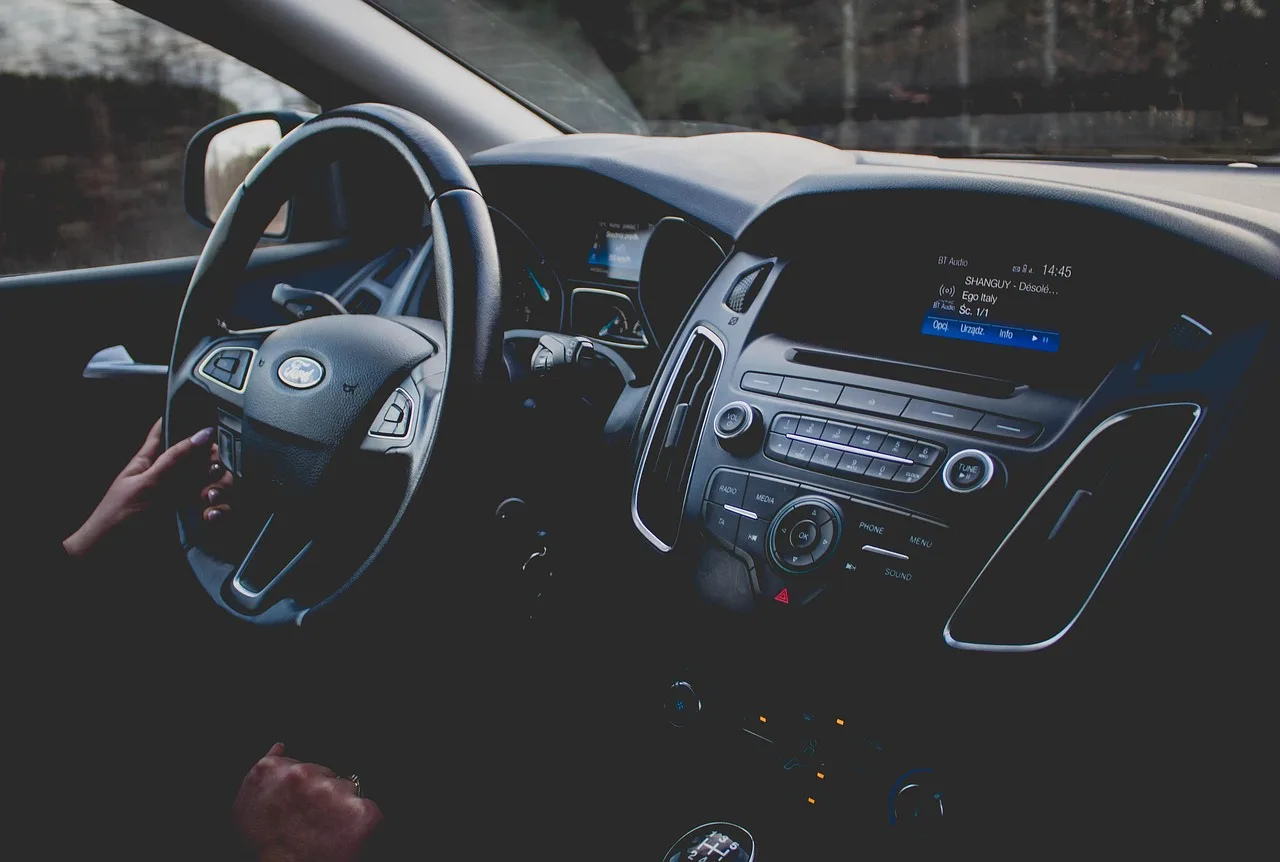
A car can function as a mobile office, a gear locker, and a weather buffer. The automotive page notes that reliable, fuel-efficient vehicles matter for nomads, and that mobile hotspot connectivity is becoming essential infrastructure. That matters most when you work between towns, stay outside walkable cores, or need to reach client sites.
When a car becomes extra cost and friction
A vehicle adds fuel, insurance, parking, tolls, maintenance, and repair exposure. It also adds decisions: where to park, how to sleep, whether the battery will hold, and how far the next service center is. In a city with strong transit and high parking costs, those burdens can outweigh the convenience fast.
Picture a solo developer who moves every two weeks and carries only a laptop, charger, and one small bag. A hatchback may be enough. Picture a couple with two monitors, winter clothing, and cooking gear moving through rural areas. The answer shifts toward more cargo room, better sleep space, and higher reliability planning.

How do digital nomads get internet in a car?
Most vehicle-based workers rely on a cellular hotspot, then add backup connectivity because coverage gaps are real. Carrier choice matters as much as the device. The right setup depends on where you drive, how much data you move, and whether you can work offline if the signal drops.
Cellular hotspot basics
A hotspot can turn a phone or dedicated mobile router into your internet source. For short work sessions, that can be enough. For longer trips, a dedicated data plan often works better than tethering alone because it avoids draining your phone battery and lets you keep a backup line available.
Carrier choice and coverage gaps
Coverage maps are only a starting point. Rural routes, mountain passes, and desert corridors can expose dead zones quickly. A practical setup often uses one primary carrier and one backup carrier, so a single outage does not stop work for the day. That is especially important for calls, uploads, and client deadlines.
Backup connectivity and data planning
Have a fallback before you need it. That can mean a second SIM, a different carrier hotspot, or scheduled work that can run offline until you reach signal. Mobile internet is now treated as essential infrastructure in many nomad setups, and overages can be expensive if you misjudge how much video calling or file syncing you do.
Car, rental, or van: which fits your setup?
Choose by trip length, storage needs, sleep plans, and how much commitment you want. Rental cars fit short trips and uncertain itineraries. Buying or leasing makes more sense when you will live with the vehicle long enough for the monthly cost to matter. Camper vans add sleep space and off-grid potential, but they also add buildout, fuel, and repair costs.
Rental car for short trips and low commitment
Rental cars can work well for temporary moves, city-to-city travel, or short trial runs. They lower long-term commitment and avoid surprise repair bills, but insurance rules, mileage limits, and return deadlines can become limiting. For someone testing nomad life for a month, that flexibility can be worth a premium.
Buying or leasing for longer stays
Buying makes sense if you will keep the vehicle for a while, need custom storage, or expect repeated use across regions. Leasing can look attractive on monthly cost, but mileage limits and wear rules can clash with a travel-heavy routine. Both options require a maintenance plan, not a loose hope that the car will cooperate.
Camper van for sleeping and off-grid use
A camper van can solve the sleep problem and give you room for batteries, water, and gear. It is not automatically the best answer. Higher buildout cost, higher fuel use, and more complicated repairs are the tradeoff. It fits best when overnight parking, long stretches away from hotels, or off-grid living are part of the plan.
Why a car can help a mobile worker
A car helps when it supports work, not when it merely carries the idea of freedom. The useful features are practical: secure storage, decent seat comfort, good ergonomics, enough outlets or charging capacity, and access to places where transit does not reach. Those details affect focus more than image does.
Storage for gear and supplies
Storage matters for laptops, cameras, extra clothing, tools, and food. A sedan trunk can protect gear better than an open cabin, while a hatchback or SUV makes larger items easier to load. For a family or couple, cargo volume often becomes the deciding factor before styling does.
Seat comfort and work posture
If you answer email between stops or take calls in the vehicle, seat support and driving posture matter. Long travel days are harder if the seat is narrow, the steering wheel position is awkward, or there is nowhere to rest a tablet safely. That is one reason many nomads prefer vehicles with stronger front-seat adjustment.
What are the hidden costs of car-based nomad life?
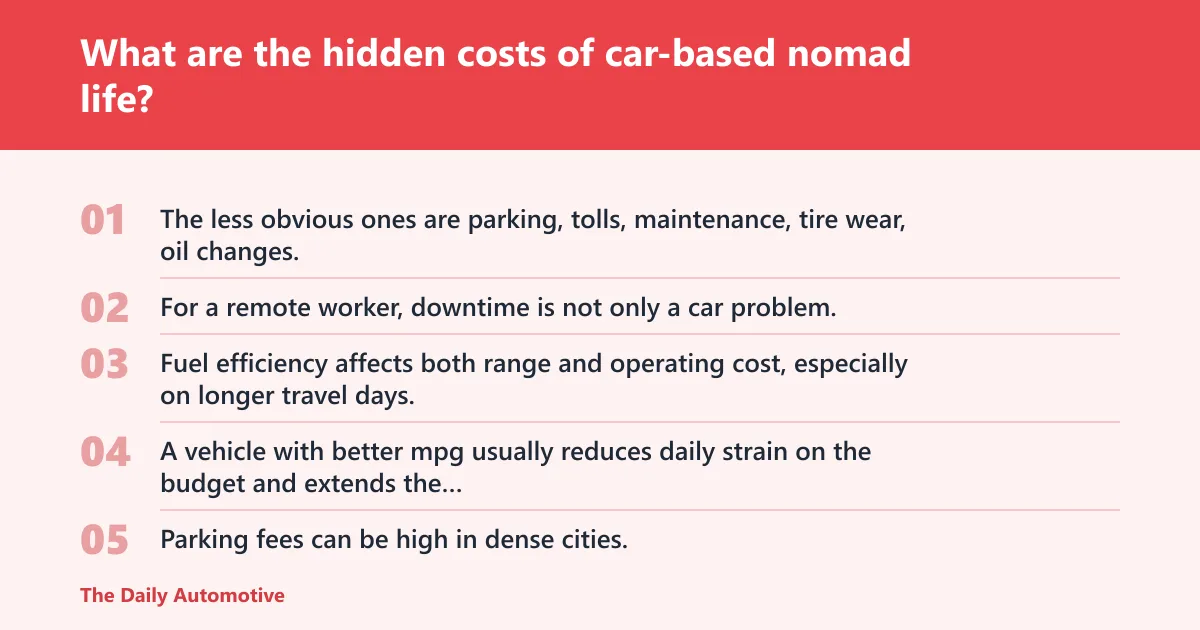
The obvious costs are fuel and insurance. The less obvious ones are parking, tolls, maintenance, tire wear, oil changes, inspection intervals, repairs, and downtime. For a remote worker, downtime is not only a car problem; it can become an income interruption if the vehicle is also your office or sleeping space.
Fuel, insurance, and parking
Fuel efficiency affects both range and operating cost, especially on longer travel days. A vehicle with better mpg usually reduces daily strain on the budget and extends the distance between fill-ups. Parking fees can be high in dense cities, and they may still apply even on days you do not drive much.
Maintenance and repair intervals
Plan for oil changes, tires, brakes, and inspections on schedule, not after something starts making noise. If you drive often, maintenance intervals come up faster than expected. Tire replacement and brake work are especially painful when you are parked far from a familiar shop or trying to work through a deadline.
Downtime from service or breakdowns
The automotive page notes that a breakdown far from a service center can cost days. That is not only an inconvenience. It can interrupt income, force hotel stays, and scatter your routine. Roadside assistance helps, but it does not replace a nearby mechanic, spare cash, or a backup internet plan.
A common first-timer mistake is assuming the car can serve as a remote workstation and a sleeping space without arranging reliable power, parking, or a place to go if the vehicle needs repairs. Suppose a compact SUV loses a battery in a mountain town on a Friday night. The work call is at 9 a.m. Monday. Without roadside coverage, local service contacts, and a place to work in the meantime, the vehicle becomes a bottleneck.
Vehicle-fit checklist: use this scoring table
Use this as a practical filter, not a ranking of status. Score each vehicle type on the things that affect work: connectivity setup, cargo room, fuel cost, sleepability, maintenance burden, and breakdown risk. Higher scores mean a better fit for that category.
| Vehicle type | Internet setup | Cargo space | Fuel cost | Sleepability | Maintenance burden | Breakdown risk |
|---|---|---|---|---|---|---|
| Sedan | 3/5 | 2/5 | 4/5 | 1/5 | 4/5 | 4/5 |
| Hatchback | 3/5 | 3/5 | 4/5 | 2/5 | 4/5 | 4/5 |
| SUV | 4/5 | 4/5 | 3/5 | 3/5 | 3/5 | 3/5 |
| Minivan | 4/5 | 5/5 | 2/5 | 4/5 | 3/5 | 3/5 |
| Camper van | 4/5 | 5/5 | 1/5 | 5/5 | 2/5 | 2/5 |
What to compare before you buy
- Check mpg for your real travel pattern, not a brochure route.
- Measure cargo room against your bag, charger, and storage needs.
- Confirm power outlets, USB ports, and inverter options.
- Test seating comfort for long driving and laptop use breaks.
- Review safety features such as stability control, backup camera, and tire-pressure monitoring.
- Map service centers along the routes you actually plan to drive.
- Decide whether sleepability matters enough to justify a larger vehicle.
Which vehicle type fits which traveler?
Solo workers usually do well with sedans or hatchbacks if they need lower fuel cost and simple parking. Couples often prefer SUVs or minivans for extra storage and a workable sleeping setup. Families usually need the cargo room and interior flexibility that smaller cars cannot offer. Weekend nomads can often rent and avoid long-term ownership altogether.
What happens if a car breaks down while working remotely?
A breakdown can stop both travel and work at once. The real risk is not only the repair bill; it is the distance to service, the time lost waiting for parts, and the chance that your internet, sleep, and client schedule all collapse together. Roadside assistance reduces stress but not downtime.
Plan for distance and delay
Remote areas make simple repairs harder. A tire issue, dead battery, or cooling problem can turn into a multi-day interruption if the nearest service center is far away or fully booked. Keep a reserve for tow charges, a hotel night, and a backup way to get online.
Protect income continuity
Before long trips, save offline versions of key files, set client expectations for response windows, and keep a second internet path ready. If the vehicle is also your shelter, have a cold-weather or heat contingency. Parking in winter weather without reliable power, heat, or cell service is a poor place to discover missing equipment.
Frequently asked questions
What do digital nomads do?
Digital nomads do remote work while traveling. Common examples include freelance writing, design, tech work, online courses, dropshipping without inventory, and running an online media company. The key requirement is that the job can move with a laptop and an internet connection.
What is digital nomadism?
Digital nomadism is a work style built around location independence. It trades fixed housing and routine for mobility, but that only works when income, internet access, and day-to-day logistics stay dependable enough to keep work moving.
Is a car or van better for digital nomad life?
A car fits lighter travel, lower fuel cost, and easier parking. A van fits sleeping, gear storage, and off-grid living better, but it usually brings higher purchase, buildout, fuel, and repair costs. The better choice depends on how often you sleep in the vehicle.
Products related to this article
Sponsored / affiliate links. As an Amazon Associate I earn from qualifying purchases. I may earn additional commission from eligible campaigns.