Car Trash Can Cost / Price / How Much
A car trash can usually costs $8 to $30; basic hang-on bags sit near the bottom, while rigid, lidded, leak-resistant models and insulated liner designs can reach $40 or more. Buy too cheap and you often get spills, smells, and a bin that tears or slides around. This guide breaks down car trash can price tiers, the features that justify each jump, and when paying more is worth it.
This guide is part of our Car accessories for comfort and convenience series.
Typical cost range


Most car trash cans are commonly grouped into three pricing bands: budget models around $8 to $15, mid-range options around $16 to $30, and premium designs around $31 to $45 or more. The jump in price usually tracks capacity, mounting hardware, liner quality, lid design, and whether the bin comes with bags, straps, or reinforced sides.
Budget price band
Budget car trash cans usually cover simple cup-holder bins, open-top pouches, and basic hanging bags. They handle receipts, tissues, snack wrappers, and a few napkins. The tradeoff is weaker structure, simpler closures, and a higher chance of tipping or sagging once the bin fills.
Mid-range price band
Mid-range models are where most buyers land. This tier usually adds a lid, better fabric, a waterproof or leakproof lining, and stronger mounting hardware. For commuters, families, and road-trippers who toss in coffee cups or food containers, this band often gives the best balance of price and day-to-day cleanup.
Premium price band
Premium car trash cans are usually larger, more structured, and more stable. They may use reinforced panels, heavier-duty lids, better odor control, and more pocketing or bag retention features. The extra cost makes sense when the bin must stay upright through daily use, repeated emptying, and passenger-facing trips.
Pros and cons of each price tier
The cheapest option is not always the worst buy, and the priciest option is not always the right one. Price matters most when it changes how the bin handles your trash load, cabin layout, and cleanup routine.
Budget models
- Pros: low entry cost, easy to replace, fine for light trash.
- Cons: more likely to tip, leak, or wear out quickly; usually fewer closure features.
Mid-range models
- Pros: better structure, better lids, better liner quality, better value for daily use.
- Cons: costs more than a grocery bag setup, and some styles still need careful mounting.
Premium models
- Pros: better spill control, stronger straps or panels, longer useful life, cleaner look.
- Cons: highest upfront cost, and some buyers will not use the extra features enough to justify it.
Car trash cost price matrix
This matrix shows the common styles buyers compare most often. Prices vary by brand and included accessories, but the structure, mounting method, and closure type usually explain the biggest cost differences.
| Style | Expected price band | Typical capacity | Mounting method | Lid or closure | Best use case |
|---|---|---|---|---|---|
| Mini car trash can | $5 to $12 | Under 1 liter | Cup holder or small console slot | Push-open or flip-top | Receipts, gum wrappers, tissues, small daily clutter |
| Cup-holder trash can | $8 to $18 | 500 ml to 1 liter | Cup holder | Push-open lid | Drivers who want a compact bin near the shifter or center console |
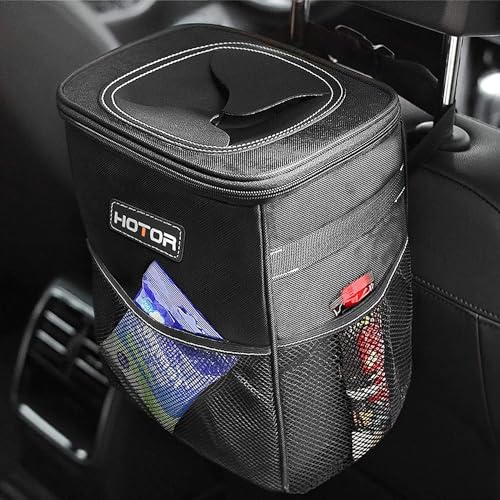
| Hanging trash can | $10 to $22 | 1 to 3 gallons | Headrest, seatback, or console strap | Drawstring, flip-top, or open-top | Families and commuters who want a larger catch-all bag |
| Foldable trash can | $15 to $35 | 1.75 gallons to about 6.5L | Adjustable strap | Soft rubber lid with hook-and-loop closure | Mixed use in front seat, back seat, or center console areas |
| Back-seat bin | $18 to $40 | 2 to 4 gallons | Seatback straps or floor placement | Zip, flap, or lidded top | Road trips, kids, and high-volume snack trash |
| Rigid lidded bin | $20 to $45 | 3 to 5 gallons | Floor or console placement | Snap lid or push lid | Busy cabins that need better spill control |
| Waterproof liner bin | $18 to $38 | 2 to 5 gallons | Strap or floor mat base | Flip-top or elastic opening | Fast food, coffee cups, and wet trash |
| Insulated liner bin | $25 to $40+ | 3 to 6 gallons | Seatback or floor mount | Lid with tighter seal | Longer trips where odor control matters more |
What you get for the money
Price changes are easiest to justify when they buy a larger useful capacity, a better fit for the cabin, and a closure that actually keeps trash contained. Cheap bins often look fine in product photos. The trouble starts after the first drink lid, coffee cup, or greasy wrapper goes in.
Capacity and cabin fit
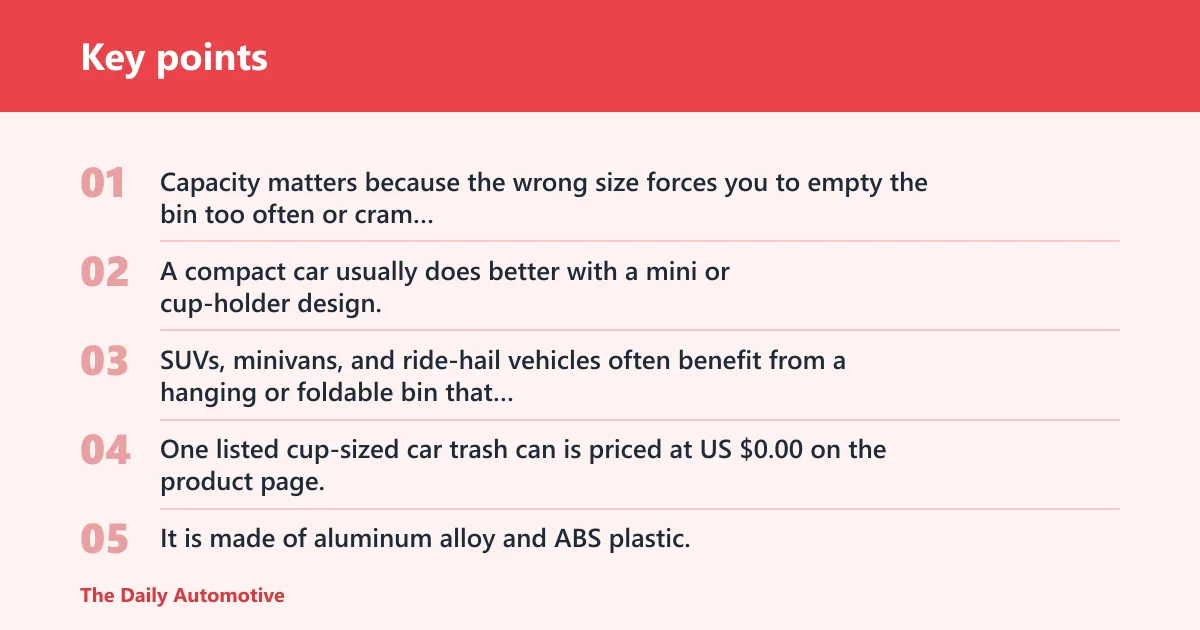
Capacity matters because the wrong size forces you to empty the bin too often or cram trash into an overfilled bag. A compact car usually does better with a mini or cup-holder design. SUVs, minivans, and ride-hail vehicles often benefit from a hanging or foldable bin that can hold more without rolling around the floor.
One listed cup-sized car trash can is priced at US $0.00 on the product page, uses a cup-sized design, and has a 500 ml volume. It is made of aluminum alloy and ABS plastic, and it includes three rolls of waterproof polyethylene bags. That kind of setup makes sense for tiny trash only, not for mixed family use.
Mounting method
Mounting style is a major price driver. A cup-holder bin is simple and compact. Hanging designs add straps and flexible placement. Foldable models often cost more because they need structure, a better lid, and a mounting system that can handle front-seat, back-seat, or center-console placement without collapsing.
The foldable bin in the sourced example is a 1.75-gallon bin that holds up to 6.5L. It measures 6.3″ L × 9.5″ H × 6.3″ W and uses an adjustable strap for front-seat, back-seat, or center-console placement. That is the sort of setup that usually costs more than a basic bag, because it has to stay put.
Lid and closure type
Lids are not cosmetic. A push-open lid helps with one-handed use. A soft rubber lid with hook-and-loop closure can cut down on visible trash and keep smells from escaping as fast. Drawstring and flap closures are simpler, but they can be slower to use and easier to leave half open.
If you carry coffee cups, fast food, or wet napkins, a lid becomes more than a nice extra. It is part of the cleanup system. Without it, the bin becomes a source of odor and a place where liquid trash can slosh out on a turn or hard stop.
Lining, odor control, and cleaning
Leakproof or waterproof lining should be standard buying criteria, not a luxury add-on. It matters because spilled soda, melted ice, or coffee drips can soak through thin fabric and leave the bin smelling bad. Easy-clean interiors matter for the same reason. Smooth liners wipe out faster than textured fabric.
Odor control is most useful when trash sits in the car for days. That includes drive-thru wrappers, fruit peels, coffee lids, and tissues. A sealed or partially sealed bin usually costs more than an open bag, but it can save time and reduce the need for frequent replacements.
Bags and straps included
Check whether bags are included before judging the price. Some bins ship with disposable bags, which cuts the first-week cost. Others expect you to use grocery bags or buy liners separately. Side clips, elastic rings, or bag retainers also matter because a loose bag is one of the fastest ways to create a mess.
The foldable model in the sourced facts has built-in side clips to hold a disposable trash bag or plastic grocery bag in place, plus two mesh side pockets and one front fabric pocket. Those extras do not matter for every buyer, but they do help when passengers need a place for tissues, wipes, or small wrappers.
Who each style
The best car trash can depends on how your cabin is used. Light daily clutter calls for a smaller, cheaper bin. Frequent fast-food runs or kid-heavy back seats call for more capacity and a tighter lid. Passenger-facing use usually justifies a cleaner-looking, more stable design.
Commuters
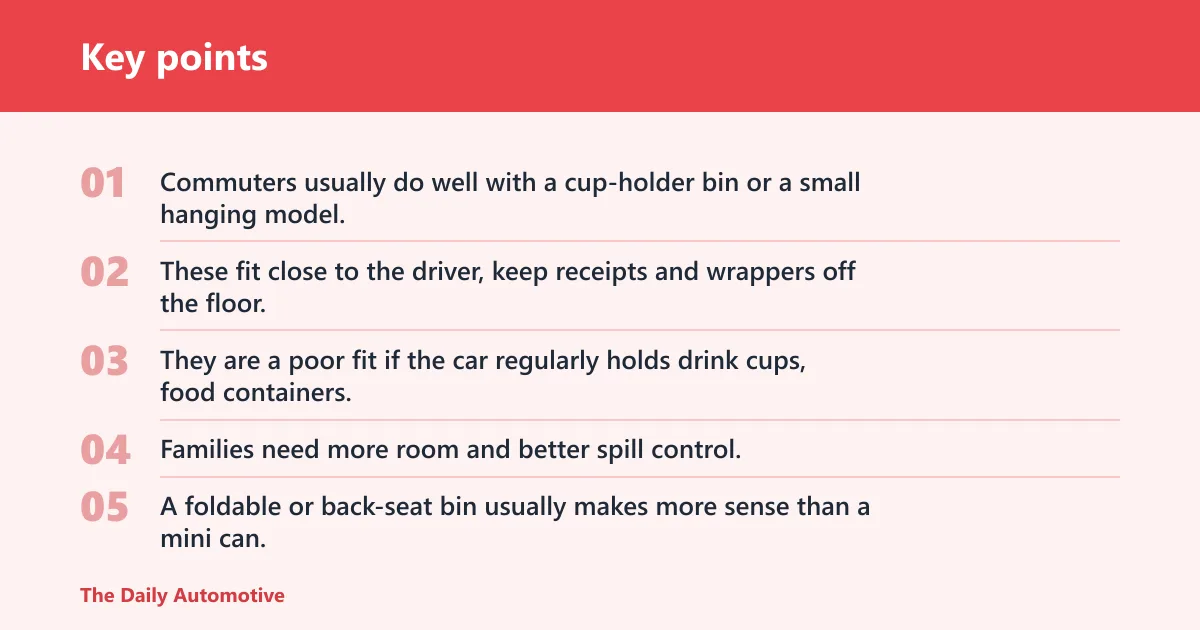
Commuters usually do well with a cup-holder bin or a small hanging model. These fit close to the driver, keep receipts and wrappers off the floor, and cost less than larger bins. They are a poor fit if the car regularly holds drink cups, food containers, or several passengers.
Families
Families need more room and better spill control. A foldable or back-seat bin usually makes more sense than a mini can, especially if snacks, tissues, toy packaging, and drink lids pile up during school runs. Higher price is easier to justify here because emptying a tiny bin every day gets old fast.
Rideshare drivers
Rideshare drivers need a bin that looks tidy, stays in place, and handles mixed trash without leaking. A lidded foldable bin or rigid hanging model usually works better than an open cup-holder bin. Passenger-facing use makes odor control and easy cleaning more valuable, because the cabin is part of the service.
Road-trip drivers
Road-trip drivers usually need the largest useful capacity. A back-seat bin or a foldable model with bag retention and a waterproof liner can handle snack waste, coffee cups, tissues, and wrappers better than a tiny console bin. The extra cost is easier to justify when the car stays full for hours at a time.
Say your sedan has one cup holder next to the shifter and you mainly toss in receipts and gum wrappers. A 500 ml cup-holder bin may be enough. Suppose the same sedan starts carrying two coffee cups, napkins, and fast-food bags every day. The cheaper bin will fill fast, tip more often, and need more frequent emptying.
A common first-timer mistake is buying the biggest bin on the page without checking mounting. A 6.5L foldable model can be a good value, but only if the strap and lid fit the cabin layout and the bin does not block legroom or slide into the footwell.
When paying more makes sense
Pay more only if the cheap option is likely to fail in your use case. That usually means frequent spills, heavy daily trash, or a cabin that carries passengers who expect a cleaner look. If your trash is mostly dry wrappers, a low-cost bin may be enough. If you carry drinks or wet food, the added price often buys fewer messes.
Frequent spills
If coffee cups, soda lids, or takeout containers are part of your routine, spend more on a waterproof liner and a better lid. That is where cheap bins fail fastest. Liquid ruins thin fabric, weak seams, and open tops. A better bin can cost more up front and still save money by lasting longer.
Heavy daily trash
Heavy daily trash means more emptying, more bag changes, and more wear on the closure. That is when strap quality, reinforced sides, and bag clips start to matter. A bargain bin that tears or sags after a few weeks is cheaper only on the shelf.
Passenger-facing use
If passengers can see the bin, price becomes a cleanliness decision as much as a storage decision. Lidded designs, tidy mounting, and odor control keep the cabin looking cared for. A plain grocery bag still works as a backup, but it is not the best choice when presentation matters.
Long-term replacement cost
The cheapest option can become the most expensive one if it needs frequent replacement. Weak lids break. Thin straps stretch. Open bins spill. A mid-range car trash can often lasts long enough to make its higher sticker price easier to justify, especially if it includes bags and a waterproof liner.
- Match capacity to your trash load, not to the biggest number on the page.
- Pick a mounting method that fits your cabin layout.
- Choose a lid if you carry drinks, food, or wet trash.
- Check for waterproof or leakproof lining.
- Confirm bag compatibility and whether bags are included.
- Pay extra only for structure, retention, and cleaning ease that you will actually use.
Frequently asked questions
How much does a trash can cost?
A basic car trash can usually starts around $8 and can run past $30 for larger or better-built versions. In-car designs cost more when they include a lid, waterproof lining, sturdy mounting hardware, or included bags. Very small cup-holder bins sit at the low end.
How much is a trash can?
For car use, most shoppers will see usable options between about $8 and $30. The cheapest bins work for light trash only. If you want a lidded, leak-resistant model for coffee cups or food wrappers, expect to move into the mid-range.
How much do trash cans cost?
Car trash cans usually cost less than a tank of fuel, but the spread still matters. Budget bins are cheapest for dry trash and short trips. Mid-range and premium bins cost more because they add capacity, better closures, and better resistance to leaks and tipping.
Why are trash cans so expensive?
They are expensive when the price includes structure, liner quality, a better lid, and mounting hardware that keeps the bin from sliding. For cars, those details matter more than on a home bin. A flimsy design may be cheaper up front but fails faster in daily use.
Best car trash can
The best car trash can is the one that fits your cabin and trash volume. For small clutter, a cup-holder bin is usually enough. For family or ride-hail use, a foldable or lidded hanging model is often better because it holds more, seals better, and stays cleaner longer.
Car trash can price
Car trash can price depends on size, material, mounting style, and extras. Cup-holder bins and mini pouches cost the least. Foldable, waterproof, or rigid lidded bins cost more because they solve spill control and stability problems that cheaper bins leave behind.
Products related to this article
Sponsored / affiliate links. As an Amazon Associate I earn from qualifying purchases. I may earn additional commission from eligible campaigns.