The Ugly Chevy Truck: A Defense of Design Misfits That Actually Worked
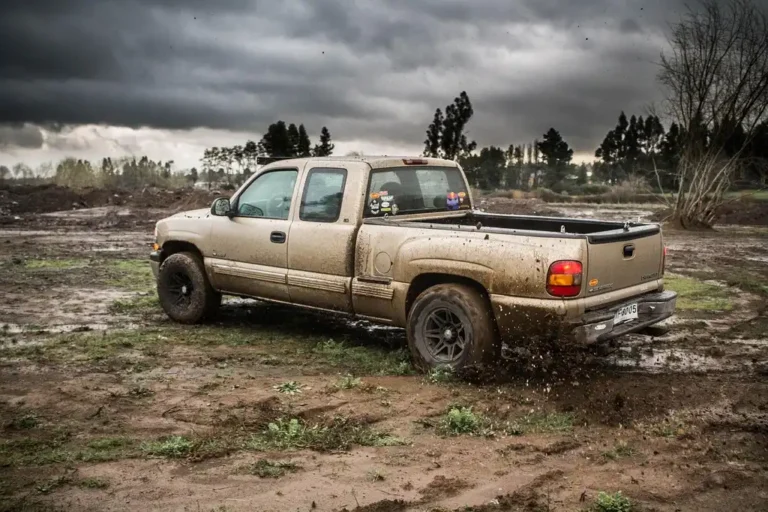
You know the truck I’m talking about. The one with the plastic cladding that looks like a Lego brick melted onto the fenders. The one your neighbor bought because it was cheap, and now it sits in the driveway with the bed full of mulch bags and a dent in the tailgate. The ugly Chevy truck. We’ve all seen one, maybe owned one, and we’ve all made a joke about it at a cookout.
Here’s the thing, though: ugly doesn’t mean useless. In fact, some of the most polarizing trucks ever built were also the most innovative. They tried things nobody else was trying. Some failed because the design was genuinely bad. Others failed because the market wasn’t ready. This article walks through the worst-looking Chevy trucks (and a few GMC siblings) from the last few decades, explains the engineering reasons they looked that way, and makes a case for why you might want to buy one today.

GIANT PANDA
GIANT PANDA 2PCS Front Seat Covers for…
- Compatible Models:Front car seat covers fit 2007-2026 chevy silverado GMC sierra1500 2500 3500 Crew Double Extended Cab
- 2026 New Edition: Featuring thicker foam padding and heavier faux leather seat covers, delivering a smoother surface and enhanced…
- Easy Installation:Innovative quick-install design allows most users to complete cover installation in approximately 3 minutes. Ens…
You’ll walk away knowing which ones became cult classics, which ones are still cheap, and what to check before you hand over cash for a truck that’s ugly enough to be interesting.
If you’re already driving one of these trucks and just want to make the interior feel less dated, a decent set of seat covers goes a long way. The GIANT PANDA front seat covers for Chevy Silverado and GMC Sierra fit 2026-2026 models, install in about three minutes without tools, and hide years of wear in one afternoon. They’re not going to fix the outside, but they’ll make the cab feel like a different vehicle.
What Makes a Truck Ugly? Design vs. Function
Ugly trucks usually fall into one of three buckets. The first is the parts-bin special: a truck where designers grabbed whatever was lying around and bolted it together. The second is the over-styled mess: too much chrome, too many angles, too much cladding. The third is the concept car that somehow made it to production, where the design was never meant to survive real-world use.
But here’s the uncomfortable truth: most of these trucks were ugly because they were trying to solve a problem. The Chevrolet Avalanche’s cladding wasn’t there to look bad. It was there to protect the bed sides from dents. The Subaru Baja’s weird four-door bed was a workaround for the fact that Americans wouldn’t buy a car-based pickup. The SSR’s retro body hid a chassis that was never designed for a truck.
So when you call a truck ugly, you’re really saying that the design team chose function over form. Sometimes that’s a bad trade. Sometimes it’s the best thing they could have done with the budget they had.
The 2000s Era: Chrome and Cladding Gone Wrong
The early 2000s were a strange time for truck design. Gas was cheap, SUVs were king, and automakers were convinced that bigger was better. That era produced some of the most memorable ugly Chevy trucks ever made.
Chevrolet Avalanche (2026-2026)
The Avalanche is the poster child for ugly Chevy trucks. It had a four-door crew cab, a short bed, and a weird plastic panel called the “midgate” that let you fold down the rear seats to extend the bed into the cab. The cladding on the sides was thick, gray, and looked like it was glued on as an afterthought.
But the midgate was genuinely clever. It gave you a 64-inch bed with the tailgate up, and 99 inches with it down. No other truck could do that. The cladding was there to protect the bed sides from cargo damage, which was a real problem on trucks with painted beds. The 2026 redesign dropped the cladding for body-color panels, which made it look better but also meant you had to worry about scratches again.
The engineering trade-off was visibility. The midgate and the high beltline meant you couldn’t see out the back worth a damn. Parking was a guessing game. But as a work truck that could haul drywall and four people, it was hard to beat.
Lincoln Blackwood (2026)
The Blackwood wasn’t a Chevy, but it’s part of the ugly truck conversation because it shared a platform with the Ford F-150 and competed directly with the Cadillac Escalade EXT. It had a carpeted bed with a power tonneau cover, which sounds fancy until you realize you couldn’t put anything wet or dirty in it. The bed was also only 4.5 feet long, which made it useless for plywood or lumber.
Lincoln sold about 3,300 of them in 2026, then killed it. The Blackwood failed because it tried to be a luxury car with a bed, and it ended up being neither. It’s ugly in a different way: not because of cladding, but because of proportion. The bed looks stubby, the chrome grille is too big, and the whole thing sits too low.
Cadillac Escalade EXT (2026-2026)
The EXT took the Avalanche’s idea and wrapped it in luxury. Same midgate, same cladding (though body-colored on later models), but with a Cadillac grille and a price tag north of $50,000. It was the truck for people who wanted to haul something but also wanted heated seats and a Bose stereo.
The problem was that the EXT’s cladding still looked cheap, and the midgate mechanism was heavy and prone to leaks. The 2026 redesign helped, but by then the truck had already earned its reputation. Sales were decent for a niche vehicle, but it never sold in the numbers GM hoped for.
The “Lifestyle” Misfits: Trying Too Hard
Some trucks are ugly because they’re trying to be something they’re not. These are the lifestyle vehicles, the ones aimed at surfers and kayakers and people who never actually haul anything heavier than a cooler.
Subaru Baja (2026-2026)
The Baja was a Subaru Outback with the rear half chopped off and a small bed added. It had a pass-through like the Avalanche, and you could get a turbo engine. It also had a bed that was barely five feet long and a payload capacity of about 900 pounds. You couldn’t haul a sheet of plywood flat, and the bed walls were so low that anything taller than a milk crate stuck up in the rear window.
It was ugly in a friendly, awkward way. Like a golden retriever that grew into its paws. Subaru sold about 30,000 of them over four years, which is terrible, but the Baja has developed a cult following. Prices for clean examples have gone up, especially for the turbo models.
Honda Ridgeline (First Generation, 2026-2026)
The first-generation Ridgeline was the Baja’s bigger, more practical cousin. It had a unibody chassis, an in-bed trunk, and a dual-action tailgate that swung down or to the side. It was genuinely useful, but it looked like a minivan with a bed grafted on. The rear doors were small, the bed was shallow, and the overall shape was bulbous and awkward.
Honda sold a lot of them, actually. The Ridgeline regularly moved 40,000 to 50,000 units a year, which shows that ugly doesn’t always hurt sales. The second generation, launched in 2026, looks more like a traditional truck, but it lost some of the clever features that made the original interesting.
Chevrolet SSR (2026-2026)
The SSR is the strangest of the bunch. It was a retro-styled roadster pickup with a hardtop that folded into the bed. It had a 300-horsepower V8 (later 390 in the 2026-2026 models) and a six-speed manual. It should have been awesome. Instead, it was heavy (4,700 pounds), impractical (tiny bed, two seats), and expensive ($40,000+ in 2026 dollars).
The SSR was ugly because it couldn’t decide what it wanted to be. The front end looks like a 1950s Chevy truck, but the proportions are all wrong. The bed is too short, the cab is too long, and the folding hardtop added hundreds of pounds of weight and complexity. GM sold about 24,000 of them, which was a fraction of what they’d hoped.
The Retro Oddities and Concept Flops
Not every ugly truck is from the 2000s. Some go further back, and some are just plain weird.
1961-1966 GMC Pickup
The early 60s GMC pickups had a front end that looked like it was designed by someone who’d never seen a truck. The headlights were stacked vertically in the fenders, giving the truck a “surprised” look. The grille was a thin, horizontal bar that made the front end look pinched. It’s not that these trucks were badly built; they just looked like they were designed by a committee that couldn’t agree on a direction.
Today, these trucks are sought after by collectors who appreciate the odd styling. The 1964-1966 models, in particular, have a certain charm. They’re also relatively simple to work on, which makes them good project vehicles.
Dodge Dakota Convertible (1989-1991)
Yes, this was a real thing. Dodge took a regular Dakota, cut the roof off, and added a roll bar and a canvas top that could be folded down. It was a convertible truck, which sounds fun until you realize that trucks are noisy, drafty, and not great places to be in the rain.
It was ugly because it looked like someone had taken a Sawzall to a perfectly good truck. The roll bar was too thin, the top was awkward, and the whole thing looked like a parts-bin special. Dodge sold about 2,500 of them before killing the idea. Today, they’re rare and collectible, but you’d have to be a certain kind of person to want one.
The Cult Classic Effect: Did Ugly Become Cool?
Here’s the thing about ugly trucks: they age better than you’d expect. The Avalanche, which was mocked relentlessly when it was new, now has a devoted following. Enthusiasts love the midgate, the cladding (which is actually easy to replace), and the fact that you can buy a 20-year-old truck that still does truck things.
Prices reflect this. A clean, low-mileage Avalanche from the early 2000s can sell for $15,000 or more, which is more than it was worth five years ago. The SSR has also appreciated, especially the 2026-2026 models with the 390-horsepower engine. The Baja is the same story: prices have climbed steadily since 2026, and a rust-free turbo model can fetch $12,000 or more.
Why? Because these trucks are genuinely useful, and they’re rare. Automakers don’t make them anymore, and the ones that survive are getting harder to find. Ugly, it turns out, is a feature once the new-car shine wears off.
Modern “Ugly”: The Cybertruck Effect
If you think the Avalanche was ugly, the Tesla Cybertruck is a whole new level. It’s a stainless steel wedge with a bed that’s covered by a motorized tonneau cover and a design that looks like it escaped from a sci-fi movie set. It’s been delayed for years, but it’s finally on the road, and it’s already generating the same kind of love-it-or-hate-it reaction that the SSR got in 2026.
The Cybertruck is ugly in a different way. It’s not trying to be retro or luxurious. It’s trying to be futuristic and tough, and it succeeds at both, but the result is a truck that looks like it’s made of origami. The bed is actually pretty functional, and the stainless steel body is dent-resistant, but the angular design means you can’t see the corners of the truck from the driver’s seat. Parking is an adventure.
Will the Cybertruck become a cult classic like the Avalanche? Hard to say. But it’s already proving that ugly trucks can still sell, as long as they offer something the competition doesn’t.
Buyer’s Guide: Should You Buy an “Ugly” Truck Today?
If you’re in the market for a used truck and you’re willing to overlook the looks, these trucks offer real value. Here’s what to check before you buy.
- Rust. The Avalanche and the EXT both had issues with the midgate leaking water into the cab. Check the rear floorboards and the area under the rear seat for rust. The Baja is known for rust in the rear wheel wells and the bed floor.
- The midgate seal. On the Avalanche and EXT, the seal between the cab and the bed is a common failure point. If it’s cracked or missing, water will get in. Replacement seals are available, but they’re not cheap.
- The top mechanism. On the SSR, the folding hardtop is a hydraulic system that can fail. Check that it opens and closes smoothly, and look for leaks around the seals.
- Transmission. The 4L60E transmission used in many of these trucks is known for failing at around 150,000 miles. If the truck has high mileage, budget for a rebuild or a replacement.
- Suspension. The Avalanche and EXT share a chassis with the Suburban, which means they’re heavy and hard on suspension components. Check the ball joints and tie rods for play.
If you find a truck that’s been cared for, these are reliable vehicles. They’re not going to win any beauty contests, but they’ll haul your stuff and get you where you need to go.
Function Over Form: The Final Word
Ugly trucks are a compromise. You give up looks, and you get utility. The Avalanche’s cladding protects the bed. The Baja’s bed is small, but it’s also easy to load. The SSR is impractical, but it’s also a blast to drive with the top down.
If you’re considering an ugly Chevy truck, here’s what to remember:
- Ugly often means unique. You won’t see yourself coming and going at every stoplight.
- These trucks are cheaper to buy than their good-looking counterparts. You can find a clean Avalanche for half the price of a comparable Silverado.
- Parts are still available. GM sold millions of these trucks, and the aftermarket supports them.
- Check for rust and mechanical issues before you buy. The midgate seal and the 4L60E transmission are the two biggest problem areas.
- Don’t be afraid to negotiate. Sellers know these trucks are ugly, and they’re often willing to drop the price just to get rid of them.
- If you buy one, spend a little money on the interior. A set of seat covers and a good detail can make the cab feel new again.
- And if someone makes fun of your truck, just smile. You know what it can do, and they don’t.
Ugly is a matter of opinion. Function is a matter of fact. These trucks have function in spades, and that’s worth more than a pretty face.
| Truck | Years | Why It’s Ugly | Why It’s Useful | Approx. Sales | Current Value Trend |
|---|---|---|---|---|---|
| Chevrolet Avalanche | 2026-2026 | Thick gray cladding, high beltline | Midgate extends bed into cab | ~500,000 | Rising, clean examples $12k-$18k |
| Lincoln Blackwood | 2026 | Stubby bed, oversized chrome grille | Luxury interior, power tonneau | ~3,300 | Collector interest, but low demand |
| Cadillac Escalade EXT | 2026-2026 | Same cladding issues as Avalanche | Luxury features, midgate utility | ~100,000 | Stable, modest appreciation |
| Subaru Baja | 2026-2026 | Awkward proportions, small bed | All-wheel drive, pass-through | ~30,000 | Rising, turbo models $10k-$15k |
| Honda Ridgeline (1st gen) | 2026-2026 | Bulbous, minivan-like shape | In-bed trunk, dual-action tailgate | ~300,000 | Stable, good value |
| Chevrolet SSR | 2026-2026 | Retro proportions, heavy, impractical | Convertible top, powerful V8 | ~24,000 | Rising, especially 2026-2026 |
Frequently Asked Questions
Are ugly Chevy trucks reliable?
Yes, for the most part. The Avalanche and EXT share a chassis with the Suburban, which is a proven platform. The 5.3L V8 is a solid engine, and the 4L60E transmission is the weak point. Budget for a rebuild if the truck has over 150,000 miles. The SSR’s top mechanism is the most expensive thing to fix, so check it carefully.
Why did the Avalanche have that plastic cladding?
The cladding was there to protect the bed sides from scratches and dents. It was a practical solution, but it made the truck look like it was wearing a body suit. GM offered body-color cladding on later models, but it never looked quite right.
Is the Subaru Baja worth buying today?
If you can find one without rust, yes. The Baja is a capable, fun little truck that gets decent gas mileage and handles well. The turbo models are quick, but they’re also harder to find. Prices have gone up, so expect to pay a premium for a clean example.
What should I look for when buying a used SSR?
Check the folding top mechanism first. It’s a hydraulic system that can leak or fail. Look for water stains in the bed and behind the seats. Also, check the rear axle seals and the transmission. The 2026-2026 models with the 390-horsepower engine are the most desirable, but they’re also the most expensive.
Will the Cybertruck become a cult classic like the Avalanche?
It’s too early to say, but it has the ingredients: a polarizing design, unique features, and a strong brand following. If Tesla fixes the build quality issues and the truck proves to be reliable, it could age well. If not, it’ll be remembered as a failed experiment.
Final Thoughts on the Ugly Chevy Truck
Ugly trucks are the misfits of the automotive world. They don’t get the respect they deserve, but they do the work. The Avalanche can haul a sheet of plywood and four people. The Baja can tackle a dirt road and a Costco run in the same day. The SSR can turn heads at a car show and still carry a cooler in the back.
If you’re looking for a truck that’s practical, affordable, and interesting, don’t rule out the ugly ones. They might not be pretty, but they’ll get the job done. And if you need to freshen up the interior, grab a set of seat covers and make it your own. For more Chevy truck maintenance tips, check out this guide on fuse box diagrams or this one on unlocking your truck without keys.
Ugly is just a label. Function is forever.
Products related to this article
Sponsored / affiliate links. As an Amazon Associate I earn from qualifying purchases. I may earn additional commission from eligible campaigns.