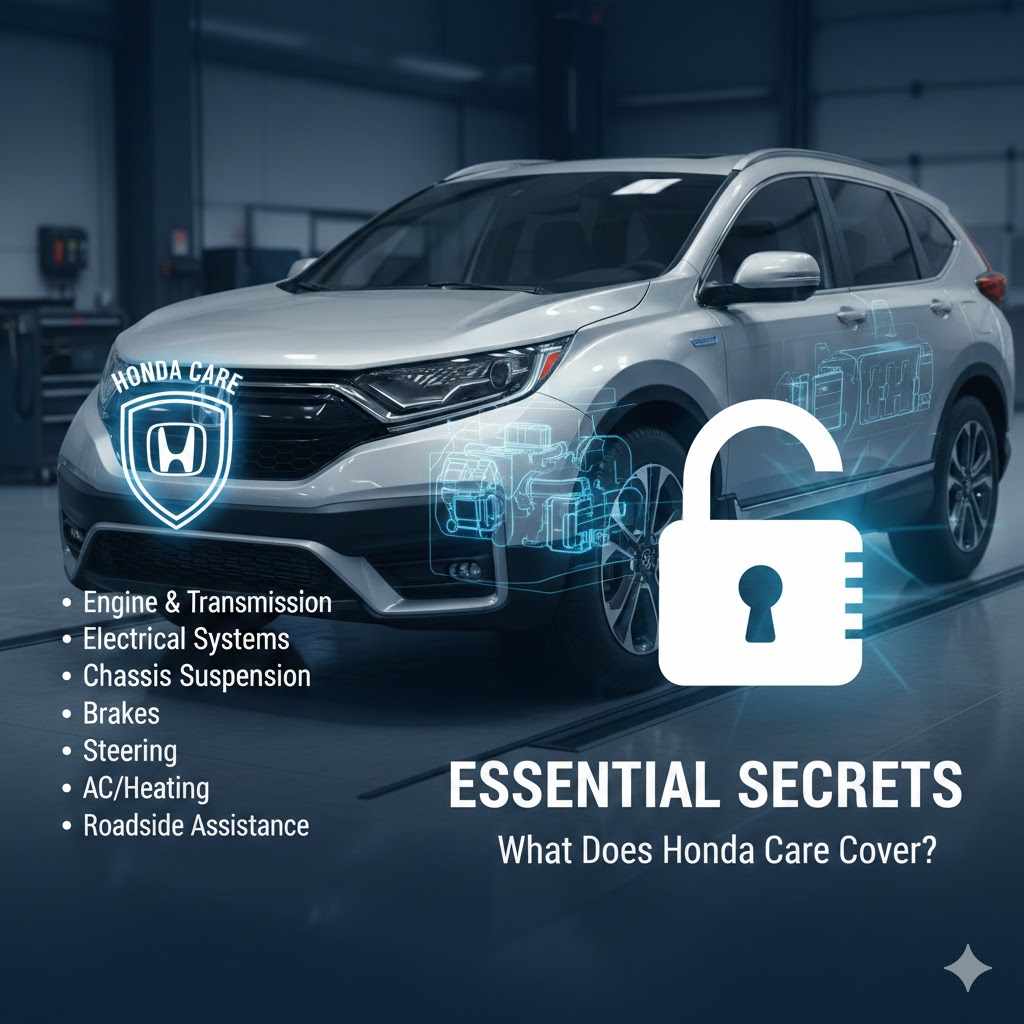
What Does Honda Care Cover? Essential Secrets
Honda Care covers major mechanical components like the engine, transmission, and drivetrain, providing bumper-to-bumper protection beyond the standard factory warranty. It includes various plans offering coverage for complex repairs, roadside assistance, and even rental car reimbursement, giving you peace of mind against unexpected high repair bills.
Buying a Honda is exciting, but the worry about future repair costs can sometimes linger. Have you ever looked at your warranty paperwork and felt totally lost? You are not alone! Understanding what your protection plan truly covers is key to saving money and avoiding surprises. We want you to feel confident every time you drive, knowing exactly what’s protected.
This guide will break down “What Does Honda Care Cover” into simple, easy-to-digest steps. Forget the confusing jargon; we are going to explain exactly what those maintenance plans offer. Get ready to feel like an expert on your own Honda coverage!
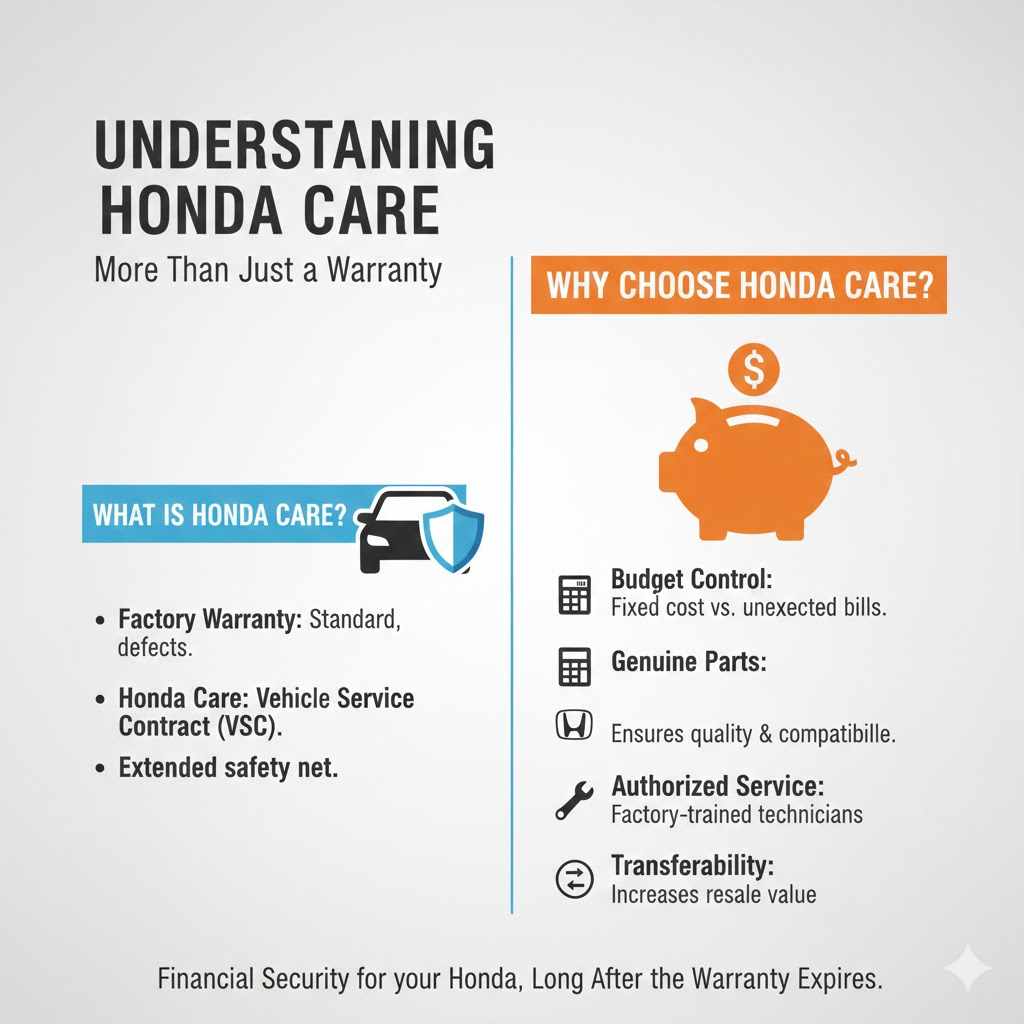
Understanding Honda Care: More Than Just a Warranty
Before we dive into the specifics, let’s clear up one common confusion. A factory warranty is what comes standard when you buy a new Honda—it covers defects in materials or workmanship for a set period. Honda Care, on the other hand, is a Vehicle Service Contract (VSC). Think of it as an extended safety net you purchase to protect yourself long after the original warranty expires.
This extended coverage is designed to handle the big, expensive stuff that wears out or breaks down as your Honda gets older and racks up more miles. It is all about predictability in your car ownership budget.
Why Choose an Extended Service Contract Like Honda Care?
The main appeal of Honda Care is simple: financial security. Modern vehicles are packed with complex electronics and high-tech components. When something goes wrong, the repair bill can easily stretch into the thousands of dollars.
Consider these benefits:
- Budget Control: You pay a fixed amount upfront (or monthly) instead of facing a huge, unexpected repair bill later.
- Genuine Parts: Repairs under Honda Care plans use genuine Honda parts, ensuring quality and compatibility.
- Authorized Service: Work is performed by factory-trained technicians, usually at Honda dealerships.
- Transferability: These plans can often be transferred to a new owner if you sell your vehicle, increasing resale value.
The Three Pillars of Honda Care Coverage
Honda Care isn’t just one package; it’s a family of protection plans tailored to different driving needs and vehicle ages. Generally, these plans are grouped into three main categories, though exact names can vary slightly by year and region:
1. Honda Care Sentinel (Tire & Wheel Protection)
This is often the most straightforward plan, focusing heavily on items frequently damaged by the road itself. If you drive in areas with poor road conditions, this coverage is worth looking closely at.
What Sentinel Typically Covers:
- Tire Damage: Repair or replacement for punctures, cuts, or bulges caused by covered road hazards (like nails or potholes).
- Wheel/Rim Damage: Repair or replacement of alloy wheels damaged by covered road hazards.
- Mounting and Balancing: The cost associated with putting the new tire on the wheel and ensuring it’s balanced is usually included.
What it usually DOES NOT cover: Damage from off-road driving, cosmetic damage, or wear and tear (like tread wearing thin).
2. Honda Care AutoGuard (Mechanical Protection)
This is the core mechanical coverage that most drivers consider when they think of an extended warranty. AutoGuard plans are usually tiered based on the level of components they cover.
The secret here is knowing the difference between “Exclusionary” and “Named Component” coverage. For beginners, the easiest way to think about it is:
- Exclusionary (Often called “Platinum” or “Comprehensive”): This is the best coverage. It covers everything in the vehicle unless it is specifically listed as an exclusion (like wear-and-tear items).
- Named Component (Often called “Powertrain” or “Gold”): This covers only the specific parts listed in the contract. If a part isn’t listed, it isn’t covered.
Key Mechanical Systems Covered Under Comprehensive AutoGuard:
If you opt for the highest level of mechanical protection (often the “Platinum” plan), you can expect coverage for these vital, expensive systems:
| System Component | What This Means for You |
|---|---|
| Engine | Pistons, cylinder block, cylinder head, manifolds, timing chain, etc. (The heart of your car). |
| Transmission/Transaxle | Internal gears, torque converter, electronic components related to shifting. |
| Drivetrain | Axles, drive shafts, constant velocity (CV) joints, and differential. |
| Factory Installed Navigation/Audio | Specific electronic units installed when the car was built (check mileage limits!). |
| Air Conditioning & Heating | Compressor, condenser, blower motor, and related electrical components. |
| Advanced Safety Systems | Coverage for sensors and control modules related to features like Lane Keeping Assist or Adaptive Cruise Control. |
3. Honda Care AutoGuard (Maintenance & Wear-and-Tear)
This is often purchased as an add-on or a separate package, focusing on items that naturally wear out over time, which standard mechanical contracts skip. This is crucial for budgeting your routine upkeep.
Essential Wear-and-Tear Items Often Included:
- Brake Pads and Shoes: Replacement when worn down to the factory specification minimum.
- Battery Replacement: Coverage for the standard 12V battery.
- Wiper Blades: Replacement due to wear.
- Light Bulbs: Replacement for standard exterior bulbs (not LEDs, usually).
Pro Tip for Beginners: Always check the specific contract document for the mileage limits on wear-and-tear items. For example, brake pads might only be covered up to 30,000 miles under this specific rider.
Decoding the Fine Print: What is ALWAYS Excluded?
This is arguably the most important section. Knowing what Honda Care won’t pay for prevents nasty surprises when you need a repair. These exclusions are standard across almost all extended service contracts, not just Honda’s.
Standard Exclusions You Must Know About:
Honda Care is designed to cover mechanical failure, not general maintenance or accidental damage. Here are the usual suspects for non-coverage:
- Routine Maintenance: Oil changes, fluid top-offs, tune-ups, spark plugs, filters, tire rotation, and general inspections.
- Cosmetic Damage: Dents, scratches, paint chips, or interior upholstery damage.
- Wear and Tear (Unless specific plan purchased): Items that wear out with normal use, like brake pads (unless you bought the Maintenance Rider), belts, hoses, and tires (unless you bought the Tire & Wheel package).
- Non-Factory Parts: Any aftermarket parts or accessories you installed yourself or that were installed by a non-authorized shop.
- Damage from Abuse or Neglect: If you drive the car without oil, race it on a track, or ignore required maintenance checks listed in your owner’s manual, the contract can be voided for that repair.
- Environmental Damage: Rust, corrosion, flood damage, or damage caused by natural disasters.
For a detailed look at how vehicle reliability is maintained, you can review standards set by bodies like the U.S. Department of Transportation’s National Highway Traffic Safety Administration (NHTSA), which helps define safety standards that authorized repairs must meet.
The Critical Factor: Transferability and Contract Terms
When you purchase Honda Care, you are buying a contract with specific terms regarding duration and mileage. These limits define the longevity of your coverage.
Understanding Contract Durations
Honda Care plans are usually offered in terms of years OR miles, whichever comes first. For example, a common option might be “7 years or 100,000 miles.”
If you drive 15,000 miles a year, your coverage ends when you hit the 100,000-mile mark, even if it’s only been 6 years. If you only drive 5,000 miles a year, your coverage ends exactly when the 7-year term is up, regardless of your mileage.
Transferring Your Honda Care Plan
A major selling point for many is the transferability feature. If you sell your Honda privately before the contract expires, you can usually transfer the remaining coverage to the new owner. This adds significant value to your used vehicle.
Steps to Transfer Coverage (General Guide):
- Locate your original Honda Care contract paperwork.
- Contact the Honda Care administrator (the number is on your contract).
- Provide the new owner’s name, address, and contact information.
- Pay any required transfer fee (usually a small administrative charge).
- Ensure the new owner keeps all updated contract documents.
Honda Care vs. Third-Party Warranties: What’s the Secret Sauce?
Many third-party companies offer extended warranties. While they can sometimes be cheaper upfront, Honda Care holds distinct advantages because it’s backed directly by the manufacturer.
Comparison Table: Honda Care vs. Independent Providers
| Feature | Honda Care (Factory Contract) | Typical Third-Party Contract |
|---|---|---|
| Repair Network | Exclusively authorized Honda dealers and certified repair facilities. | Varies widely; may require you to use specific, sometimes distant, approved shops. |
| Parts Used | Guaranteed genuine Honda OEM parts. | Often uses aftermarket or “like kind and quality” parts; verification can be tough. |
| Claim Approval Speed | Generally faster and smoother, as the dealer deals directly with the manufacturer financing arm. | Can involve lengthy claim inspections, approvals, and potential payment disputes. |
| Plan Exclusions | Clear, consistent exclusions based on Honda standards. | Exclusions can be vague or change depending on the specific contract tier purchased. |
The secret advantage of sticking with Honda Care is simplicity. When your car breaks down at a Honda dealer, they know the car, they have the parts, and they know exactly how to file the claim with the contract provider because it’s all in the same family.
Roadside Assistance and Rental Car Perks: The Hidden Value
Many people focus only on major mechanical failures, but often the most frequent claims under Honda Care are for the “trip-saver” benefits. These perks can save you a significant headache—and cash—on the side of the road.
Roadside Assistance Coverage Details
If your Honda Care plan includes roadside assistance (which most comprehensive plans do), you get help when you are stranded due to a covered mechanical breakdown or even simple issues like a flat tire or running out of gas.
Typical Roadside Services Covered:
- Towing service up to a specified mileage limit (e.g., 100 miles) to the nearest authorized Honda dealer.
- Jump-starts for a dead battery.
- Emergency fluid delivery (like fuel or coolant).
- Winch/extraction service if your car is stuck in a ditch or snowdrift (within reasonable limits).
Rental Car Reimbursement
If a covered mechanical failure occurs and the repair will take more than a set amount of time (often 24 hours), Honda Care usually steps in to cover a rental car. This is a fantastic benefit that prevents you from being stuck without transportation.
What to Check About Rentals:
Always check the daily maximum reimbursement rate and the total number of days allowed per covered repair. Some plans offer up to $50 per day for a maximum of 5 days, while others might offer more robust coverage for major repairs.
Making Smart Decisions: When to Buy Honda Care
You have the option to purchase Honda Care at the time of your new car purchase, or later on, sometimes even after the factory warranty expires (though this usually requires a multi-point inspection).
Buying at Purchase vs. Buying Later
Buying at Purchase:
- Financing Ease: You can often roll the cost of the plan into your new car loan, making the monthly payment increase small.
- Best Pricing: Pricing is often the most favorable when bundled with the new vehicle sale.
Buying Later (When Factory Warranty Ends):
- Pay Cash Option: You avoid adding interest to the contract cost by paying for it outright.
- Need-Based Decision: You can wait to see how reliable your car has been. If it’s running perfectly at 3 years/36,000 miles, you might decide you don’t need the coverage yet.
The decision often comes down to your personal comfort level with risk. If you plan to keep your Honda for 10 years or more, or you just hate surprises, buying the coverage early makes the most sense.
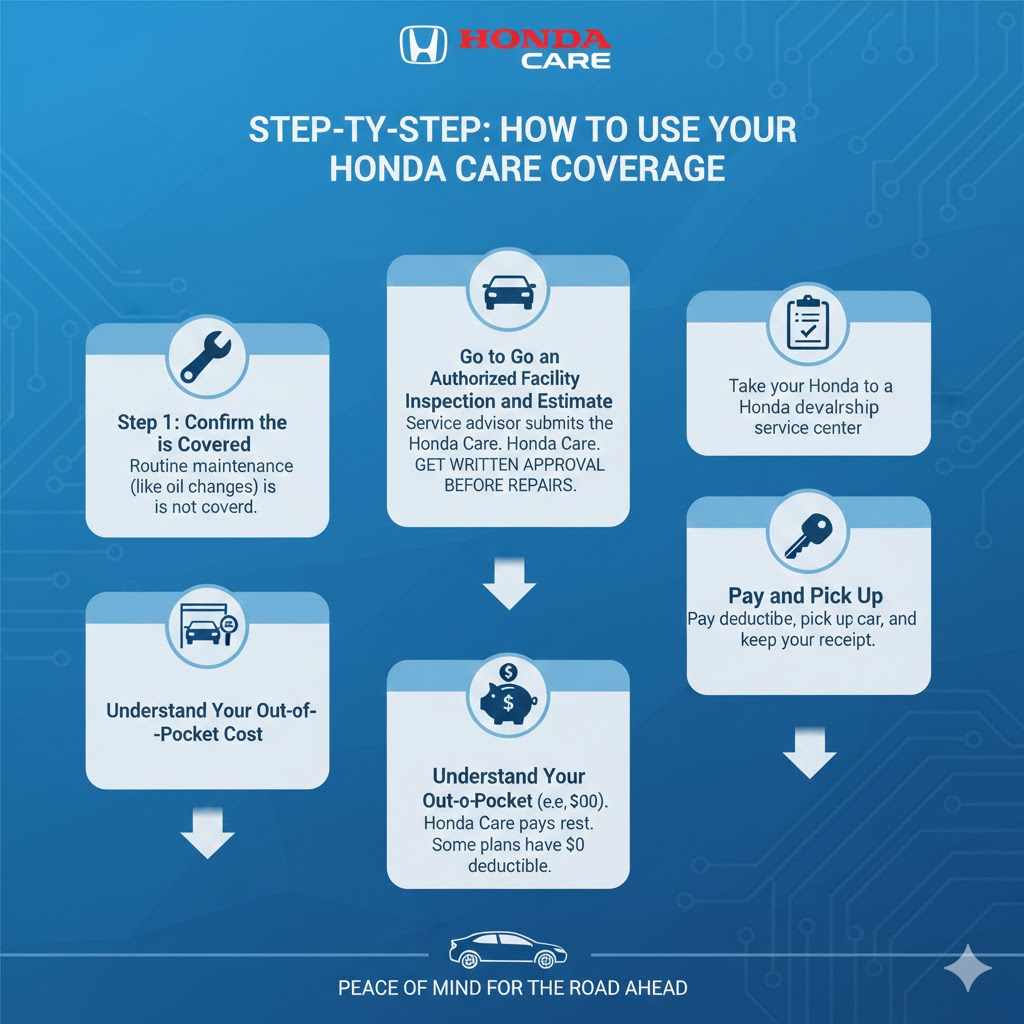
Step-by-Step: How to Use Your Honda Care Coverage When You Need It
Knowing what’s covered is only half the battle. Knowing how to make a claim smoothly is the real secret to peace of mind.
Step 1: Confirm the Issue is Covered
If your “Check Engine” light comes on, first, try to recall what you bought. Does your plan cover the specific system related to the light (e.g., transmission vs. emissions sensor)? If it’s a routine check (like an oil change warning), it’s not covered.
If you are unsure, proceed to Step 2, as the repair shop will confirm eligibility before work begins.
Step 2: Go to an Authorized Facility
For mechanical repairs under Honda Care, you should take your vehicle to an authorized Honda dealership service center. They are equipped with the necessary diagnostic tools and have direct communication lines with the contract administrator.
Step 3: Authorize the Inspection and Estimate
When you drop off the car, tell the service advisor you have an active Honda Care service contract. They will diagnose the issue and generate an estimate. They will then submit this estimate directly to the Honda Care administrator for pre-authorization.
Crucial Action: Do not let the technician begin any repair work until you see written confirmation that Honda Care has approved the repair and agreed to pay the covered amount.
Step 4: Understand Your Out-of-Pocket Cost (The Deductible)
Almost all service contracts, including Honda Care, have a deductible. This is the amount you agree to pay out of pocket for each covered repair visit.
For example, if the total repair bill is $1,200 and your deductible is $100, you pay $100, and Honda Care pays the remaining $1,100.
Secret Tip: Some Honda Care plans offer a $0 deductible option, or a lower deductible if you use a Honda dealer versus an independent shop, so verify this detail in your specific contract.
Step 5: Pay and Pick Up
Once the repair is complete, you pay only your deductible amount to the dealership. The dealer handles the rest of the payment directly with Honda Care. Keep your final repair receipt for your records.
Frequently Asked Questions (FAQ) About Honda Care
Q1: Does Honda Care cover my regular oil changes and tire rotations?
A: Generally, no. Honda Care mechanical plans cover mechanical failures, not routine scheduled maintenance like oil changes, filter replacements, or tire rotations. You would need a specific, separate Honda Maintenance Plan rider for that coverage.
Q2: Can I use my Honda Care plan at any mechanic, or only Honda dealers?
A: For the smoothest and most reliable experience, you should use an authorized Honda dealership. While some plans may allow repairs at specific, approved independent shops, using a non-authorized facility can void your claim or cause significant delays.
Q3: What happens if I sell my car? Can the coverage be transferred?
A: Yes, Honda Care service contracts are typically transferable to a new private owner for a small administrative fee. This is a great feature that helps increase your car’s resale value.
Q4: Is the deductible the same for every repair?
A: Yes, the deductible you select when purchasing the contract ($0, $50, $100, etc.) is usually applied per visit, regardless of how many components are fixed during that single service appointment.
Q5: If my navigation screen stops working, is that covered?
A: Factory-installed navigation and infotainment systems are often covered under higher-tier Honda Care AutoGuard plans, but they are frequently subject to mileage caps that are lower than the mechanical limits. Always check your specific contract details regarding electronics.
Q6: Does Honda Care cover recalls or warranty extensions?
A: No. Recalls and manufacturer warranty extensions are handled by Honda America and are provided free of charge to you, regardless of whether you have a Honda Care service contract or not. Honda Care is for issues arising after the factory warranty expires.
Conclusion: Driving Forward with Confidence
Navigating the details of extended service contracts can seem complicated, but now you know the essentials of what Honda Care covers. It is a robust system designed to protect you from the financial shock of major mechanical breakdowns on your engine, transmission, and drivetrain.
Remember the key takeaways: choose the tier that matches your driving style (especially regarding wear-and-tear items), always know your deductible, and understand that it covers failures, not maintenance. By taking the time to understand these essential secrets now, you ensure that your reliable Honda stays that way for years to come, allowing you to enjoy every drive without that lingering worry about the next big repair bill.