What Does V6 Mean on a Car? Engine Layout & Firing Order Explained
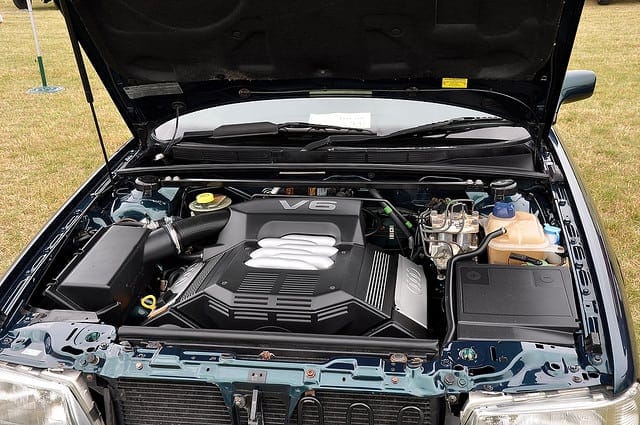
V6 means an engine with six cylinders arranged in two banks of three, set at an angle to form a V shape over the crankshaft — as opposed to an inline engine, which lines all its cylinders up straight. This layout is common in mid-size sedans, SUVs, and trucks because it packs more power than a 4-cylinder into a shorter, more compact space than a straight-6 or V8. This guide covers how a V6 actually works, why firing order isn’t the same across every V6, and the real power and fuel-economy trade-offs versus 4-cylinder engines. If you’re also trying to make sense of your dashboard, see what RPM actually means on the tachometer.
Quick Answer
V6 stands for a six-cylinder engine with two banks of three cylinders arranged in a V shape. It typically offers more power and smoother operation than a 4-cylinder, at the cost of worse fuel economy and higher complexity, while staying more compact than a straight-6 or V8.
What Does V6 Actually Mean?
The “V” describes the physical layout — two rows of cylinders angled toward each other like the letter V, sharing a single crankshaft — and the “6” is simply the cylinder count. Splitting six cylinders into two angled banks of three, rather than lining them up in a row, keeps the engine shorter front-to-back, which is why V6s fit transversely under the hood of front-wheel-drive cars where a straight-6 wouldn’t.
How a V6 Engine Works
Each of the six cylinders fires in sequence, and having two more cylinders than a 4-cylinder means power pulses arrive more frequently and more evenly throughout the RPM range. That’s the practical reason V6s tend to feel smoother than 4-cylinders: there’s less time between power strokes, so the engine has fewer noticeable vibrations. A misfire in just one of those six cylinders is also a common cause of a rough-running or knocking engine, which is why isolating the exact cylinder number matters.
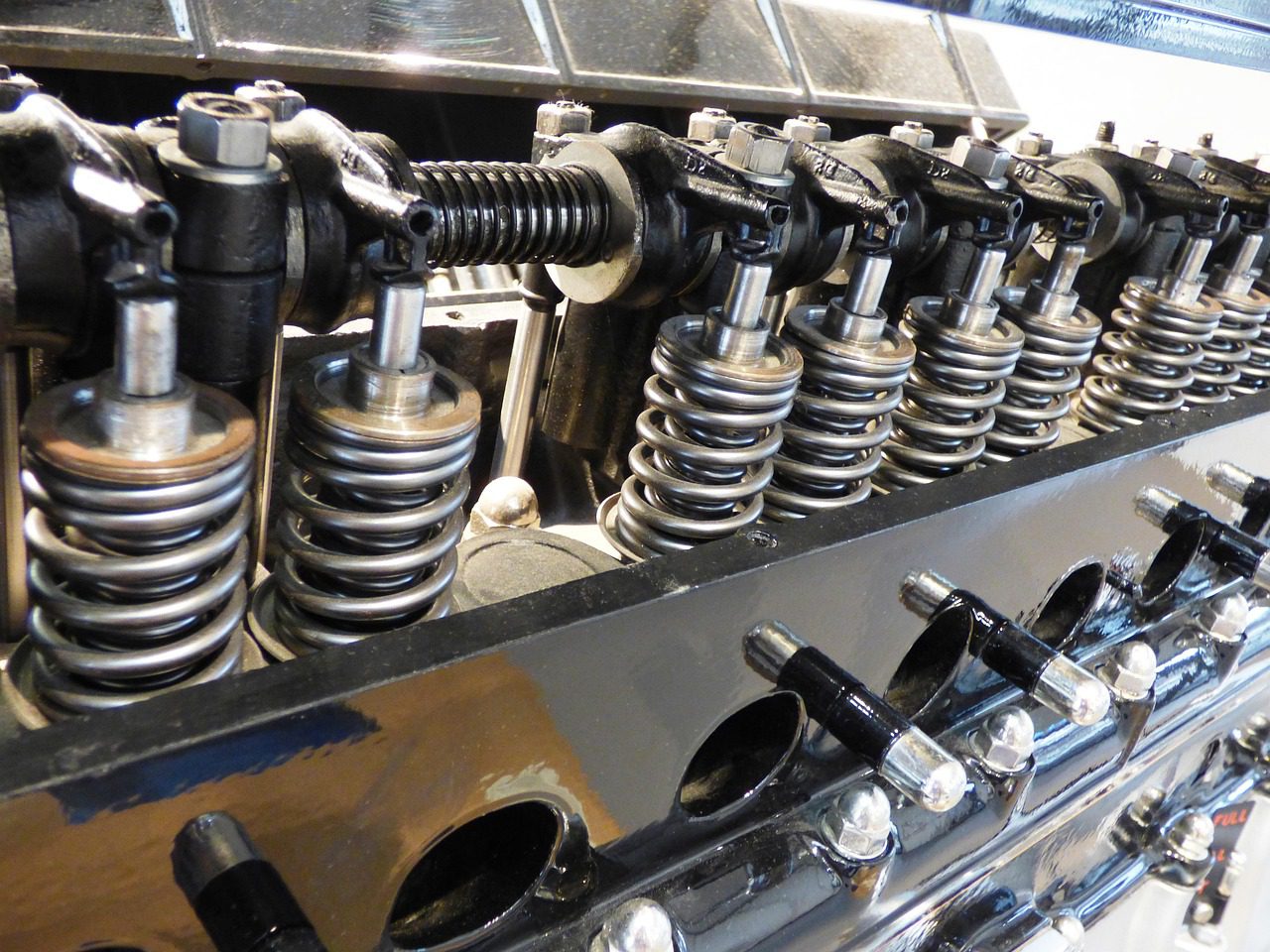
The crankshaft and connecting rods convert each cylinder’s up-and-down piston motion into the crankshaft’s rotation, which ultimately turns the wheels. Because the V-shaped layout lets the crankshaft be shorter than an equivalent straight-6’s, the whole assembly is more compact and, generally, lighter than a straight-6 of similar displacement.
Firing Order: Why There’s No Single Answer
A common claim is that “the” V6 firing order is 1-2-3-4-5-6, with odd-numbered cylinders on one bank and even-numbered on the other. That’s true for one specific engine family — GM’s 60-degree V6 (used in the 2.8, 3.1, 3.4, and related engines) — but it is not a universal rule. Ford V6 engines commonly use a 1-4-2-5-3-6 firing order instead, and different manufacturers number their cylinders differently in the first place, so the same firing sequence numbers don’t even map to the same physical cylinders across brands.
- GM 60-degree V6 family (2.8, 3.1, 3.4, 3100, 3400, 3500): firing order 1-2-3-4-5-6.
- Many Ford V6 engines: firing order 1-4-2-5-3-6.
- Always check your specific engine’s factory service manual or a firing-order reference chart before doing any ignition or spark plug wire work — guessing wrong can cause a rough-running or non-starting engine. If your V6 is already misfiring, checking the throttle position sensor and pulling the cylinder-specific trouble code are good next diagnostic steps.
📊 Ford V6 engines commonly use a 1-4-2-5-3-6 firing order, while GM’s entire 60-degree V6 family (2.8, 3.1, 3.4, 3100, 3400, 3500) shares the same 1-2-3-4-5-6 order — proof the “correct” firing order genuinely depends on the specific engine, not V6 engines in general.
“GM and Ford number their cylinders differently, even when the numeric firing sequence might appear similar.”
Related Tools
- Best for: Replacing a full set of coils and plugs on a V6 misfire or rough-idle repair
- Why we picked it: Matches the exact V6 firing-order and cylinder-bank layout this guide explains, sold as a complete 6-cylinder set
- Main drawback: Fitment is model-specific — confirm your exact V6 engine code before ordering
 |
ANCEL AD310 OBD II Scanner Best for: Reading the misfire code that points to which of the 6 cylinders is at fault |
Check on Amazon |
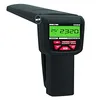 |
Innova 3568 Digital Timing Light Best for: Verifying ignition timing on older V6 engines with adjustable distributors |
Check on Amazon |
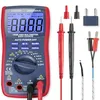 |
AstroAI Digital Multimeter Best for: Testing coil resistance and wiring continuity across all 6 cylinders |
Check on Amazon |
As an Amazon Associate we earn from qualifying purchases.
Advantages and Disadvantages of a V6 Engine
Advantages
- Smoother power delivery across the RPM range than a 4-cylinder
- More compact than a straight-6 or V8 of similar output
- Generally more power available than a 4-cylinder of similar size
Disadvantages
- More expensive to manufacture and repair than a simpler 4-cylinder due to the added cylinders and complexity
- Typically less fuel-efficient than a 4-cylinder, since more displacement and more cylinders burn more fuel
- Usually heavier than a comparable 4-cylinder, which can affect handling and efficiency. Some automakers address the fuel-economy gap with a dual-clutch transmission instead of a traditional automatic.
Frequently Asked Questions
Is a V6 Engine Good?
Yes — a V6 offers a practical balance of power and fuel efficiency, making it suitable for a wide range of vehicles. Its two-bank layout allows for smoother power delivery and better performance across the RPM range than a 4-cylinder.
Does V6 Mean Faster?
Often, yes. A V6’s larger displacement and more even power delivery across the RPM range can make it quicker than a comparable 4-cylinder, though actual speed also depends on the vehicle’s weight, gearing, and tuning.
Which Is Better, a 4-Cylinder or a V6 Engine?
A V6 generally offers more power and smoother operation thanks to its larger displacement and more evenly distributed power pulses. A 4-cylinder is usually lighter, cheaper to maintain, and more fuel-efficient. Which is “better” depends on whether you prioritize power or efficiency.
Does a V6 Use More Gas Than a 4-Cylinder?
Typically, yes. A V6’s larger displacement and extra cylinders burn more fuel to produce their extra power, so V6-equipped vehicles usually see lower fuel economy than the same model with a 4-cylinder engine.
Is the V6 Firing Order Always 1-2-3-4-5-6?
No — that specific order is used by GM’s 60-degree V6 family, but many Ford V6 engines use 1-4-2-5-3-6 instead. Always check your specific engine’s factory firing order before doing ignition work.
The Bottom Line
V6 simply means six cylinders split into two angled banks sharing one crankshaft — a layout that trades some of a 4-cylinder’s fuel economy for smoother, more evenly-delivered power in a package still more compact than a straight-6 or V8. The one detail worth remembering: there is no single “correct” V6 firing order or cylinder numbering scheme across every manufacturer, so always confirm yours before doing ignition work.
Products related to this article
Sponsored / affiliate links. As an Amazon Associate I earn from qualifying purchases. I may earn additional commission from eligible campaigns.