What Happens If Baby Failed Car Seat Test: What It Means
A failed car seat test usually means one of two things: a newborn did not keep safe breathing or oxygen levels during a hospital challenge, or a car seat failed a consumer safety test or recall review. Ignoring the result can delay discharge, raise crash risk, or leave an unsafe seat in regular use. This guide explains what each failure means and what to do next.
What does “failed car seat test” mean?


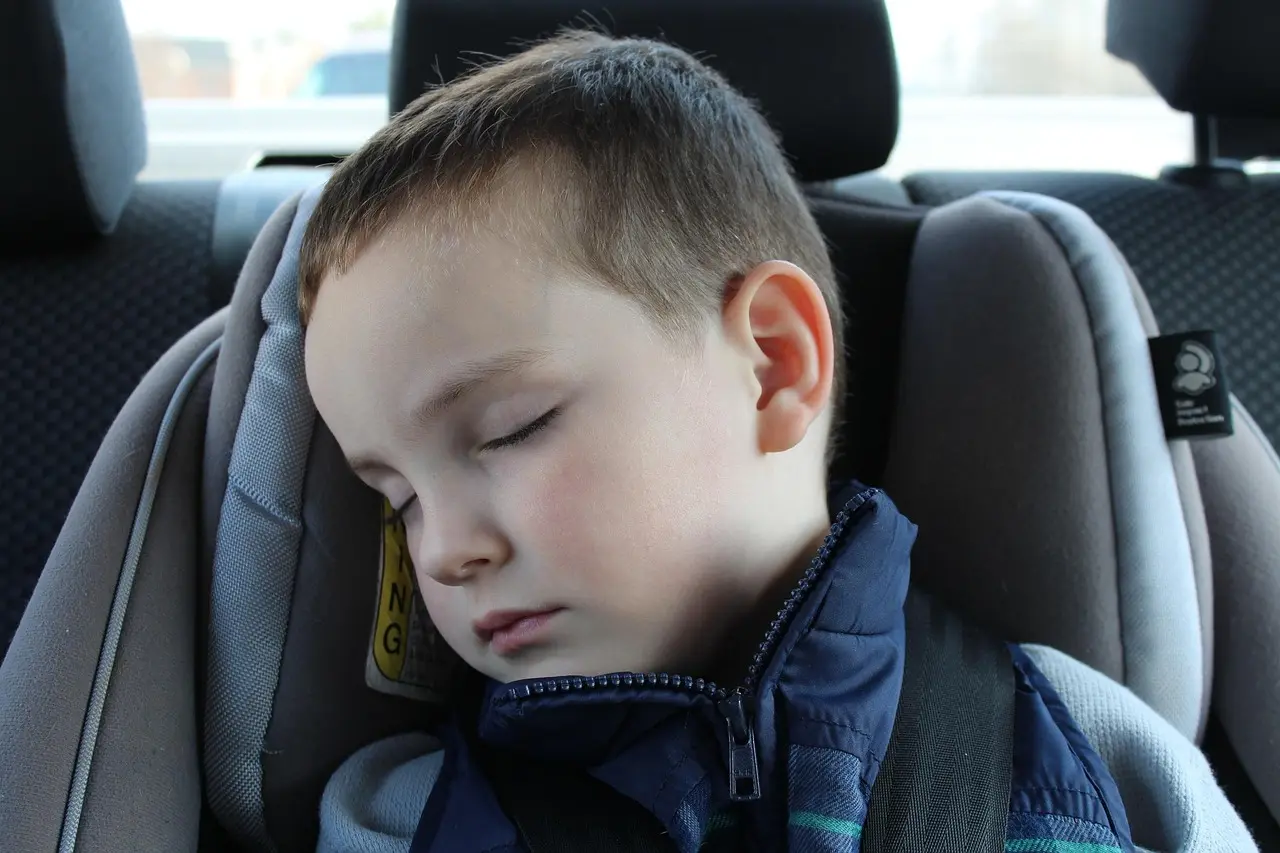
The phrase covers two very different problems. In a hospital, a newborn may fail a car seat challenge because breathing, heart rate, or oxygen saturation dropped in a rear-facing infant seat during a supervised check before discharge. In consumer testing, the seat itself may fail safety review, performance testing, or a recall investigation.
Why the same phrase causes confusion
Parents often hear “failed car seat test” and assume one explanation. That can blur a baby-specific discharge screen with a product-level safety problem. The first concerns the infant’s tolerance of a seated position. The second concerns how the restraint performs in testing, fit checks, or defect review.
How to tell which failure path you are dealing with
Ask one simple question: was the “test” done on the baby in the hospital, or on the seat model by a testing body or recall notice? If the issue came from a nursery, NICU, or pediatric team, it is a hospital car seat challenge. If it came from a news item, database, retailer notice, or manufacturer letter, it is a seat-level issue.
📊 CR’s crash tests simulate 35-mph frontal crashes. Source: How We Test Child Car Seats.
What happens after a baby fails a car seat challenge?
A hospital car seat challenge checks whether a newborn can stay stable in a rear-facing infant seat before discharge. Staff watch breathing, heart rate, and oxygen levels. If the baby does not pass, the care team may repeat the test, extend monitoring, or arrange follow-up before sending the baby home.
What the test checks before discharge
This screening is used for infants, often preterm or medically fragile, before leaving the hospital. The seat is set up in a typical travel position, and the baby is observed for signs of desaturation, slowed breathing, or heart rate changes. It is a physiologic screen, not a crash test.
Why a repeat test is common
A single failure does not automatically mean a long-term problem. Some babies need a later repeat after more maturity, a different position, or a change in timing around feeds and sleep. The team may also want more observation to see whether the result was isolated or repeatable.
Same-day action plan after a hospital failure
- Call the NICU, newborn nursery, or pediatric team before discharge paperwork moves forward.
- Ask whether the car seat challenge will be repeated and when.
- Write down the exact result, the time of the test, and any symptoms staff described.
- Confirm whether the team wants monitoring, a follow-up visit, or a different transport plan.
- Ask who should review the seat setup if the baby seemed uncomfortable or poorly positioned.
Why would a baby fail the hospital test?
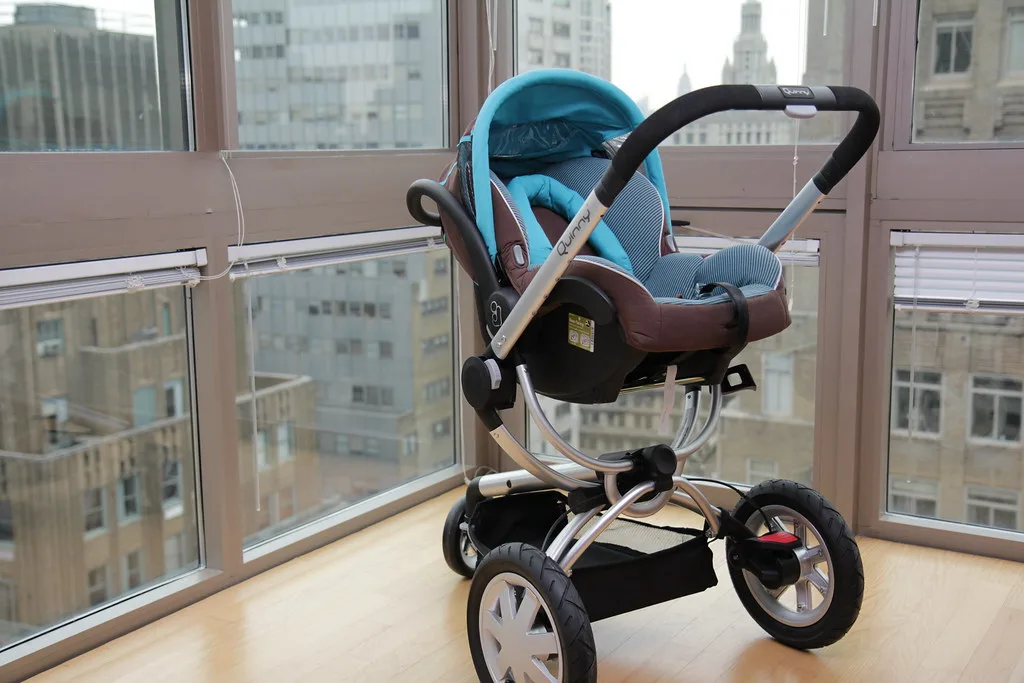
Common reasons include immature breathing control, oxygen drops, and heart rate changes during the seated position. Positioning matters too. A newborn in a rear-facing infant car seat may struggle if the recline angle is off, the head tips forward, or the body sits poorly for the baby’s size.
Positioning and size issues in a rear-facing infant seat
A rear-facing infant car seat is designed for newborn transport, but angle and fit still matter. Too upright can let the head fall forward. Too reclined can change the baby’s posture in another direction. The strap fit also matters, because loose straps allow more slumping.
When to ask about a CPST or medical recheck
If the baby fails more than once, ask whether a child passenger safety technician, often called a CPST, should review the setup. Also ask whether the pediatric team wants a medical recheck before another test. That separation matters: one question is fit, the other is infant readiness.
Say your preterm newborn is small and seems to do fine in a bassinet but drops oxygen in the car seat after a short time. That pattern points the team toward position or physiologic tolerance, not a defect in the seat itself. The next step is clinical review, not guessing.
What if the car seat itself failed safety testing?
If a seat failed safety testing, the issue is with the product, not the baby. In the U.S., child restraint standards reference NHTSA’s Federal Motor Vehicle Safety Standards, and FMVSS 213 is the child restraint standard. A failed seat may later lead to a recall and one of several remedies.
How FMVSS 213 fits into U.S. testing
FMVSS 213 is a U.S. benchmark for child restraint systems. It is the standard that manufacturers and regulators use to measure how a seat performs under defined conditions. A product can meet that benchmark and still be reviewed later if a defect is found in the field.
What Consumer Reports-style testing measures
Consumer Reports evaluates child car seats for crash protection, fit to vehicle, and ease of use. Its crash tests simulate 35-mph frontal crashes. Technicians install each seat in all unique rear-seat positions of five vehicle types, using both LATCH anchors and a vehicle’s seat belt. Ease-of-use testing includes instructions, strap adjustment, and seat weight. (consumerreports.org)
How crash test dummies are used in simulated crashes
Crash tests use a crash test dummy to represent a baby or child. The dummy is secured in the seat during simulated crashes so testers can study how the restraint manages impact forces. That is very different from a hospital car seat challenge, which watches the baby’s breathing and oxygen levels.
Failure-path checklist: hospital test vs seat test
These two failure paths need different calls, different paperwork, and different follow-up. The table below separates what to do the same day, who to contact, and what to save so you can confirm whether the issue is with the baby, the installation, or the seat itself.
| Hospital car seat challenge failure | Car seat product test failure |
|---|---|
| Call the NICU, newborn nursery, or pediatric team the same day. | Check the manufacturer notice and NHTSA recall lookup the same day. |
| Ask whether the baby needs repeat testing, monitoring, or follow-up. | Ask whether the seat needs a repair kit, replacement, or refund. |
| Document the oxygen, breathing, or heart rate issue described by staff. | Save the model name, serial number, date code, and recall reference. |
| Ask whether a CPST should review recline angle and strap fit. | Ask whether installation in your vehicle changes the concern. |
| Save discharge notes and any repeat-test instructions. | Save emails, case numbers, and photos of the label and base. |
How to confirm whether the problem is baby-fit, installation, or the seat itself
Start with the source of the failure. If a hospital gave the result, the baby’s tolerance is the issue until a clinician says otherwise. If a manufacturer or testing organization issued the concern, review the model number and fit instructions. Then check whether the seat is installed correctly and whether the straps are snug.
How fit and installation affect results

Fit and installation can change both hospital screening and consumer safety performance. Rear-facing infant car seat setup depends on recline angle, the vehicle attachment method, and strap fit. A seat that is right for one baby may be poorly suited for another if the recline or strap setup is off.
Rear-facing recline angle
For newborns, the recline angle matters because head control is limited. Too much upright positioning can worsen chin-to-chest slump. Too much recline can create a different fit problem. Use the manufacturer’s angle guidance, not a guess based on the car’s seat cushion alone.
LATCH anchors versus seat belt
LATCH anchors are one approved installation method and are part of fit-to-vehicle evaluation. A seat may install well with LATCH in one car and better with the seat belt in another. That is why technicians often check both methods. The right answer depends on the seat instructions and the vehicle.
Strap fit and other setup checks
Strap fit should be snug and properly adjusted. Loose straps can let the body shift, while the wrong slot height can reduce control. Check the manual for the correct infant insert use, buckle position, and strap tension. If tightening feels difficult, note that for a CPST or the manufacturer.
A common first-timer mistake is assuming the seat is “bad” when the real problem is a loose strap fit and a too-upright install in the middle rear seat. A CPST can separate those issues quickly by checking the angle, the belt path, and the baby’s position together.
How to check for recalls and next steps from the manufacturer
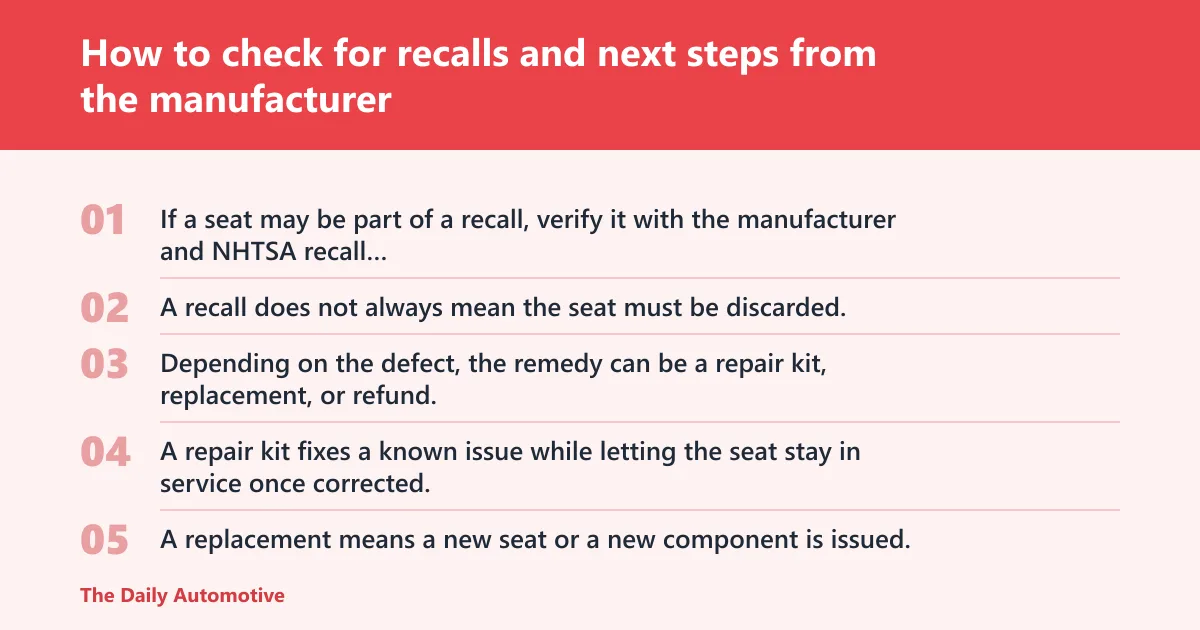
If a seat may be part of a recall, verify it with the manufacturer and NHTSA recall lookup. A recall does not always mean the seat must be discarded. Depending on the defect, the remedy can be a repair kit, replacement, or refund.
What a repair kit, replacement, or refund means
A repair kit fixes a known issue while letting the seat stay in service once corrected. A replacement means a new seat or a new component is issued. A refund means the company is ending use of that product and returning value instead of repairing it.
What proof to keep if you contact support
Keep the seat’s model number, serial number, date of manufacture, photos of labels, and a copy of the recall notice. Save the date and time of any call or chat, the case number, and the name of the person who handled it. Those details make follow-up easier if the answer changes.
What standards are used to test child car seats?
In the U.S., the core federal reference is NHTSA’s FMVSS 213, the child restraint standard. Consumer Reports also evaluates seats for crash protection, fit to vehicle, and ease of use, including 35-mph frontal crash simulations and installation checks in multiple vehicles and seating positions. Those are separate from a hospital screening.
What “safe” does and does not mean
Good test results matter, but they are not a promise that every child and every vehicle will fit the same way. A high score on one seat does not erase the need to match the model to the baby’s size, the vehicle seat, and the correct installation method. Always check the labels and instructions.
Frequently asked questions
What does it mean if baby failed car seat test?
It usually means a newborn did not maintain stable breathing, heart rate, or oxygen levels during a hospital car seat challenge. That result calls for medical follow-up, not panic. The care team may repeat the test, suggest monitoring, or review whether the seat position contributed to the result.
Why would a baby fail a car seat test in the hospital?
Common reasons include immature breathing control, oxygen drops, heart rate changes, and a seating position that is too upright or poorly matched to the baby’s size. The test is about physiologic tolerance before discharge. It is not the same as a crash test or a recall review.
How long do babies need to repeat the car seat test?
There is no single fixed timeline because the answer depends on the hospital, the baby’s condition, and why the first test was not passed. Some babies are retested later the same day or after additional observation. Others need follow-up after the care team addresses a medical concern first.
Can a car seat fail safety testing and be recalled?
Yes. A failed seat may lead to a recall, and the remedy may be a repair kit, replacement, or refund. The important step is to confirm the exact model, date code, and recall notice. Do not assume a hospital failure and a product recall mean the same problem.
Products related to this article
Sponsored / affiliate links. As an Amazon Associate I earn from qualifying purchases. I may earn additional commission from eligible campaigns.
 Seat Belt Covers for Kids, 2 in 1 Car Seat Strap Covers & Auto Seatbelt Pillow for Kids nap, Car Travel Pillow & Strap Pads Cushion for headrest, Neck/Shoulder Support, fit Child, Adult, Grey;
 Universal Child Car Seat Chest Harness Clip – Kids Seat Belt Adjuster & Anti Escape Buckle Guard, Child Safety Car Seat Belt Lock Clip, Toddler Seatbelt Locking Clip for Stroller & Booster (Gray)