Best Car Armrest Pad for Daily Driving (2026): Research Shows
For daily driving, a commonly recommended car armrest pad is a vehicle-specific model that locks to the console. Choose a universal pad only if it uses straps, a grippy base, and the correct width. A poor fit slides, shifts your elbow, and can get in the way of the shifter or lid. This guide sorts armrest pads by comfort, fit, and how well they stay in place, then shows which problems each type solves best.
Quick comparison
| Product | Badge | Best for | Price | ||
|---|---|---|---|---|---|
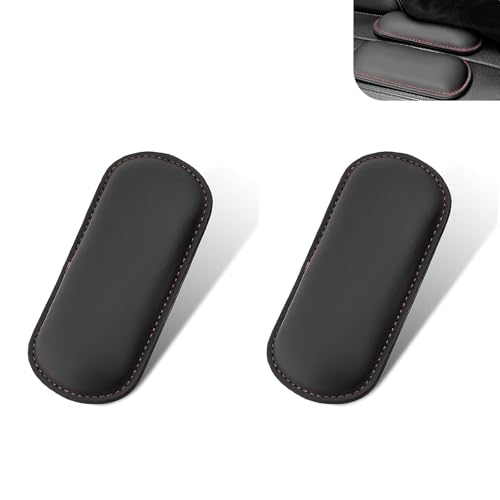 |
Icyfond 2PCS Car Door Armrest PadsIcyfond | Our pick | 2PCS · universal fit · black | $11.99
Price as of 3 Nov 2026
|
View |
 |
Stacool Upgraded Car Center Console Cover,Microfiber LeatherStacool | Also great | Universal cover · storage bags · black | $6.99
Price as of 3 Nov 2026
|
View |
 |
winterrock 2PCS Car Arm Rest Elbow Padswinterrock | Also great | 2PCS · universal fit · black | $7.99
Price as of 3 Nov 2026
|
View |
 |
nvojeaf Car Center Console Armrest Cushionnvojeaf | Upgrade pick | Single cover · universal fit · black | $15.99
Price as of 3 Nov 2026
|
View |
 |
SKTU Auto Car Armrest Extender Support Elbow & Forearm ArmSKTU | Pair with it | Adjustable extender · organizer · black | $39.91
Price as of 3 Nov 2026
|
View |
This quick comparison groups the main armrest styles by the daily-driving problem they solve best. Fit and mounting stability come first, then padding feel, then storage.
How we chose
The picks below are based on manufacturer specs, listing details, and published buyer feedback. The main filters were mounting style, fit and dimension checks, comfort versus storage, and vehicle compatibility details.
Mounting stability matters more than thick padding. A soft pad that shifts under your elbow creates a worse commute than a firmer pad that stays put.
We also separated options by vehicle type, because a commuter sedan, a crossover, a work van, and a restomod do not need the same armrest approach.
Icyfond 2PCS car door armrest pads: best for elbow pressure
This two-piece set is for drivers who want softer elbow support in a common commuter car, crossover, or family SUV without replacing the whole console. The memory foam aims to reduce elbow pressure, and the adhesive backing makes placement simple.
Its main advantage is comfort at a low buy-in. The drawback is that adhesive pads depend on a clean surface and a stable base, so they are best for a console that already fits your arm well and does not need extra height or storage.
Stacool center console cover: best for comfort plus small storage
This universal cover fits drivers who want a softer top and a small place for loose items. The built-in storage bags help if your console top is narrow and you want somewhere to stash a phone cord, receipt, or parking card.
The elastic band helps the cover fit firmly, which matters more than the added padding. The tradeoff is obvious: storage can help with daily clutter, but it can also add bulk around controls or a lid if your console is already crowded.
Winterrock 2PCS car arm rest elbow pads: best for pressure relief
This set suits drivers who want a simple pressure-relief layer on a central control armrest, door area, or console top. The non-slip base is the key detail here, because a pad that stays put is more useful than one that feels soft for five seconds and then slides.
Because it comes as two pads, it is handy for a driver and passenger setup. The drawback is that universal pads still need enough top surface to sit flat; narrow or curved armrests can make even good padding feel awkward.
Nvojeaf armrest cushion: best for low or hard consoles
This pad is aimed at drivers whose center armrest sits too low and leaves the elbow unsupported. The added height is the point, and that can help bring your forearm into a more natural position on longer drives.
It also protects the top surface from wear. The tradeoff is that extra height can become a problem if the pad pushes your arm too high, blocks a lid, or makes it harder to rest your shoulder naturally.
SKTU armrest extender support: best for reach and extra support
This is the pick for drivers who need more than a simple pad. The adjustable height can help if the stock armrest sits too low or too far away, and the added organizer space gives it a more utility-focused feel.
That extra adjustability can make it more useful on long commutes, but it also makes fit checks more important. If your console area is tight, an extender can interfere with the seat belt area, the shifter, or nearby controls.
What is the best car armrest pad for daily driving?
The best car armrest pad for daily driving is the one that solves your main problem without wobble. For most commuters, that means a vehicle-specific or securely mounted option that sits where your arm naturally falls. If your console is plain but stable, a universal pad can work well.
Start with the pain point. Elbow pressure calls for softer padding. A low console calls for added height. A narrow or awkward console calls for a better shape and tighter fit. If the armrest moves while you drive, comfort stops mattering.
Universal console pad
A universal console pad is the easiest route for common commuter cars, crossovers, and family SUVs. These pads strap over or adhere to the top of an existing center console, add extra padding and a bit of height, and are easy to install and remove.
They are usually the lowest upfront cost, but the fit can be hit or miss. Universal products often look more like an add-on than a factory part, so check width, length, and height before you buy.
Replacement or add-on center console
An add-on or replacement center console sits on top of a plain tunnel or replaces a basic factory console. That makes it a better route for older compacts, work vans, and base-model sedans where the stock setup is bare or too simple.
These can bring comfort and storage together, but they need more careful fit checks than a simple pad. Tunnel shape, console height, and lid clearance matter here, because a replacement that looks right can still sit too high or too far back.
Seat-mounted armrest
A seat-mounted armrest bolts or clamps to the side of a seat frame and swings up or down. This style is common in trucks, business cars, and vans, especially when the seat and console layout leave no good place for a top-mounted pad.
Seat-frame compatibility matters most. The mounting hardware has to grip a solid structure, and the swing range has to clear the seat, belt buckle, and nearby trim. If the frame is wrong, the armrest can feel loose or sit at a poor angle.
Custom door-panel armrest
Custom door-panel armrests attach to or are built into the door, and they are common in hot rods and restomods. Some are simple adhesive pads, while others are part of bespoke upholstery work where appearance matters as much as comfort.
This route can look right in a classic cabin, but the door panel has to support the load. If the pad is only decorative, it may help with touch comfort without giving real arm support on a long drive.
Universal console pads: best for commuters
Universal console pads work best when you want quick comfort for a typical daily driver and you do not want to replace factory parts. They suit common commuter cars, crossovers, and family SUVs because they add padding without turning the cabin into a custom project.
The main benefit is simple: less elbow pressure on a hard console top. The main risk is a bad fit, which can make the pad slide, twist, or sit too far back for your arm to land naturally.
What to check before buying a universal pad
Measure the console top before you order. Compare length, width, and height against the listing, then check whether the mounting method is straps, adhesive, or a grippy base. If the pad is wider than the lid or too tall for the seat position, it will get in the way.
Say your console is 11 inches wide and the pad overhangs both sides. That extra width may press into the seat bolster or block the lid from opening cleanly. A pad that “fits” in a loose sense is not enough if it interferes with daily use.
When added height helps and when it gets in the way
Extra height helps when the stock armrest is low enough that your elbow drops and your shoulder lifts. It gets in the way when the pad pushes your forearm too high or changes the reach to the shifter, cupholders, or console latch.
A common mistake is choosing a car armrest pad only because it feels plush, without checking whether it stays supportive during long daily commutes. A softer pad can still be wrong if it raises the arm too much or leaves the elbow floating at the edge instead of resting flat.
Seat-mounted armrest: best for trucks and vans
Seat-mounted armrests are often the better answer in trucks and vans because they attach to the seat frame instead of depending on a small console lid. They swing up or down, which gives more flexibility when the cabin layout is tight.
These are the most dependent on hardware quality. A solid seat frame and proper brackets matter more than padding thickness, because a loose mount will move every time the seat flexes or the driver shifts position.
Why frame compatibility matters most
Seat-frame compatibility decides whether the armrest can mount securely at all. If the seat structure does not match the bracket pattern or has weak attachment points, the armrest can wobble, sit crooked, or fail to hold up over time.
Check the vehicle manual and the product listing carefully. If the seller does not list your model or seat type, assume you need more confirmation before buying.
Why clamps and brackets need solid mounting points
Clamps and brackets put force into the seat structure every time you lean on the armrest. That force has to go somewhere, so the mount needs a strong, stable point instead of soft trim or a thin panel.
Loose hardware tends to loosen more. For a daily driver, that usually means more rattles, more movement, and more maintenance than a top-mounted pad.
Common tradeoffs in reach and swing range
Seat-mounted arms can improve support, but they may not line up with the driver as neatly as a center-console mount. The swing range also matters, because an armrest that clears the seat in one position may hit the console or belt in another.
If you share the vehicle, the adjustment range matters even more. The right armrest should work for the driver without making the passenger side awkward or cramped.
Replacement console: best for plain interiors
A replacement or add-on console is the right choice when the cabin needs more than a cushion. Older compacts and base-model sedans often use this route because the factory armrest is basic, small, or missing storage altogether.
It is the best fit when comfort and storage both matter. The drawback is install sensitivity: tunnel shape, console height, and compatibility with the seat and shifter all need attention before you buy.
When storage matters as much as padding
If your daily drive needs a place for keys, coins, cards, or cables, a replacement console can make more sense than a simple pad. Storage can reduce clutter and keep items from sliding around the cabin.
The tradeoff is size. More storage usually means more structure, and more structure means more chances to interfere with legroom, seat travel, or the parking brake.
Fit checks for tunnel shape and console height
Measure the tunnel width where the console will sit, then compare it with the console base and mounting points. Also check the final height from seat to armrest so you do not end up with a support that is too low or too tall for your elbow.
If the console sits too far back, your shoulder will reach for it. If it sits too far forward, your wrist may hit the edge instead of resting on it.
Car armrest pad checklist
This checklist is the fastest way to screen out the common failures before you buy. Use it as a text-only comparison tool, not as a substitute for the product listing or the vehicle manual.
| Vehicle type | Likely armrest style | Three must-measure dimensions | Top failure risk |
|---|---|---|---|
| Commuter car, crossover, family SUV | Universal console pad | Console length, console width, lid or pad height | Sliding or blocking the shifter lid |
| Older compact, base-model sedan, work van | Add-on or replacement center console | Tunnel width, console height, front-to-back clearance | Wrong tunnel shape or lid interference |
| Truck, business car, van | Seat-mounted armrest | Seat-frame attachment spacing, armrest swing clearance, seat-to-console gap | Unsupported seat frame or loose bracket |
| Hot rod, classic car, restomod | Custom door-panel armrest | Door-panel width, mounting depth, arm reach from seat | Poor panel support or awkward reach |
Simple yes/no rule for universal buyers: buy a universal pad only if the console top is flat enough to support it, the dimensions match within the listing limits, and the mount can stay secure without blocking controls. If any one of those answers is no, skip it.
Do not buy if: it wobbles when pressed, blocks cupholders or controls, or relies on a seat frame that is not supported by the vehicle or product instructions.
Which one should you buy?
Buy universal if your console is stable and the dimensions match. That is the best route for daily commuters who mainly want less elbow pressure and a little extra height, not a major cabin change.
Buy vehicle-specific if you want a more integrated fit. Vehicle-specific armrests are designed around named models or detailed compatibility lists, and they typically feel more solid and sit where your arm naturally falls. They usually cost more, but that extra fit quality matters if your commute is long.
Choose a replacement console if your current setup is too plain and you need storage as well as support. Pick a seat-mounted armrest when the vehicle is a truck or van and the seat frame can take a proper bracket. Use a custom door-panel armrest when the interior is a classic or restomod and appearance matters as much as comfort.
Picture a compact sedan with a narrow lid and a driver who keeps bumping the shifter. A wider universal pad would make that worse, while a vehicle-specific pad or a replacement console can solve the reach problem without adding wobble.
Frequently asked questions
How do I know if a universal car armrest pad will fit my console?
Measure the console length, width, and height, then compare those numbers to the listing. Check whether the pad uses straps, adhesive, or a grippy base. If the pad overlaps controls, blocks the lid, or leaves no flat support, it is the wrong fit.
What size armrest pad do I need for my car center console?
You need a pad that matches the console top closely enough to sit flat without hanging over the edges. The right size depends on the console’s length, width, and height, plus seat position. A pad that is too tall or too wide can feel worse than no pad at all.
Should I choose a console pad or a full replacement armrest?
Choose a console pad if you want a quick comfort fix for a stable console. Choose a full replacement or add-on console if you also need storage, a better armrest position, or a solution for a plain tunnel. The right answer depends on fit, not just padding feel.
How stable should an armrest pad feel while driving?
It should feel fixed in place during normal arm movement and braking. A little compression is fine. Wobble, sliding, or side-to-side shift is not. If the pad moves when you rest your elbow on it, that is a fit problem, not a comfort feature.
What’s the difference between a universal armrest pad and a vehicle-specific one?
A universal armrest pad is meant to fit many vehicles and is usually the lowest upfront cost. A vehicle-specific armrest is designed around named models or detailed compatibility lists, so it usually fits more securely and sits more naturally. Universal is simpler; specific is usually more integrated.
Products related to this article
Sponsored / affiliate links. As an Amazon Associate I earn from qualifying purchases. I may earn additional commission from eligible campaigns.