Back to the Future Car: The DeLorean DMC-12 (Facts vs Fiction)
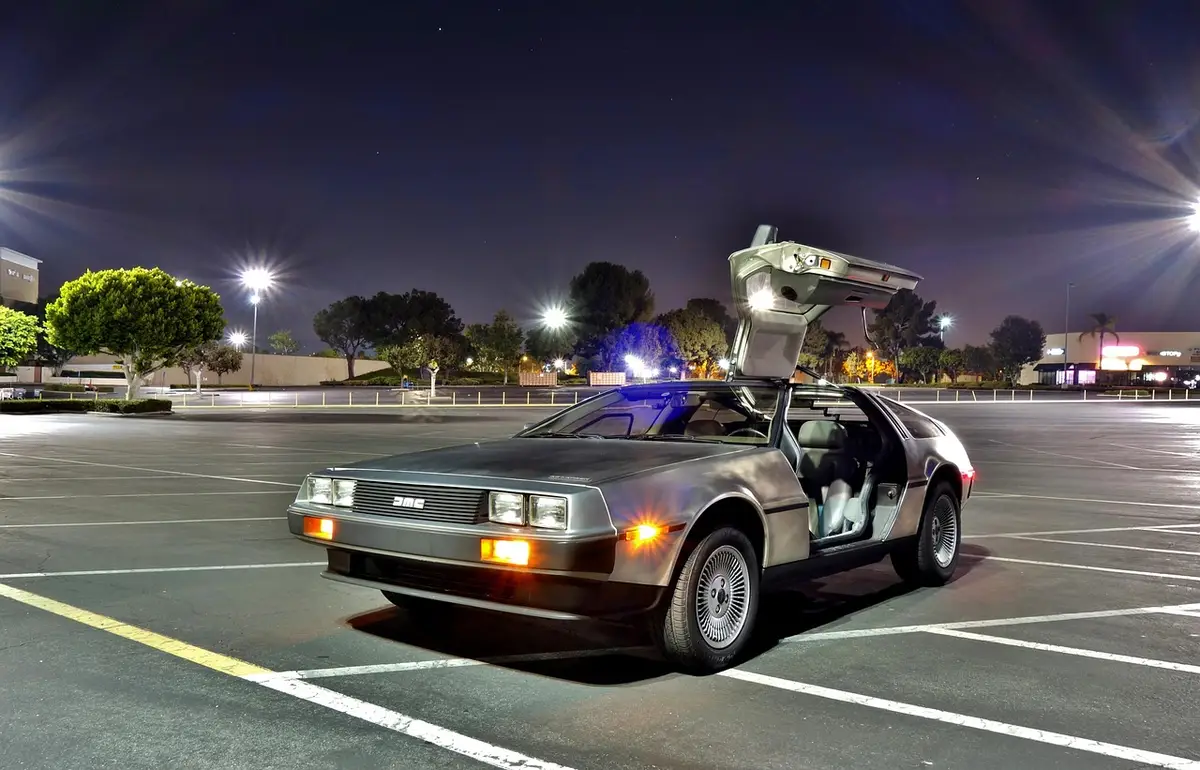
The car in Back to the Future is a DeLorean DMC-12, a stainless steel, gull-wing sports car that was built in Northern Ireland from 1981 to 1983, a couple of years before the film reached theaters in 1985. The time travel parts, such as the Flux Capacitor and time circuits, are movie props added to a real production car. This page separates the real car from the film fiction and shows what each source supports.
What Is the Car in Back to the Future? The DeLorean DMC-12
The short answer is a DeLorean. The long answer is that “DeLorean” is the maker and DMC-12 is the model. According to the Classic DeLorean Motor Company buyers guide, more than 9000 of them were manufactured between 1981 and 1983 just outside Belfast, Northern Ireland, and the car remains well known mainly because of the Back to the Future connection.
That matters for anyone searching “back to the future car name”. The movie did not invent a vehicle. The filmmakers took an existing, unusual production car and dressed it as Doc Brown’s time machine. If you want to explore the movie side as a collector, one book covers it directly.
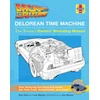 |
Best Book Pick for Time Machine Fans Back to the Future: DeLorean Time Machine: Doc Brown’s Owner’s Workshop Manual (Haynes Manual)
As an Amazon Associate we earn from qualifying purchases. Spec-based pick from the listing, not a hands-on test. |
Below you will find the real specifications, a labeled table of film fiction versus the real DMC-12, where the main film car is today, and a short list of common myths. For a different angle on the same topic, our companion article asks what car was used in Back to the Future and how the models in the movies were handled.
Back to the Future Car Name: Real DMC-12 Facts
Here is what the manufacturer-side sources say about the real car, before any movie modifications. Figures come from the Classic DeLorean Motor Company (Texas) buyers guide and its About Us page, both read in full for this update.
| Topic | What the source says | Source |
|---|---|---|
| Maker and model | DeLorean DMC-12, built just outside Belfast, Northern Ireland | Classic DeLorean buyers guide |
| Production years | 1981 to 1983; more than 9000 built (the About Us page says approximately 9,000) | Buyers guide and About Us page |
| 1981 output | About 6,700 cars in 1981 (VIN range BD000500 to BD007199) | Buyers guide |
| Engine | 2.8 liter all-aluminum V6, 130 hp, built jointly by Peugeot, Renault and Volvo (PRV) | Buyers guide |
| Transmission | Either a 3-speed automatic or a five-speed manual | Buyers guide |
| Interior | Grey or black were the only factory choices | Buyers guide |
| Paint | None from the factory; every car left in bare stainless steel | Buyers guide |
| New price | $25,000 or more in 1981 | Buyers guide |
Notice what is missing: a quoted top speed or 0 to 60 time. We did not find one on the manufacturer-side pages we read, so we are not printing one. Any figure you see elsewhere should be checked against a primary source.
Gull-Wing Doors and the Stainless Steel Body
Gull-wing doors
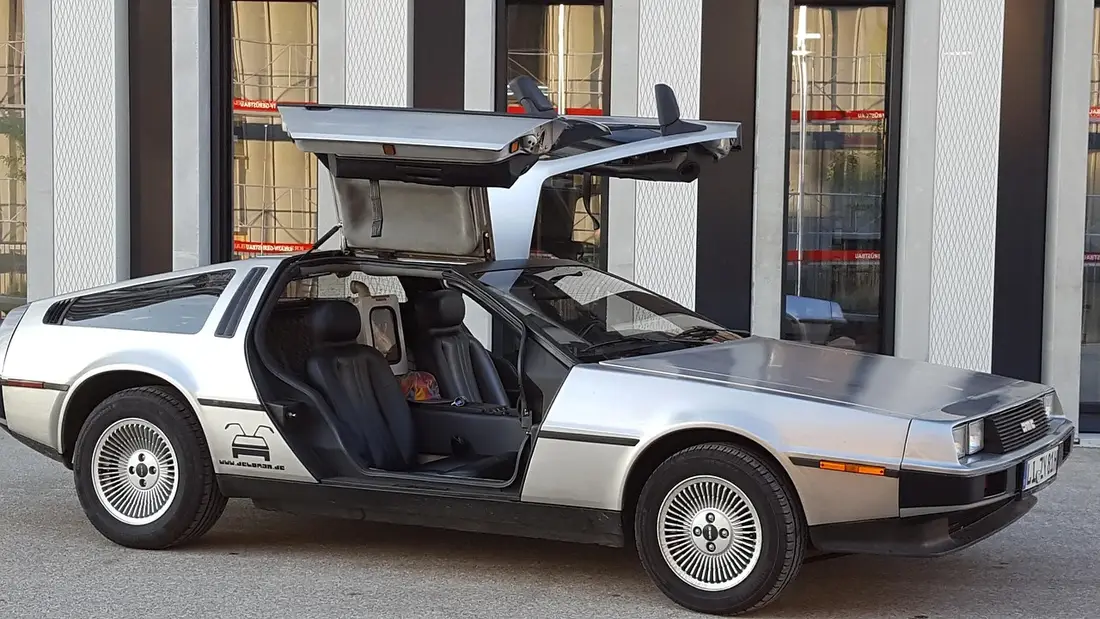
The doors hinge at the roof and swing upward, which is why the car is so easy to recognize in a parking lot. The publisher of the official Back to the Future owners’ manual book calls them “unmistakable,” and the feature appears in the film unchanged because it belonged to the real car.
Stainless steel body
Every DMC-12 left the factory in bare, brushed stainless steel. The buyers guide says records show three cars were painted by DMC in the USA (black, yellow and red), all very early production cars, and warns buyers to ask for documentation if someone claims a car was painted at the factory. It also says a painted car is typically worth up to 30 to 50 percent less than an unpainted one, so the shiny look is also part of the value.
The same guide explains the design thinking: John DeLorean wanted anything you can see, touch or feel on the car to be unique to it, while DMC used off-the-shelf parts for the drivetrain, heating and air conditioning, and brakes.
Engine, Options and What the Real Car Cost
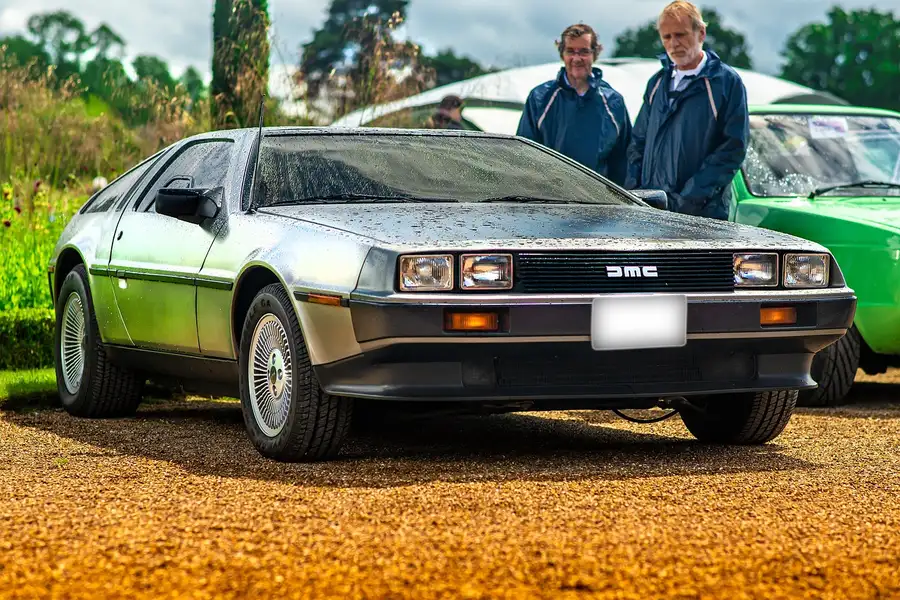
The movie shows a car that can reach 88 miles per hour, but the real DMC-12 used the modest 130 hp PRV V6 described above. The buyers guide says single and twin turbo versions were being developed by the original company, but neither reached production and only a handful of prototypes were built.
Factory choices were limited to interior color and transmission type. Dealer options included two side stripes, a luggage rack, a ski rack adapter, fitted sheepskin seat covers and a car cover. At $25,000 or more in 1981, the car was compared against the Porsche 911 and 928, Ferrari 308, Maserati Merak and Corvette, according to the guide.
On running costs, the same source is blunt. It says a good, reliable DeLorean is about $70,000 to $75,000 in the community “rule of thumb,” that low-mileage cars often still have original tires, belts, hoses and coolant, and that documented recent service matters more than a low odometer. Treat these as the seller-side view of the market, not a price guarantee.
Film Fiction vs the Real DMC-12
This table is deliberately labeled. The middle column is what the story depicts; the right column is what a real DMC-12 has. Nothing in the middle column works on a real car, and nothing here is a modification guide.
| Item | In the film (fiction) | Real DMC-12 |
|---|---|---|
| Time travel | Powered by a Flux Capacitor and time circuits; the official site plays on “1.21-gigawatt” and “88mph” in its own copy | No time travel; a 130 hp V6 and ordinary electrics |
| Fuel | Mr. Fusion, named by the owners’ manual publisher as one of Doc’s modifications | Gasoline, with fuel tank care a common issue on stored cars |
| Looks | Added props and a deliberately “homemade” look, per designer notes quoted by backtothefuture.com | Clean, brushed stainless panels |
| Flying | The updated flying model seen in the sequels | Never flew; no production version had it |
| Doors | Gull-wing doors | Gull-wing doors (real, factory feature) |
| Body finish | Stainless steel with film dressing | Bare stainless steel, no factory paint |
Designer Ron Cobb’s approach, as described by co-creator Bob Gale on the official site, was that every component had to do something and the machine had to look as if Doc built it in his own workshop. That explains why the movie car feels cluttered next to the clean production DMC-12.
The DeLorean in the Sequels: Hover Conversion and the Time Train
The official site describes the owners’ manual book as covering the original version of the car and the updated flying model. The same page says the book also covers Doc Brown’s Time Train from Part III and the 2015 hoverboards from Part II. In story terms, that is the sequence: the stainless DeLorean, then a hover-capable upgrade, then a train that takes over for the Old West ending.
Keep the fiction label in mind. The hover conversion and Time Train are story devices, and the sources above treat them that way. We did not find a manufacturer or museum page that claims any real DMC-12 was converted to fly.
Where the Main Film Car Is Today
backtothefuture.com says the “A” DeLorean used throughout all three films was badly weathered by the 2010s. It describes a September 8, 2011 press event on the Universal backlot where the car stood by the clock tower set, and says visitors had been allowed to take “souvenirs” over the years, so some media even mistook it for a mock-up.
The same site says a fan-led restoration was formally announced on February 27, 2012 and took a full year, and that restorer Joe Walser led Universal Studios’ 2013 restoration of the car used in all three movies. It is now on display at the Petersen Automotive Museum in Los Angeles, where, per the official site, it is on permanent loan. The site also says the car was inducted into the National Historic Vehicle Register in 2021, documented for the Library of Congress. Check the museum for current hours and display status before you visit.
DeLorean Motor Company (Texas) Today
A common confusion is who still supports the car. The Classic DeLorean Motor Company in Humble, Texas, is not the original company. Its own buyers guide says it has no connection to the original DMC but now holds the rights to the name and logo, plus the remaining parts, tooling and drawings.
Its About Us page tells a timeline: John DeLorean’s company filed for bankruptcy in 1982, the Northern Ireland factory was liquidated in 1983, and Stephen Wynne formed DeLorean One in California in 1985, opened a Houston location in 1988, renamed it DeLorean Motor Company in 1995, and acquired the remaining inventory and distribution rights in 1997. The page says the warehouse holds more than 3.5 million items, that it has introduced more than 800 reproduction parts, and that pre-owned sales since the late 1990s exceed 250 cars. That is the company’s own account of its history.
For owners, the practical point from the guide is that parts are readily available and relatively inexpensive compared with similar cars of the era, and the factory service publications still exist. The guide also names a 197 hp performance engine option from the Texas company.
What Each Source Says: A Quick Reference
| Question | Answer supported | Where it comes from |
|---|---|---|
| What car is it? | DeLorean DMC-12 | Classic DeLorean buyers guide; backtothefuture.com |
| Where was it built? | Just outside Belfast, Northern Ireland | Classic DeLorean buyers guide |
| How many exist? | More than 9000 built (about 9,000 per About Us) | Buyers guide; About Us page |
| Which film car is the original? | The “A” car used in all three films | backtothefuture.com |
| Where is it? | Petersen Automotive Museum, on permanent loan | backtothefuture.com (Hagerty documentary post) |
| Who sells parts today? | Classic DeLorean Motor Company (Texas) | Buyers guide; About Us page |
Myths About the Back to the Future Car
| Myth | What the sources support |
|---|---|
| “The DeLorean was built for the movie.” | No. The buyers guide says cars were built from 1981 to 1983; the film topped the 1985 box office per backtothefuture.com. |
| “Only a handful were ever made.” | Not supported. Sources say about 9,000 or more than 9000 were built. |
| “The Texas company is the original DeLorean.” | No. Its own guide says it has no connection to the original DMC. |
| “DeLoreans were painted silver.” | No. They left the factory in bare stainless steel; the guide says only three early cars were painted by DMC in the USA. |
| “It had a turbo from the factory.” | No. Turbo versions did not reach production; only a handful of prototypes were built. |
| “The real car has a Flux Capacitor.” | No. That is a movie prop; replicas are fan builds. |
One note on replicas: this page is trivia, not a how-to. Fan replicas exist, but we are not providing instructions for modifying a car to resemble the prop. Electrical and fuel changes on any road car are safety issues and belong with a qualified shop.
Frequently Asked Questions
What car is used in Back to the Future?
A DeLorean DMC-12, the stainless steel, gull-wing sports car built by the DeLorean Motor Company in Northern Ireland from 1981 to 1983.
Who built the car in Back to the Future?
The real car was built by the DeLorean Motor Company at its factory just outside Belfast. The time machine details were added for the film by the production.
Was the Back to the Future car a real car?
Yes. The DMC-12 was a production car sold to the public. The Flux Capacitor, Mr. Fusion and flying conversion are fictional additions.
Where is the original Back to the Future DeLorean now?
Per backtothefuture.com, the “A” car used in all three films is on permanent loan at the Petersen Automotive Museum in Los Angeles. Confirm current display status with the museum.
Can you still buy parts for a DeLorean?
Yes. The Classic DeLorean Motor Company (Texas) says it holds the remaining parts, tooling and drawings and has introduced more than 800 reproduction parts.
Bottom line: the Back to the Future car is a real DeLorean DMC-12 wearing a fictional costume, and the best sources agree on the key facts above.
Products related to this article
Sponsored / affiliate links. As an Amazon Associate I earn from qualifying purchases. I may earn additional commission from eligible campaigns.