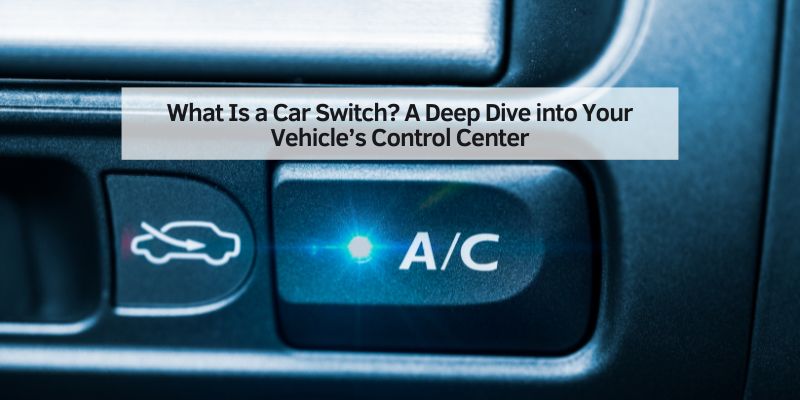
What Is a Car Switch? A Deep Dive into Your Vehicle’s Control Center
Hey there! If you’ve ever wondered, “what is a car switch?” you’re not alone. As someone who’s spent countless hours tinkering with cars and exploring their inner workings, I’m excited to break it down for you. A car switch is a small but mighty component that controls various functions in your vehicle, from starting the engine to turning on the headlights. Think of it as the bridge between you and your car’s systems, making your driving experience smooth and safe. Let’s dive into the world of automotive switches and uncover everything you need to know in a way that’s easy to grasp, whether you’re a car enthusiast or just curious.
Understanding the Basics of Car Switches
Let me start by painting a picture. You hop into your car, turn the key, and the engine roars to life. Or maybe you flick a switch, and your headlights cut through the darkness. Those actions? They’re all made possible by car switches. These are the devices that let you control electrical circuits in your vehicle. Without them, your car would be a lifeless hunk of metal.
A car switch works by completing or breaking an electrical circuit. When you flip a switch, you’re either allowing electricity to flow to a component (like your wipers) or cutting it off. It’s a simple concept, but these switches are everywhere in your car, handling tasks big and small. From my time poking around under dashboards, I’ve learned that switches are the unsung heroes of your vehicle’s functionality.
There are different types of car switches, each with a specific job. Some are manual, like the ones you push or flip, while others are automatic, triggered by sensors. They come in all shapes and sizes, but they share one goal: making your car do what you want, when you want it.
Types of Car Switches and Their Functions
Now, let’s get into the fun part—exploring the different car switches you’ll find in your vehicle. I’ve spent enough time behind the wheel and under the hood to know that each switch has a unique role. Here’s a rundown of the most common ones you’ll encounter:
- Ignition Switch: This is the big one. It’s what starts your car. When you turn the key (or push a button in newer models), the ignition switch sends power to the starter motor, firing up the engine. I’ve seen older cars where a worn-out ignition switch caused all sorts of starting issues—frustrating, but fixable!
- Headlight Switch: Ever driven at night? You owe your visibility to the headlight switch. It controls your headlights, taillights, and sometimes even fog lights. In my old pickup, I loved how the headlight switch had a satisfying click when I turned it on.
- Turn Signal Switch: This one’s on your steering column, usually as a lever. Flick it up or down, and it activates your turn signals to let other drivers know your intentions. I once had a car where the turn signal switch got sticky—talk about an annoying repair!
- Wiper Switch: Rainy days call for the wiper switch. It controls your windshield wipers and, in some cars, the rear wiper too. Modern cars often have automatic wiper switches that sense rain, which I find super handy.
- Power Window Switch: Roll down your windows with a button? That’s the power window switch at work. These are usually on the driver’s armrest, and I’ve replaced a few in my time when they stopped responding.
- Hazard Light Switch: This bright red button (usually) activates your hazard lights to warn others of an emergency or if you’re parked on the roadside. I’ve used this one more times than I’d like to admit during breakdowns!
- Cruise Control Switch: For long highway drives, the cruise control switch is a lifesaver. It lets you set a steady speed, giving your foot a break. I remember my first car with cruise control—it felt like magic.
Here’s a quick table to sum up these switches and their jobs:
| Switch Type | Function | Location |
|---|---|---|
| Ignition Switch | Starts the engine | Steering column or dashboard |
| Headlight Switch | Controls headlights and taillights | Dashboard or steering column |
| Turn Signal Switch | Activates turn signals | Steering column |
| Wiper Switch | Operates windshield wipers | Steering column or dashboard |
| Power Window Switch | Controls window movement | Door panel or armrest |
| Hazard Light Switch | Activates hazard lights | Dashboard |
| Cruise Control Switch | Sets and maintains vehicle speed | Steering wheel or column |
Each of these vehicle switches plays a critical role in how you interact with your car. Next time you’re driving, take a moment to notice how often you use them!
How Car Switches Work: The Science Made Simple
Okay, let’s talk about how these car switches actually do their magic. I’m no electrician, but I’ve learned enough from working on cars to explain it in a way that makes sense. At its core, a switch is like a gatekeeper for electricity. When you flip it, you’re either opening the gate (letting electricity flow) or closing it (stopping the flow).
Most automotive switches are connected to your car’s electrical system. Your car’s battery provides the power, and the switch directs that power to the right component. For example, when you turn on the headlight switch, it completes a circuit that sends electricity to your headlights. Simple, right?
But it’s not just about flipping a switch. Some switches, like the ignition switch, have multiple positions (like “off,” “accessory,” and “start”). Each position connects different circuits to power things like the radio or the starter motor. I remember swapping out an ignition switch in a friend’s car—it was a puzzle, but seeing it work again was so satisfying.
Modern cars also use electronic control units (ECUs) to manage some switches. For instance, an automatic wiper switch might rely on a rain sensor that talks to the ECU, which then decides when to turn the wipers on. It’s like your car’s brain working with the switch to make decisions.
Common Issues with Car Switches and How to Spot Them
As someone who’s dealt with my fair share of car troubles, I can tell you that car switches don’t last forever. They get worn out from constant use, and when they fail, it can be a real headache. Here’s what I’ve learned about spotting and fixing common switch problems.
One of the most common issues is a faulty ignition switch. If your car won’t start or you have to jiggle the key to get it going, the switch might be to blame. I had this happen in an old sedan, and replacing the switch solved it.
Another troublemaker is the power window switch. If your windows get stuck or move sluggishly, the switch could be failing. I once spent an afternoon taking apart a door panel to replace one—it’s not fun, but it’s cheaper than a shop visit.
Turn signal switches can also act up. If your signals don’t work or you hear a weird clicking sound, it’s time to check the switch. And don’t ignore a broken hazard light switch—those lights are crucial for safety.
Here’s how you can spot a bad switch:
- The component (like headlights or wipers) doesn’t work at all.
- The switch feels loose, sticky, or doesn’t click properly.
- You notice electrical issues, like flickering lights or intermittent function.
If you’re handy, you can replace many switches yourself with basic tools. But if you’re not sure, a mechanic can diagnose and fix it. Trust me, I’ve learned the hard way that ignoring a bad switch only makes things worse!
Why Car Switches Matter for Your Driving Experience
You might not think about car switches much, but they’re a huge part of how you interact with your vehicle. Every time you start your car, adjust your mirrors, or turn on the AC, you’re using a switch. They’re designed to be intuitive, so you can focus on the road.
From my experience, good switches make driving feel effortless. In my current car, the cruise control switch is perfectly placed on the steering wheel, so I can set it without looking. On the flip side, a sticky or broken switch can make even simple tasks frustrating. Imagine trying to signal a turn with a faulty turn signal switch—it’s not just annoying, it’s unsafe.
Car manufacturers spend a lot of time designing switches to be durable and user-friendly. Next time you’re in your car, notice how the switches feel. Are they smooth? Do they click satisfyingly? Those little details add up to a better driving experience.
The Evolution of Car Switches: From Manual to High-Tech
Car switches have come a long way since I first started driving. Back in the day, switches were simple mechanical devices—think chunky levers and knobs. My dad’s old truck had a headlight switch you had to pull out with a satisfying thud. Today, things are way more advanced.
Modern cars use digital switches and touch-sensitive controls. Some even have voice-activated switches, where you can say, “Turn on the wipers,” and the car listens. I got to test-drive a new electric vehicle last year, and the dashboard switches were all part of a sleek touchscreen. It felt futuristic, but I’ll admit, I missed the tactile feel of a physical button.
Another cool advancement is the proximity switch. These use sensors to detect your hand’s movement, so you don’t even have to touch anything. My friend’s SUV has a power liftgate switch that works this way—just wave your foot under the bumper, and the tailgate opens.
But high-tech switches aren’t perfect. Touchscreens can be distracting, and electronic switches are pricier to repair. I’ve seen plenty of older cars outlast newer ones because their simple mechanical switches were built like tanks.
Maintaining and Replacing Car Switches
If you want your car switches to last, a little care goes a long way. I’ve learned a few tricks over the years to keep them in good shape. First, avoid slamming or forcing switches—they’re tougher than they look, but they’re not indestructible. If a switch feels sticky, don’t keep pushing; it might need cleaning or replacing.
Cleaning is simple for most switches. A bit of compressed air or a soft brush can remove dust and debris. For deeper cleaning, I’ve used contact cleaner (available at auto parts stores) on switches like the power window switch. Just be sure to disconnect the battery first to avoid any electrical mishaps.
When it’s time to replace a switch, you’ve got options. Many automotive switches are affordable and easy to swap out if you’re comfortable with basic tools. For example, replacing a headlight switch usually involves removing a panel and unplugging the old switch. I did this on my old hatchback, and it took less than an hour.
For trickier switches, like the ignition switch, I’d recommend a professional unless you’re confident in your skills. A good mechanic can save you from accidentally messing up your car’s wiring.
Choosing the Right Switch for Your Car
If you’re replacing a car switch, make sure you get the right one. I learned this the hard way when I ordered a power window switch that didn’t quite fit my car’s make and model. Always check your vehicle’s manual or consult with an auto parts store to match the switch to your car’s specifications.
You’ll also want to decide between OEM (original equipment manufacturer) and aftermarket switches. OEM switches are made by your car’s manufacturer and guarantee a perfect fit, but they’re pricier. Aftermarket switches can be cheaper, but quality varies. I usually stick with OEM for critical switches like the ignition switch, but I’ve had good luck with aftermarket for less vital ones like the wiper switch.
My Final Thoughts on Car Switches
After spending years driving, fixing, and learning about cars, I can tell you that car switches are small but essential parts of your vehicle. They’re the connection between you and your car’s systems, making every drive safer and more comfortable. Whether it’s the satisfying click of a headlight switch or the convenience of a cruise control switch, these little devices make a big difference.
Next time you’re behind the wheel, take a second to appreciate the switches that make it all possible. If one starts acting up, don’t ignore it—fixing it early can save you time and money. And if you’re curious about your car’s switches, pop the hood or check your manual. You might be surprised at how much you learn!
FAQs About Car Switches
What does a car switch do?
A car switch controls electrical circuits in your vehicle, allowing you to turn on or off functions like headlights, wipers, or the engine. It’s like a command center for your car’s features.
Can I replace a car switch myself?
Yes, many car switches, like the power window switch or headlight switch, are easy to replace with basic tools. Check your car’s manual for instructions, and always disconnect the battery for safety. For complex switches like the ignition switch, consider a mechanic.
Why is my car switch not working?
A car switch might fail due to wear and tear, dirt, or electrical issues. If it’s sticky, loose, or the component doesn’t work, try cleaning it with contact cleaner. If that doesn’t help, it may need replacing.
Are modern car switches better than older ones?
Modern car switches are more advanced, with features like touchscreens and sensors. They’re convenient but can be distracting or costly to repair. Older mechanical switches are simpler and often more durable.
How do I know which switch to buy for my car?
Check your car’s manual for the exact part number or consult an auto parts store. Match the switch to your vehicle’s make, model, and year. OEM switches ensure a perfect fit, but quality aftermarket options can work too.