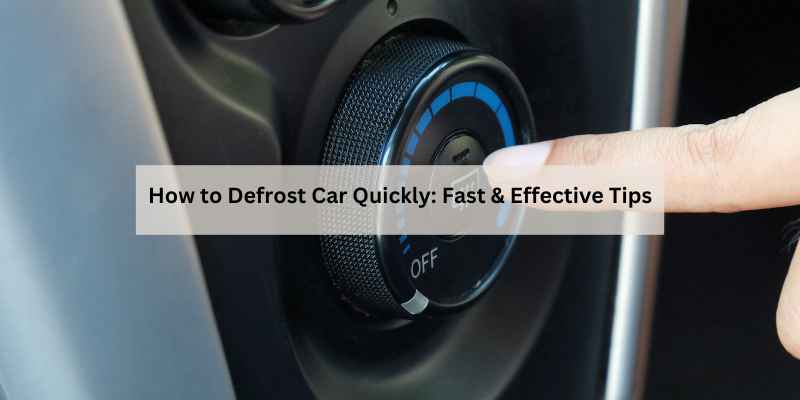
How to Defrost Your Car Quickly (Fastest Method + Safety Tips)
The fastest way to defrost a car is to start the engine, set the heater to full heat on defrost, turn the AC on, and switch recirculation off — dry outside air clears a frosted windshield in 3 to 5 minutes. Hot water instead risks a cracked windshield from thermal shock. This guide covers the fastest settings, safe ice-removal tools, mistakes to avoid, and what to do when locks freeze shut.
Quick Answer
Start the engine, set the heater to defrost on full heat, turn the AC on, and switch recirculation off so dry outside air clears the glass fast — most frosted windshields clear in 3–5 minutes. Run the rear defroster too, and scrape remaining ice with a plastic scraper — never metal, and never hot water.
What You Need to Defrost a Car Fast
Keep these items in the car all winter so you are never caught without them on a frosty morning.
- Plastic ice scraper — metal scrapers gouge glass and can scratch tint or trim
- Windshield de-icer spray — an isopropyl-alcohol or methanol-based spray, not a road-salt product (see below for why that distinction matters); for a full product roundup see our best windshield de-icers guide
- Microfiber towel — wipes away melted moisture so it does not refreeze
- Windshield cover or car cover — the fastest defrost is the one you never have to do (see how to keep a car from freezing overnight)
Best Windshield De-Icer Pick
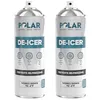
Polar De-Icer Spray for Car Windshield, 2 x 17 Fl Oz
A fast-acting alcohol-based spray that melts frost and ice on contact without the risk hot water carries.
- Best for: mornings when you need the windshield clear in under a minute
- Why we picked it: uses the same alcohol-based chemistry real de-icer sprays rely on, safe on glass and painted surfaces when used as directed
- Main drawback: works best on thin frost — thick ice still needs a scraper afterward
Compare more defrosting tools
 Option 1 AstroAI 27″ 2-in-1 Snow Brush & Ice Scraper
|
 Option 2 EcoNour Windshield Cover for Ice and Snow
|
 Option 3 Zonetech Heated 12V Car Window Ice Scraper
|
As an Amazon Associate we earn from qualifying purchases.
The Fastest Defrost Settings (AC On, Recirculation Off)
Running the heater alone is the slowest way to defrost a car. The fastest method uses the air conditioner as a dehumidifier while fresh, dry outside air replaces the humid air already inside the cabin.
- Start the engine and select defrost: turn the temperature to full heat and point the vents at the windshield.
- Turn the air conditioning on: the AC compressor pulls moisture out of the air passing over the vents, which stops the glass from fogging back up as it warms.
- Switch recirculation off: recirculated cabin air is already saturated with moisture from your breath and body heat; fresh outside air is drier and clears the glass faster, even though it feels colder at first.
- Turn on the rear defroster and heated mirrors: the rear window has its own heating grid embedded in the glass — it will not clear on its own from the front vents.
- Set the fan to high: more airflow moves warm, dry air across the glass faster.
Combine these settings with light scraping while the cabin heats up, and most vehicles clear a frosted windshield in 3 to 5 minutes. Thick ice from an overnight storm can still take 10 to 15 minutes even with the settings right — that time comes from ice thickness and outside temperature, not from doing anything wrong.
How to Scrape Ice Off Safely
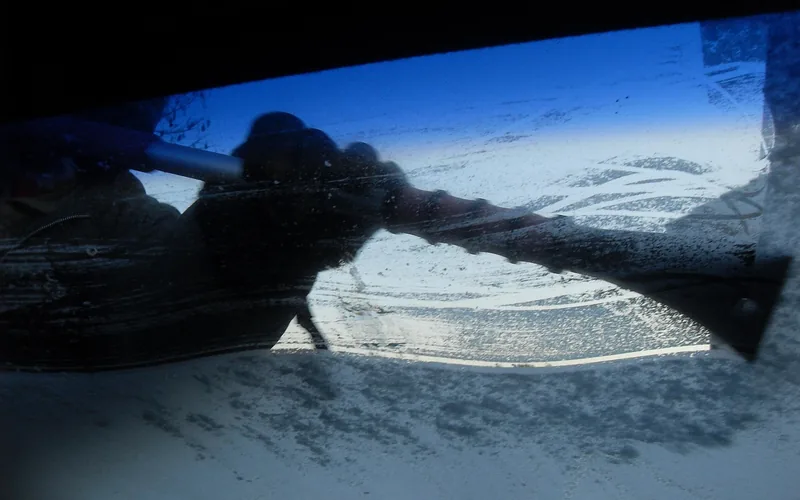
Hold a plastic ice scraper at roughly a 45-degree angle and push it across the glass in long, even strokes. A metal scraper, a credit card, or any improvised metal edge can gouge the glass or strip window tint — plastic is the only safe choice.
A heated ice scraper (one with a battery or 12V-powered blade) melts a thin channel through the ice as it scrapes, which speeds up thick-ice mornings without adding any liquid to the glass. Combining the scraper with the defroster settings above — scrape first, then let the warm dry air finish the job — clears the car faster than either method alone.
Windshield De-Icer Sprays: What Actually Works
Windshield de-icer sprays are not the same product as the salt or calcium chloride used to de-ice roads and sidewalks. Automotive de-icer sprays use isopropyl alcohol, often blended with methanol or propylene glycol, at concentrations of roughly 60–90%. Alcohol has a freezing point far below water’s, so it melts ice on contact instead of just lowering the freezing point of a puddle the way road salt does.
| Ingredient | Used On | How It Works |
|---|---|---|
| Isopropyl alcohol / methanol spray | Windshields, mirrors, locks | Melts ice on contact; freezing point near −60°F or lower |
| Propylene glycol | Added to some sprays as an anti-icing agent | Slows re-freezing after the alcohol has melted the ice |
| Sodium chloride (rock salt) | Roads and sidewalks only | Lowers the freezing point of surface water; corrosive to paint and metal, never spray on a car |
| Calcium chloride | Roads and sidewalks only | Fast-acting road de-icer, not formulated or safe for glass or paint |
To use a de-icer spray, apply it directly to the glass, let it sit for 30 to 60 seconds, then scrape or wipe the loosened ice away. Never spread a road de-icing product like rock salt or calcium chloride on a windshield — those are granular and corrosive to paint and undercarriage metal, and they were never designed to touch glass.
Homemade De-Icer Solutions
A homemade spray can work in a pinch when you are out of commercial de-icer:
- Rubbing alcohol solution: mix 2 parts isopropyl rubbing alcohol with 1 part water in a spray bottle.
- Vinegar solution: mix 3 parts white vinegar with 1 part water.
- Saltwater solution: mix 3 parts water with 1 part salt.
Spray the mixture on the glass, let it sit for a few minutes, then scrape away the loosened ice. Use these sparingly and wipe the glass afterward — vinegar’s acidity and salt residue can damage paint, chrome, and rubber trim with repeated or prolonged contact, and rubbing alcohol dries out rubber wiper blades over time if it lands on them. Keep the spray on the glass only.
3 Mistakes That Can Crack Your Windshield or Get You a Ticket
Never Pour Hot or Boiling Water on the Glass
Pouring hot or boiling water onto a frozen windshield causes thermal shock: the area the water touches expands instantly while the surrounding cold glass stays contracted, and the internal stress can crack or shatter the windshield outright. If the glass already has a small chip, trapped water can refreeze and grow the crack. Lukewarm water is safer than boiling, but a de-icer spray, scraper, or the defroster settings above avoid the risk entirely.
“Another no-no is hot water, which can crack glass by causing thermal shock and result in an expensive auto glass repair.”
Do Not Drive With Only a Small Peephole Cleared
Clearing a single small patch of the windshield and driving off — sometimes called “peephole driving” — is illegal in most states and dangerous even where it is not explicitly banned. Minnesota Statute 169.71, for example, states plainly: “No person shall drive any motor vehicle with the windshield or front side windows covered with steam or frost to such an extent as to prevent proper vision.” Clear every window, the mirrors, headlights, taillights, and the roof before you drive — a small cleared circle does not give you a usable view of pedestrians, cyclists, or merging traffic.
Source: Minnesota Statutes 169.71, Subdivision 3 — most states have a similar clear-visibility requirement.
Never Run the Engine to Warm Up Inside a Closed Garage
📊 More than 400 Americans die every year from unintentional carbon monoxide poisoning not linked to fires, and over 50,000 visit an emergency room for it — Source: CDC, Carbon Monoxide Poisoning Basics
Running your car to warm up or defrost while it sits inside an attached or enclosed garage can let carbon monoxide build to dangerous levels in a matter of minutes, even with the garage door open a crack. The CDC recommends backing the car fully out of the garage before letting it run, or, if you must start it inside, opening the garage door completely and moving the car outside right away. Carbon monoxide is odorless and colorless — you will not smell the danger building up.
Preventing Frost Overnight
The fastest defrost is the one you never need to do. Parking in a garage, using a windshield cover, or fitting a full car cover all stop frost from forming on the glass in the first place. A dedicated windshield cover is the cheapest and quickest to use — drape it over the glass before you go inside and pull it off in the morning to a clear windshield. For a full breakdown of overnight prevention methods, see how to keep a car from freezing overnight.
Winter Car Maintenance Checklist
A few regular checks keep your defrosting routine fast all winter and catch problems before they leave you stranded.
| Check Item | Frequency | Why It Matters |
|---|---|---|
| Battery | Every 6 months | Cold weather cuts battery output; a weak battery struggles to run the heater and blower on high |
| Tires | Monthly | Proper pressure and tread improve grip on icy roads |
| Fluids (coolant, washer fluid) | Every 3 months | Low coolant slows how fast the heater core warms the cabin; use a winter-rated washer fluid so it does not freeze in the reservoir |
| Wiper blades | Every 6 months | Cracked or brittle blades smear melted ice instead of clearing it — rubbing alcohol overuse accelerates this |
Frozen Locks and Door Handles
If a lock or handle is frozen shut, warm the key with your breath or use a de-icer spray directly in the keyhole rather than forcing it — never pour hot water on a frozen lock for the same thermal-shock reason covered above. For the full range of fixes, including hair-dryer and portable-heater methods, see how to unfreeze car doors. If the lock is still stuck after trying a de-icer spray, a locksmith can free it without damaging the mechanism.
Frequently Asked Questions
How can I defrost my car quickly?
Start the engine, set the heater to full heat on the defrost setting, turn the AC on, and switch recirculation off. Turn on the rear defroster too, and scrape any remaining ice with a plastic scraper. Most windshields clear in 3 to 5 minutes with this combination.
What is the fastest AC setting to defrost a windshield?
Full heat, defrost vent mode, air conditioning on, and recirculation switched off. The AC dehumidifies the air passing through the vents while outside air replaces the moisture-heavy air already in the cabin, which clears fog and frost faster than heat alone.
What household items can help defrost my car?
A spray bottle mix of 2 parts rubbing alcohol to 1 part water, or 3 parts white vinegar to 1 part water, can loosen frost when sprayed on the glass and left for a few minutes before scraping. Use sparingly and wipe the glass afterward, since vinegar and salt can damage paint and rubber trim with repeated contact.
Is it safe to use hot water to defrost a car windshield?
No. Hot or boiling water causes thermal shock that can crack or shatter cold glass, since the area the water touches expands instantly while the surrounding glass stays cold and contracted. Use a de-icer spray, a plastic scraper, or the car’s defroster instead.
How long does it take to defrost a car?
A light frost clears in about 3 to 5 minutes using the AC-on, recirculation-off method. Thick ice from an overnight storm can take 10 to 15 minutes even with the right settings, since ice thickness and outside temperature affect the time more than the method used.
Is it illegal to drive with only a small area of the windshield cleared?
In most states, yes. Laws like Minnesota Statute 169.71 prohibit driving with a windshield covered enough by frost or steam to prevent proper vision, and clearing just a small “peephole” still leaves dangerous blind spots for pedestrians and merging traffic. Clear every window, mirror, and light before driving.
Can I warm up my car in the garage to help it defrost?
Not while it is fully inside an enclosed garage. Carbon monoxide from the exhaust can build to dangerous levels within minutes, even with the door partly open. Back the car out of the garage first, or open the garage door completely and move the car outside right after starting it.
Conclusion
Defrosting a car quickly comes down to using the right settings — heat on high, AC on, recirculation off — combined with a plastic scraper and, if needed, an alcohol-based de-icer spray. Skip the hot water, clear every window before you drive, and never let the car run inside a closed garage. A few minutes of prevention with a windshield cover the night before saves you the whole routine on the coldest mornings.
Products related to this article
Sponsored / affiliate links. As an Amazon Associate I earn from qualifying purchases. I may earn additional commission from eligible campaigns.