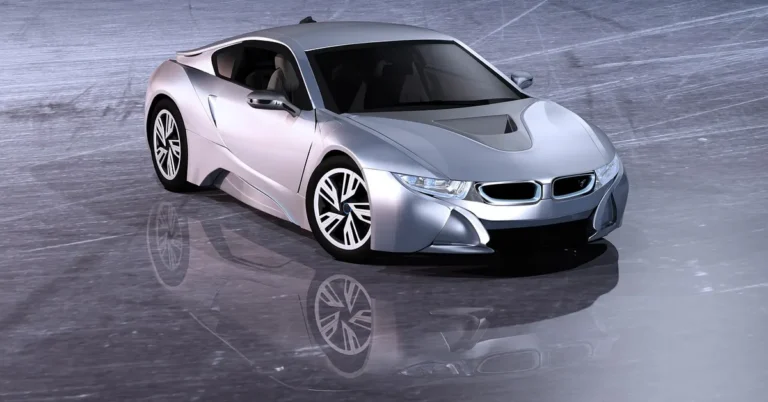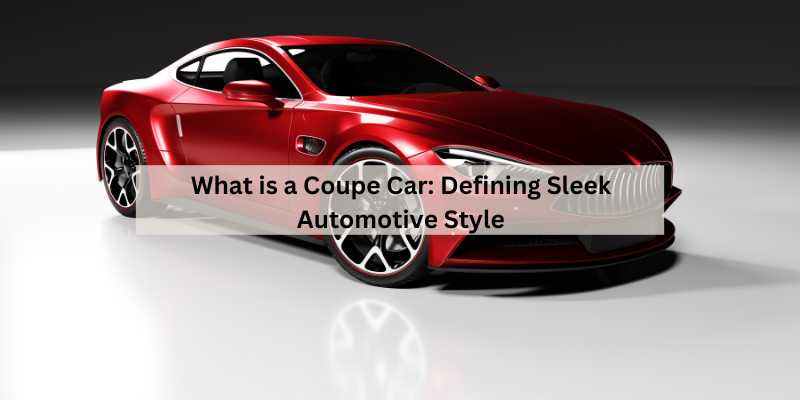
What Is a Coupe Car? Definition, Types & Examples
A coupe is a 2-door car with a fixed sloping roofline and under 33 cubic feet of interior space — the SAE standard that separates coupes from sedans — typically seating 2–4 passengers. Coupes prioritize style and sporty handling over rear-seat and cargo room, though not every coupe is a performance car; luxury coupes like the BMW 8 Series use the same body style.
What Is a Coupe Car? (Definition)
A coupe is a closed-roof passenger car characterized by two doors, a sloping or truncated rear roofline, and an interior volume of less than 33 cubic feet according to the Society of Automotive Engineers (SAE). The SAE’s 33-cubic-foot threshold is the most widely cited technical boundary separating coupes from sedans — a car with the same two-door layout but more interior space would technically be classified as a sedan.
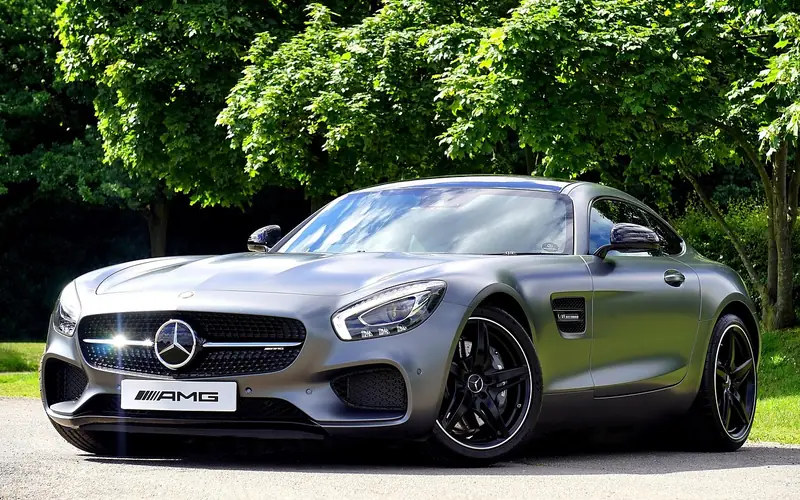
The ISO 3833 standard (1977) defines a coupe more broadly as a vehicle with two doors, a fixed roof, limited rear volume, and at least two side windows. In everyday use, most drivers recognize a coupe by its distinctive silhouette: a low roofline that slopes toward the rear, giving the car a sleeker, more aerodynamic appearance than a sedan or minivan.
Why Is It Called a Coupe?
The word “coupe” comes from the French verb couper, meaning “to cut.” The term originally referred to a shortened horse-drawn carriage that was “cut” — meaning its rear passenger section was removed compared to a full-length berliner carriage. When automobiles adopted carriage terminology in the early 1900s, “coupe” carried over to describe closed-body cars with a shortened, cut-down roofline relative to full sedans.
In French, the word is spelled coupé (with an accent), pronounced “koo-PAY.” The anglicized version dropped the accent but retained the pronunciation in many markets, especially in the United States where it is sometimes spelled and said simply as “coop.”
Coupe vs Sedan: Key Differences
The most common comparison is coupe vs sedan — both are common passenger car body styles, but they differ significantly in doors, space, and purpose.
| Feature | Coupe | Sedan |
|---|---|---|
| Doors | 2 doors | 4 doors |
| Interior volume (SAE) | Less than 33 cu ft | 33 cu ft or more |
| Roofline | Sloping, truncated | Upright, more vertical |
| Rear seat space | Limited — sometimes usable, sometimes not | Full rear row seating |
| Typical focus | Style and performance | Practicality and passenger comfort |
| Price (comparable models) | Generally higher | Generally lower |
It is worth noting that some automakers blur this line. BMW sells cars called the “4 Series Gran Coupé” and “8 Series Gran Coupé” — four-door vehicles with coupe-style rooflines. These use the coupe designation for marketing reasons, though technically they fall closer to the sedan definition by interior volume.
Coupe vs Convertible vs Sports Car
Three body styles are often confused with each other — coupes, convertibles, and sports cars — but each has a distinct definition.
- Coupe: Fixed roof, 2 doors, sloping roofline, under 33 cu ft interior. May or may not be performance-oriented.
- Convertible (Cabriolet): Retractable or removable roof — either soft-top fabric or hard-top panels. Two-door like a coupe, but classified separately because the roof opens. The Mazda MX-5 Miata and Ford Mustang Convertible are examples.
- Sports car: Defined by performance — engine output, handling capability, and driving dynamics — not body style. Most sports cars are coupes, but a coupe does not have to be a sports car. A Lexus RC 350 is a coupe but not a sports car; a Porsche 911 is both.
Types of Coupe Cars
The coupe body style has evolved into several distinct sub-types since the 1950s:
Traditional 2-Door Coupe
The original coupe format — two doors, fixed roof, sloping rear roofline, limited rear seating. This includes iconic models like the Ford Mustang, Chevrolet Camaro, and Porsche 911. Traditional coupes seat 2 to 4 passengers depending on the model.
4-Door Coupe (Gran Coupé)
A marketing term used by automakers — mainly BMW, Mercedes-Benz, and Audi — to describe four-door cars with a coupe-style sloping roofline. Examples include the BMW 4 Series Gran Coupé and the Mercedes-Benz CLA-Class. These retain the sleek visual profile of a coupe while offering the practicality of rear doors.
SUV Coupe (Coupe-SUV)
A crossover or SUV with a sloping rear roofline styled to mimic a coupe silhouette. Examples include the BMW X6, Mercedes-Benz GLE Coupe, and Porsche Cayenne Coupe. These are not traditional coupes by the SAE definition but use the coupe label to signal sporty styling over utility-box SUV aesthetics.
Luxury Coupe
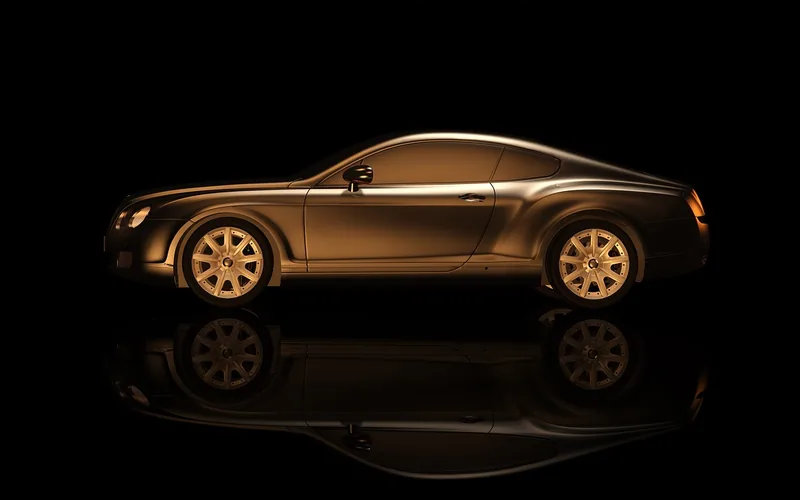
Coupes that prioritize refinement and comfort over raw performance. The Lexus LC 500, Bentley Continental GT, and Mercedes-Benz E-Class Coupe fall into this category. These often have large engines but are tuned for quiet cruising rather than track performance.
Examples of Coupe Cars
Coupes span every price and performance bracket. Here are well-known examples across categories:
- Performance coupes: Ford Mustang, Chevrolet Camaro, Dodge Challenger, Porsche 911, Audi TT
- Luxury coupes: BMW 8 Series, Bentley Continental GT, Lexus LC 500, Mercedes-Benz CLE Coupe
- Compact coupes: Honda Civic Coupe (discontinued 2021), Volkswagen Golf GTI (hatchback-coupe crossover)
- 4-door coupes: BMW 4 Series Gran Coupé, Hyundai IONIQ 6, Audi A5 Sportback
- SUV coupes: BMW X4/X6, Mercedes-Benz GLE Coupe, Porsche Cayenne Coupe
Pros and Cons of Coupe Cars
Advantages
- Sporty styling: The sloping roofline and lower profile give coupes a more aggressive, premium appearance than equivalent sedans.
- Handling: Shorter wheelbase and lower center of gravity in many coupes contribute to sharper handling dynamics.
- Exclusivity: Coupe versions of popular models (BMW 4 Series vs 3 Series, for example) typically carry a price premium that signals status.
- Structural rigidity: Fewer door openings in the body shell can improve torsional stiffness.
Disadvantages
- Limited rear access: Two large doors require more clearance to open in tight parking spaces, and rear passengers must fold the front seat forward to enter.
- Reduced rear headroom: The sloping roofline cuts into rear passenger headroom — adults over 6 feet often find coupe rear seats uncomfortable.
- Less cargo space: Trunks in coupes are generally smaller than in equivalent sedans due to the shortened body design.
- Higher cost: Coupes typically cost more than their sedan counterparts from the same manufacturer and model line.
Frequently Asked Questions
What is the difference between a coupe and a sedan?
A coupe has 2 doors and under 33 cubic feet of interior space (SAE standard); a sedan has 4 doors and 33 cubic feet or more. Coupes have a sloping roofline that reduces rear headroom, while sedans have a more upright roofline with a full rear passenger row. Coupes prioritize style and sporty handling; sedans prioritize practicality and passenger comfort.
Is a coupe the same as a sports car?
No — a coupe is a body style (2 doors, sloping roof), while a sports car is defined by performance characteristics like engine output and handling dynamics. Most sports cars are coupes, but not all coupes are sports cars. A Lexus LC 500 is a luxury coupe, not a sports car. A Porsche 911 is both a coupe and a sports car.
Why is a car called a coupe?
The word coupe comes from the French verb couper, meaning “to cut.” It originally described a shortened horse-drawn carriage with the rear section removed. When automobiles emerged in the early 1900s, “coupe” carried over to describe cars with a shortened, cut-down roofline compared to full sedans.
Is every 2-door car a coupe?
No — not every 2-door car is a coupe. Convertibles have a retractable roof and are classified separately. Roadsters are open-top 2-seat cars. Some hatchbacks have 2 doors but are classified as hatchbacks due to their rear cargo door design. The SAE definition requires under 33 cubic feet of interior space, so a large 2-door car with more interior room technically qualifies as a sedan, not a coupe.
What are examples of coupe cars?
Common coupe examples include the Ford Mustang, Chevrolet Camaro, Porsche 911, Audi TT, BMW 4 Series, Lexus LC 500, and Bentley Continental GT. SUV coupes include the BMW X6 and Mercedes-Benz GLE Coupe. 4-door coupes include the BMW 4 Series Gran Coupé and Hyundai IONIQ 6.
What is a 4-door coupe?
A 4-door coupe is a marketing term — not a technical classification — used by automakers like BMW and Mercedes-Benz to describe four-door cars with a coupe-style sloping roofline. Examples include the BMW 4 Series Gran Coupé and Mercedes-Benz CLA-Class. By the SAE’s technical definition, these vehicles are sedans, but manufacturers use “coupe” to emphasize their sporty styling.
Conclusion
A coupe car is defined by three things: two doors, a fixed sloping roofline, and under 33 cubic feet of interior space per SAE standards. The body style trades rear seat room and cargo space for a sportier profile — but coupes range from affordable compact cars to six-figure luxury GTs. Whether you’re drawn to the Ford Mustang’s performance or the Bentley Continental GT’s refinement, the coupe body style is one of the most enduring in automotive design.
Products related to this article
Sponsored / affiliate links. As an Amazon Associate I earn from qualifying purchases. I may earn additional commission from eligible campaigns.