What Is Invoice Price on a Car? MSRP, Holdback & Dealer Cost
Invoice price is what a car dealer is billed by the manufacturer for a specific vehicle — typically 5% to 10% below the MSRP sticker price. But invoice isn’t the dealer’s true floor: manufacturer holdback, usually 2-3% of MSRP, plus other incentives often push the dealer’s real cost lower, so paying invoice rarely means the dealer earns nothing. This guide covers where to find real invoice data, what holdback pays back, and how to negotiate fairly from it.
Quick Answer
The invoice price is the amount the manufacturer bills the dealer for a vehicle, usually 5-10% below the MSRP sticker price. It is not the dealer’s final cost — manufacturer holdback (about 2-3% of MSRP, paid back to the dealer later) and other factory incentives typically make the dealer’s real cost lower than invoice, which is why a deal priced at or near invoice can still be profitable for the dealer.
What Is Invoice Price on a Car?
The invoice price is the amount a manufacturer charges a dealer for a specific vehicle, including its base cost, factory-installed options, and the destination (shipping) charge. It’s the number printed on the factory invoice sent to the dealership when the car arrives on the lot — not a price you’ll typically see posted anywhere for sale.
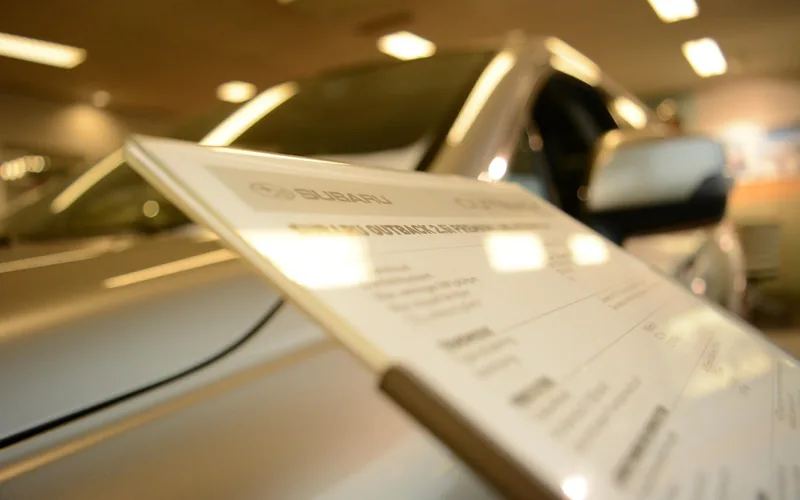
The invoice price is usually 5% to 10% lower than the MSRP (Manufacturer’s Suggested Retail Price), which is the number printed on the window sticker. That gap between invoice and MSRP is the dealer’s advertised markup — the room they have to negotiate before touching their own margin.
Here’s the part most explanations skip: invoice price is not the same as the dealer’s true cost. Manufacturers routinely pay dealers back a percentage of the invoice or MSRP after the sale — a practice called dealer holdback — plus separate cash incentives that never appear on the invoice itself. Both are covered in detail below.
Invoice Price vs. MSRP vs. the Dealer’s True Cost
These three numbers are easy to mix up, but they answer three different questions: what the sticker says, what the dealer was billed, and what the dealer actually ended up paying after rebates. The table below breaks down each one.
| Price Point | What It Represents | Typical Range | Where Buyers See It |
|---|---|---|---|
| MSRP (sticker price) | Manufacturer’s suggested retail price | Full sticker amount | Printed on the window sticker |
| Invoice price | Amount the manufacturer bills the dealer | ~5-10% below MSRP | Estimated on pricing sites (KBB, Edmunds, TrueCar) |
| Dealer holdback | Percentage paid back to the dealer later, not shown on the invoice | ~2-3% of MSRP | Rarely disclosed to buyers |
| Dealer’s true cost | Invoice minus holdback and manufacturer incentives | Often below invoice | Never officially published — estimate only |
What’s Included in a Car’s Invoice Price?
The invoice price bundles several real manufacturer costs, not just the sticker-worthy base price of the car itself.
- Base vehicle cost — materials, factory labor, and engineering/R&D costs baked into building that specific trim.
- Destination (shipping) charge — the flat factory-to-dealer freight fee, which is added to every unit of that model regardless of how far it actually travels.
- Factory-installed options — any packages or equipment added on the assembly line, each with its own line-item cost on the invoice.
- Regional advertising fees — a small charge many manufacturers add to fund local dealer-association marketing.
- Dealer holdback — a percentage the manufacturer adds to the invoice, then pays back to the dealer later (see below). This is the single biggest reason invoice price overstates what the dealer actually keeps as cost.
📊 Dealer holdback typically runs about 2-3% of a vehicle’s MSRP — for most domestic manufacturers (Chrysler, Ford, GM) it’s roughly 3% of the sticker price, paid back to the dealer at the end of the sales quarter or year. — Source: Edmunds, “What Is Dealer Holdback?”
Does Paying Invoice Price Mean the Dealer Makes No Profit?
No. This is the most common misunderstanding about invoice pricing. A deal at or near invoice can still leave the dealer with real profit, for three reasons that never show up on the sticker or the invoice itself.
- Holdback: that 2-3%-of-MSRP holdback described above is paid to the dealer after the sale closes, so it isn’t reflected in what the invoice “shows” as cost.
- Manufacturer incentives: automakers regularly send dealers cash-back offers, volume bonuses, and other rebates tied to hitting sales targets — none of which lower the printed invoice number, even though they lower what the dealer actually paid.
- Other profit centers: financing, extended warranties, add-ons, and trade-in markup can all add margin on top of the vehicle sale itself, separate from the invoice-to-MSRP gap.
Because of holdback and incentives, dealers can sometimes sell below invoice and still profit — this happens most often on slow-selling models, vehicles that have sat on the lot 60+ days, or near the end of a model year or sales quarter, when manufacturers push extra cash to move inventory. That means a price at or slightly above invoice is often a genuinely fair deal on a car that isn’t in high demand — it just isn’t proof the dealer walked away with nothing. For a deeper breakdown of dealer profit centers and typical markup ranges by segment, see our guide on what the markup on a new car actually looks like.
What Affects a Car’s Invoice Price?
Invoice price isn’t fixed for a given model year — it shifts based on a few real-world factors.
- Supply and demand: a model in short supply (new redesign, chip shortage, popular trim) tends to hold closer to MSRP with less negotiating room; an overstocked model has more flexibility below it.
- Trim level and options: every factory-installed package adds its own cost to the invoice, so a loaded trim has a proportionally similar — not identical — gap to MSRP as the base trim.
- Manufacturer incentives: cash-back offers and special financing rates change monthly and can effectively lower what the dealer nets, even though the invoice number on paper stays the same.
- Timing in the model year: outgoing models near a redesign or new model-year changeover typically carry the most incentive money, since dealers need to clear space for the next year’s inventory.
How to Find a Car’s Invoice Price
You won’t get the dealer’s exact confidential invoice without asking, but these sources get you close enough to negotiate from real numbers instead of guessing.
- Check published estimates: Kelley Blue Book, Edmunds, and TrueCar all list estimated invoice pricing by model and trim, pulled from manufacturer data.
- Pull a VIN- or build-specific report: free tools like CarEdge can generate invoice pricing tied to the exact vehicle’s configuration rather than a generic trim average.
- Look up current manufacturer incentives: check the automaker’s own incentives page, since factory-to-dealer cash doesn’t show up in invoice estimates but still lowers the dealer’s real cost.
- Ask the dealer directly: once you’re in serious negotiations, some dealers will show you the factory invoice or a build sheet — it doesn’t hurt to ask.
- Compare it against the MSRP: subtract the invoice estimate from the window sticker price to see the advertised markup you’re actually negotiating against.
How to Negotiate Using the Invoice Price
Invoice price is a starting anchor for negotiation, not a target you’re guaranteed to hit — and definitely not proof of the dealer’s bottom line. Used well, it still shifts the conversation in your favor.
- Research before you go — pull the invoice estimate and any current manufacturer incentives for the exact trim you want, so you’re negotiating from data instead of instinct.
- Anchor near invoice, not MSRP — opening near the invoice estimate (rather than negotiating down from the sticker) starts the conversation much closer to a fair price.
- Get multiple quotes — comparing offers from a few dealerships puts real competitive pressure on the price, especially for models that aren’t in high demand.
- Watch for fees added back on top — documentation fees, dealer-installed accessories, and addendum stickers can quietly erase the savings you negotiated off the invoice, so ask for a full out-the-door price before signing.
- Stay firm and be willing to walk away — dealers with slow-moving inventory or end-of-quarter targets have real incentive to call back with a better number.

Frequently Asked Questions
What is an invoice price?
The invoice price is the amount a manufacturer bills the dealer for a specific vehicle. It includes the base vehicle cost, factory-installed options, and the destination (shipping) charge, and it’s typically 5% to 10% below the MSRP.
How does the invoice price affect car buying?
Knowing the invoice price gives you a realistic starting point for negotiation instead of anchoring off the higher sticker price. It shows roughly what the dealer was billed, so you can aim for a fair markup instead of guessing.
Is the invoice price the same as the sticker price?
No. The invoice price is what the dealer is billed by the manufacturer, while the sticker price (MSRP) is what the manufacturer suggests the dealer charge the customer. The gap between the two is the dealer’s advertised markup.
Can I buy a car below the invoice price?
Yes. Dealers can sell below invoice and still profit, especially on slow-selling models, vehicles that have sat on the lot 60+ days, or near the end of a model year or sales quarter, when manufacturer incentives and dealer holdback cover the difference.
Does paying invoice price mean the dealer makes no profit?
No. Manufacturer holdback, typically 2-3% of MSRP, is paid back to the dealer later and isn’t reflected in the invoice price. Combined with other incentives, a dealer’s actual cost is usually lower than invoice, so paying invoice still leaves room for profit.
Where can I find a car’s real invoice price?
Pricing sites like Kelley Blue Book, Edmunds, and TrueCar publish estimated invoice prices for most new models, and free tools like CarEdge can pull invoice pricing tied to a specific VIN or configuration. None of these is the dealer’s exact confidential invoice, but they’re close enough to negotiate from.
Conclusion
Invoice price tells you roughly what the dealer was billed for a car — typically 5-10% below MSRP — but it isn’t the dealer’s real floor. Holdback and manufacturer incentives usually push their actual cost lower, so a price at or near invoice is often a fair deal without meaning the dealer profited nothing. Use published invoice estimates from sites like Edmunds or Kelley Blue Book as your negotiating anchor, ask for the full out-the-door price before signing, and compare it against a couple of other dealers. For related terms, see what sticker price (MSRP) and MSRP mean on their own, or read about how dealers can mark up special-ordered cars.
Products related to this article
Sponsored / affiliate links. As an Amazon Associate I earn from qualifying purchases. I may earn additional commission from eligible campaigns.
![iPhone Car Charger,USB C Fast Car Charger[Apple MFi Certified] Apple Car Charging 38W Dual Port CarCharger Cigarette Lighter Adapter 2x3ft PD&QC 3.0 Lightning Cable for iPhone 14/13/12 Pro/11/Airpods](https://m.media-amazon.com/images/I/41XizrssoiL._SL500_.jpg)