What Is Tweeters In Car: Essential Guide
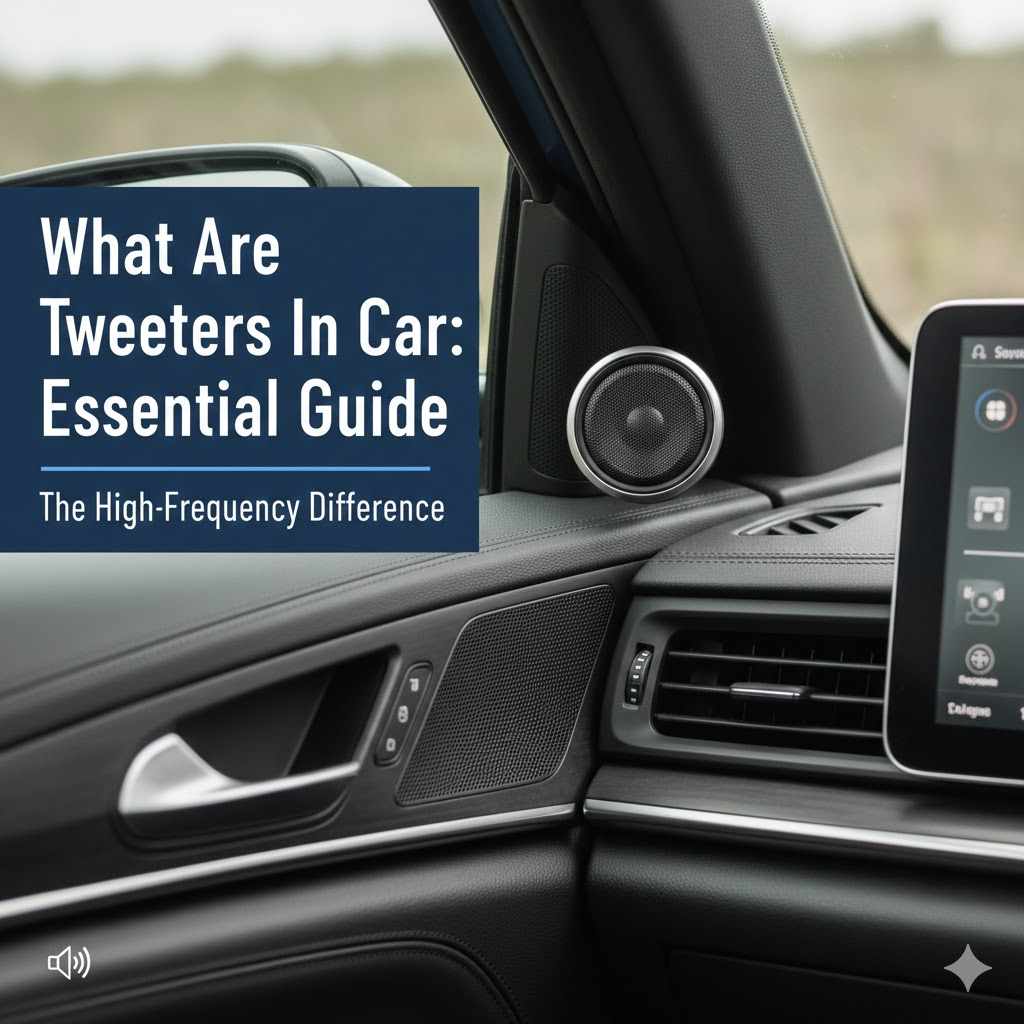
In car audio, tweeters are small speakers specifically designed to reproduce the highest frequencies, or “highs,” like cymbals and vocal sibilance. They provide the crispness and detail missing from standard door speakers, dramatically improving overall sound clarity and realism.
Are you tired of your car stereo sounding dull, muddy, or lacking that bright “sparkle”? You might be hearing the limits of your factory sound system. Many drivers notice that while the bass is strong, the higher notes—like the shimmer of a cymbal or the clarity of a singer’s voice—just aren’t coming through. This is a very common frustration, but fixing it is easier than you think!
The good news is that understanding the part responsible for those clear high notes—the tweeter—is the first step to upgrading your sound. You don’t need to be a mechanic to grasp this concept. We are going to break down exactly what tweeters are, where they live in your car, and why they are crucial for fantastic music enjoyment.
By the end of this guide, you’ll know exactly what to look for when upgrading or troubleshooting your car’s audio setup. Let’s dive into the world of high-fidelity sound!
What Is Tweeters In Car Audio? A Simple Explanation
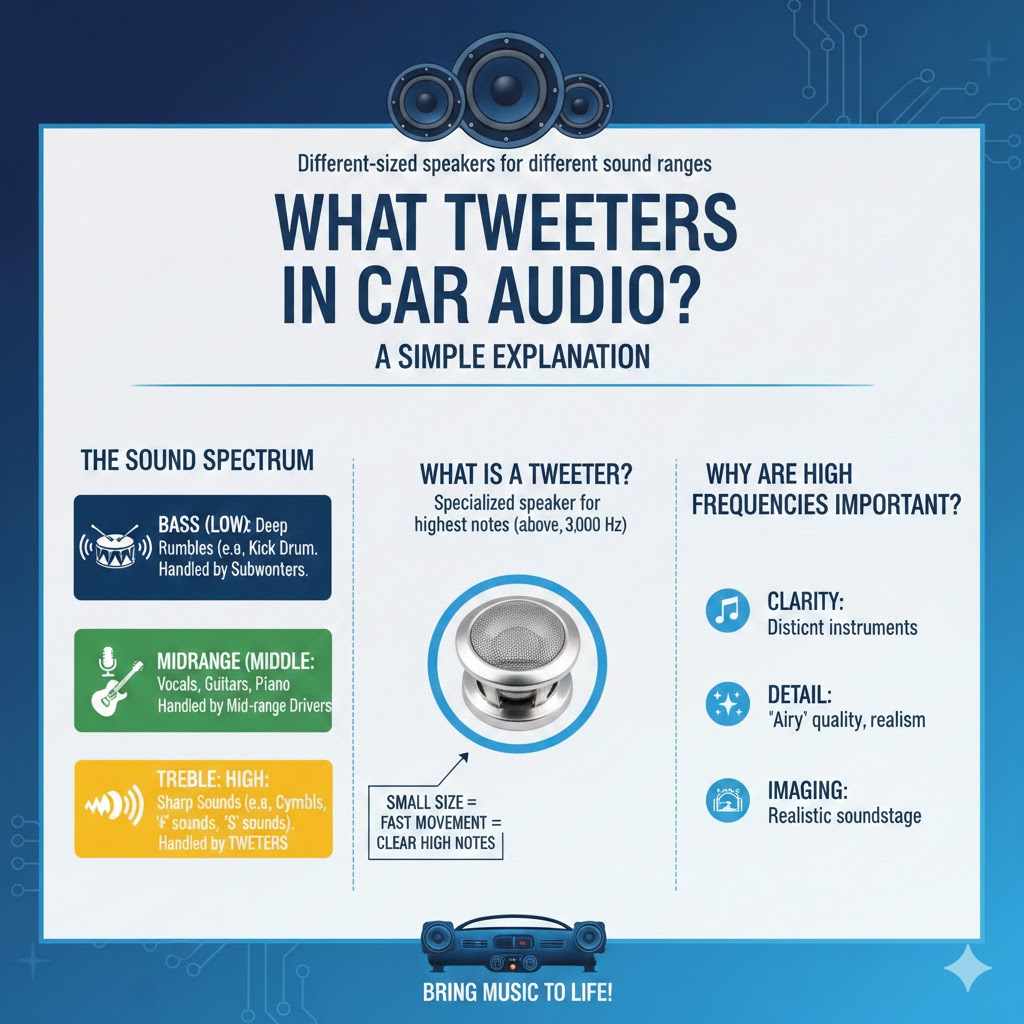
If you’ve ever looked inside a speaker enclosure, you might have seen speakers of different sizes. This is because different-sized speakers are good at producing different ranges of sound. Think of it like an orchestra; you need different instruments to play different notes.
In car audio, the sound spectrum is divided into three main areas:
- Bass (Low Frequencies): Deep, rumbling sounds like the kick drum or heavy bass guitar. These are handled by subwoofers or large woofers.
- Midrange (Middle Frequencies): The bulk of the music—vocals, guitars, piano. These are handled by mid-range drivers or full-range speakers.
- Treble (High Frequencies): The very bright, sharp sounds—cymbals, the “S” sounds in voices, and high-pitched flutes. This is the tweeter’s job.
So, what is a tweeter in a car? A tweeter is simply a specialized speaker designed only to handle the highest notes, typically anything above 3,000 Hertz (Hz). Because these frequencies are so fast and require quick movement, tweeters are much smaller than other speakers in your car. Their small size allows them to move rapidly enough to create those delicate, detailed, and crisp high notes that bring music to life.
Why Are High Frequencies So Important?
You might ask why you need a separate tiny speaker just for the highest notes. It comes down to physics and clarity. Low and mid-range speakers struggle to reproduce very high frequencies accurately. If they try, the sound becomes muffled or distorted.
Tweeters step in to handle this high-frequency load, ensuring:
- Clarity: You can hear the distinct sounds of individual instruments, even in a busy song.
- Detail: That “airy” quality in the music—the sparkle and realism—is created by the tweeter.
- Imaging: Good tweeters help create a realistic soundstage, making it seem like the musicians are standing right in front of you, rather than just coming out of the door panels.
The Anatomy of a Tweeter: What Makes It Tick?
Even though tweeters are small, they have a sophisticated design built for speed and accuracy. Understanding the main components helps you appreciate how they work and why different types sound different.
Key Components of a Car Tweeter
Most dome tweeters, the most common type found in modern cars, consist of these essential parts:
- The Dome (Diaphragm): This is the part that actually moves to create the sound waves. It must be very light and stiff to respond quickly to the electrical signal. Common materials include silk, soft fabrics, metal (like aluminum or titanium), or synthetic materials like mylar.
- Voice Coil: A tiny coil of wire attached to the dome. When electricity (the audio signal) passes through it, it creates a magnetic field that interacts with the permanent magnet, causing the dome to vibrate.
- Magnet Structure: A small, powerful magnet that drives the voice coil.
- Housing/Mount: The protective casing that holds everything together and allows the tweeter to be mounted in the dashboard or pillar.
Tweeter Material Matters: Soft Domes vs. Hard Domes
The material used for the dome significantly affects the sound signature. Think of this as the material the painter uses for the brush—it affects the final look of the painting!
| Dome Type | Characteristics | Best For |
|---|---|---|
| Soft Dome (Silk, Cloth) | Smooth, warm, natural sound. Less fatiguing on long drives. Excellent for vocals and acoustic music. | Comfort listening, Jazz, Classical. |
| Hard Dome (Metal/Titanium) | Very detailed, crisp, and extended high frequencies. Can sound slightly bright or piercing if not matched well. | Loud listening, Rock, Electronic Music. |
Where Are Tweeters Located in Your Car?
If you are wondering where these little sound makers hide in your vehicle, their location is key to their performance. Tweeters are almost always mounted as high up and as close to your ears as possible. This strategic placement helps high frequencies travel directly to you without getting blocked by seats or door panels.
Common Mounting Locations
In most factory setups, you will find tweeters in one of these spots:
- A-Pillars: These are the vertical supports located between your windshield and your front doors. They are excellent locations because they are high and angled towards the driver and passenger seats.
- Dashboard Top (Sail Panels): Sometimes they are mounted flush into the corner of the dashboard, often where the side mirror housing meets the window glass.
- Door Panels (High Up): In some older or simpler systems, the tweeter might be built right into the top section of the main door speaker enclosure, though this is less ideal for clarity.
Pro Tip for Better Sound: When upgrading, many audiophiles recommend aiming the tweeters directly at the listener’s head. This is called “tweeter angling” or “toe-in.” If you install aftermarket tweeters in the A-pillars, you can often adjust their angle slightly for the best possible sound staging. You can learn more about optimal speaker placement from acoustic design resources like those found at leading university engineering departments, which detail how sound waves interact in small environments.
Coaxial vs. Component Speakers: Where Do Tweeters Fit In?
When shopping for new speakers, you will run into two main terms: Coaxial and Component speakers. Understanding the difference is vital when deciding if you need to buy separate tweeters.
1. Coaxial Speakers (Full-Range)
Coaxial speakers are an all-in-one solution. They look like a typical speaker, but the tweeter is mounted directly in the center, right on top of the woofer (the main cone). They are sometimes called 2-way or 3-way speakers.
- Pros: Easy to install, require only one mounting location per door, and are generally budget-friendly.
- Cons: The tweeter is stuck in the middle of the woofer, meaning the sound waves have to travel around each other, which can cause phase issues and slightly less clarity than separated systems.
2. Component Speaker Systems (Separate Tweeters)
This is where dedicated tweeters shine! A component system splits the frequencies across separate units:
- You get a separate woofer (for bass/mids) that goes in the door.
- You get a separate tweeter that goes up high (like in the A-pillar).
- Crucially, you get a crossover.
The crossover is an electronic filter box that ensures only the high notes go to the tweeter and only the low/mid notes go to the woofer. This separation is key to achieving superior audio quality.
For the best possible sound quality, always opt for a component system if you are serious about upgrading. This gives you full control over where the high notes originate in your car cabin.
The Essential Role of the Crossover
If you are installing component speakers (which include separate tweeters), you cannot skip the crossover. This is the silent hero of your sound system.
Imagine trying to send a letter addressed only to “the high notes” to the tweeter, and a letter addressed only to “the low notes” to the woofer. The crossover is the sorting office!
What Does a Crossover Do?
A crossover is a small box of electrical components (capacitors and inductors) installed between your stereo/amplifier and the speakers. Its sole job is frequency management:
- It blocks low frequencies from reaching the delicate tweeter voice coil. Sending deep bass to a tweeter will quickly destroy it.
- It allows only the required high frequencies to pass through to the tweeter.
- It ensures the mid and low frequencies are passed to the woofer.
In a coaxial speaker, the crossover is built internally and tiny. In a component system, the crossover is external and much more sophisticated, allowing for better, cleaner signal splitting, which results in a clearer sound.
How to Test Your Existing Car Tweeters
Before you spend money on new parts, you need to confirm if your existing tweeters are actually working. A blown tweeter is a common reason for missing high-frequency sounds. You can test this safely without specialized tools, though a multimeter makes it easier.
Method 1: The Listening Test (Easiest)
This test relies on your ears and where the sound is coming from.
- Find the Right Music: Select a song with very distinct, high-frequency elements. Think songs with heavy use of cymbals, hi-hats, or clear female vocals.
- Adjust Balance/Fader: Go into your car stereo settings and move the balance all the way to the left (driver side). Play the song. Note how the highs sound.
- Switch Sides: Move the balance all the way to the right (passenger side). Play the same part of the song.
- Analyze: If the sound dramatically changes—losing all the crispness or detail when switched to one side—the tweeter on the dead side is likely blown or disconnected. If the sound is equally poor on both sides, the issue might be your stereo or amplifier, not the individual tweeter.
Method 2: Using a Multimeter (For the Brave)
If you are comfortable carefully removing a small panel to access the wiring, you can use a multimeter to check for continuity. (Always disconnect the car battery before testing wires to prevent shorts.)
- Set your multimeter to the Ohms (Ω) setting, usually marked with the horseshoe symbol.
- Locate the tweeter wires (often the smallest wires leading to the speaker).
- Touch the multimeter probes to the two wires.
- What to Look For: A working tweeter should show a small, stable resistance reading (usually between 2 and 8 ohms). If it reads “OL” (Open Line) or infinity, the internal voice coil is broken, and the tweeter is blown.
If you find a blown tweeter, replacing it is straightforward, especially if you are replacing it with a component set designed for your vehicle model. Always check official repair diagrams from sources like the National Highway Traffic Safety Administration (NHTSA) resources regarding vehicle safety when working near airbags, which are often located near A-pillars.
Choosing the Right Tweeter Upgrade for Your Car
Upgrading your tweeters is one of the most cost-effective ways to achieve a massive leap in sound quality. If your factory tweeters are underperforming or blown, replacing them with quality aftermarket parts is highly recommended.
Factors to Consider When Buying Tweeters
Don’t just grab the first shiny tweeter you see! Consider these technical aspects to ensure compatibility and great sound.
1. Impedance (Ohms)
This is crucial for matching power. Most factory systems run at 4 ohms. When buying aftermarket tweeters, you should generally stick to 4-ohm tweeters unless you are also installing a dedicated external amplifier specifically designed for a different load. Mismatching impedance can cause your amplifier to overheat or not provide the correct power.
2. Power Handling (RMS Watts)
This tells you how much continuous power the tweeter can safely handle. If you are keeping your factory stereo (which produces low power, maybe 10–15 watts RMS), you need high-sensitivity tweeters. If you are adding an amplifier, you need tweeters rated to handle that higher power output.
3. Sensitivity (dB)
Sensitivity measures how loud a speaker plays with a given amount of power. It’s measured in decibels (dB). A speaker rated at 93 dB is louder than one rated at 88 dB with the same power input.
Beginner Tip: If you are not adding an amplifier, choose tweeters with high sensitivity (92 dB or higher). This ensures they get loud enough using your existing, lower-powered head unit.
4. Frequency Response Range
This specifies the range of frequencies the tweeter can reproduce. Look for a tweeter that starts reproducing sound clearly at a low point (e.g., 2,500 Hz) and extends as high as possible (e.g., up to 25,000 Hz). A wider, lower starting point means a smoother transition from the midrange speaker.
Common Aftermarket Tweeter Types (Component Sets)
When shopping for upgrades, you’ll often see these terms:
- Silk Dome Tweeters: Often the best choice for a warm, non-fatiguing sound. Great for almost all music genres.
- Aluminum/Titanium Tweeters: Known for extreme clarity and the ability to play very loudly, suitable for heavy metal or rap where clarity at high volumes is needed.
- External Crossover Tweeters: These are part of a full component set and offer the best sound customization and protection.
Step-by-Step: Installing Aftermarket Tweeters (Component System Focus)
Installing a component system is a fantastic DIY project that boosts your car’s sound significantly. While exact panel removal varies by car model, the core electrical steps are the same. Safety first!
Tools You Might Need
- Plastic trim removal tools (to avoid scratching paint/plastic)
- Screwdrivers and possibly socket wrenches
- Wire strippers/crimpers
- Electrical tape or heat shrink tubing
- Your new component speaker set (woofers, tweeters, crossovers)
Installation Process Overview
- Disconnect Power: Always disconnect the negative terminal on your car battery first. This is essential for electrical safety.
- Remove Old Door Speaker Grills: Carefully locate and remove the sail panel or A-pillar trim piece covering the existing tweeter location using your plastic trim tools.
- Remove Factory Tweeter: Unscrew or unclip the old tweeter and disconnect its wires. Note which wire is positive (+) and which is negative (-).
- Prepare the Crossover Location: The crossover needs a safe, dry, accessible spot, often under the dashboard or deep inside the door panel cavity. It must be mounted securely so it doesn’t rattle.
- Wire the Crossover Input: Run new speaker wire (or use the existing factory wires if they are sound) from your car stereo/amplifier output to the input terminals on the new crossover. Be meticulous about polarity (+ to + and – to -).
-
Wire the Crossover Outputs: Run two sets of wires from the crossover outputs:
- One pair goes to the new woofer location (in the door).
- The second pair goes up to the new tweeter location.
- Install the New Tweeter: Mount the new tweeter securely in the factory opening or in a custom pod. Connect the wires coming from the crossover output.
- Test Before Reassembly: Temporarily reconnect the battery. Play music at a low volume. Confirm that the high notes are coming clearly from the new tweeters and the mids/lows are coming from the door speakers. If you hear buzzing or no sound, immediately disconnect the power and check all your wiring polarity and connections.
- Final Assembly: Once satisfied with the sound, turn off the power, disconnect the battery again, and carefully reassemble all interior panels and trim pieces.
This process requires patience, but the reward is truly magnificent sound quality. For detailed removal instructions specific to your vehicle, searching for a “car-specific forum” or service manual (often available via subscription services offered by manufacturers) is always the safest bet for panel removal.
Troubleshooting Common Tweeter Issues
Even with the best equipment, sometimes things don’t sound right. Here are quick fixes for common tweeter problems, keeping things simple and reassuring.
Problem 1: My New Tweeters Sound Harsh or Too Loud
The Cause: This usually happens when the tweeter is too sensitive (high dB rating) for the power it’s receiving, or the crossover point is set too low, allowing too much midrange sound in.
The Fix:
- If your crossover has multiple attenuation settings (e.g., 0dB, -3dB, -6dB), switch the tweeter output to -3dB or -6dB. This reduces the volume level of the tweeter specifically.
- If you have no crossover adjustments, you may need to slightly adjust the high-frequency setting (Treble dial) on your head unit down a notch or two.
Problem 2: No Highs at All, But Bass and Mids Are Fine
The Cause: The tweeter is either blown, or the signal isn’t reaching it.
The Fix:
- Check the wiring from the crossover output terminal dedicated to the tweeter. Ensure the connections are tight.
- Use the multimeter test (Method 2 above) to confirm the tweeter itself is not open-circuited (blown).
Problem 3: My Tweeters Buzz or Rattle
The Cause: The physical mounting is loose, or the crossover box is rattling.
The Fix:
- Remove the trim panel and gently press on the tweeter housing while playing music. If the rattle stops, use a small amount of foam tape or adhesive putty to secure the tweeter firmly inside its housing or mounting cup.
- Ensure the crossover box is securely strapped or taped down so it cannot vibrate against any metal or plastic panels behind the trim.
Tweeters vs. Full-Range Speakers: Which Do I Need?
This is a frequent question for beginners: If I replace my factory speakers, do I need to buy tweeters separately?
The answer depends entirely on what you buy and your goals:
| If You Buy… | What You Get | Best For |
|---|---|---|
| Coaxial Speakers | One speaker unit with the tweeter built into the center. (No separate tweeter needed). | Easy replacement, budget upgrades. |
| Component Speakers | Separate woofer, separate tweeter, and a separate crossover. (Requires installing a new tweeter). | Maximum sound quality and staging. |
| Full-Range Drivers | One driver attempting to play all frequencies. (No dedicated tweeter). | Very basic replacement, usually low fidelity. |
If your goal is significantly better sound staging and clarity, investing in a component system and installing those dedicated tweeters in the A-pillars is the way to go. If you just want a quick, drop-in replacement without messing with extra wires and mounting, quality coaxial speakers will be a good step up from stock.
The Physics of Sound: Why Placement Equals Performance
Why do audio experts always stress placing tweeters high up? It comes down to how high-frequency sound waves behave compared to low-frequency waves.
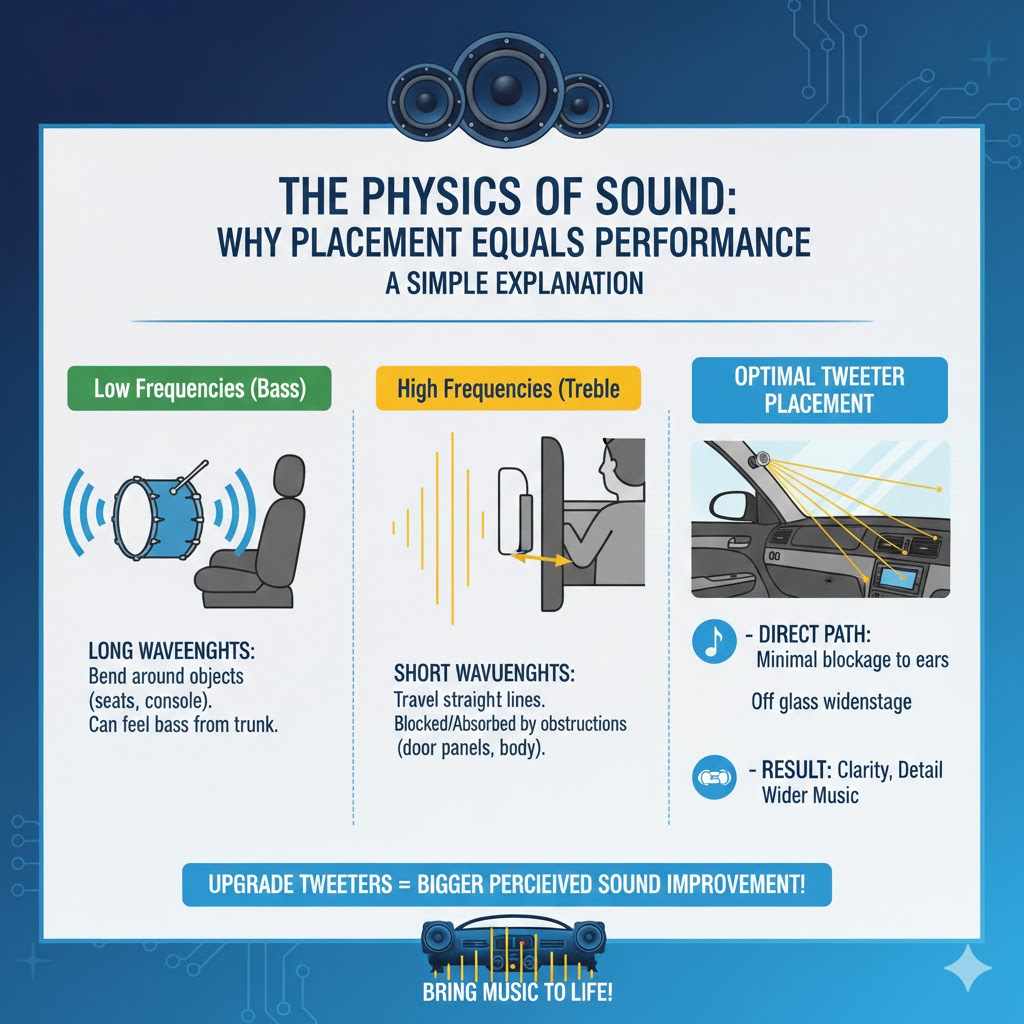
Low frequencies (bass) have very long wavelengths. They easily bend around objects like seat cushions, center consoles, and even your body. This is why you can feel bass even if the subwoofer is hidden in the trunk.
High frequencies (treble), however, have very short wavelengths. They travel in much straighter lines, similar to a flashlight beam. If a high-frequency wave hits an obstruction, it reflects or gets absorbed. If your tweeters are buried down in your door panels, your body or the door’s internal structure blocks those crucial details.
By placing the tweeter near the window glass or the top of the dash, you achieve two things:
- Direct Path: The high frequencies travel directly to your ears with minimal blockage.
- Reflection Control: Highs reflect cleanly off glass surfaces, helping to widen the sound stage across the dashboard, making the music sound bigger and wider.
This understanding is why upgrading your tweeters often yields a bigger immediate perceived improvement in sound quality than just upgrading your woofers alone.
Final Thoughts: The Crispness You Deserve
So, there you have it! What is a tweeter in a car? It is the critical component responsible for the sparkle, clarity, and realism in your favorite music. They are small, they work incredibly hard, and their strategic placement makes all the difference in your listening experience.
Whether your factory tweeters have given up the ghost, or you are simply ready to unlock the hidden detail in your music library, understanding the role of the tweeter—and the importance of component systems and crossovers—puts you in the driver’s seat of your car audio journey. Don’t settle for dull sound. A small investment in quality tweeters and proper installation can transform your daily drive into a private concert hall. You now have the knowledge to make smart choices and enjoy the crisp, clear highs you’ve been missing!
Frequently Asked Questions (FAQ) About Car Tweeters
Q1: Can I install tweeters without an amplifier?
A: Yes, absolutely! Many high-quality aftermarket tweeters (especially silk dome models) are designed with high sensitivity (92 dB or higher) to work perfectly well with the low power output of your factory car stereo. Just ensure you use them as part of a component set with a crossover, or ensure the coaxial speaker has a built-in crossover.
Q2: Will replacing just the tweeters improve my sound quality?
A: Yes, often dramatically! If your factory tweeters are weak or blown, replacing them with dedicated aftermarket tweeters will instantly add detail, clarity, and crispness to your music that your old speakers couldn’t provide.
Q3: What is the difference between a tweeter and a super tweeter?
A: A standard tweeter handles frequencies usually up to 20,000 Hz or 22,000 Hz. A super tweeter is specifically designed to reproduce frequencies even higher, often starting around 4,000 Hz and going up to 30,000 Hz or more. They add extreme “air” and presence but are usually only necessary for very high-end audio setups.
Q4: How much does it cost to replace a pair of car tweeters?
A: The cost varies widely. A basic set of component tweeters (without professional installation) can cost anywhere from $50 to $150 for a decent pair. High-end audiophile tweeters can easily run $300 or more. DIY installation keeps costs low.
Q5: Why do my tweeters sound distorted when the music is loud?
A: This usually means the tweeter is being overloaded by too much power (it’s “clipping”) or it’s receiving frequencies too low for it to handle (the crossover is failing or missing). Double-check that you have a functioning crossover installed between the signal source and the tweeter wires.
Q6: Do I need to disconnect the car battery when installing new tweeters?
A: Yes, it is highly recommended, especially if you are installing crossovers near the door or under the dash. Working with speaker wires while the battery is connected risks shorting out wires, which can damage your head unit or amplifier.