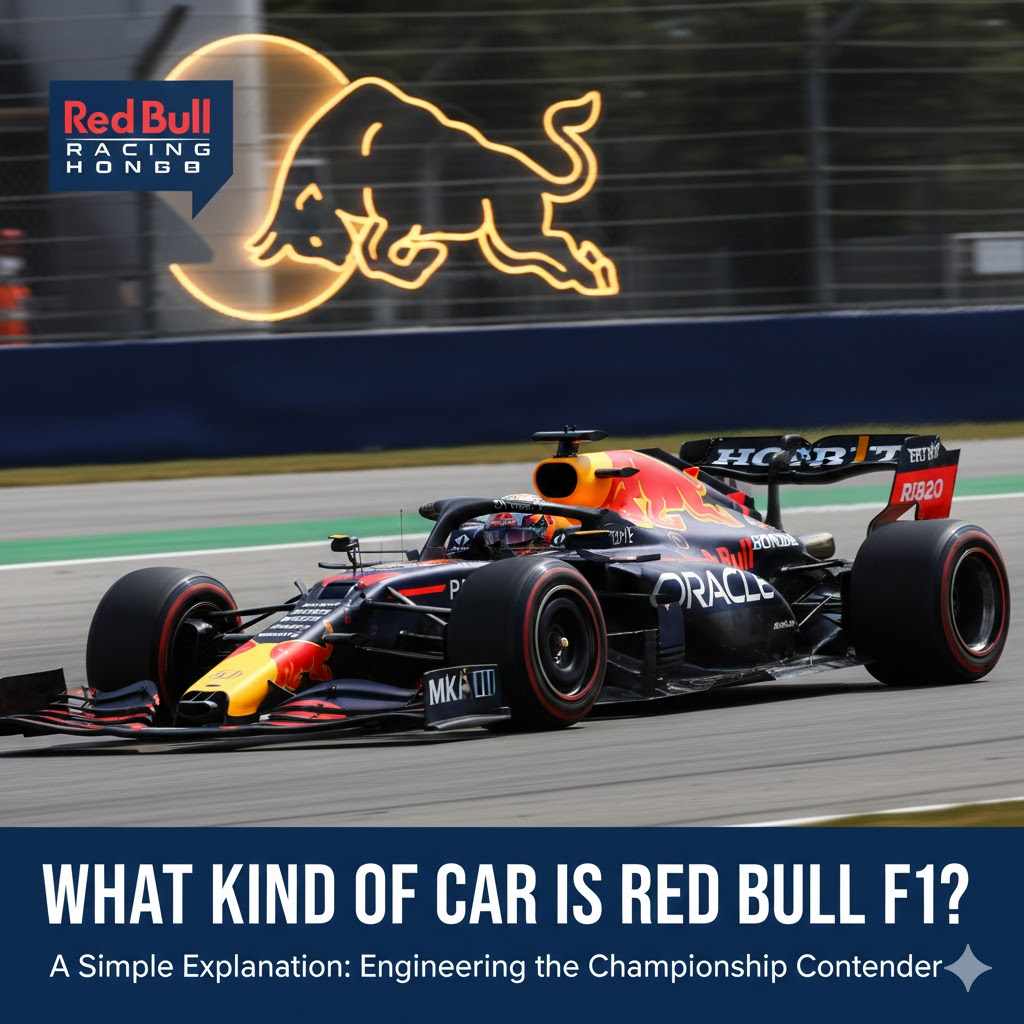
What Kind of Car Is Red Bull F1? A Simple Explanation
Figuring out What Type of Car Is Red Bull F1? Explained Simply can seem a bit tricky. It’s because these cars are super specialized and different from what you see on the road. Don’t worry, though! We’ll break it down into easy-to-understand parts. We’ll explore the design, the parts, and what makes these cars so incredibly fast, so you’ll be able to tell anyone what they are. Let’s get started!
The Basics of a Formula 1 Car
Formula 1 cars, like the ones used by Red Bull, aren’t like regular cars. They are designed for one thing: speed. These racing machines are built to perform at the highest levels of motorsports. Unlike street cars that prioritize comfort and practicality, F1 cars focus on aerodynamics, lightweight materials, and powerful engines. They are built for the track, not the road. Every detail, from the shape of the body to the tires, is carefully crafted to improve performance.
These cars are not mass-produced; they’re handcrafted with precision. The construction process involves using advanced materials like carbon fiber for the chassis, which is the car’s main structure. The engines are highly specialized, capable of reaching incredible speeds. Teams like Red Bull continually update their cars with the latest technology to stay ahead of the competition. The goal is to make a car that is both fast and reliable.
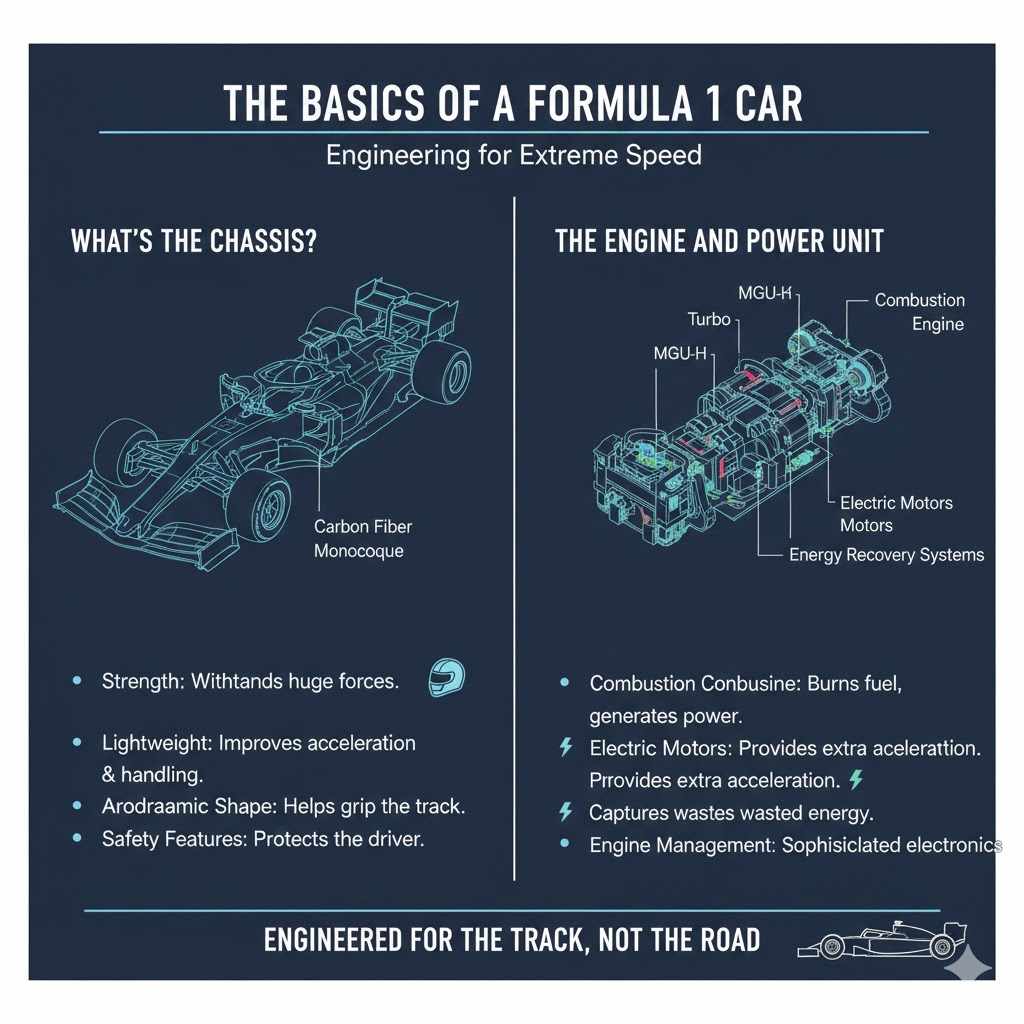
What’s the Chassis?
The chassis, or the main frame of the car, is like the car’s skeleton. It’s the structure that holds everything together: the engine, wheels, driver’s seat, and all the other parts. In Formula 1, chassis are typically made from lightweight, super-strong materials like carbon fiber. Carbon fiber is made by weaving thin strands of carbon together to make a fabric. This fabric is incredibly strong and light. This reduces the car’s weight, allowing it to accelerate faster and handle corners better.
- Strength: Carbon fiber is extremely strong, capable of withstanding huge forces like those generated by high speeds and impacts.
- Lightweight: Despite its strength, carbon fiber is surprisingly light, which helps improve the car’s performance.
- Aerodynamic Shape: The chassis is designed to work with the car’s aerodynamics, helping it stick to the track.
- Safety Features: The chassis includes safety elements like the cockpit and roll hoop to protect the driver.
Understanding the chassis is key to the overall design of an F1 car. It is the foundation upon which the rest of the car is built, and its design impacts everything from handling to safety. Without a strong, lightweight chassis, an F1 car wouldn’t be able to perform.
The Engine and Power Unit
The engine in a modern Formula 1 car is called a “power unit.” It’s not just a single engine; it is a complex system that includes a combustion engine (the part that burns fuel) and several electric motors. This power unit delivers an enormous amount of horsepower and is designed to accelerate the car to amazing speeds. F1 teams are always trying to improve engine efficiency and power output. These engines are incredibly sophisticated and require a high level of expertise to create and maintain.
- Combustion Engine: This is a small, high-revving engine that burns fuel to generate power.
- Electric Motors: The power unit has electric motors that provide extra power, especially during acceleration and to recover energy.
- Energy Recovery Systems: These systems capture energy that would normally be wasted, such as heat from the brakes and exhaust.
- Engine Management: The engine is controlled by sophisticated electronics that manage fuel flow, ignition, and other settings.
F1 engines must adhere to strict regulations. The rules govern many aspects, including engine size, fuel flow, and the materials used. The goal is to keep the competition close. The power unit is a central component of an F1 car, helping determine its overall speed and performance. Teams invest heavily in engine development, trying to get every possible advantage.
Aerodynamics and Its Function
Aerodynamics is all about how air moves around an object. In Formula 1, aerodynamics is incredibly important because it significantly affects the car’s performance. The shape of the car is carefully designed to use airflow to create downforce, which helps the car stick to the track. This allows drivers to go faster through corners without losing control. The aerodynamic elements on a car are constantly adjusted to get the best possible performance.
The goal of aerodynamics in an F1 car is to make the car move through the air efficiently and generate as much downforce as possible. Downforce is like an invisible force that pushes the car toward the ground, which increases the amount of grip that the tires have on the track. This helps the car turn quickly and stay stable at high speeds. This is why the shape of every part, from the front wing to the rear wing, is so important.
Front Wing Design
The front wing is a critical element in an F1 car’s aerodynamics. It’s the large, wing-shaped structure at the front of the car. Its main job is to direct airflow, which helps create downforce and improve the car’s overall balance. The design of the front wing is constantly changed to suit different tracks and racing conditions. The front wing needs to manage airflow effectively to ensure the car performs well in corners.
- Downforce Creation: The front wing generates downforce, which helps the front of the car grip the track, especially through corners.
- Airflow Control: The front wing helps direct airflow around the car, reducing drag and improving the car’s efficiency.
- Balance: The front wing works with other aerodynamic elements, such as the rear wing, to balance the car’s performance.
- Track-Specific Designs: Teams adjust the front wing design to match the specific needs of each track, such as low-speed or high-speed circuits.
The front wing is one of the most visible parts of an F1 car. It is a key tool in an F1 team’s effort to gain a competitive edge. The constant changes and adjustments to the front wing are evidence of the importance of aerodynamic research and design in Formula 1.
The Rear Wing
The rear wing is another crucial aerodynamic component, positioned at the back of the car. Just like the front wing, it is designed to create downforce and improve stability, especially at higher speeds. The rear wing’s shape and angle are carefully designed to direct airflow. This is to increase the car’s grip and handling capabilities. The rear wing works together with the front wing and other aerodynamic features to provide overall balance. The rear wing is essential for the car’s performance.
- Downforce Generation: The rear wing creates downforce, which presses the rear tires firmly onto the track, offering enhanced grip.
- Balance and Stability: The rear wing works with the front wing to balance the car’s downforce, helping to improve stability at high speeds.
- Drag Reduction: While generating downforce, the rear wing is also designed to reduce drag, improving the car’s efficiency.
- DRS System: Formula 1 cars have a Drag Reduction System (DRS) on the rear wing, which reduces drag on the straights for overtaking.
The rear wing plays a major role in how an F1 car handles on the track. It allows the car to change direction quickly and with control. The shape and settings of the rear wing are changed depending on the race track and how the car is performing. The rear wing’s importance in managing airflow and producing grip makes it a critical part of the car’s design.
Essential Components: Tires, Brakes, and Suspension
Besides the chassis, engine, and aerodynamics, other parts are essential for a Formula 1 car to function. These are the tires, brakes, and suspension. They all work together to provide performance and safety. The tires connect the car to the track. The brakes allow the driver to slow down. The suspension system controls the car’s movement. All these components are important.
Each component plays a critical role in the car’s handling and performance. The quality of these parts can mean the difference between winning and losing. Teams invest a lot of time and money in these components, constantly looking for improvements. The tire compound, the brake design, and the suspension setup are all changed to work best for each specific track. These three components play key roles in the overall design and performance of the car.
Tires and Their Impact
Tires are the only point of contact between the Formula 1 car and the track. They are essential to performance because they provide grip, which is necessary for acceleration, braking, and turning. The type of tire a team chooses depends on the track conditions and the race strategy. The tires’ compound is soft, medium, or hard. This greatly affects the car’s performance. F1 tires are built to perform at extreme conditions and offer maximum performance.
- Grip: Tires provide the grip needed for fast cornering and acceleration.
- Compound: The tire compound (soft, medium, hard) affects grip and wear, influencing race strategy.
- Construction: F1 tires are made from special materials that withstand high forces.
- Performance Window: Tires have a “performance window” where they perform optimally, which is affected by temperature and track conditions.
Tire choice is an important part of the race strategy. Teams constantly assess the tire condition and adjust their strategies. This can greatly impact the outcome of a race. The tires, including the pit stops and tire management strategies, are essential to racing.
Braking Systems
The braking system in an F1 car is very powerful. It is designed to slow the car down quickly from incredibly high speeds. The brakes use special carbon-fiber discs and pads. These can withstand the heat generated when the car slows down. Drivers often use the brakes very aggressively, especially when approaching corners. The braking system is one of the most critical safety features of an F1 car.
- Carbon-Fiber Discs and Pads: These materials are used because they can handle high temperatures and provide strong braking power.
- Brake Calipers: The calipers squeeze the brake pads against the discs to slow the car.
- Brake-by-Wire: Modern F1 cars use a brake-by-wire system, which gives the driver more control.
- Heat Management: Cooling systems are included to keep the brakes from overheating during a race.
The braking system is critical for both performance and safety in Formula 1. The drivers must use the brakes precisely to get the best performance. The design of the brakes and the way they function help drivers make quick turns. This is critical in the fast-paced world of Formula 1.
Suspension and Its Role
The suspension system in an F1 car is complex. It includes springs, dampers, and other parts that connect the wheels to the chassis. The suspension’s main role is to keep the tires in contact with the track surface. It helps absorb bumps and irregularities. It also allows the driver to maintain control. The suspension system is set up differently for different tracks.
- Springs and Dampers: These components absorb bumps and control the car’s movement.
- Wheel Control: Suspension helps keep the tires in contact with the track, which maximizes grip.
- Ride Height: Teams adjust the car’s ride height to improve aerodynamics and handling.
- Handling and Stability: A well-tuned suspension system helps improve the car’s handling and stability at high speeds.
The suspension system plays a crucial role in the overall performance of a Formula 1 car. Suspension ensures the tires stay in contact with the track. This system helps the car be as fast as possible. The suspension is constantly adjusted to work well with other parts of the car. It is crucial for a successful Formula 1 racing.
Red Bull’s Car Model
Red Bull Racing, one of the most successful teams in Formula 1, develops its own cars. The specific model name changes each year, depending on the rules and advancements. For example, the RB18 was a dominant car. It was designed to maximize aerodynamic performance and incorporate the latest engine technologies. Red Bull’s approach involves advanced design and engineering, combining the skills of talented designers and engineers. They use computer simulations, wind tunnel testing, and on-track testing to ensure each new model is optimized for maximum performance.
Red Bull, like other top teams, uses a combination of in-house manufacturing and partnerships with suppliers. They design most of the car themselves, including the chassis, suspension, and aerodynamic elements. Their work is a combination of engineering, performance analysis, and driver feedback. This is essential for the team’s ongoing success in Formula 1.
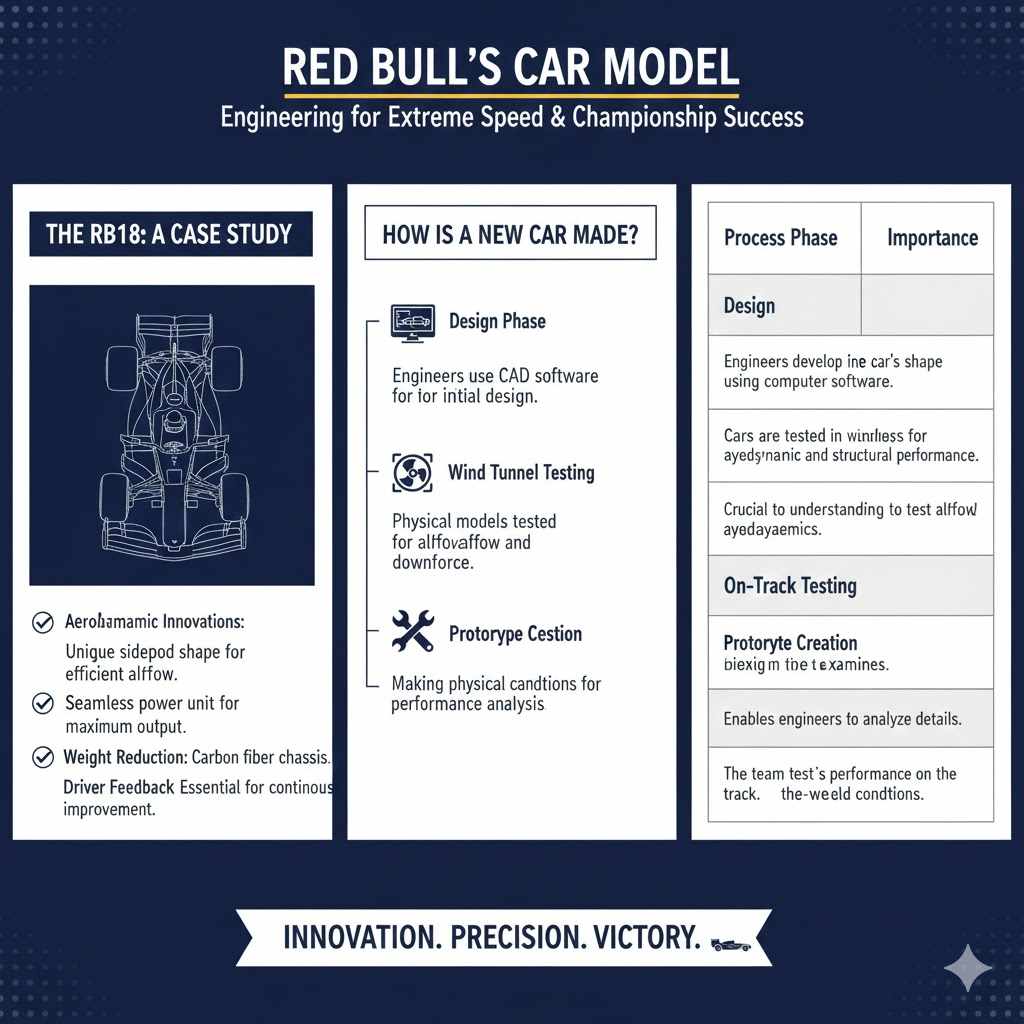
The RB18: A Case Study
The RB18 was a notable car for Red Bull Racing. It won the Constructors’ Championship. Its innovative design and strong engine performance made it one of the top cars on the grid. The RB18 was designed around new regulations. These regulations aimed to improve racing and reduce the “dirty air” effect. The RB18 showed how a well-designed car could perform effectively with those rules.
- Aerodynamic Innovations: The RB18 included innovative aerodynamic features, such as the shape of the side pods. They helped manage the airflow efficiently.
- Engine Integration: The car’s engine, supplied by a partner, was integrated smoothly. This maximized the power output.
- Weight Reduction: The team worked on reducing the car’s weight. This helped improve acceleration and handling.
- Driver Feedback: Constant feedback from the drivers helped improve the car’s performance.
The RB18 is a good example of how to make a high-performance F1 car. It highlights the importance of design, engineering, and teamwork. Red Bull’s success with the RB18 shows its capability in Formula 1.
How Is a New Car Made?
Creating a new F1 car is a long process that involves several stages. The teams start with the rules that the FIA (Fédération Internationale de l’Automobile) sets. The rules describe what is allowed and what is not. This shapes the initial design concepts. Engineers then use computer-aided design (CAD) software to create the car’s shape. They also do simulations to test the design and predict how the car will perform.
- Design Phase: Engineers use CAD software to design the car, including the chassis, aerodynamics, and other parts.
- Wind Tunnel Testing: Teams test their designs in wind tunnels. They test the airflow around the car and measure the downforce and drag.
- Prototype Creation: Teams make prototypes of key components, such as the front and rear wings.
- On-Track Testing: The team tests the car on the track. They make sure all components work well and make adjustments.
This process of creating a new F1 car can take months and involves the contributions of many skilled people. It is a highly specialized process. It shows the amount of work required for the car to be successful.
| Process Phase | Description | Importance |
|---|---|---|
| Design | Engineers develop the car’s shape using computer software. | Lays the foundation for aerodynamic and structural performance. |
| Wind Tunnel Testing | Cars are tested in wind tunnels to test airflow patterns. | Crucial to understanding the car’s aerodynamics. |
| Prototype Creation | Making physical examples to examine and use. | Enables engineers to analyze details. |
| On-Track Testing | The team tests the car on the track. | Tests the car’s performance in real-world conditions. |
Frequently Asked Questions
Question: What makes a Formula 1 car different from a regular car?
Answer: F1 cars are built specifically for racing. They have advanced aerodynamics, lightweight materials, and powerful engines. Regular cars are designed for everyday driving and comfort.
Question: What is downforce, and why is it important in Formula 1?
Answer: Downforce is a force that pushes the car toward the track, increasing grip. It is crucial because it allows the car to go faster through corners.
Question: What is the main material used to build the chassis?
Answer: The chassis is typically made of carbon fiber, which is lightweight and strong.
Question: What is the Drag Reduction System (DRS)?
Answer: DRS is a system that opens the rear wing’s flap on the straights. This decreases drag and allows for easier overtaking.
Question: Why do F1 teams constantly update their cars?
Answer: F1 teams always try to stay competitive by improving their cars. They adjust the design to keep up with the rules and other teams.
Final Thoughts
So, we’ve explored the fascinating world of Formula 1 cars, specifically focusing on the Red Bull F1 machines. We looked at what they are, starting with their design, chassis, engine, and aerodynamics. We discussed the key components like tires, brakes, and suspension. It is obvious that the Red Bull car is more than just a car.
These amazing machines bring the best in engineering and technology. The RB18 model showed how important aerodynamics and engine efficiency are. Remember that understanding the basics of these cars can greatly increase your appreciation for the sport. Keep following the races and learning about the technology. The race car is a complex machine.