What Will a Dealer Give Me for My Car? Proven Value
A dealer will likely give you less than the car’s retail value for your trade-in. The exact amount depends on your car’s condition, age, mileage, demand, and the dealer’s profit goals. Expect a wholesale or auction price, adjusted for reconditioning costs. Researching your car’s worth and negotiating are key to getting a fair deal.
Figuring Out Your Car’s Trade-In Value: What Dealers Look At
So, you’re thinking about trading in your car for a new one, or perhaps just selling it to a dealership. It’s a common question: “What will a dealer give me for my car?” It’s natural to want to know the “proven value” of your vehicle. You’ve put miles on it, kept it running, and now you’re curious about its worth in the eyes of a professional buyer.
This process can feel a bit like a mystery. You see prices online, you hear what friends got, but when you walk into a dealership, the number might be different. Don’t worry! It’s not magic, and it’s not always a trick. There are clear reasons behind the offer a dealer makes. My goal today is to shine a light on this, break down exactly what goes into that valuation, and help you get the most you can for your car. We’ll cover everything from the basics to how you can prepare yourself for a successful trade-in.
The Core Factors Dealers Consider
When a dealer looks at your car, they aren’t just seeing a vehicle; they’re seeing a potential profit. They need to buy it low enough to make money after they’ve fixed it up, cleaned it, and resold it on their lot. This means the offer they make is usually much lower than what you might see a similar car listed for by another private seller.
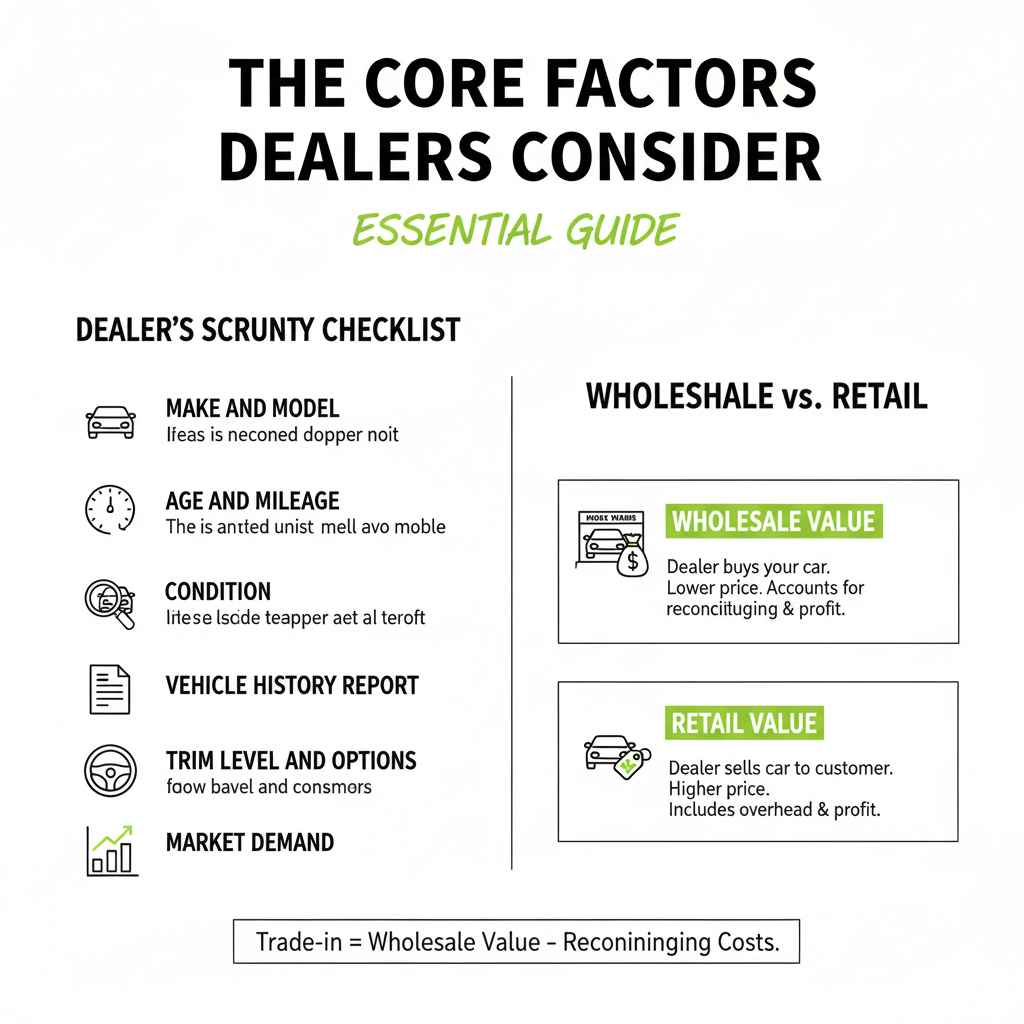
Here are the main things they’ll scrutinize:
Make and Model: Some cars are in higher demand than others. A popular SUV or truck might fetch a better price than a niche sedan.
Age and Mileage: Generally, newer cars with lower mileage are worth more. Wear and tear naturally increases with age and driven miles.
Condition: This is a big one. A car that’s been meticulously maintained, has a clean interior, and no major mechanical issues will always get a better offer than one that’s been neglected. Dents, scratches, worn tires, and interior damage all subtract from the value.
Vehicle History Report: Things like accident history, flood damage, or title issues (like salvage or rebuilt titles) significantly impact resale value.
Trim Level and Options: Higher trim levels with desirable features (like leather seats, sunroof, navigation systems, advanced safety features) can increase the car’s value.
Market Demand: Is this the type of car people are looking for right now in your local area? Dealers track what sells well.
Understanding the Dealer’s Perspective: Wholesale vs. Retail
It’s crucial to understand the difference between the wholesale value and the retail value of your car.
Retail Value: This is the price a dealer typically sells a used car for on their lot. It includes their overhead, reconditioning costs, and profit margin. You, as a buyer, would pay this amount (or negotiate down towards it) if you were buying a used car from a dealer.
Wholesale Value: This is the price a dealer might pay for a car at an auction, or what they’d essentially be buying your car for to put it back on their lot. It’s the lower figure.
When you trade your car in, the dealer is essentially buying it wholesale. They will then likely spend money to detail it, fix any minor issues, and prepare it for re-sale at their retail price. So, the trade-in offer reflects this wholesale value, minus any costs they anticipate incurring to make it salable.
How Dealers Determine Your Car’s Trade-In Value: The Nitty-Gritty
Dealers use a combination of tools and their own expertise to arrive at an offer. They aren’t just guessing!
1. Valuation Tools and Resources
Dealerships have access to industry-standard tools that provide a baseline for your car’s value. These commonly include:
Kelley Blue Book (KBB): KBB provides trade-in values based on your car’s specifics. They consider condition, mileage, and region. Many consumers use KBB as a starting point, and so do dealers.
Edmunds: Similar to KBB, Edmunds offers appraisal tools that consider various factors to estimate your car’s value.
NADA Guides: The National Automobile Dealers Association also provides valuation data, often used by dealers.
Auction Data: Dealers often subscribe to services that track recent wholesale auction prices for similar vehicles in their region. This gives them a very real-time look at what cars are trading for in the wholesale market.
2. The Physical Inspection: What They Look For
While the tools provide numbers, the physical inspection is where things get specific to your car. A dealership appraiser will meticulously check:
Exterior: They’ll walk around the car, looking for dents, scratches, rust, paint imperfections, tire tread depth, and the condition of wheels and glass.
Interior: This includes checking the upholstery for tears or stains, the condition of the dashboard and trim, the functionality of all buttons and controls, and the cleanliness. They’ll also check for any strange smells (smoke, pet odors).
Mechanical Condition: They’ll start the engine, listen for unusual noises, check all fluids, test the brakes and steering, and often take it for a short test drive. They might also hook it up to a diagnostic computer to check for trouble codes.
Vehicle History: They will run a VIN (Vehicle Identification Number) check, usually through services like Carfax or AutoCheck, to identify any reported accidents, title issues, or major repairs.
3. Market Conditions and Demand
The local market plays a huge role.
High Demand Models: If your car is a popular model that sells quickly on their lot (e.g., a fuel-efficient sedan in a city, or a truck in a rural area), they might be willing to offer a bit more.
Oversupply: If they already have many similar cars on their lot, they might offer less for yours.
Seasonality: Sometimes, demand for certain types of vehicles can fluctuate seasonally (e.g., convertibles in summer, 4WD vehicles before winter).
How to Get the Best Trade-In Value for Your Car
Knowing what dealers are looking for is half the battle. The other half is preparing your car and negotiating effectively.
1. Do Your Homework (Research!)
Before you even talk to a dealer, get a solid understanding of your car’s worth.
Use Online Valuation Tools: Get estimates from KBB, Edmunds, and NADA. Be honest about your car’s condition. These tools will give you a range.
Check Local Listings: Browse online marketplaces (like Craigslist, Facebook Marketplace, or local dealership websites) for similar cars to yours. See what they are listed for. Remember, listed prices are usually higher than what a dealer will offer, but it gives you a sense of the market.
Understand Trade-In Value vs. Private Party Value: The trade-in value will always be lower than what you could get selling it yourself. Aim to get as close to the wholesale value as possible with your trade-in.
2. Prepare Your Car for Inspection
Presentation matters! A little effort can go a long way.
Clean it Thoroughly: A detailed interior and exterior can make a car seem much better maintained. Wash, wax, vacuum, clean windows, and wipe down the dashboard. Remove all personal belongings.
Fix Minor Issues: If you have a cracked windshield, a loose trim piece, or a burnt-out bulb, consider getting it fixed. A dealer will factor in the cost of these repairs, and they’ll likely charge more for it than you would. Simple DIY fixes can save you money here.
Organize Your Documents: Gather your service records. A car with a documented maintenance history shows it’s been well cared for, which increases buyer confidence (and thus, dealer offer). Have your title and registration ready if you own the car outright.
Address Any Warning Lights: If a check engine light is on, get it diagnosed and fixed if possible. This is a significant red flag for dealers.
3. Negotiate Smartly
Don’t just accept the first offer.
Don’t Negotiate Trade-In First: When buying a new car, negotiate the price of the new car before you start talking about your trade-in. This prevents dealers from manipulating numbers between the new car price and your trade-in value.
Get Multiple Offers: If possible, get appraisals from a couple of different dealerships or even a car buying service (like CarMax, which specializes in buying cars). This gives you leverage and a benchmark.
Be Realistic: Remember that the dealer needs to make a profit. If your research shows your car is worth $8,000 as a private sale, don’t expect a dealer to offer you $7,500 as a trade; anything closer to $6,000-$6,500 might be more realistic for them.
Consider the Entire Deal: Sometimes, a slightly lower trade-in offer might be acceptable if the dealer is giving you a fantastic deal on the new car or offering other incentives. Look at the total cost of the transaction.
What Factors Don’t Typically Matter to Dealers?
While many things influence trade-in value, some factors that might be important to you personally often don’t sway a dealer’s offer significantly.
Aftermarket Modifications: Unless they are very high-quality and appeal to a broad market (like a professional off-road package on a truck), aftermarket parts (stereos, rims, body kits) often don’t add value and can sometimes even detract from it, as dealers prefer to sell cars in a stock configuration.
Sentimental Value: Your emotional attachment to the car is, unfortunately, irrelevant to a dealer’s offer.
Your Personal Expenses: How much you’ve spent on repairs or maintenance over the years doesn’t directly translate into a higher trade-in value, though good maintenance records do help signal good condition.
When to Consider Selling Privately
If a dealer’s trade-in offer feels significantly lower than what your research suggests your car is worth, selling it privately might be the better route.
Higher Potential Profit: You will almost always net more money selling your car directly to another individual than trading it in.
More Control: You set the price and can negotiate directly with buyers.
However, it requires more effort: You’ll need to advertise your car, arrange viewings, handle potential buyers, and deal with paperwork such as title transfer. There’s also the risk of meeting strangers and the hassle of payment.
To sell privately, you’ll need to:
Prepare your car (as mentioned above – clean, fix, detail, gather records).
Determine your asking price, using online tools and local listings as a guide. Price it competitively.
Take high-quality photos showcasing the car’s best features.
Write a detailed and honest description.
Advertise on platforms like Craigslist, Facebook Marketplace, AutoTrader, or dedicated car-selling apps.
Screen potential buyers and arrange safe meeting places for test drives.
Complete the sale paperwork correctly to ensure the car is legally out of your name. The U.S. Department of Motor Vehicles (DMV) provides guidance on private vehicle sales and title transfers.
A Comparison: Trade-In vs. Private Sale Value
To illustrate, let’s look at a hypothetical example. Imagine you have a 2018 Honda CR-V EX with 60,000 miles in good condition.
| Valuation Type | Estimated Value Range | Notes |
|---|---|---|
| Private Party | $18,000 – $20,000 | What you might sell it for to another individual. |
| Trade-In Value | $15,000 – $17,000 | What a dealer might offer, factoring in reconditioning and profit. |
| Wholesale Value | $15,500 – $17,500 | What a dealer might pay at auction (often close to trade-in offer). |
These are illustrative numbers and can vary significantly based on location, specific vehicle condition, and market fluctuations.
As you can see, the trade-in offer is typically lower than the private party value. It’s the price of convenience and a faster sale.
Can Dealers Offer More Than the Market Value?
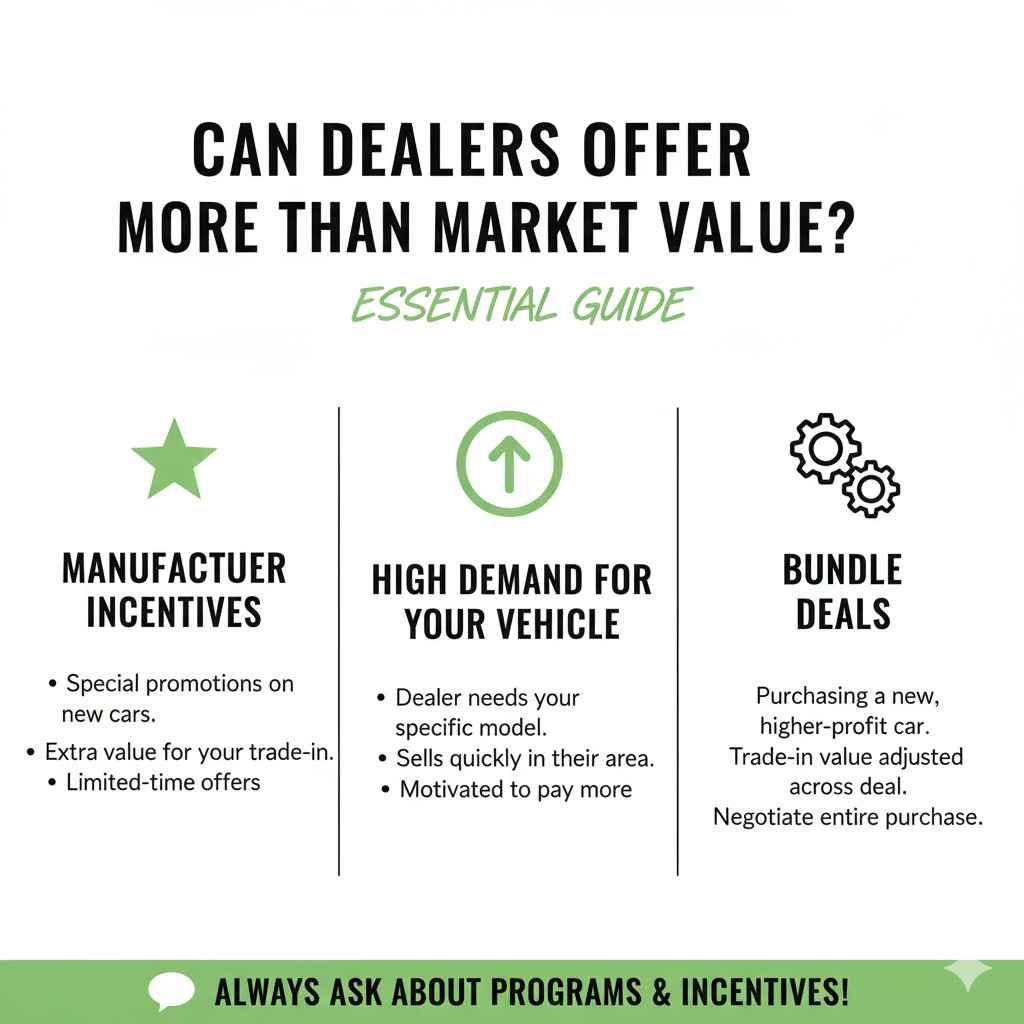
There are certain situations where a dealer might offer more than you expect, or at least make the trade-in value seem more attractive:
Manufacturer Incentives: Sometimes, car manufacturers offer special incentives on new car purchases that can include extra value for your trade-in. These are often limited-time promotions.
High Demand for Your Specific Vehicle: If your car is a model they desperately need to replenish their inventory because it sells so quickly, they might stretch their offer a bit.
Bundle Deals: A dealer might offer you a slightly better trade-in value if you’re also purchasing a more expensive or higher-profit new car from them. They can sometimes adjust profit margins across the entire deal.
It’s always worth asking the dealer if there are any current programs or incentives that could boost your trade-in value.
Common Pitfalls to Avoid
Not Researching: Walking into a dealership without knowing your car’s worth is the biggest mistake.
Focusing Only on Trade-In Value: If you’re buying a new car, the total price of the deal matters more than just the trade-in number in isolation.
Hiding Problems: Be upfront about any known issues. Dealers will find them during inspection, and it erodes trust, potentially leading to a lower final offer. Trustworthy sources like the Federal Trade Commission (FTC) offer advice on dealing with dealerships and avoiding deceptive practices.
Accepting the First Offer: Unless it’s incredibly generous, always try to negotiate.
Frequently Asked Questions (FAQ)**
Q1: How much less will a dealer give me for my car compared to private sale?
Typically, a dealer will offer you about 10-20% less than the private party sale value. This is because they need to account for reconditioning costs, overhead, and their profit margin when they resell the car.
Q2: Can I get a better trade-in value if I buy a new car from the same dealer?
Sometimes, yes. Dealers may be more willing to negotiate your trade-in value if you are buying a new car from them. They might adjust numbers across the entire sale to make the deal more attractive, especially if it means securing a new car sale.
Q3: What if I owe money on my car?
If you owe money on your car, you have “negative equity” if the amount you owe is more than the dealer’s trade-in offer. The dealer can pay off the loan for you, but you will need to pay the difference out-of-pocket. This extra amount can sometimes be rolled into your new car loan, but it will increase your monthly payments.
Q4: How important are the vehicle’s maintenance records for a trade-in?
Very important! A detailed log of regular maintenance and minor repairs shows that you’ve taken good care of the car. This builds confidence in the vehicle’s condition and can lead to a slightly better offer from the dealer, as they see less risk and fewer immediate repairs needed.
Q5: Should I get my car detailed before trading it in?
Yes, a good detailing can make a big difference. A clean car looks better maintained and can impress the appraiser. It signals that you’ve cared for the vehicle. While it won’t dramatically increase the wholesale price, it can prevent deductions for dirtiness and improve its overall presentation.
Q6: What if my car has significant damage or mechanical issues?
If your car has major problems (e.g., serious accident damage, blown engine, transmission issues), a dealer’s offer will be very low, often reflecting its value as a parts car or a severely discounted wholesale unit. In such cases, selling it privately as-is or even to a salvage yard might be more financially sensible.
Q7: How can I be sure the dealer is being fair with their offer?
The best way to ensure fairness is by doing your research beforehand. Use online valuation guides (KBB, Edmunds, NADA), check local private sale listings, and consider getting an appraisal from another dealer or a car-buying service. Having this information will help you assess if the dealer’s offer is reasonable within the current market.
Conclusion
Navigating the world of car trade-ins can feel a bit daunting, but by understanding the factors that influence value and preparing yourself, you can feel much more confident. Remember, when a dealer asks, “What will you give me for my car?” their offer is based on the wholesale value, their need to recondition, and their profit goals. It’s rarely the same as the retail price you see listed elsewhere.
Your best strategy is to be informed. Research your car’s value extensively using reputable online tools.