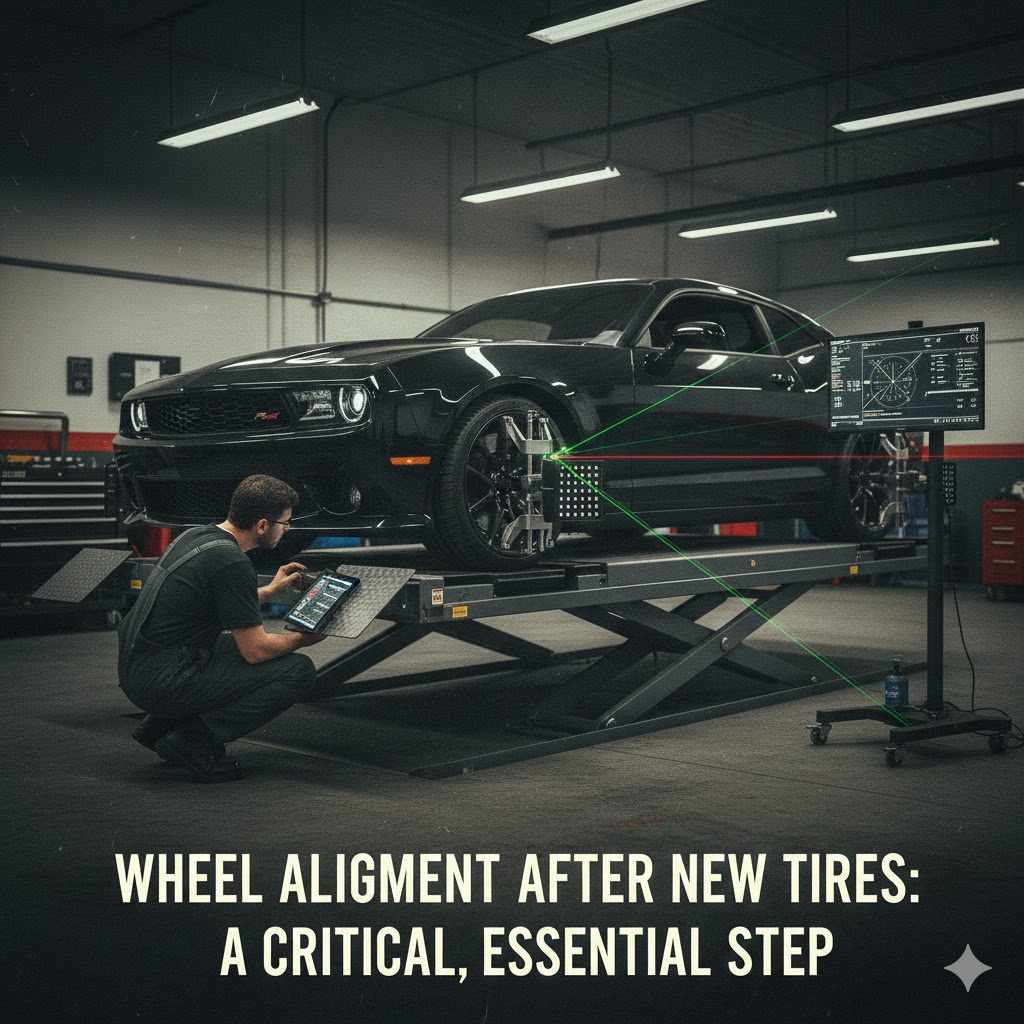
Wheel Alignment After New Tires: A Critical, Essential Step
Yes, getting a wheel alignment after new tires are fitted is a critical and necessary step. It ensures your new tires wear evenly, improves vehicle safety and handling, and protects your investment. Skipping it can lead to premature tire wear, costing you more money in the long run and compromising your car’s performance.
You just spent a good amount of money on a fresh set of tires. Your car feels brand new, gripping the road with confidence. It’s a great feeling! But then the technician asks a question: “Would you like to get a wheel alignment today?” For many drivers, this question brings confusion. Is it an unnecessary upsell? Or is it something you genuinely need?
If you’ve ever felt unsure about this, you’re not alone. It’s a common point of confusion for car owners. The simple answer is that getting an alignment is one of the smartest things you can do to protect your new tire investment. In this guide, I’ll walk you through exactly why it’s so important, what an alignment is, and how this simple service saves you money and keeps you safer on the road. Let’s make car care simple, together.
What Exactly Is a Wheel Alignment?
Before we dive into why it’s so crucial, let’s clear up what a wheel alignment actually is. It has nothing to do with the tires themselves, but everything to do with the car’s suspension—the system that connects your car to its wheels.
Think of it like a shopping cart. Have you ever pushed one with a wonky wheel that pulls hard to one side? That’s what a car with bad alignment feels like. An alignment is simply the process of adjusting the angles of your wheels so they are perfectly parallel to each other and perpendicular to the ground. This ensures they point in the right direction.
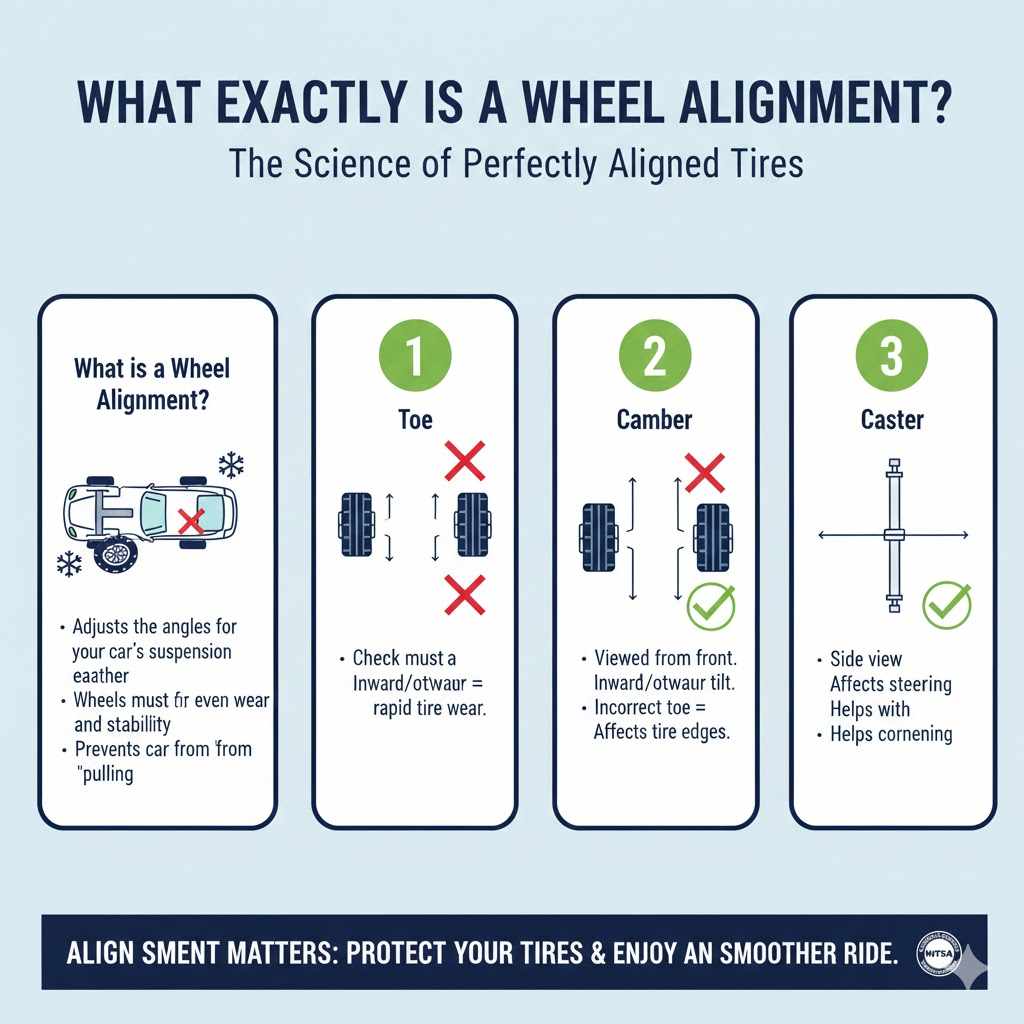
Mechanics look at three main angles:
- Toe: This is the direction your tires point when viewed from above. Think of your own feet. If they point inward, that’s “toe-in.” If they point outward, that’s “toe-out.” Both are bad for your tires.
- Camber: This is the inward or outward tilt of your tires when viewed from the front of the car. Too much inward tilt (negative camber) or outward tilt (positive camber) will wear down the edges of your tires.
- Caster: This angle helps with steering stability and cornering. While it doesn’t affect tire wear as much, an incorrect caster angle can make your steering feel heavy or unstable.
When these angles are out of whack, your tires don’t roll straight. Instead, they get dragged and scrubbed along the road, which is the primary cause of uneven and rapid tire wear.
Why New Tires Make Alignment an Absolute Must
So, why is this especially important when you get new tires? Think of your new tires as a blank slate. They have perfect, full tread across their entire surface. An alignment sets them up for a long and healthy life.
1. Protect Your Big Investment
Tires aren’t cheap. A new set can cost hundreds, even thousands of dollars. Getting an alignment, which is a fraction of that cost, is like buying insurance for your tires. A misaligned suspension can ruin a brand-new set of tires in just a few thousand miles. You’ll see the edges wearing down rapidly while the middle of the tread is still new. An alignment ensures they wear evenly, allowing you to get the full lifespan you paid for.
2. Start with a Perfect Foundation
The old tires you just replaced were likely worn down in a pattern that matched your existing (and possibly poor) alignment. When you put new tires on, they will immediately start wearing into that same bad pattern if the alignment isn’t corrected. It’s a cycle that will continue until the root cause—the misalignment—is fixed. Starting with a fresh alignment gives your new tires the best possible chance to perform as they were designed.
3. Uncover Hidden Suspension Problems
Sometimes, what caused your old tires to wear out in the first place was a problem with your suspension, not just a gradual misalignment. Worn-out suspension parts like ball joints, tie rods, or control arm bushings can prevent a car from holding its alignment. During an alignment check, a good technician will inspect these components. This can help you catch a small problem before it becomes a major, expensive repair.
The Hidden Costs of Skipping an Alignment
Deciding to skip an alignment might seem like a way to save a little money upfront, but it almost always costs you more in the long run. The consequences go beyond just tire wear.
Uneven and Premature Tire Wear
This is the biggest and most immediate cost. A misaligned car can chew through the tread on your new tires alarmingly fast. Instead of getting 50,000 miles out of them, you might only get 20,000 or 30,000. That means you’ll be buying another set of tires much sooner than you should.
Poor Fuel Economy
When your wheels are fighting each other, your engine has to work harder to move the car forward. This “scrubbing” effect creates resistance, which increases your fuel consumption. According to the U.S. Department of Energy, improper alignment can decrease your gas mileage by as much as 10%. Over a year, that adds up to a significant amount of wasted money at the pump.
Unsafe Handling and Driver Fatigue
A car that constantly pulls to one side is not just annoying; it’s a safety hazard. You have to constantly apply pressure to the steering wheel to keep the car driving straight. This can be exhausting on long trips and can reduce your reaction time in an emergency. Proper alignment makes the car track straight and true, making it easier and safer to drive.
Stress on Steering and Suspension Parts
Misalignment puts extra strain on your entire steering and suspension system. Components like your tie rods, ball joints, and wheel bearings are forced to work under constant pressure they weren’t designed for. This can lead to premature failure of these parts, resulting in repairs that are far more expensive than a simple alignment.
Cost Comparison: Alignment vs. Neglect
Let’s look at the numbers to see how a small investment can save you a lot of money.
| Cost Item | Cost of Getting an Alignment | Potential Cost of Skipping an Alignment |
|---|---|---|
| Wheel Alignment | $80 – $150 | $0 (initially) |
| New Set of Tires | $600 (protected investment) | $600 (worn out 40% faster, needing replacement sooner) |
| Extra Fuel Cost (Annual) | $0 | ~$150 (assuming 15k miles/year, 25 MPG, $3.50/gallon, 5% loss) |
| Potential Suspension Repair | $0 (problems caught early) | $300+ (from premature wear on components) |
| Total Cost Over 2 Years | ~$100 | ~$500+ (in premature tire replacement, fuel, and repairs) |
As you can see, the small upfront cost of an alignment is easily offset by the savings in tires, fuel, and potential repairs.
Key Signs Your Car Needs an Alignment
Even if you don’t have new tires, your car can fall out of alignment from everyday driving. Hitting potholes, bumping into curbs, or just general wear and tear on suspension components can knock your wheels out of spec. Here are the tell-tale signs to watch for:
- Vehicle Pulling to the Left or Right: While driving on a straight, flat road, you have to hold the steering wheel firmly to keep the car from drifting to one side.
- Crooked Steering Wheel: The steering wheel is not centered when you are driving straight. The logo might be tilted to one side.
- Uneven Tire Wear: This is the most obvious sign. Check your tires. Is the tread on the inside or outside edge worn down much more than the center? This is a classic symptom of a bad alignment.
- Sloppy or Loose Steering: The steering feels less responsive than it used to. There might be a slight delay or “play” in the wheel.
- Squealing Tires: If you hear your tires squealing when making routine turns at normal speeds, it’s often a sign that they are being dragged sideways due to poor alignment.
If you notice any of these symptoms, it’s a good idea to get your alignment checked, regardless of how new your tires are.
The Alignment Process: What to Expect at the Shop
Getting a wheel alignment is a straightforward and relatively quick process. Knowing what happens can make you feel more confident when you take your car in.
- Initial Inspection: First, the technician will likely test drive the car to confirm your concerns (like pulling). Then, they will put your car on a lift and perform a visual inspection of the steering and suspension systems. They’ll check for any worn or damaged parts that could prevent a successful alignment.
- Mounting the Sensors: The mechanic will attach highly sensitive sensors or targets to each of the four wheels. These devices are connected to a central computer.
- Measuring the Angles: The computer, using lasers or cameras, measures the current angles of your wheels (toe, camber, and caster) with extreme precision. It compares these measurements to the vehicle manufacturer’s specifications.
- Making Adjustments: The technician will then make fine adjustments to the suspension components. They will turn nuts and bolts on the tie rods, control arms, and other parts to bring the angles back into the exact manufacturer-recommended range.
- Final Report: Once finished, you will typically receive a printout showing the “before” and “after” measurements. This report is proof of the work done and shows you how far out of spec your car was.
The entire process usually takes about an hour.
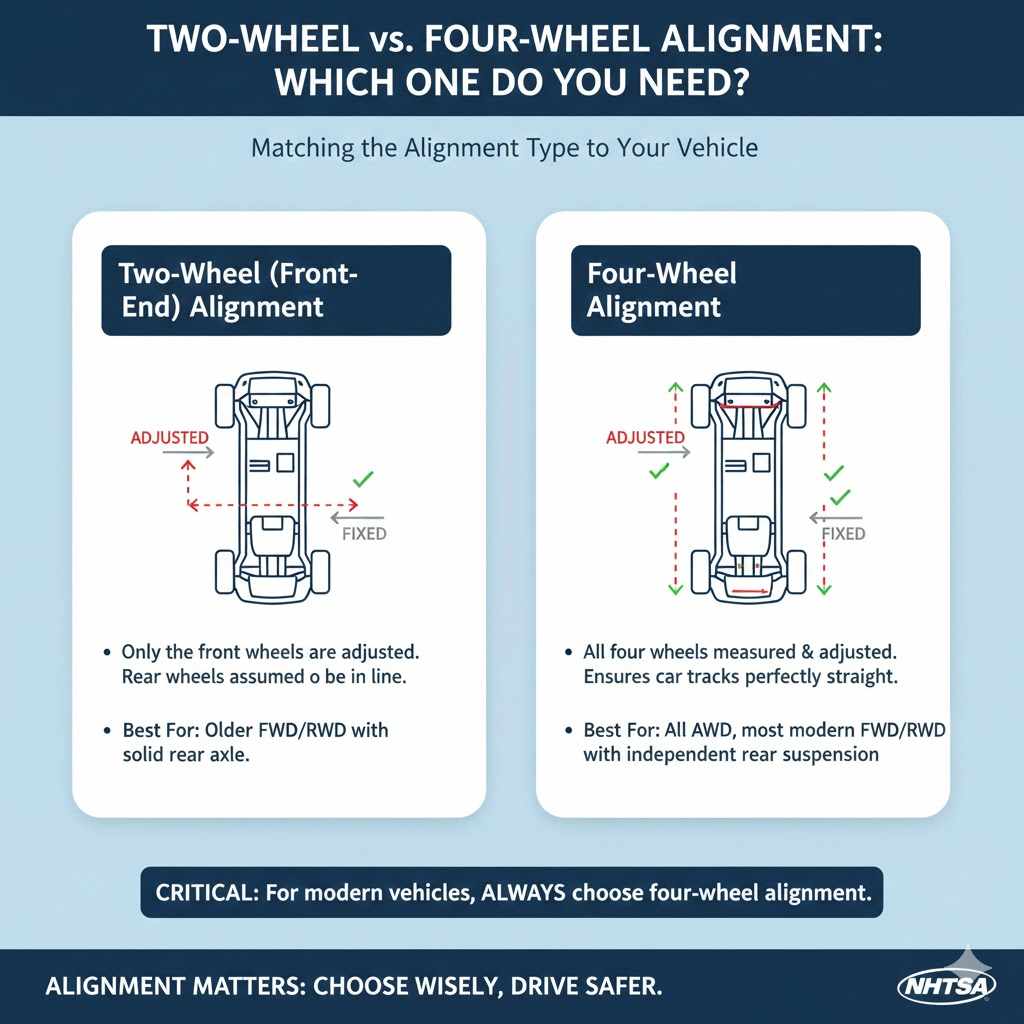
Two-Wheel vs. Four-Wheel Alignment: Which One Do You Need?
You might hear the terms “front-end alignment” (two-wheel) and “four-wheel alignment.” The one you need depends on your vehicle’s drivetrain and suspension type.
| Alignment Type | What It Is | Best For |
|---|---|---|
| Two-Wheel (Front-End) Alignment | Only the front wheels are adjusted. The rear wheels are assumed to be in line. | Older vehicles with a solid rear axle, typically front-wheel drive (FWD) or rear-wheel drive (RWD). It’s less common on modern cars. |
| Four-Wheel Alignment | All four wheels are measured and adjusted. This ensures all four wheels are working together perfectly. | All-wheel drive (AWD) vehicles, most modern front-wheel drive (FWD) cars with independent rear suspension, and all rear-wheel drive (RWD) cars with independent rear suspension. This is the standard for most cars today. |
For almost all modern vehicles, a four-wheel alignment is the correct and necessary choice. It is the most comprehensive and ensures that the car tracks perfectly straight. When in doubt, always opt for the four-wheel alignment to be safe.
Frequently Asked Questions (FAQ)
1. How much does a wheel alignment usually cost?
The cost of a wheel alignment typically ranges from $80 to $150, depending on the type of vehicle, the shop’s location, and whether you need a two-wheel or four-wheel alignment. Some shops offer lifetime alignment packages for a higher initial cost.
2. How long does a wheel alignment take?
A standard four-wheel alignment on a modern vehicle usually takes about one hour to complete. If the technician discovers worn suspension parts that need replacement, it could take longer.
3. Do I really need an alignment if my car feels like it drives straight?
Yes, it’s still highly recommended. A car can be out of alignment enough to cause uneven tire wear without being severe enough for you to feel a pull in the steering wheel. The alignment machine is far more sensitive than a driver. Getting it checked is the only way to be sure.
4. Is tire balancing the same as a wheel alignment?
No, they are two completely different services. Tire balancing involves correcting weight imbalances in the tire and wheel assembly to prevent vibrations at high speeds. Wheel alignment involves adjusting the angles of the wheels so they travel straight. You need both for a smooth ride and long tire life.
5. What if my car still pulls to the side after an alignment?
If your car still pulls after a fresh alignment, it could be due to “radial pull” from a defective tire or uneven wear patterns that have already set in. Swapping the front tires from side to side can sometimes fix this. In other cases, it could point to a worn suspension or steering component that wasn’t caught, so you should take it back to the shop for re-evaluation.
6. Will the tire shop automatically do an alignment when I buy new tires?
No, a wheel alignment is a separate service. While most reputable tire shops will strongly recommend it, they will not perform it without your consent. It’s an added service with an additional charge, so you need to specifically ask for it.
7. How often should I get my wheels aligned?
Besides getting one with every new set of tires, a good rule of thumb is to have your alignment checked once a year or every 12,000 miles. You should also get it checked immediately if you hit a large pothole, curb, or are involved in a minor accident. The National Highway Traffic Safety Administration (NHTSA) emphasizes the importance of proper tire maintenance for safety, and alignment is a key part of that.
Conclusion: A Small Step for a Major Payoff
So, is it really necessary to get an all-wheel alignment check after new tires are fitted? The answer is a resounding yes. Think of it less as an extra cost and more as the final, essential step in the tire replacement process. It’s the single best thing you can do to protect your investment, ensure your car drives safely, and save money on fuel and future repairs.
By investing a small amount of time and money in an alignment, you are setting your new tires up for a long, even life. You’ll enjoy a smoother, safer ride and have the peace of mind that comes from knowing your car is in top condition. The next time you buy new tires and the technician asks about an alignment, you can confidently say “yes,” knowing you’re making a smart, informed decision for your vehicle and your wallet.