Why Is My Car Horn Not Working? Common Causes & Fixes
A car horn that will not sound is almost always one of six things: a blown fuse, a failed relay, a worn-out horn unit, a corroded ground wire, a cracked steering-wheel clock spring, or a dead horn switch. Most of these are a $5 to $20 fix you can diagnose in under 15 minutes with a multimeter and the fuse box under the hood. This guide walks through each cause in the order you should actually check them, plus what to do if the horn only works some of the time.
Why a Working Horn Matters
BEST TOOL FOR DIAGNOSING A DEAD HORN
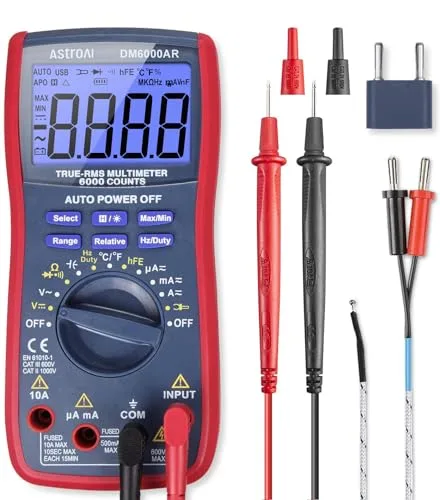 |
AstroAI Digital Multimeter – $34.99 Every diagnostic step in this guide, from testing the horn directly at the battery to checking wiring continuity, needs a multimeter, and this auto-ranging one handles voltage, continuity, and resistance in a single tool.
|
Your horn is not just for venting frustration in traffic. It is a legally required safety device in every U.S. state, used to warn drivers, cyclists, and pedestrians who have not seen you. A horn that does not work can also fail a state vehicle safety inspection in the states that require one, so it is worth fixing as soon as you notice it rather than waiting for your next inspection.
Common Reasons Your Car Horn Isn’t Working
Car horns are simple, low-voltage devices, but the circuit that powers one runs through several parts that can each fail on their own. Here are the six most common culprits, roughly in the order you should check them.
Blown Fuse
Every car protects its horn circuit with a fuse in the underhood or under-dash fuse box, usually labeled HORN. A power surge or short circuit can pop it instantly, and it is the cheapest, fastest thing to rule out first. Pull the fuse and look for a broken metal strip inside; if it is blown, swap in a new one of the exact same amperage listed on the fuse box cover. A replacement costs $1 to $5 for a multi-pack at any auto parts store.
Faulty Horn Relay
The horn relay is a small electromagnetic switch that closes the high-current circuit between the battery and the horn when you press the button. When a relay’s internal contacts wear out or corrode, the horn gets no power even though the fuse, wiring, and horn itself are all fine. Most fuse boxes have another relay of the identical part number nearby, often for the fan or fuel pump, and swapping it in temporarily is the standard way to confirm a bad relay before buying a $10 to $20 replacement.
Bad Horn Unit
The horn itself sits behind the front bumper or grille, directly exposed to heat, road spray, and vibration, and its internal diaphragm eventually wears out or rusts through. You can test it by disconnecting the horn’s two wires and touching a set of jumper wires straight from the battery terminals to the horn’s own terminals; if it stays silent, the horn itself is dead. A replacement horn runs about $15 to $50 and bolts in with basic hand tools.
Wiring and Corroded Ground Connections
Loose, corroded, or chafed wires between the horn, the relay, and the steering wheel can cut power at any point in the circuit, and a corroded ground connection where the horn bolts to the car’s frame is one of the most overlooked causes, because the horn can look and test fine everywhere else. Follow the wiring from the horn back to the fuse box and check the ground point for rust or a loose bolt; a multimeter set to continuity mode finds a broken connection faster than a visual inspection. Cleaning a corroded ground with a wire brush and dielectric grease costs almost nothing; a full wiring repair through a shop runs $50 to $150.
Steering Wheel or Airbag Clock Spring Issues
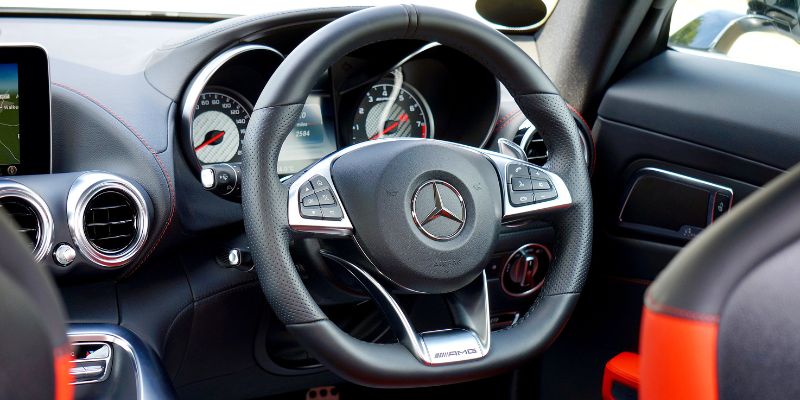
The horn button is built into the steering wheel and wired through the airbag clock spring, a coiled ribbon cable that keeps the electrical connection intact as the wheel turns. When the clock spring cracks or wears through, from age or from repeated hard steering-lock-to-lock turns, the horn (and sometimes the airbag or cruise control) stops responding. This repair should go to a professional; airbag components can deploy unexpectedly if handled incorrectly, and a clock spring replacement typically costs $150 to $500 with parts and labor.
Faulty Horn Switch
The horn switch is the physical contact you press on the steering wheel pad, and repeated pressing over the years wears down its internal contacts until they no longer make a clean connection. A shop can confirm this by bypassing the switch with a jumper wire directly at the clock spring connector; if the horn sounds, the switch itself needs replacing. Parts and labor for a switch replacement usually run $50 to $200 depending on the vehicle.
Here is a quick summary of all six causes:
| Issue | Symptoms | Fix | Cost Estimate |
|---|---|---|---|
| Blown Fuse | Horn is completely silent | Replace fuse (same amperage) | $1–$5 |
| Faulty Relay | Pressing the button does nothing, no click | Swap or replace relay | $10–$20 |
| Bad Horn Unit | No sound, or a faint/weak honk | Replace horn | $15–$50 |
| Wiring / Corroded Ground | Intermittent honk, or silent despite good fuse and relay | Clean ground, repair wiring | $0–$150 |
| Clock Spring / Airbag | Horn cuts out at certain wheel angles, airbag light on | Professional clock spring repair | $150–$500 |
| Faulty Horn Switch | Relay clicks but no sound, or switch feels mushy | Replace switch | $50–$200 |
Why Does My Horn Only Work Sometimes?
If your horn honks fine most of the time but goes silent at random, or only works with the wheel turned to a certain angle, the cause is almost always a connection that is failing rather than one that has failed completely. The most common culprits are a clock spring ribbon that is starting to crack (the horn cuts out at specific steering angles), a horn relay whose contacts stick or hesitate as it heats up, a horn switch that only makes contact if you press it at a certain spot, or a corroded ground connection that opens up over bumps and vibration.
Start by cleaning and tightening every ground point in the circuit; that single five-minute fix resolves a large share of intermittent horn complaints. If cleaning the grounds does not help and the problem tracks with steering wheel position, budget for a clock spring inspection instead of replacing parts at random.
How to Diagnose a Car Horn Problem Step by Step
Work through these five steps in order. Each one rules out a cheaper, easier cause before you move on to the next, so you never pay for a part you did not need.
Step 1: Check the Fuse
Open your fuse box (check the owner’s manual for its exact location and diagram) and find the fuse labeled HORN. Pull it and hold it up to the light; a blown fuse has a visibly broken or scorched metal strip inside. Replace it only with a fuse of the same amperage rating printed on the fuse box cover or diagram, never a higher one.
Step 2: Test the Horn Itself
Locate the horn, usually mounted behind the front grille or bumper, and disconnect its wiring connector. Touch two jumper wires from the battery’s positive and negative terminals directly to the horn’s own terminals. If it sounds, the horn is fine and the problem is upstream in the fuse, relay, switch, or wiring; if it stays silent, the horn unit itself needs replacing.
Step 3: Swap the Relay
If the horn sounded fine in Step 2, find the horn relay in the fuse box (usually labeled HORN RELAY) and swap it with another relay of the identical part number, such as the fan or fuel pump relay. If the horn works after the swap, the original relay is bad, and a replacement is a direct, inexpensive fix.
Step 4: Inspect the Wiring and Ground
With the relay ruled out, trace the wiring from the horn to the fuse box and back to the steering column, looking for chafed insulation, loose connectors, or a corroded ground point where the horn bolts to the frame. A multimeter set to continuity mode confirms a broken connection faster than a visual check alone. If you are not comfortable probing live automotive wiring, this is a reasonable point to hand the job to a shop.
Step 5: Test the Horn Switch and Clock Spring
If everything else checks out, the problem is likely the horn switch or the clock spring behind the steering wheel. Press the horn button while listening at the fuse box for the relay’s click; no click means the switch or clock spring is not sending a signal. Because this involves the airbag system, have a professional handle any repair here, especially if the airbag warning light is also on.
DIY Fix or Professional Repair?
Once you know the cause, the next decision is whether to fix it yourself or hand it to a shop.

DIY Fixes
A blown fuse, a bad relay, or a worn-out horn unit are all straightforward DIY jobs with basic hand tools: a screwdriver, a wrench, and a multimeter. Always disconnect the negative battery terminal before working on any part of the horn circuit.
When to Call a Mechanic
Wiring repairs, a cracked clock spring, or anything involving the airbag system are worth handing to a professional. Airbag components can deploy unexpectedly if mishandled, and a clock spring replacement is a common $150 to $500 repair precisely because it requires safely removing the steering wheel.
Cost to Fix a Car Horn
The total cost depends entirely on which part failed:
- Fuse: $1–$5 for a multi-pack at any auto parts store.
- Relay: $10–$20, available online or at stores like AutoZone.
- Horn Unit: $15–$50 for most cars. Universal horns are cheaper; OEM parts cost more.
- Wiring / Ground Repairs: $0–$150, depending on whether it is a DIY cleaning job or shop labor.
- Clock Spring / Steering Wheel Fix: $150–$500, since it involves specialized airbag-safe labor.
Most horn problems cost under $50 to fix yourself, or $100 to $300 for a shop to diagnose and repair a simple fuse, relay, or horn unit issue. Only budget $150 to $500 if the diagnosis actually points to the clock spring or steering wheel wiring.
Tips to Prevent Horn Problems
A few minutes of preventive maintenance a couple of times a year will catch most horn problems before you need the horn in an actual emergency:
- Check Fuses Periodically: Inspect the fuse box during routine service, such as an oil change, so a blown fuse does not go unnoticed.
- Protect the Horn From Water: Avoid parking somewhere the horn sits in standing water or gets constantly soaked, since moisture speeds up corrosion.
- Test the Horn Regularly: Press it every month or two so a failing part shows up before you actually need it.
- Address Electrical Issues Early: Flickering lights, slow power windows, or other electrical symptoms often point to the same corroded grounds or wiring that eventually take out the horn.
Comparing Horn Issues Across Car Brands
Horn problems are not limited to any one brand, but the type of failure tends to follow a pattern. On mass-market Japanese brands like Honda and Toyota, a blown fuse or worn relay is the most common cause. On many domestic trucks and SUVs, exposed underhood wiring and clock spring wear show up more often, especially on older, higher-mileage vehicles. Luxury brands generally have reliable horns, but repairs cost more simply because the steering wheel electronics are more complex to access and service.
Horn location also varies by model, so check your owner’s manual if you cannot find it behind the grille; some trucks and SUVs mount it near the radiator support instead.
When to Replace vs. Repair
If the horn unit itself is old, rusted, or physically damaged, replacing it outright is almost always cheaper than trying to repair it, and a new unit will last for years. For a full walkthrough of swapping the horn itself, see our guide on how to fix a car horn that stopped working, or check our breakdown of what a replacement horn actually costs. A blown fuse or bad relay only ever needs a straight swap. Anything involving the steering wheel, clock spring, or airbag system should always go to a professional, since these parts are tied directly to occupant safety systems.
Final Thoughts
A silent horn is almost always cheaper and faster to fix than it feels in the moment. Start with the fuse, move to the relay, then the horn unit itself, and only look at wiring, the clock spring, or the switch if the simpler causes check out fine. Handle anything electrical with the battery disconnected, and leave the airbag-adjacent repairs to a professional. Fix it now rather than later; it is a legally required safety feature, not just a convenience.
FAQs
Why did my car horn suddenly stop working?
It is almost always a blown fuse, a bad relay, or a faulty horn unit. Check the fuse first, since it is the easiest and cheapest fix, then test the relay or horn unit if the fuse is fine.
Why does my horn only work sometimes?
An intermittent horn usually points to a failing connection rather than a fully dead part, most often a cracking clock spring, a relay that hesitates when hot, or a corroded ground. Clean and tighten every ground point first, since that fixes a large share of intermittent cases.
Can I drive legally with a broken horn?
In most US states, a working horn is required by law. You could get a ticket or fail a vehicle inspection, so fix it as soon as possible.
How do I know if my horn fuse is blown?
Find the fuse box (check your manual) and look for the horn fuse. If the metal strip inside is visibly broken, it is blown. Replace it with a fuse of the exact same amperage.
Is it safe to fix my car horn myself?
For a fuse, relay, or horn unit, DIY is safe as long as you disconnect the battery first. Avoid airbag or steering wheel repairs unless you are a trained professional.
How much does it cost to fix a car horn?
Simple fixes like a fuse or relay run $1 to $20. A new horn unit is $15 to $50. Wiring or clock spring repairs through a mechanic can run $150 to $500.
Can a bad battery cause horn issues?
Yes. A weak or discharged battery may not supply enough power for the horn to sound normally. Check your battery voltage with a multimeter or have it load-tested at an auto shop.
Could a corroded ground connection be the cause?
Yes, and it is one of the most commonly missed causes because the fuse, relay, and horn all test fine on their own. Check the ground point where the horn mounts to the frame for rust or a loose bolt, and clean it with a wire brush and dielectric grease.
Products related to this article
Sponsored / affiliate links. As an Amazon Associate I earn from qualifying purchases. I may earn additional commission from eligible campaigns.