Where Is The Car Clutch Located: Essential Guide
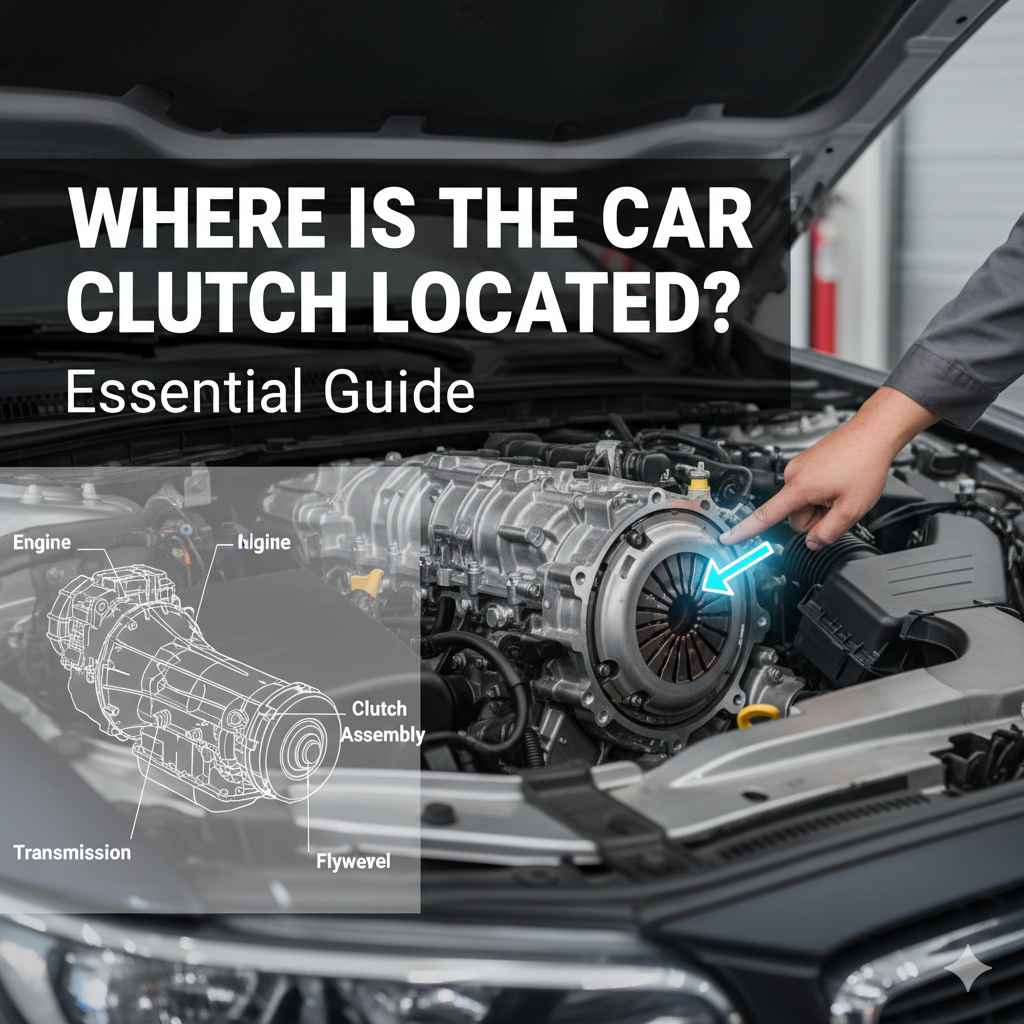
The car clutch is a crucial part connecting the engine to the transmission. In manual transmission cars, you’ll find the clutch pedal inside the cabin, but the actual clutch assembly is located underneath the vehicle, between the engine and the gearbox. It’s not a single part you can easily see without getting under your car.
Ever wondered what that third pedal in some cars does, or heard a mechanic talk about a “clutch job” and felt a little lost? Don’t worry! Understanding your car’s clutch is a great step towards feeling more confident about your vehicle. It’s a vital component, especially in cars with manual transmissions. While you interact with the clutch through a pedal inside your car, the clutch itself is tucked away, working its magic between the engine and the transmission (gearbox).
This guide is designed to demystify the clutch. We’ll break down exactly where it is, what it does, and why it matters, all in simple terms. You don’t need to be a gearhead to understand this. By the end, you’ll know more about your car’s inner workings than you thought possible, making you a savvier driver and car owner. Let’s get started on this essential journey!
What Exactly is a Car Clutch?
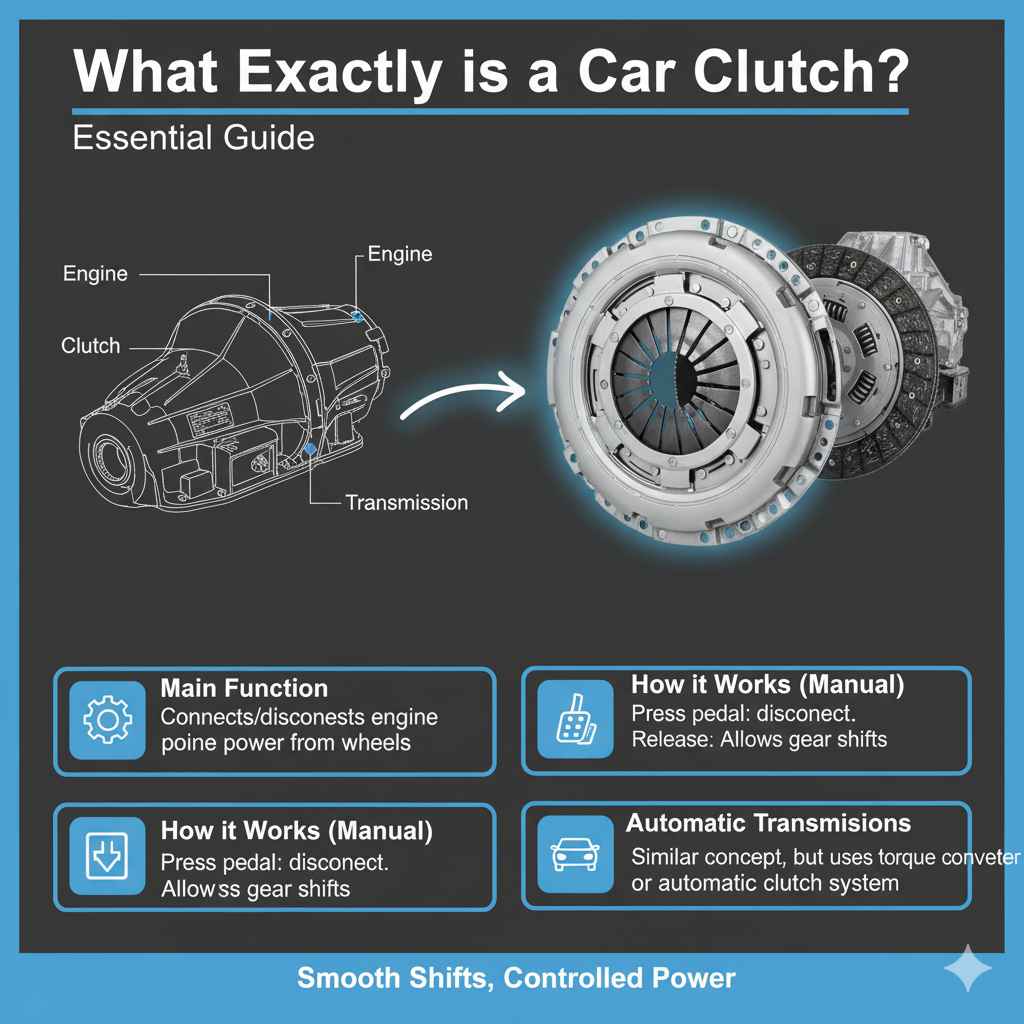
Think of your car’s clutch as a really important connector. Its main job is to help you switch gears smoothly, especially in cars with manual transmissions. When you press the clutch pedal, you’re essentially disconnecting the engine’s power from the wheels for a brief moment. This allows you to safely shift into a different gear without grinding the gears or damaging the transmission. Once you release the pedal, the clutch reconnects the engine to the transmission, sending power back to the wheels.
It’s like a controlled handshake between two spinning parts. Without the clutch, starting off from a standstill or changing gears would be incredibly difficult, if not impossible, in a manual car. For automatic transmissions, the concept is similar, but the clutch mechanism is usually replaced by a torque converter or a more complex system of gears and clutches that operate automatically.
Where is the Car Clutch Located? The Big Reveal!
This is the question on everyone’s mind! So, where is the car clutch located? Well, it’s not one single thing in one accessible spot like your engine oil dipstick. The clutch assembly is actually a system of parts that sits between your car’s engine and its transmission (also known as the gearbox).
For Manual Transmission Cars:
- The Pedal: The part you interact with is the clutch pedal. This is located inside the car, to the left of the brake pedal. When you press it, it triggers a hydraulic or cable system that disengages the clutch assembly.
- The Assembly: The clutch assembly itself – the part that actually does the connecting and disconnecting – is located underneath the vehicle. You’ll typically find it tucked right where the engine meets the transmission. It’s a unit that includes the clutch disc, pressure plate, and flywheel. Accessing it usually requires lifting the car safely and working from below.
For Automatic Transmission Cars:
Automatic transmissions don’t have a clutch pedal because they don’t require manual gear changes. Instead, they use different mechanisms to manage power transfer and gear selection. The most common is the torque converter, which acts as a fluid coupling between the engine and the transmission. Some modern automatics also use complex internal clutch packs or dual-clutch systems, but these are all housed within the transmission unit itself and don’t have an external clutch pedal or a separate, externally visible “clutch assembly” in the same way a manual car does.
A Closer Look: The Components of a Manual Clutch
To really understand where the clutch is and how it works, it helps to know its main parts. These components work together seamlessly:
| Component | Location | Function |
|---|---|---|
| Flywheel | Bolted to the end of the engine’s crankshaft. It’s a heavy metal disc that spins with the engine. | Provides a flat, smooth surface for the clutch disc to connect with and stores rotational energy. |
| Clutch Disc (or Friction Disc) | Sandwiched between the flywheel and the pressure plate. It has friction material on both sides. | Transmits power from the flywheel to the transmission input shaft. It’s the part that actually grips and slips. |
| Pressure Plate | Bolted to the flywheel, it encloses the clutch disc. Contains a spring mechanism (diaphragm spring). | When engaged, it presses the clutch disc firmly against the flywheel, creating a solid connection. When disengaged, it pulls away, allowing slippage. |
| Release Bearing (Throw-out Bearing) | Located in the bell housing, between the clutch pedal linkage and the pressure plate. | When you press the clutch pedal, this bearing pushes on the pressure plate’s springs to disengage the clutch. |
| Clutch Fork | A lever arm that pivots and pushes the release bearing. | Transfers the force from the clutch cable or hydraulic system to the release bearing. |
When you press the clutch pedal, the linkage (cable or hydraulic system) activates the clutch fork, which pushes the release bearing against the pressure plate. This action causes the pressure plate springs to retract, releasing the clamping force on the clutch disc. The clutch disc then loses its connection with the flywheel and the pressure plate, interrupting power flow from the engine to the transmission. When you release the pedal, the springs push the pressure plate back against the clutch disc, re-establishing the connection.
Why Understanding Your Clutch Location Matters
Knowing where the clutch is located isn’t just trivia; it’s practical knowledge that can save you time, money, and frustration. Here’s why:
- Troubleshooting: If you experience symptoms like slipping gears, difficulty shifting, or strange noises when shifting, knowing the clutch is between the engine and transmission helps you understand where the problem might lie.
- Repair Decisions: Clutch replacement is a common repair for manual cars. Mechanics will often refer to the “clutch assembly” being replaced. Understanding its location gives you context when discussing repairs and costs. It often involves removing the transmission, which is a significant job.
- Maintenance Awareness: While clutch discs are wear items and not typically “maintained” in the traditional sense (like oil changes), understanding their function and location reminds you of the mechanical complexity involved in driving.
- Identifying Car Types: The presence of a clutch pedal is the most obvious indicator of a manual transmission. Knowing that automatics don’t have this external clutch system helps you identify different types of vehicles.
The Clutch Pedal: Your Inside Connection
The clutch pedal is your direct interface with the clutch system in a manual car. It’s usually positioned to the far left of the driver’s footwell, next to the brake pedal. Its travel and feel can tell you a lot about the clutch’s health.
What to Feel for:
- Engagement Point: This is where the clutch starts to grab. A good clutch engages smoothly and at a reasonable point in the pedal travel (not too high, not too low).
- Spongy or Soft Pedal: This could indicate an issue with the hydraulic system (master or slave cylinder), like air in the lines or a leak.
- Stiff or Hard Pedal: This might point to a problem with the pressure plate, release bearing, or the pedal mechanism itself.
- Grinding or Shuddering: When you release the pedal, if you feel vibrations or hear grinding, it often signals a worn clutch disc or misaligned components.
If you notice any significant changes in how your clutch pedal feels or operates, it’s a good idea to have it checked out by a qualified mechanic. For instance, the National Highway Traffic Safety Administration (NHTSA) provides valuable safety information and recall data for vehicles, which is always a good resource to check for any potential issues.
Differentiating Between Manual and Automatic Transmissions
One of the biggest determinants of where and how you’ll interact with a clutch system is whether your car has a manual or an automatic transmission. Here’s a simple breakdown:
| Feature | Manual Transmission | Automatic Transmission |
|---|---|---|
| Clutch Pedal | Yes – Located to the left of the brake pedal. | No – Only has accelerator and brake pedals. |
| Gear Shifter | Typically has numbers (1, 2, 3, 4, 5, 6) and R for reverse. Requires manual selection. | Usually has letters like P (Park), R (Reverse), N (Neutral), D (Drive), and sometimes lower gears (L, 2, 3). Often electronically controlled. |
| Main Clutch Component(s) | Clutch disc, pressure plate, flywheel, release bearing, clutch fork. Located externally between engine and transmission. | Torque converter or internal clutch packs/bands. Housed within the transmission unit itself. |
| Driver Interaction | Requires driver to operate clutch pedal and shifter for gear changes. | Vehicle selects gears automatically. Driver just needs to select drive mode (P, R, N, D). |
Essentially, if your car has a third pedal (besides brake and accelerator), you have a manual transmission, and the clutch assembly is located externally at the junction of the engine and transmission. If you only have two pedals, you have an automatic, and the “clutch” function is handled internally by the transmission’s components like the torque converter.
Real-World Scenarios: When Clutch Location Becomes Important
Let’s put this knowledge into practice. Imagine these common situations:
Scenario 1: Strange Noise When Shifting Gears
You’re driving your manual car and hear a grinding or clunking sound every time you try to change gears, especially when the clutch pedal is being pressed or released. Knowing the clutch assembly is located between the engine and transmission, you can suspect that a component within this unit – like the clutch disc, pressure plate, or release bearing – might be worn out or failing. This information is crucial when describing the problem to your mechanic.
Scenario 2: Clutch Pedal Feels “Off”
One day, you notice your clutch pedal feels unusually light, or maybe it doesn’t return all the way up after you press it. This could be a sign of a problem with the clutch pedal linkage, the hydraulic fluid, or the release system. Since the clutch system is linked internally and externally, this issue could signal something wrong with the hydraulic lines, the slave cylinder (near the transmission), or even the master cylinder (near the pedal). Understanding that the ‘clutch’ involves both inside and outside components helps pinpoint potential failure points.
Scenario 3: Considering a Used Manual Car
You’re looking to buy a used car with a manual transmission. How do you check the clutch? You’ll be testing the pedal feel, the engagement point, and listening for noises. Although you can’t directly see the clutch assembly under the car without a mechanic’s inspection, a bad pedal feel or grinding noises when driving are strong indicators that the clutch assembly might need expensive repairs soon. This knowledge empowers you to make a more informed decision during your purchase.
Can You See the Clutch Assembly Without Lifting the Car?
Generally, no, you cannot easily see the main clutch assembly (flywheel, clutch disc, pressure plate) without safely lifting the vehicle. This assembly is situated directly between the engine block and the transmission’s input shaft, enclosed within what’s often called the “bell housing.”
The bell housing is a protective and structural part that connects the engine to the transmission. While you can often see the transmission itself from underneath, and sometimes parts of the clutch linkage from inside the engine bay, the critical clutch friction surfaces are hidden within this housing.
What You Might See (and What It Means):
- Clutch Pedal and Linkage (Inside Cabin/Engine Bay): You can see the pedal and potentially the cable or hydraulic lines running to it. This is the control interface.
- Transmission Input Shaft: Sometimes visible, this shaft goes into the transmission and is connected to the clutch disc.
- Bell Housing Area: This is the larger, bell-shaped casing just behind the engine. The clutch assembly resides inside this. You might see hydraulic slave cylinders or mechanical linkages attached to the side of it.
- Clutch Release (Slave) Cylinder: In hydraulic systems, this cylinder is usually mounted on the outside of the bell housing. It’s pressed by fluid pressure to activate the clutch fork.
If you need to inspect the clutch itself (for wear or damage), a mechanic will typically need to disconnect the transmission from the engine, slide it back, and then the clutch assembly becomes accessible.
Maintenance and Lifespan of a Clutch
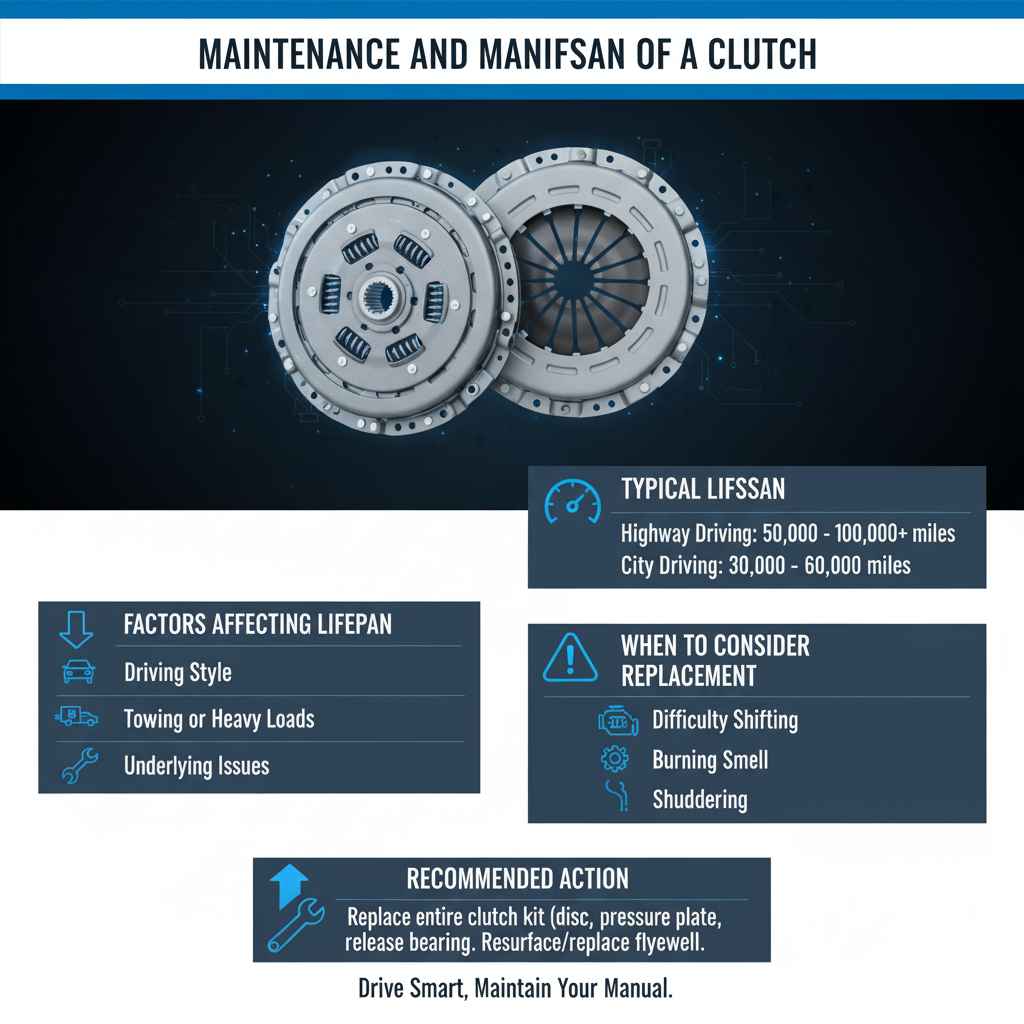
Clutches in manual transmission cars are wear items, much like brake pads. They are designed to be replaced after a certain period of use. The lifespan can vary greatly depending on driving habits and conditions.
Factors Affecting Clutch Lifespan:
- Driving Style: Frequent stop-and-go traffic, aggressive acceleration, “riding” the clutch (resting your foot on the pedal), and improper shifting can significantly shorten its life.
- Towing or Heavy Loads: Constantly towing or carrying heavy loads puts extra strain on the clutch, leading to faster wear.
- Underlying Issues: Leaking hydraulic fluid or misadjusted components can also contribute to premature clutch failure.
Typical Lifespan:
A well-maintained clutch in a car driven primarily on highways can last anywhere from 50,000 to 100,000 miles or even more. In city driving conditions, this might be reduced to 30,000 to 60,000 miles.
When to Consider Replacement:
- Slipping: The engine revs up, but the car doesn’t accelerate proportionally.
- Difficulty Shifting: Grinding gears or requiring excessive force to shift.
- Burning Smell: A distinct burning smell, often like burnt toast, can indicate overheating friction material.
- Shuddering: The car shudders when you release the clutch pedal.
When clutch replacement is needed, it’s usually recommended to replace the entire clutch kit, which includes the clutch disc, pressure plate, and release bearing. Sometimes, the flywheel will also need resurfacing or replacement. Resources like Edmunds’ car maintenance guides offer practical advice on vehicle care and common repairs.
FAQ: Your Clutch Questions Answered
Q1: Do cars with automatic transmissions have a clutch?
Answer: Cars with automatic transmissions do not have a clutch pedal or a clutch assembly in the same way manual cars do. They use a torque converter or an internal set of clutches and bands to manage gear changes automatically.
Q2: If I have an automatic car, do I need to worry about a clutch?
Answer: No, you don’t need to worry about operating or replacing an external clutch. However, the torque converter or internal clutches of an automatic transmission can still wear out and require repair, but this is considered a transmission issue rather than a clutch issue.
Q3: What is the “bell housing” of a car?
Answer: The bell housing is a bell-shaped casing that connects the engine to the transmission. It encloses the clutch assembly in manual transmission vehicles, protecting it and providing a mounting point for components like the clutch slave cylinder.
Q4: Are clutch jobs expensive?
Answer: Yes, clutch replacement is typically one of the more expensive common repairs for manual transmission cars. This is because it involves significant labor, as the transmission usually needs to be removed to access the clutch assembly.
Q5: How can I tell if my clutch is starting to go bad?
Answer: Common signs include a slipping clutch (engine revs up but car doesn’t accelerate), difficulty shifting gears, a burning smell, or a change in how the clutch pedal feels (e.g., spongy, stiff, or engaging very high or very low).