What Do the Lower Gears in a Car Do? Torque, Towing & Hill Guide
Lower gears (first, second, or the “L”/“1” position) trade speed for torque — they make the engine work harder per wheel turn so you get more pulling power when starting from a stop, towing a trailer, climbing a steep grade, or controlling your speed downhill through engine braking. You lose top speed and fuel economy while you’re in them, which is exactly why they’re not meant for cruising.
I stalled my uncle’s pickup twice the first time he handed me the keys to a stick shift, and it took a few more embarrassing lurches before the relationship between gear, torque, and engine sound actually clicked. Whether you drive a manual, a torque-converter automatic, or a modern CVT, the underlying idea is the same. Below, I’ll cover exactly what lower gears do, when to use them in a manual or automatic, what a CVT does differently when you select “L,” and the mistakes that trip up most new drivers.
Quick Answer
Lower gears (1st, 2nd, or “L”/“1”) multiply engine torque roughly 3-4 times over direct drive, giving your wheels more turning force at the cost of top speed. Use them to start from a stop, tow heavy loads, climb steep hills, drive on ice or snow, and slow down on long descents through engine braking instead of your brake pads.
What Are Lower Gears?
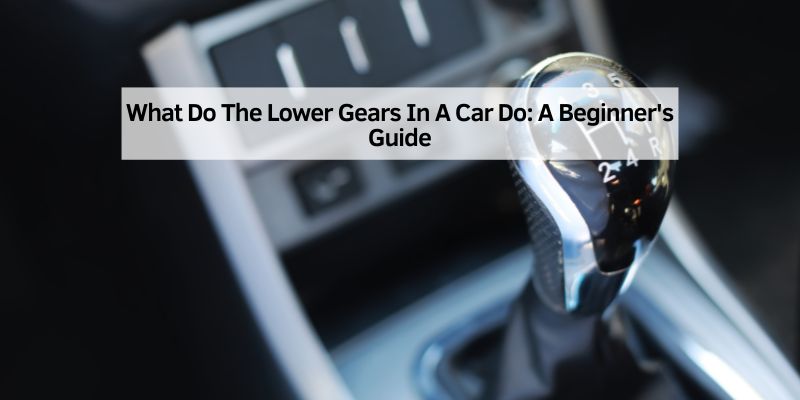
Lower gears, like first and second gear, are the car’s power boosters. They make the engine work harder to give you more torque—that’s the force that gets your car moving. Think of them like the strong, slow pedals on a bike when you’re climbing a hill. They don’t make you go fast, but they give you the muscle to tackle tough tasks. In a manual car, you shift into first gear to start moving. In an automatic, the car often picks low gear for you, but you can manually select it (look for “L” or “1” on the gearshift).
Why do lower gears matter? They help your car handle heavy jobs without overworking the engine or brakes. Whether you’re towing a trailer or driving up a steep road, lower gears are your best friend.
By the numbers: First gear typically multiplies engine torque by roughly 3 to 4 times compared with direct (1:1) drive. That’s the real mechanical reason a small four-cylinder engine can still get a loaded trailer rolling from a dead stop — the gear ratio is doing the heavy lifting, not raw horsepower.
When to Use Lower Gears
Lower gears shine in specific situations. Here are the main times you’ll want to use them:
- Starting from a stop: First gear gives the power to get moving without stalling. It’s like giving your car a big push to start rolling.
- Towing heavy loads: Pulling a trailer or boat? Low gear boosts torque to move heavy stuff safely.
- Climbing steep hills: Low gears give your engine extra strength to go uphill without straining.
- Going downhill: They help control your speed using engine braking, which saves your brakes from overheating.
- Driving in tricky conditions: Ice, snow, or mud? Low gears give better control for safer driving.
I once drove up a steep mountain road in Colorado. My car was struggling in third gear, chugging like it was out of breath. I shifted to second gear, and boom—it powered up the hill like it was no big deal!
“The moment your engine’s note shifts from a smooth hum to a strained, high-pitched whine while climbing or towing, you’re already a gear too high for the job — shifting down half a second earlier saves both your transmission and your nerves.”
— Md Meraj, The Daily Automotive
Do CVT Cars Have a “Low Gear”? What “L” Really Means
Most new sedans and crossovers — think Toyota Corolla, Honda Civic, Honda CR-V, Nissan Rogue, Subaru Outback — use a Continuously Variable Transmission (CVT), not a traditional set of fixed gears. This changes what “lower gear” actually means under the hood.
A CVT doesn’t have separate first, second, or third gears at all. Instead, it uses a belt-and-pulley system that continuously varies its drive ratio across a smooth range, with no fixed steps. So when you shift into “L” on a CVT, or pull the paddle to “downshift,” the transmission isn’t dropping into a physical low gear the way a stepped automatic would.
Here’s what actually happens: the car’s computer locks the pulley ratio at a preset high-ratio point, or raises the minimum engine RPM (often to roughly 2,000 RPM or higher), which mimics the effect of a real low gear. You still get the same practical benefits — stronger engine braking on a downhill grade and a more “locked-in” power band for towing — but it’s a software simulation of a gear change, not an actual mechanical one. Paddle shifters on a CVT work the same way: they command the computer to hold simulated “steps” instead of letting the ratio float freely.
The takeaway for drivers: if your car has a CVT, use “L” or manual mode exactly the way you would in a traditional automatic — for long descents or heavy pulling — and trust that it delivers the same real-world result, even though there’s no physical gear being engaged.
How to Use Lower Gears: A Simple Guide
Using lower gears is easier than it sounds, whether you drive a manual or automatic. If you want the fundamentals of shifting itself first, see our guide on how to shift a car the right way. Otherwise, here’s a step-by-step guide for each:
Manual Transmission
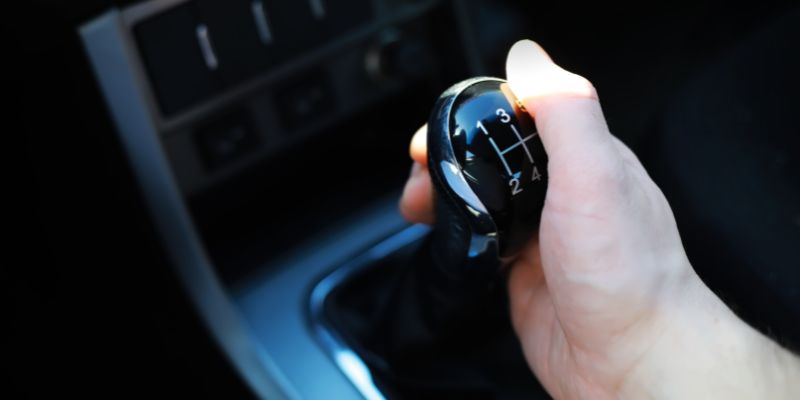
- Press the clutch: Push the clutch pedal all the way down with your left foot.
- Shift to a lower gear: Move the gearstick to first or second gear, depending on your speed.
- Ease off the clutch: Slowly release the clutch while gently pressing the gas pedal.
- Feel the power: The car will feel stronger but move slower. Perfect for hills or towing!
Tip: Listen to your engine. If it’s screaming (high-pitched noise), you’re in too low a gear. If it’s chugging (low grumble), shift down.
Automatic Transmission
- Find the low gear setting: Look for “L” or “1” on your gearshift. Some cars have a “+” or “-” for manual mode.
- Slow down first: Ease off the gas to let the car slow naturally before shifting.
- Shift to low gear: Move the gearstick to “L” or “1” for extra torque.
- Drive steady: Keep your speed low to avoid overworking the engine.
Mistake to Avoid: Don’t slam the gearshift into “L” while going fast—it can stress your transmission. Always slow down first.
Benefits and Drawbacks of Lower Gears
Lower gears are awesome, but they’re not perfect for every situation. Here’s a quick look at the pros and cons:
| Aspect | Benefits | Drawbacks |
|---|---|---|
| Power | More torque for heavy tasks like towing or climbing hills. | Less speed, so not great for highways. |
| Control | Better grip in snow, ice, or off-road conditions. | Can feel jerky if you shift too fast. |
| Engine Health | Reduces brake wear via engine braking on descents. | Uses more fuel in low gears. |
Comparing Gears: A Gear-by-Gear Breakdown
To understand lower gears, it helps to see exactly how each gear position compares — not just “low vs. high,” but what each one is actually for and what it does to your engine and brakes.
| Gear / Position | Typical Engine RPM | Best Used For | Engine Braking Effect |
|---|---|---|---|
| 1st / “L” | 2,000-4,000+ RPM at low road speed | Starting from a stop, very steep hills, deep snow or mud | Strongest — holds speed down on the steepest descents |
| 2nd | 2,000-3,500 RPM | Towing, moderate hills, slow off-road driving | Strong — good for most downhill grades |
| 3rd / mid-range “D” | 1,800-3,000 RPM | City driving, gentle inclines, merging | Moderate |
| 4th-5th+ / Overdrive | 1,200-2,500 RPM | Highway cruising, maximum fuel economy | Minimal to none |
Higher gears are like gliding on a bike—you go fast with less effort. Lower gears are like pedaling hard to climb a hill—more power, less speed.
My Top Tips for Using Lower Gears
After years of driving everything from zippy sedans to heavy trucks, I’ve learned a few tricks for using lower gears:
- Check your owner’s manual: Every car is different. Some automatics limit speed in low gear, so read up first.
- Practice in a safe spot: Try shifting to low gear in an empty parking lot to feel how your car responds.
- Don’t overdo it: Staying in low gear too long can burn more gas or overheat your engine. Shift up when the job’s done.
- Use engine braking wisely: On long downhills, low gear saves your brakes. I once coasted down a hill in neutral—big mistake! My brakes got hot, and I learned my lesson.
Common Mistakes to Avoid
Lower gears are simple, but beginners can trip up. Here are mistakes I’ve made (so you don’t have to):
- Shifting too fast: Downshifting to first gear at high speed can jolt your car. Slow down first!
- Staying in low gear too long: It’s great for hills, but cruising in first gear on flat roads wastes gas.
- Ignoring the engine’s sound: If your engine sounds like it’s whining or struggling, you’re in the wrong gear.
Cost-Saving and Safety Tips
Using lower gears can save you money and keep you safe. Here’s how:
- Save your brakes: Engine braking in low gear reduces brake wear, saving you on repairs. Brake pads can cost $100-$300 to replace!
- Avoid engine strain: Low gears ease the load when towing, preventing costly engine damage.
- Stay safe on hills: Low gears prevent runaway speed on downhills, keeping you in control.
Safety Tip: Always check your surroundings before shifting gears, especially in traffic. A quick glance in your mirrors can prevent accidents.

Frequently Asked Questions
What Do The Lower Gears In A Car Do?
Lower gears give your car more power but less speed. They help with tasks like starting, towing, or climbing hills by boosting torque roughly 3-4 times over direct drive. Think of them as your car’s “strong mode” for tough jobs.
Can I Use Low Gear on Highways?
No, low gear isn’t for highways. It’s meant for slow, powerful tasks like towing or climbing hills. On highways, use higher gears for speed and fuel efficiency.
Does Low Gear Save Gas?
Not really. Low gears use more fuel because the engine works harder per wheel turn. Use them for specific tasks, then shift to higher gears to save gas on regular drives.
Is Low Gear the Same as First Gear?
Yes, low gear is often first gear. In automatics, it’s marked as “L” or “1.” It limits speed and boosts power for starting or heavy tasks.
Can Low Gear Damage My Car?
No, if used correctly. Shifting to low gear at high speeds or staying in it too long can strain your engine or transmission. Always slow down first.
When Should I Shift to Low Gear in Snow?
Use low gear for better control in snow. It gives more torque for traction, helping you avoid slipping on icy or snowy roads.
How Do I Know If I’m in the Right Gear?
Listen to your engine. If it’s loud and whiny, shift up. If it’s chugging or sluggish, shift down. Practice makes it second nature!
Does My CVT Car Have a Low Gear Like “L” or “1”?
Not a physical one. A CVT has no fixed gears — selecting “L” tells the computer to lock the pulley ratio at a preset high-ratio point or raise the minimum RPM, simulating the effect of a low gear for engine braking and towing without an actual mechanical gear change.
Conclusion
Lower gears are like your car’s secret superpower. They give you the strength to start moving, tow heavy loads, climb steep hills, or control your speed going down. From my first stall-out to mastering mountain roads, I’ve learned that lower gears make tough drives a piece of cake. Try practicing in a parking lot or on a quiet hill to feel the difference. For more tips, check out trusted sites like Car and Driver or Edmunds. Happy driving!
Products related to this article
Sponsored / affiliate links. As an Amazon Associate I earn from qualifying purchases. I may earn additional commission from eligible campaigns.
![iPhone Car Charger,USB C Fast Car Charger[Apple MFi Certified] Apple Car Charging 38W Dual Port CarCharger Cigarette Lighter Adapter 2x3ft PD&QC 3.0 Lightning Cable for iPhone 14/13/12 Pro/11/Airpods](https://m.media-amazon.com/images/I/41XizrssoiL._SL500_.jpg) iPhone Car Charger,USB C Fast Car Charger[Apple MFi Certified] Apple Car Charging 38W Dual Port CarCharger Cigarette Lighter Adapter 2x3ft PD&QC 3.0 Lightning Cable for iPhone 14/13/12 Pro/11/Airpods
iPhone Car Charger,USB C Fast Car Charger[Apple MFi Certified] Apple Car Charging 38W Dual Port CarCharger Cigarette Lighter Adapter 2x3ft PD&QC 3.0 Lightning Cable for iPhone 14/13/12 Pro/11/Airpods Mighty Max Battery MM-G24 Start and Stop Car BCI Group Size 24 12V 70Ah, 120RC, 710 CCA Rechargeable AGM Car battery