Where Is the Fuel Pump in a Car? A Complete Guide
Hey there! I’m so excited you’re here to dive into a topic that’s super important for any car owner: where is the fuel pump in a car? A few years back, my old pickup truck started sputtering on the highway, and I had to figure out what was wrong. Turns out, it was a failing fuel pump, and I had no clue where it even was! That experience sent me on a mission to learn everything about fuel pumps—where they’re located, what they do, and how to deal with them.
I’ve poked around under hoods, talked to mechanics, and even replaced a fuel pump myself. Let’s sit down together, and I’ll share all I’ve learned in a way that’s easy to follow, like we’re chatting over a cold drink. Whether you’re a car newbie or a gearhead, you’ll know exactly where to find your fuel pump and why it matters by the end. Ready? Let’s get started!
What Is a Fuel Pump and What Does It Do?
First, let’s talk about what a fuel pump is. When my truck started acting up, I didn’t even know my car had one. The fuel pump is a small but mighty part that moves gas from your fuel tank to the engine. Without it, your engine wouldn’t get the fuel it needs to run. I think of it like the heart of the fuel system, pumping life into the car.
In most cars, the fuel pump makes sure fuel flows at the right pressure. It’s critical for starting the engine and keeping it going, whether you’re cruising down the road or idling at a light. I learned my truck’s pump was working overtime to keep up, which is why it failed. Knowing what it does helped me understand why finding it was so important.
Why Do You Need to Know Where the Fuel Pump Is?
I used to think only mechanics needed to know where car parts were. But when my truck broke down, I realized finding the fuel pump could save time and money. If your car won’t start, stalls, or loses power, the fuel pump might be the culprit. Knowing where it is lets you check it yourself or tell a mechanic what’s up.
For me, locating the fuel pump was key to fixing my truck without getting overcharged at a shop. It’s also handy for routine maintenance, like checking fuel lines or filters. Plus, if you’re a DIYer like me, you might want to replace it yourself. I saved $200 by doing it at home. Even if you don’t fix it, knowing its spot helps you understand your car better.
Where Is the Fuel Pump Located in Most Cars?
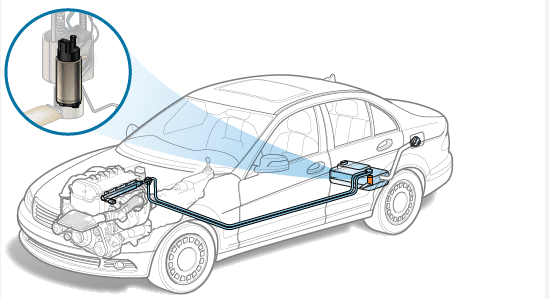
Now, let’s get to the big question: where is the fuel pump? In most modern cars, the fuel pump is inside the fuel tank. I was shocked when I learned this—it’s not under the hood like I expected! The fuel tank is usually under the back seat or in the rear of the car, near the trunk. I found mine in my truck by lifting the rear seat cushion.
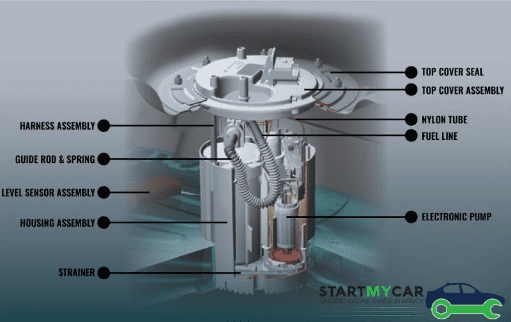
This setup is common in cars built after the 1980s. The pump sits in a module with a filter and fuel level sensor. I had to remove an access panel under the seat to reach it. Some cars have the panel in the trunk, under the carpet. In my friend’s Honda Civic, we found it by pulling up the trunk floor. It’s tucked away to stay cool and safe from crashes.
Are There Exceptions to Fuel Pump Location?
Not all cars follow the same rule. I learned this when I helped my neighbor with his old Mustang. Older cars, especially from the 1970s or earlier, often have the fuel pump under the hood. These are mechanical pumps, bolted to the engine block. I found his Mustang’s pump near the carburetor, driven by the engine’s camshaft.
Some high-performance cars or diesel vehicles might have dual pumps—one in the tank and another under the hood or chassis. My cousin’s diesel truck had a lift pump near the frame rail to move fuel to the main pump. Electric vehicles don’t have fuel pumps at all since they don’t use gas. Knowing your car’s age and type helps narrow down the location.
How to Find Your Car’s Fuel Pump
Finding the fuel pump was a bit like a treasure hunt for me. Here’s how I did it with my truck, and you can too:
- Check the Manual: I grabbed my truck’s owner’s manual. It had a diagram showing the fuel tank under the rear seat.
- Look for Access Panels: I lifted the back seat and found a round metal cover. Under it was the fuel pump module.
- Check the Trunk: If there’s no panel under the seat, look in the trunk. I helped a friend find one under her Toyota’s trunk carpet.
- Pop the Hood: For older cars, I looked near the engine. My neighbor’s Mustang pump was on the driver’s side.
- Ask a Mechanic: If you’re stuck, a quick call to a shop can point you to the right spot. I did this for a rental car once.
I used a flashlight to spot the pump in tight spaces. Always disconnect the battery before poking around to stay safe. It took me 10 minutes to find mine, and it felt like a win!
Types of Fuel Pumps
I was surprised to learn there are different kinds of fuel pumps. Each has its spot and job. Here’s what I found:
- Electric Fuel Pump: Most common in modern cars. It’s in the fuel tank, like in my truck. It runs on electricity and delivers high pressure for fuel injection.
- Mechanical Fuel Pump: Found in older cars with carburetors. It’s under the hood, like in that Mustang. It uses engine motion to pump fuel.
- Lift Pump: Used in some diesel vehicles. It’s often under the chassis to move fuel from the tank to the main pump. My cousin’s truck had one.
- High-Pressure Pump: In some performance cars, it’s near the engine to boost fuel for turbo systems. I saw one on a modified Subaru.
Knowing the type helps you know where to look. My truck’s electric pump was easy to find once I knew it was in the tank.
Table: Fuel Pump Locations by Car Type
Here’s a table I made to show where fuel pumps are in different cars:
| Car Type | Fuel Pump Location | Pump Type | Access Point |
|---|---|---|---|
| Modern Sedan/SUV | Under the rear seat or trunk | Electric | Near the carburetor or engine block |
| Classic Car (pre-1980) | Engine compartment | Mechanical | Tank access or under the frame |
| Diesel Truck | Tank and/or chassis | Electric or Lift | Tank access or under frame |
| Performance Car | Tank and/or engine | Electric/High-Pressure | Tank or near fuel rail |
| Electric Vehicle | None | None | Not applicable |
This table helped me figure out where to start looking at different cars.
Signs of a Bad Fuel Pump
Before I found my fuel pump, I had to figure out if it was the problem. My truck gave me clues. Here are the signs I noticed:
- Car won’t start: The engine cranked but didn’t fire. I heard no hum from the pump when I turned the key.
- Sputtering or Stalling: My truck hesitated at high speeds. It felt like it was choking.
- Loss of Power: Going uphill was tough. The engine struggled to get fuel.
- Whining Noise: Some pumps whine when failing. I didn’t hear this, but my mechanic said it’s common.
- Poor Gas Mileage: I noticed my fuel economy dropped before the pump died.
If you see these, check the pump or have a mechanic test it. I used a pressure gauge to confirm mine was weak.
How to Check Your Fuel Pump
I wanted to be sure my fuel pump was bad before replacing it. Here’s how I checked it:
- Listen for the Pump: I turned the key to “on” without starting the car. A healthy pump hums for a second. Mine was silent.
- Test Fuel Pressure: I borrowed a $20 gauge from a friend. I hooked it to the fuel rail under the hood. My pressure was low—30 psi instead of 50.
- Check the Fuse/Relay: I looked in my truck’s fuse box. The fuel pump fuse was fine, but a bad relay can also cause issues.
- Inspect Wiring: I checked the wires to the pump for damage. Mine were okay, so the pump itself was the problem.
If you’re not comfortable, a mechanic can test it for $50-$100. My tests confirmed I needed a new pump.
Replacing a Fuel Pump
Replacing my fuel pump was a big job, but I saved cash doing it myself. Here’s how it went:
- Gather Tools: I needed a socket set, screwdriver, and a new pump ($150 from an auto store).
- Disconnect Battery: I unhooked the battery to avoid sparks.
- Relieve Fuel Pressure: I pulled the fuel pump fuse and ran the engine until it stalled.
- Access the Pump: I lifted the rear seat and removed the access panel.
- Remove Old Pump: I disconnected the fuel lines and wiring, then pulled the pump module out. It was messy!
- Install New Pump: I swapped in the new pump, reconnected everything, and sealed the panel.
- Test It: I started the truck, and it roared to life.
It took me four hours, but a shop would’ve charged $500. If you’re not handy, let a pro do it.
Cost of Fuel Pump Replacement
Money was a big concern for me. Here’s what I found about costs in the U.S.:
- DIY Cost: $100-$300 for the pump, plus $50 for tools if you don’t have them. I spent $200 total.
- Professional Cost: $400-$1,000, including parts ($150-$400) and labor ($200-$600). My friend paid $600 for her SUV.
- Luxury/Performance Cars: $800-$2,000 due to complex systems. A BMW owner I know paid $1,200.
I got quotes from three shops to compare. DIY was cheaper, but professional work is safer if you’re unsure.
Common Fuel Pump Problems
Fuel pumps can fail in a few ways. Here’s what I learned:
- Clogged Filter: Debris can block the pump’s strainer. I replaced mine with the pump.
- Worn Motor: Electric pumps wear out over time. Mine was 10 years old and gave up.
- Bad Wiring: Faulty connections can stop the pump. I checked mine to rule this out.
- Low Fuel Damage: Running on empty can overheat the pump. I avoid letting my tank drop below a quarter.
Regular maintenance, like changing the fuel filter, can prevent some issues. I do mine every 30,000 miles.
Maintenance Tips for Your Fuel Pump
I wanted my new pump to last, so I picked up some habits:
- Keep the Tank Full: I stay above a quarter tank to keep the pump cool.
- Change the Fuel Filter: I swap it every two years for $20 to reduce strain.
- Use Quality Gas: Cheap fuel can clog the pump. I stick to reputable stations.
- Check for Leaks: I inspect fuel lines yearly for cracks.
- Drive Regularly: Sitting unused can harm the pump. I drive my truck weekly.
These steps should give my pump a long life—hopefully 100,000 miles or more.
Why Fuel Pump Location Matters
Knowing where the fuel pump is isn’t just for fixing it. It helps you understand your car’s fuel system. I felt more confident talking to mechanics after learning this. It also makes maintenance easier, like checking the filter or lines. For me, finding the pump turned a breakdown into a DIY win. It’s empowering to know your car inside and out.
Environmental Impact of Fuel Pumps
I care about the planet, so I looked into fuel pumps. A bad pump can waste gas, increasing emissions. My truck’s poor mileage before the fix hurt the environment. Replacing it improved efficiency. I also recycled my old pump at the auto store, which kept hazardous materials out of landfills. A healthy pump is good for your car and the Earth.
Wrapping It Up
So, where is the fuel pump in a car? In most modern cars, it’s tucked inside the fuel tank, under the back seat or trunk. For older rides, it might be under the hood, and diesels could have one on the chassis. I went from clueless about my truck’s fuel pump to fixing it myself, and it felt awesome. Knowing where it is, how to check it, and how to maintain it can save you time, money, and stress.
Whether you’re troubleshooting a sputter or just curious, you’re now ready to tackle this part of your car. Grab a flashlight, pop that seat up, and take a peek—you’ve got this! Thanks for diving into this with me—here’s to keeping your car running smooth and strong!
FAQs
Where is the fuel pump in my car?
In most modern cars, it’s in the fuel tank, under the rear seat or trunk. I found mine in my truck by lifting the back seat. Older cars have it under the hood.
How do I know if my fuel pump is bad?
Signs include a car that won’t start, sputters, or loses power. My truck stalled on hills, and I confirmed the pump was bad with a pressure test.
Can I replace a fuel pump myself?
Yes, if you’re handy. I replaced mine for $200 in four hours. It’s tricky, so a mechanic might be safer, costing $400-$1,000.
How much does a fuel pump replacement cost?
DIY is $100-$300 for parts. Professional jobs run $400-$1,000. I saved cash doing it myself, but got quotes to compare.
How can I make my fuel pump last longer?
Keep your tank above a quarter full, change the fuel filter regularly, and use good gas. I do these, and my new pump’s going strong.