Where to Rent a Car for Road Test: Proven Rentals
Need a car for your driving test? You can rent a suitable vehicle from various rental companies, driving schools, and specialized services. Many standard car rental agencies allow rentals for road tests, provided you meet their age and licensing requirements. Driving schools often offer car rentals specifically for this purpose, which can be a great option as their cars are well-maintained and familiar to instructors. Always check the specific policies of any rental provider regarding road test usage.
Getting your driver’s license is a huge milestone! Often, the final step is the practical road test. But what if you don’t have a car, or yours isn’t quite right for the test? It’s a common worry, and finding a reliable car for your road test shouldn’t add to your stress. Many people wonder, “Where can I rent a car for my road test?” The good news is there are several proven options. We’ll walk you through where to look and what to consider, ensuring you arrive at your test confident and prepared.
Understanding Your Road Test Vehicle Requirements
Before you even start looking for a rental, it’s crucial to know what kind of car is acceptable for your road test. Different jurisdictions and testing centers have specific requirements to ensure safety and fairness. These requirements often focus on the car’s condition and basic functionalities.
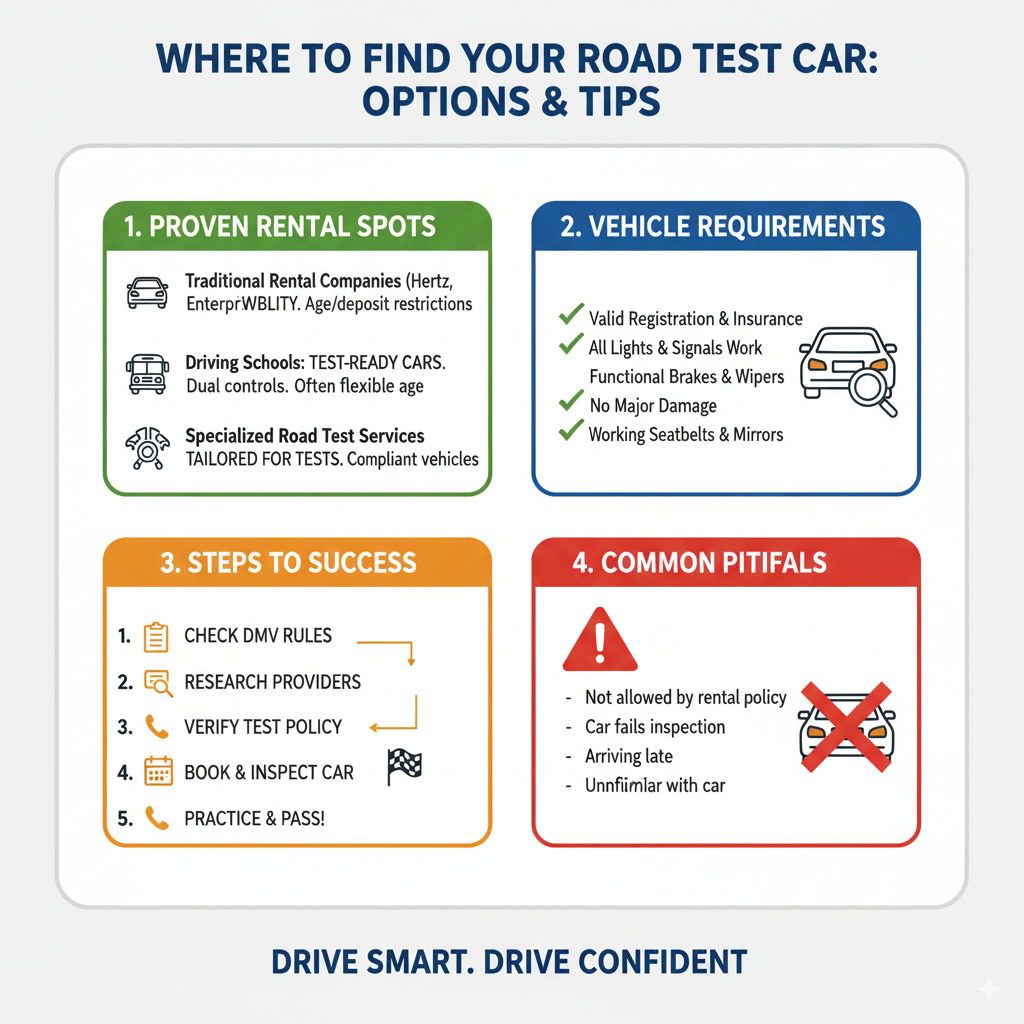
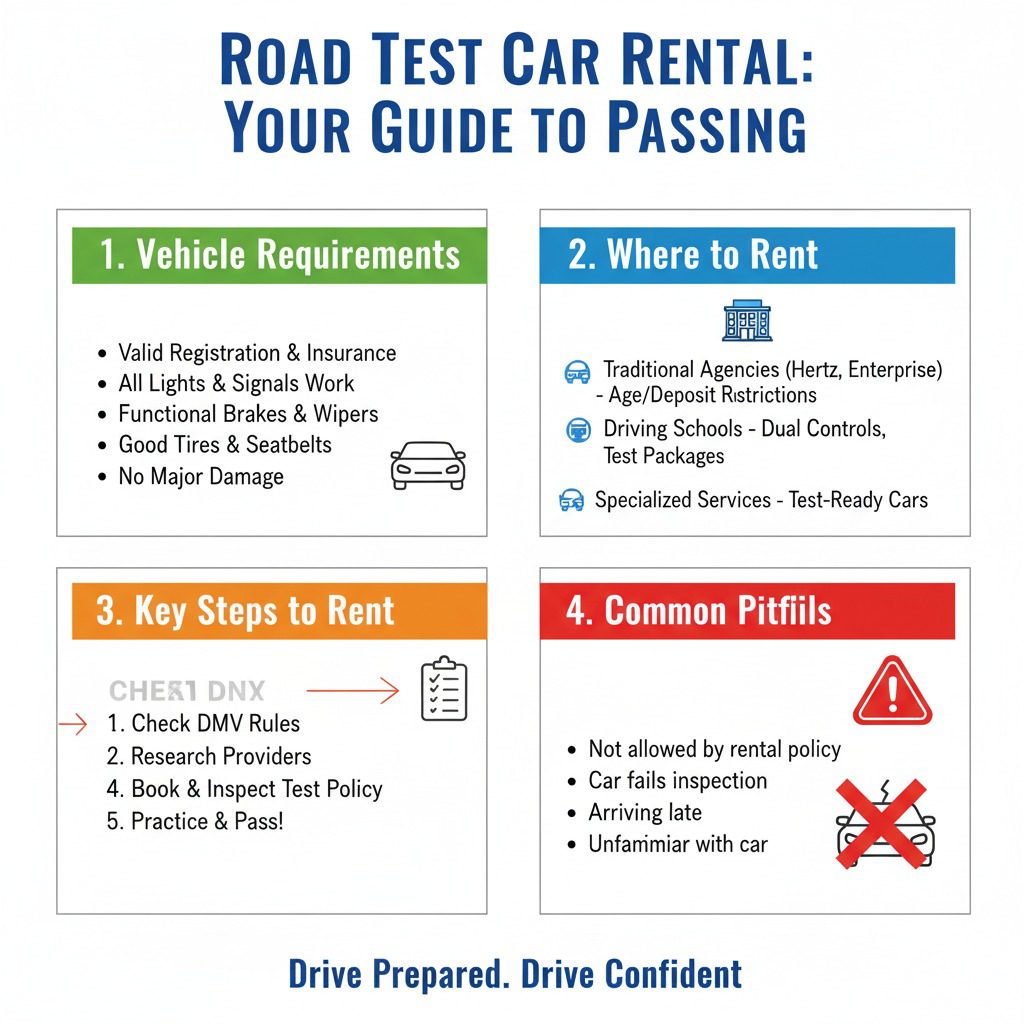
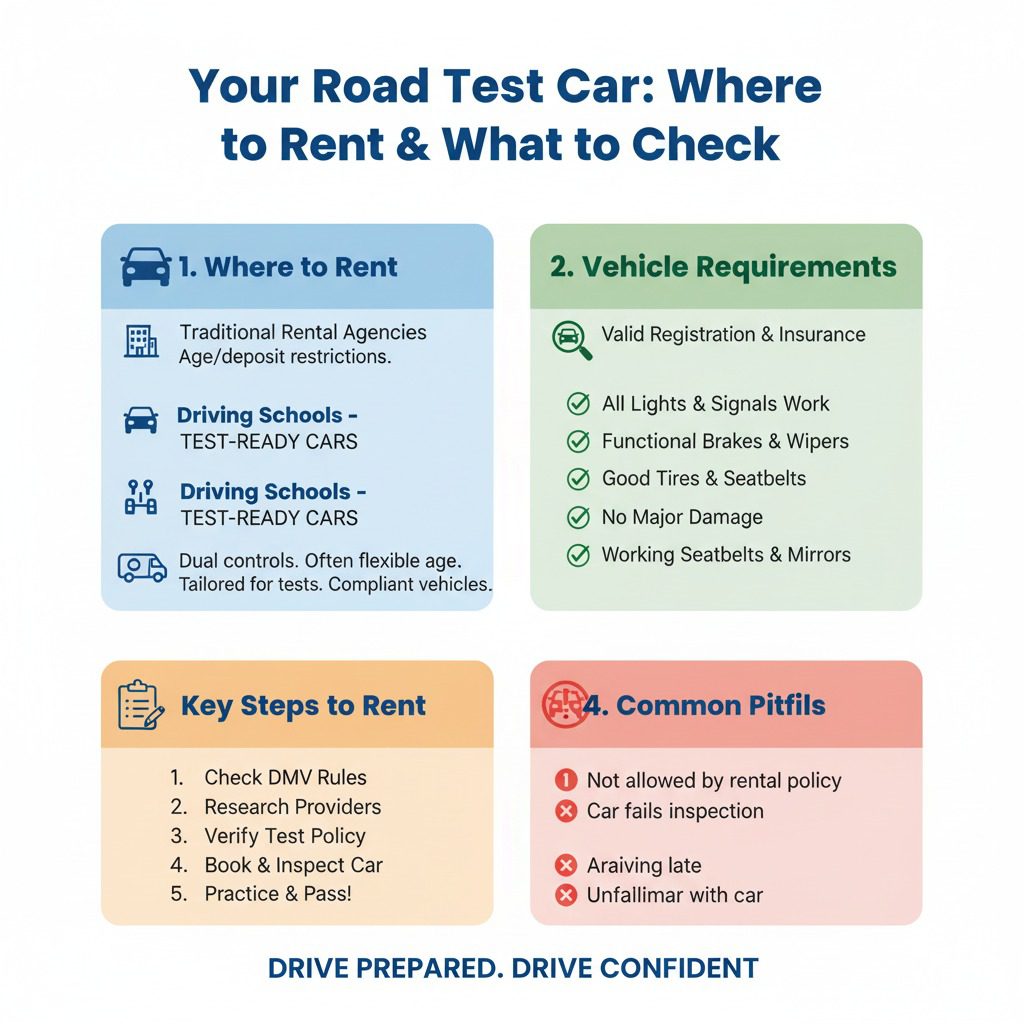
Key Vehicle Requirements You’ll Usually Encounter:
- Valid Registration and Insurance: The rental car must have current registration and insurance. Rental companies always ensure this.
- Working Signals and Lights: All headlights, taillights, brake lights, and turn signals must be in good working order.
- Functional Brakes: The braking system needs to be in excellent condition, with no warning lights or issues.
- Operable Wipers and Horn: Essential for visibility and safety, these must work correctly.
- Rearview and Side Mirrors: You’ll need clear, unobstructed mirrors.
- Seatbelts: All occupants must have properly functioning seatbelts.
- No Major Damage: The car should not have obvious, significant cosmetic or structural damage that could distract the examiner or pose a safety risk.
- Properly Inflated Tires: Tires should be in good condition with adequate tread depth.
- Emergency Brake: This emergency system must be fully functional.
It’s always best to check the official website of your local Department of Motor Vehicles (DMV) or equivalent licensing authority for the most up-to-date and specific vehicle requirements in your area. For instance, the California DMV provides detailed vehicle sale and registration information, which indirectly covers the types of vehicles permitted on the road.
Proven Places to Rent a Car for Your Road Test
Now that you know what to look for in a vehicle, let’s explore the most reliable places to find one for your driving test.
1. Traditional Car Rental Companies
Major car rental companies are often the first place people think of. They are widely accessible and have fleets of well-maintained vehicles. The key is to ensure their rental agreements permit using the car for a road test.
Popular Options:
- Hertz: A global leader, Hertz offers a wide range of vehicles. Some locations might have specific policies regarding road tests, so it’s essential to call ahead.
- Enterprise Rent-A-Car: Known for its extensive network and customer service, Enterprise is another strong contender. You can often pick up and drop off at various locations.
- Avis Car Rental: Similar to Hertz and Enterprise, Avis provides diverse car options. Check their local branch policies for road test usage.
- Budget Car Rental: Often a more budget-friendly option, Budget also has a broad presence. Like others, verify their policy on test usage.
- Sixt: While sometimes perceived as more premium, Sixt can also be a viable option, especially in major cities.
Pros of Using Traditional Rental Companies:
- Availability: Wide selection of vehicles and numerous locations.
- Professional Maintenance: Cars are generally well-maintained and meet road safety standards.
- Insurance Options: Rental companies provide insurance, simplifying the process.
Cons of Using Traditional Rental Companies:
- Age Restrictions: Many companies have strict age requirements, often 25 or older. Younger drivers might face significant surcharges or be unable to rent at all.
- Deposit Requirements: A substantial security deposit is usually required, which can be a barrier for some.
- Policy Restrictions: Not all companies explicitly permit vehicle use for driving tests, and some may have mileage limits or specific model restrictions.
- Cost: Rental fees, especially for shorter terms, can add up.
Important Note: When booking with a traditional rental company, explicitly state that you intend to use the car for a driving test. This avoids any misunderstandings and ensures you comply with their terms of service.
2. Driving Schools and Driving Test Services
Many driving schools offer specialized services for students who need a vehicle specifically for their road test. This is often a seamless and practical solution.
How They Work:
- Vehicle Rental Only: Some schools simply rent out their dual-controlled training cars for test day.
- Test Day Package: Others offer a package that includes the car rental, a brief warm-up lesson before the test, and the instructor accompanying the student to the testing center.
Why Choose a Driving School?
- Familiarity: The cars are typically equipped with dual controls and are used daily for driving instruction, meaning they are in excellent condition and familiar to instructors who may even be able to accompany you.
- No Age Restrictions (Usually): Driving schools are generally more flexible with age requirements, as their business is teaching new drivers.
- Affordability: Often, their rates are competitive, especially for their core service.
- Convenience: Pickup and drop-off are usually at their school location or close to the testing center.
- Expertise: Instructors understand the testing routes and examiner expectations.
How to Find Driving Schools:
- Online Search: Use terms like “driving school car rental for road test [your city]” or “driving test car hire.”
- Local Recommendations: Ask friends, family, or even your driving instructor if you’ve already had lessons.
- DMV/Licensing Authority Websites: Sometimes, these sites list approved driving schools.
For example, in the UK, services like GOV.UK provides official guidance on what cars can and cannot be used for the driving test, indirectly guiding you towards suitable vehicle types often provided by driving schools or rental agencies.
3. Specialized Road Test Car Rental Services
Beyond traditional rentals and driving schools, some businesses specifically cater to renting cars only for road tests. These niche providers understand the exact requirements and timelines involved.
What to Expect:
- Vehicle Suitability: They ensure their cars are compliant with all test regulations.
- Flexible Terms: Rentals are usually for the duration of the test and travel time to and from the testing center.
- Focus on New Drivers: These services are often geared towards individuals without access to a suitable car.
How to Find Them:
- Local Online Searches: Similar to driving schools, use specific search terms like “rent car for driving test [your city]” or “road test vehicle rental.”
- Driving Examiner Recommendations: Sometimes, examiners might know of local services.
4. Peer-to-Peer Car Sharing Platforms
Platforms that allow individuals to rent out their personal cars to others can be an option, but they come with more considerations.
Examples:
- Turo: Connects car owners with renters.
- Getaround: Another peer-to-peer car sharing service.
Using P2P for Road Tests:
- Verification: You must diligently check that the specific car you intend to rent is permitted for a road test and meets all requirements.
- Insurance Clarity: Understand the insurance coverage provided by the platform and the owner.
- Communication: Clearly communicate your intention to use the car for a driving test with the car owner.
- Vehicle Condition: While owners maintain their cars, they might not all be up to the specific standards or familiarity that a driving school car would offer.
Pros of P2P Sharing:
- Variety: Access to a wider range of vehicle types.
- Potentially Lower Cost: Can sometimes be cheaper than traditional rentals.
Cons of P2P Sharing:
- Policy Ambiguity: Many P2P platforms have terms of service that may restrict or not cover usage for official tests.
- Insurance Complexity: Ensuring adequate and appropriate insurance for test purposes can be challenging.
- Uncertainty: The availability and condition of cars can be less predictable than with established rental companies or driving schools.
Due to these complexities, using traditional rental agencies or dedicated driving schools is generally recommended for a smoother road test experience.
Comparison Table: Where to Rent a Car for Your Road Test
To help you decide, here’s a quick comparison of the most common options:
| Option | Pros | Cons | Best For |
|---|---|---|---|
| Traditional Car Rental Companies (Hertz, Avis, Enterprise) | Wide availability, professional maintenance, insurance included. | Strict age restrictions (often 25+), high deposits, potential policy restrictions on test use, can be expensive. | Drivers aged 25+ with a valid credit card and no specific age-related concerns. |
| Driving Schools / Driving Test Services | Cars equipped for tests (dual controls), instructor familiarity, often flexible age policies, knowledgeable about test requirements. | Fewer vehicle choices than large rental companies, availability might be limited to scheduled lessons/tests. | Younger drivers, or anyone seeking a familiar and purpose-prepared vehicle with potential instructor support. |
| Specialized Road Test Rentals | Specifically geared for test needs, compliant vehicles, straightforward rental process for tests. | Limited availability compared to major rental chains, may require specific booking in advance. | Drivers specifically needing a car solely for the test, often younger individuals or those without any other options. |
| Peer-to-Peer Sharing (Turo, Getaround) | Diverse car options, potentially lower cost. | Policy ambiguities for test use, potentially complex insurance, reliability can vary, clear communication with owner is vital. | Experienced drivers who understand P2P platform nuances and have confirmed test eligibility of the vehicle. (Generally not recommended for first-time test rentals). |
Steps to Renting a Car for Your Road Test
Here’s a straightforward guide to renting a car for your road test:
- Check Your Local DMV/Licensing Authority Requirements: Start by visiting the official website for your local driver licensing agency. Find the specific rules about what type of vehicle is permitted for the road test. Pay attention to insurance, registration, and vehicle condition requirements.
- Research Rental Providers: Identify potential rental companies, driving schools, or specialized services in your area. Look at their websites, read reviews, and note their locations.
- Verify Road Test Policy: This is crucial. Call your chosen rental provider or check their FAQ/terms of service specifically to confirm they allow their vehicles to be used for official driving tests. Not all companies permit this.
- Understand Age and Driver Requirements: If you’re renting from a traditional agency, be aware of their minimum age and whether you need a full license to rent (even if you’re taking a test to get one). Driving schools are often better for younger applicants.
- Gather Necessary Documents: You’ll typically need your learner’s permit or temporary license, a valid form of ID (like a passport or state ID), and potentially a credit card for the deposit. Driving schools might also require proof of identity.
- Book Your Rental: Once you’ve chosen a provider and confirmed their policies, book your rental car in advance. Driving test dates can be competitive, so securing a car ahead of time is wise. Specify your exact pick-up date, time, and location, and importantly, mention it’s for a road test.
- Inspect the Vehicle: On pick-up day, thoroughly inspect the car. Check that all lights, signals, brakes, wipers, and mirrors are working. Ensure the tires are in good condition. Note any existing damage (scratches, dents) on the rental agreement to avoid being charged for it.
- Familiarize Yourself with the Car: If possible, take a short drive in the rental car a day or two before your test. Get used to its size, braking, acceleration, and turning radius. This will boost your confidence on test day.
- Drive Safely to the Test Center: Ensure you follow all traffic laws on your way to the testing location.
- Return the Car Promptly: After your test, return the car according to the rental agreement.
Frequently Asked Questions (FAQs)
Q1: Can I use any car for my driving test?
Generally, you can use most cars that are properly registered, insured, and in good working condition, meeting all safety requirements set by your local licensing authority. However, some rental agreements may restrict using their vehicles for official tests, so always verify the rental policy.
Q2: What if I am under 21 and need to rent a car for my road test?
Traditional car rental companies often charge significant young driver surcharges or have strict age limits (sometimes 25 and older). Driving schools are usually a much better option for younger drivers as they are more flexible with age requirements and cater to new drivers.
Q3: Do I need a full driver’s license to rent a car for my road test?
This varies. Some traditional rental companies require you to have a full license to rent their vehicle, even if you’re testing to get one. Driving schools are generally more accommodating and will allow you to rent their car with a valid learner’s permit for the test.
Q4: What documents do I need when renting a car for a road test?
You’ll typically need your learner’s permit or temporary license, a valid government-issued photo ID (like a driver’s license from another state or a passport), and potentially a credit card. Double-check with your chosen rental provider for their specific documentation requirements.
Q5: Is it better to use a driving school car or a traditional rental car for my road test?
It depends on your situation. Driving school cars are often purpose-prepared, familiar to driving instructors, and more accommodating for younger drivers. Traditional rentals offer more variety but come with stricter age and deposit requirements. For ease and suitability for new drivers, driving schools are often preferred.
Q6: How much does it typically cost to rent a car for a road test?
Costs can vary widely. Traditional rentals might charge anywhere from $40-$80+ per day, plus insurance and potential young driver fees. Driving schools might offer packages for road tests starting from $75-$150, which sometimes include a short warm-up session. Specialized services will have their own pricing structures.
Q7: Can I rent a specific type of car, like an automatic or manual, for my test?
Yes, most traditional rental companies and many driving schools offer both automatic and manual transmission vehicles. It’s crucial to book the type of transmission required or preferred for your test to avoid issues on the day.
Important Considerations for Test Day
Beyond securing the right car, a few final points can ensure your road test day runs smoothly:
- Time Management: Arrive at the testing center with plenty of time to spare. Factor in traffic, parking, and the check-in process.
- Paperwork: Have all your required documents ready and easily accessible.
- Car Check: Do a quick visual check of the car’s lights and signals before heading into the test.
- Stay Calm: Remember that you’ve prepared for this. The rental car is just the tool; your driving skills are what matter most.
If you used a driving school, a brief warm-up lesson before the test can be incredibly beneficial. It allows you to get comfortable in the car, refresh your memory on key maneuvers, and relax before facing the examiner.