How To Buy A Car With A Pre Approved Loan (Full Guide)
A pre-approved car loan means a lender has checked your credit. They’ve agreed to lend you a certain amount of money. This happens before you even pick out a car. It gives you a clear budget and strong negotiation power. You know exactly what you can afford. This makes the shopping process much smoother. It also helps you avoid dealership financing traps — see our related guide, Why Are Car Dealerships So Shady? The Real Reasons.
What Is a Pre-Approved Car Loan?
Think of a pre-approved car loan as your car shopping superpower. A bank or credit union looks at your financial history. They check your credit score.
They also look at your income and debt. If you qualify, they tell you how much they will lend you. They also usually give you an interest rate.
This loan offer is good for a set time. It might be 30, 60, or 90 days. This means you have a budget set.
You can walk into a dealership knowing your price range.
It’s not a final loan yet. The lender still needs to check the car you choose. They will look at its age and mileage.
They also need to confirm the car’s value. But, the hard part – proving you can borrow money – is mostly done. This is different from getting financing at the dealership.
There, they make the offer after you pick a car. This can lead to pressure.
Why is this so helpful? It puts you in control. You become a cash buyer in the eyes of the dealer.
They know you have the funds. This changes the negotiation. You can focus on the car’s price.
You don’t have to worry about monthly payments changing based on a loan. You already know your loan terms.
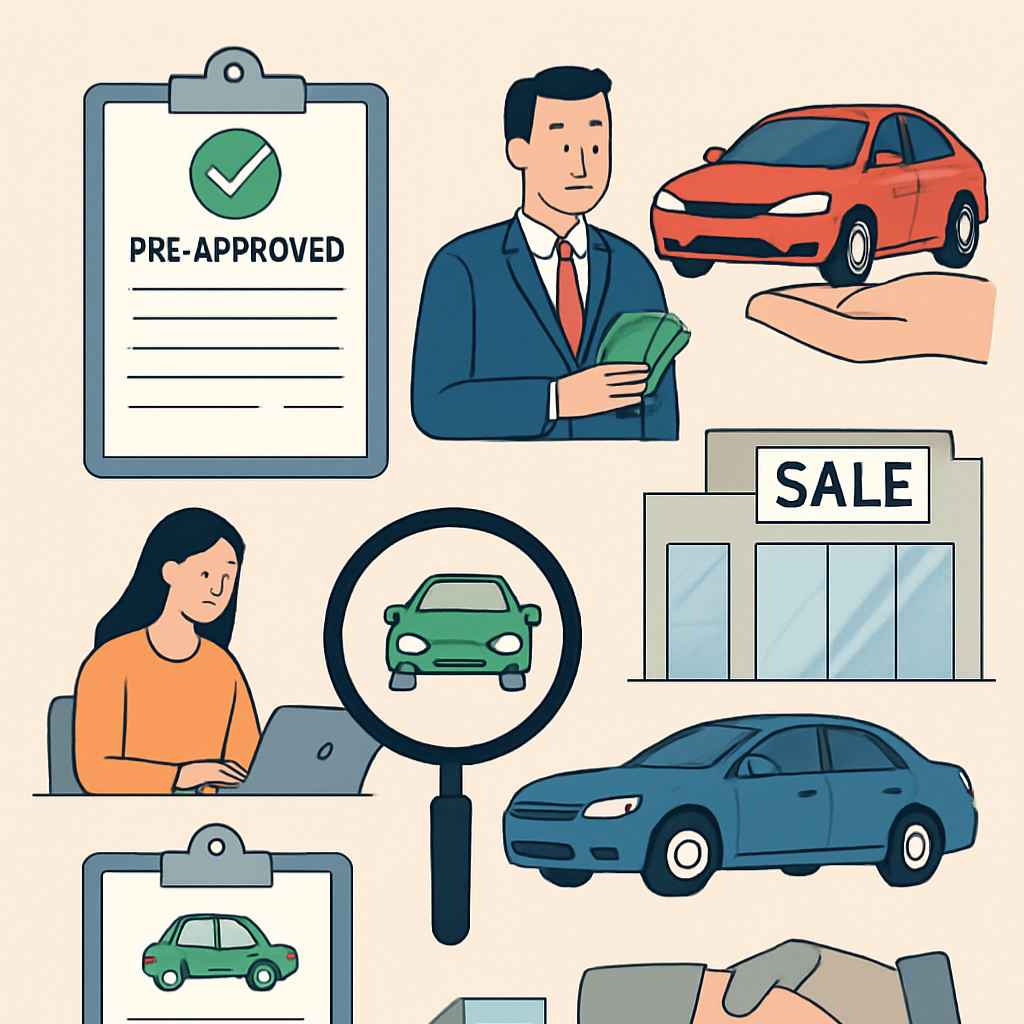
Why Getting Pre-Approved Matters So Much
Many car buyers skip this step. They go straight to the dealership. Then they talk about financing.
This often means they end up paying more. They might get a higher interest rate. Or they might accept a longer loan term.
This costs them more money over time.
A pre-approved loan helps you avoid common mistakes. It prevents impulse decisions. You know your budget.
You won’t be tempted by a car that’s slightly out of reach. You also have a benchmark. If the dealership offers you a loan, you can compare it.
You can see if their rate is better or worse than your pre-approval. Usually, your pre-approval will be a good deal.
It’s like going to the grocery store with a list. You know what you need. You won’t buy extra things you don’t.
You stick to your budget. A pre-approved loan does the same for car buying. It makes the whole experience less stressful.
You can focus on finding the right car. You can enjoy the process more. It’s about feeling confident.
This process also helps you understand your credit. Lenders check your credit report. Seeing this information can be eye-opening.
You can identify any errors. You can also see areas where you can improve your credit. Good credit means better loan terms.
It means saving money. So, the benefit extends beyond just this one car purchase.
Pre-Approval vs. Dealership Financing
Pre-Approval:
- You shop with a set budget.
- Negotiate car price first.
- Dealership can’t set financing terms.
- Often better interest rates.
Dealership Financing:
- Financing is tied to the car you choose.
- Monthly payment might be the focus.
- Can lead to higher interest rates.
- Less room for price negotiation.
How to Get a Car Loan Pre-Approval
Getting pre-approved is simpler than you might think. Many places offer this service. You can start with banks and credit unions you already use.
This can make the process faster. You already have a relationship with them. They know your banking history.
You can also look at online lenders. Many specialize in car loans. They often have quick online applications.
Some can give you a decision very fast. It’s wise to compare offers from a few different lenders. This ensures you get the best rate and terms.
The application process is usually straightforward. You’ll need to provide some personal information. This includes your name, address, and date of birth.
You’ll also need your Social Security number. Lenders will ask about your employment status and income. They’ll want to know your housing situation.
Things like rent or mortgage payments matter. They will also ask about any other loans you have.
Your credit score is a big factor. A higher score means a lower interest rate. If your score isn’t great, don’t despair.
Some lenders offer pre-approval for buyers with less-than-perfect credit. The interest rate might be higher. But, it’s still a way to get a loan.
It’s better than relying on high-interest subprime loans.
Once you submit the application, the lender reviews it. This often happens quickly. You might get an answer within minutes or hours.
If approved, you’ll receive a pre-approval letter. This letter details the loan amount. It will also state the interest rate and loan term.
Keep this letter safe. It’s your shopping tool.
Where to Get Pre-Approved
Your Current Bank or Credit Union: Familiar institution, often faster.
Online Lenders: Many options, quick applications, competitive rates.
Local Credit Unions: Often offer great rates and community focus.
Direct Auto Lenders: Some auto brands have their own financing arms.
The Application Process Explained
Let’s break down what happens when you apply. First, you’ll find a lender. This could be your local bank or an online provider.
You’ll visit their website or branch. You’ll then fill out a loan application form.
This form asks for personal details. Think about your name, address, and phone number. They need to know you are who you say you are.
They will also ask for your date of birth and Social Security number. This is standard for any loan application. It helps verify your identity and check your credit.
Next, the lender wants to know about your job. They’ll ask where you work and how long you’ve been there. They want to know your annual income.
This shows you can afford to repay the loan. Be honest and accurate. Lenders often verify this information.
They will also ask about your debts. This includes things like student loans, credit cards, and other car loans. They’ll want to know the monthly payments for these.
This helps them calculate your debt-to-income ratio. A lower ratio is better for loan approval.
The lender will then check your credit report. They use this to see your credit history. Your credit score is a key part of this.
A good score shows you’ve managed debt well. This makes you a lower risk for the lender. They might do a hard credit pull.
This can slightly lower your score. But, it’s necessary for loan approval.
After reviewing everything, the lender makes a decision. If approved, you get a pre-approval letter. This letter is important.
It states the loan amount, interest rate, and loan term. It might also have an expiration date. This tells you exactly how much you can borrow.
It also shows the cost of borrowing. You now have a solid budget.
Documents You Might Need
Proof of Identity: Driver’s license, passport.
Proof of Income: Pay stubs, W-2s, tax returns.
Proof of Address: Utility bill, lease agreement.
Social Security Number.
Using Your Pre-Approval Letter at the Dealership
This is where the magic happens. You’ve done your homework. You have your pre-approval letter.
Now, you go car shopping. Walk into the dealership with confidence. You know your budget.
You know your financing terms.
First, find the car you want. Take it for a test drive. Check its features.
Make sure it fits your needs. Once you’ve found “the one,” it’s time to talk price. Hand over your pre-approval letter.
Tell the salesperson you are ready to buy. You have your financing secured.
This shifts the negotiation. The dealership’s finance office might still try to offer you financing. They want your business.
This is your chance to compare. If their offer has a lower interest rate or better terms, consider it. But, often, your pre-approval will be competitive.
You don’t have to accept their financing.
You can say something like, “I have pre-approval for X amount at Y interest rate. Can you beat that?” This puts them on the spot. They know you can walk away and get the loan elsewhere.
This encourages them to offer you their best price on the car itself.
Focus on the out-the-door price. This is the total cost of the car. It includes taxes, fees, and any add-ons.
You want to negotiate this price down. Your pre-approval helps you do this. You can negotiate the car’s price without the pressure of figuring out monthly payments.
This is a huge advantage.
Once you agree on a price, you’ll finalize the purchase. You can then take your pre-approval letter to your chosen lender. They will finalize the loan.
Then, you can drive your new car home. The process is much smoother and often cheaper.
Negotiation Tips with Pre-Approval
- Know your budget.
- Focus on the total price.
- Let them know you have financing.
- Be prepared to walk away.
Potential Pitfalls and How to Avoid Them
While pre-approval is powerful, there are a few things to watch out for. One common issue is a car’s age or mileage. Lenders have rules about this.
They might not finance very old cars. Or cars with extremely high mileage. They see these as higher risks.
Solution: Always check the lender’s guidelines before you start shopping. Ask about age and mileage limits. If you’re looking at an older car, some lenders might still work with you.
But, the terms might be different. Some dealers might also have their own financing programs for older cars.
Another pitfall is the dealership adding fees. They might try to sneak in extras. Things like extended warranties or paint protection.
These can inflate the price significantly. They can also come with their own financing.
Solution: Scrutinize the final sales contract. Question every charge. If you don’t want an add-on, refuse it.
Your pre-approval focuses on the car’s price. Don’t let add-ons derail your budget. Stick to what you agreed on.
Sometimes, your pre-approval might be for a specific amount. If the car you want is more expensive, you’ll need to adjust. This might mean saving more for a down payment.
Or, you might need to reapply for a higher loan amount. This could affect your interest rate.
Solution: Be realistic about your budget. If you fall in love with a car over your pre-approved amount, take a step back. Can you afford the higher payments?
Is it worth it? Sometimes, choosing a slightly less expensive car saves you stress.
Finally, don’t wait too long to use your pre-approval. These offers expire. If you let it expire, you’ll have to apply again.
This means another credit check. It could also mean a different interest rate if market conditions change.
Solution: Plan your car shopping trip. Aim to buy within the pre-approval period. If you find the car you want, act.
Don’t delay the purchase unnecessarily. This ensures you get the best terms available.
Common Dealership Tactics to Watch For
- High-pressure sales.
- Adding unnecessary fees.
- Focusing on monthly payments, not total price.
- Offering less favorable financing after you pick a car.
Understanding Interest Rates and Loan Terms
When you get pre-approved, you’ll see an interest rate. This is the percentage the lender charges you to borrow money. It’s a critical number.
A lower rate saves you money. Even a small difference adds up over a car loan.
For example, a 5% interest rate is much better than 8%. Over five years, that difference can be thousands of dollars. Your credit score is the main factor in determining your rate.
Good credit equals a good rate. Building or improving your credit is key.
The loan term is the length of time you have to repay the loan. This is usually in months. Common terms are 36, 48, 60, or 72 months.
A shorter term means higher monthly payments. But, you pay less interest overall. A longer term means lower monthly payments.
But, you pay more interest over the life of the loan.
It’s often a trade-off. Many people prefer lower monthly payments. This is understandable.
It makes the car more affordable. However, it’s important to understand the long-term cost. A longer loan term can also mean you owe more than the car is worth for a longer time.
This is called being upside down on your loan.
When you get your pre-approval, look at the Annual Percentage Rate (APR). This includes the interest rate and any fees. It gives you a truer picture of the loan’s cost.
Compare the APRs from different lenders. This is the best way to see who offers the most value.
Your pre-approval letter will specify these details. It’s your guide. Always ask questions if you don’t understand something.
Lenders want you to be informed. You should feel comfortable with the terms before you sign anything.
Key Loan Terms to Know
Interest Rate: The cost of borrowing money.
APR (Annual Percentage Rate): Includes interest rate and fees.
Loan Term: The length of time to repay the loan (in months).
Principal: The amount of money borrowed.
Down Payment: Money you pay upfront, reducing the loan amount.
Pre-Approval for Used Cars vs. New Cars
The process for pre-approval is largely the same for both new and used cars. However, there are a few differences. Lenders often have stricter rules for used cars.
For new cars, the financing is usually straightforward. The car is new, so it’s less of a risk. Lenders are more comfortable with these loans.
The interest rates for new cars are often lower. This is because they are typically less risky for the lender.
For used cars, lenders look closely at the car’s age and mileage. A car that’s 10 years old with 150,000 miles is riskier than a new car. The loan amount might be lower.
The interest rate might be higher. Some lenders may not finance very old or high-mileage vehicles at all.
When you get pre-approved, it might be for a general amount. The lender might also specify that the loan is for a vehicle that meets certain criteria. This is especially true for used cars.
They want to make sure the collateral (the car itself) holds its value.
What this means for you: If you’re buying a used car, ask your lender about their specific requirements for pre-approval. Are there age limits? Mileage limits?
Does the car need to be a certain make or model?
Knowing this upfront prevents disappointment. You won’t fall in love with a car that you can’t finance. It helps you narrow your search.
You can focus on cars that meet lender criteria. This makes the entire process more efficient.
Dealerships might also have specific financing programs for used cars. These can sometimes be more flexible. But, always compare them to your pre-approved loan.
Your pre-approval gives you a powerful bargaining chip, regardless of whether the car is new or used.
Used Car Financing Considerations
Age of Vehicle: Lenders prefer newer cars.
Mileage: High mileage increases risk.
Condition: The car’s condition matters for its value.
Lender Restrictions: Some lenders have strict rules.
My Personal Experience with a Pre-Approved Loan
I remember when I was buying my first car after college. I was so excited but also totally clueless about financing. I walked into a dealership with stars in my eyes.
I found a car I loved. The salesperson was great. He talked about monthly payments.
He made it sound so easy.
I signed the papers. It wasn’t until a few weeks later that I really looked at the loan details. My heart sank.
The interest rate was higher than I expected. The loan term was longer. I was paying so much more over time.
I felt tricked and honestly, a bit foolish. That feeling of regret stuck with me.
Years later, when I needed a new car, I vowed to do it differently. I researched. I learned about pre-approval.
I applied with my credit union. I got a letter saying I was approved for a certain amount at a great rate. When I went to the dealership, it was a completely different experience.
I told them I was pre-approved. I focused on the car’s price. The salesperson tried to offer dealership financing.
I politely declined. I showed them my pre-approval letter. They saw I was serious.
The negotiation was calm. I got the car I wanted at a fair price. The best part?
I knew exactly what my loan terms were. I felt in control and relieved. It made all the difference.
What This Means for Your Car Buying Journey
Getting pre-approved for a car loan is not just a step. It’s a strategy. It empowers you.
You enter the dealership with knowledge. You know what you can spend. You know the cost of borrowing money.
This removes a lot of the guesswork and anxiety.
It means you can focus on the right things. Is the car reliable? Does it have the features you need?
Is the price fair? You aren’t distracted by trying to figure out how to afford it. This leads to better decisions.
You’re less likely to overspend. You’re less likely to get a loan with bad terms.
It also means you’re less vulnerable to high-pressure sales tactics. Salespeople know when you have leverage. Your pre-approval is that leverage.
They understand you can walk away. This often leads to more honest conversations and better deals.
For some people, getting pre-approved is a wake-up call. It shows them their credit score. It might highlight areas to improve.
This is a positive outcome. Better credit means better financial opportunities down the road. It can save you money on all sorts of loans, not just cars.
Ultimately, it means a smoother, less stressful car buying experience. You’ll feel more confident. You’ll likely save money.
You’ll drive away knowing you made a smart financial choice. It’s about taking control of a significant purchase.
When Pre-Approval Is Most Crucial
First-time buyers: Helps you understand the process.
Budget-conscious shoppers: Prevents overspending.
Those seeking the best rate: Allows for comparison.
Anyone wanting less stress: Empowers you with knowledge.
Quick Tips for a Smooth Pre-Approval Process
Here are some simple tips to make getting pre-approved easy. First, check your credit score. Many free services let you do this.
Knowing your score helps you know what to expect. It also shows you where you stand.
Gather your financial documents. This includes recent pay stubs and bank statements. Having these ready speeds up the application.
It shows lenders you are prepared.
Shop around for lenders. Don’t just go with the first one you find. Compare rates and terms from banks, credit unions, and online lenders.
Even a small difference in APR can save you a lot.
Be honest on your application. Lenders verify information. Lying or exaggerating can lead to rejection.
Accuracy is key to getting approved.
Understand the loan terms before you sign. Read the pre-approval letter carefully. Ask questions if anything is unclear.
Make sure you know the interest rate, loan term, and any fees.
Finally, remember your pre-approval is a goal. It’s not your final loan. The car itself will be assessed.
But, it’s a very strong indicator of what you can get.
Actionable Steps for Pre-Approval
- Check your credit score.
- Gather financial documents.
- Compare 3+ lenders.
- Complete applications accurately.
- Review loan terms carefully.

Frequently Asked Questions
How long does a pre-approved car loan last?
Pre-approved car loans typically last between 30 to 90 days. The exact duration varies by lender. It’s important to check with your specific lender for their policy.
You should aim to buy your car within this timeframe.
Can I negotiate the price of the car with a pre-approved loan?
Yes, absolutely! Having a pre-approved loan makes negotiating easier. You can focus on the car’s price because your financing is already set.
You become a stronger negotiator.
What happens if the dealership offers a lower interest rate than my pre-approval?
This is a good problem to have! If the dealership offers a better rate, you can certainly consider it. Always compare the total cost, including fees and loan term.
Choose the offer that saves you the most money.
Does applying for pre-approval hurt my credit score?
Applying for pre-approval usually involves a “hard” credit inquiry. This can slightly lower your credit score, typically by a few points. However, this is a necessary step to get loan offers.
The impact is usually minimal, especially if you apply to multiple lenders within a short period.
Can I use a pre-approved loan for any car?
Generally, yes, but there are limits. Lenders assess the car’s value, age, and mileage. Very old or high-mileage cars might not qualify.
Always check your lender’s specific requirements for vehicle types.
What is the difference between pre-qualification and pre-approval?
Pre-qualification is often based on self-reported information and is less rigorous. Pre-approval involves a lender reviewing your credit report and financial details, making it a more solid commitment. Pre-approval gives you a much clearer picture of your borrowing power.
Conclusion
Buying a car is a significant event. Using a pre-approved loan simplifies the process. It gives you power.
You can negotiate better. You can avoid common financial traps. You’ll know your budget from the start.
This confidence makes car shopping more enjoyable. Take the time to get pre-approved. It’s a smart step for any car buyer.
It ensures a smoother and more cost-effective purchase.
Products related to this article
Sponsored / affiliate links. As an Amazon Associate I earn from qualifying purchases. I may earn additional commission from eligible campaigns.