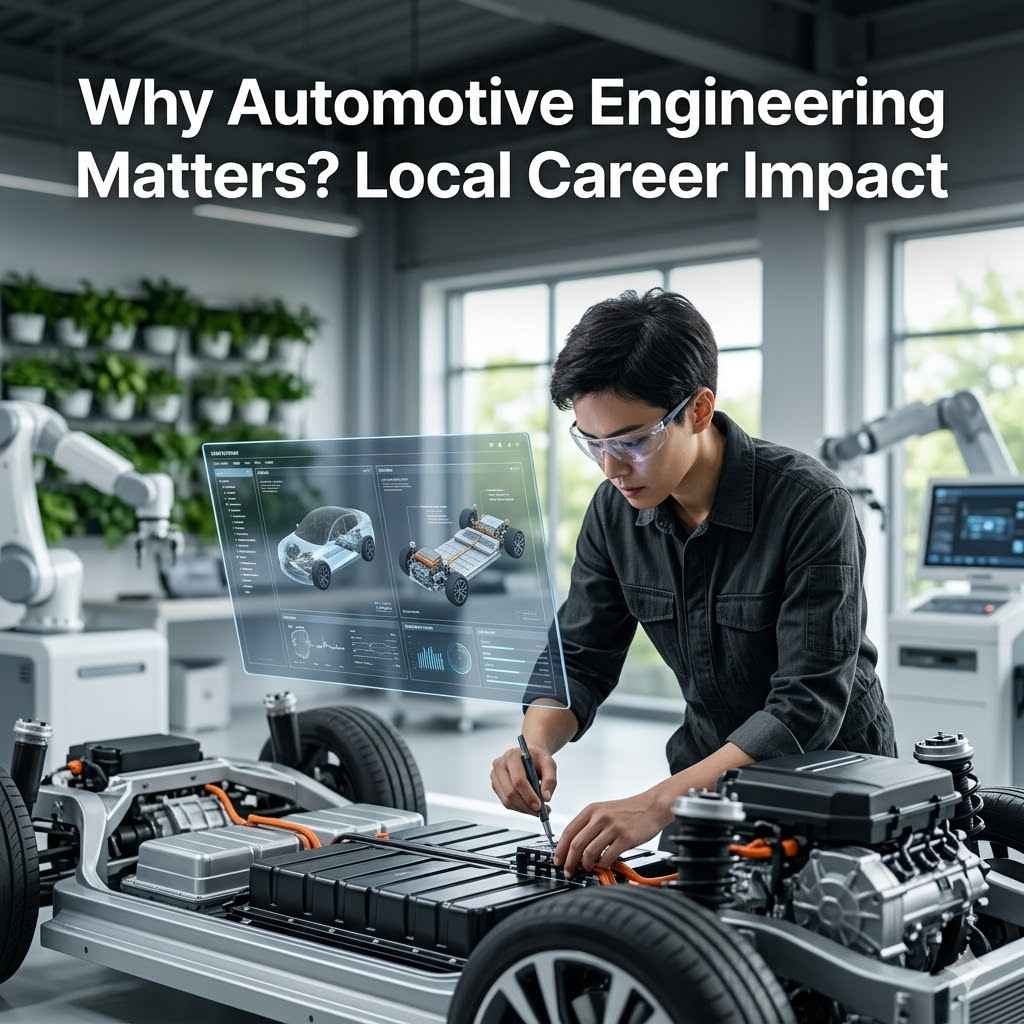
Why Automotive Engineering Matters? Local Career Impact
Thinking about careers can feel like a puzzle sometimes. You might wonder about a topic like Why is Automotive Engineering Important? Local Career Impact and feel unsure where to start.
It’s a big question, and many beginners find it a bit challenging to get a clear picture. But don’t worry! We’ll break it all down easily.
We’ll explore what makes this field so important right where you live and how it can lead to great jobs. Get ready to see how exciting and accessible automotive engineering can be.
The Role of Automotive Engineering in Our World
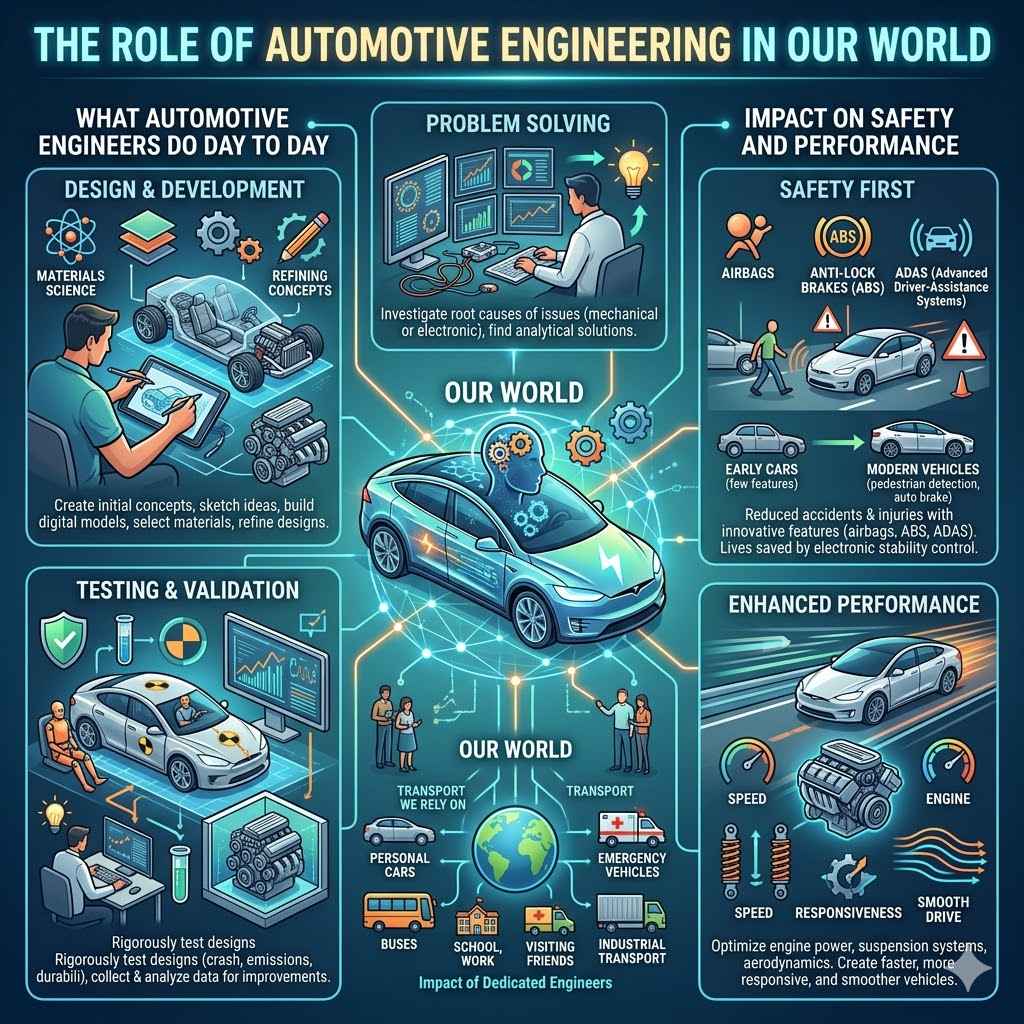
Automotive engineering is all about designing, building, and testing cars, trucks, and other vehicles. It’s a field that touches our daily lives constantly. Think about how you get to school, work, or visit friends – a vehicle is likely involved.
This engineering discipline ensures these vehicles are safe, efficient, and perform well. It involves a deep understanding of mechanics, electronics, and materials science, all working together to create the transportation we rely on. The impact of this field goes beyond just personal cars; it includes buses, emergency vehicles, and even specialized industrial transport.
What Automotive Engineers Do Day to Day
Automotive engineers spend their time on various tasks. Some focus on designing new vehicle parts, like engines or braking systems. Others work on making vehicles more fuel-efficient or environmentally friendly.
Testing is a huge part of the job too, making sure everything works perfectly and safely. They use computer software for design and simulations. They also get hands-on with prototypes, observing how they perform in real-world conditions.
This hands-on approach ensures that theoretical designs translate into practical, working vehicles.
- Design and Development: Engineers create initial concepts for vehicles and their components. They sketch ideas, build digital models, and refine designs based on performance goals. This involves selecting the right materials and ensuring parts fit together correctly.
- Testing and Validation: Once designs are complete, they are rigorously tested. This can include crash tests, emissions testing, and durability trials to ensure the vehicle meets safety and performance standards. Data from these tests informs further improvements.
- Problem Solving: When issues arise during design or testing, engineers investigate the root cause. They use analytical skills to find solutions, whether it’s a mechanical failure or an electronic glitch. This continuous improvement cycle is key to developing better vehicles.
Impact on Safety and Performance
Safety is a top priority in automotive engineering. Engineers design features like airbags, anti-lock brakes, and advanced driver-assistance systems (ADAS). These innovations have significantly reduced traffic accidents and injuries over the years.
Performance is also crucial. Engineers work to make vehicles faster, more responsive, and smoother to drive. This includes optimizing engine power, suspension systems, and aerodynamics.
A well-engineered vehicle offers a better, safer experience for everyone on the road. For example, the introduction of electronic stability control has been credited with saving thousands of lives annually by preventing skids and rollovers.
Consider the evolution of car safety. Early cars had very few safety features. Today, vehicles can detect pedestrians, warn of lane departures, and even automatically brake to avoid collisions.
This progress is a direct result of dedicated automotive engineers continually pushing the boundaries of what’s possible. The goal is always to make travel safer, for drivers, passengers, and pedestrians alike. This constant innovation is what makes automotive engineering such a dynamic and vital field.
Why is Automotive Engineering Important? Local Career Impact
The importance of automotive engineering extends directly to local economies and career opportunities. Many regions have automotive manufacturing plants, research facilities, or related service industries. These businesses create jobs for automotive engineers, technicians, designers, and many other skilled professionals.
When you understand Why is Automotive Engineering Important? Local Career Impact, you see direct links to job security and economic growth in your community. These roles are often well-paying and offer opportunities for advancement, making automotive engineering a significant factor in local employment landscapes.
Job Opportunities in Your Area
Local job markets often have a strong demand for automotive engineering talent. This demand comes from car dealerships, repair shops, manufacturing plants, and even specialized engineering consulting firms. These opportunities can range from entry-level technician roles to senior design engineer positions.
Keeping an eye on local job boards and industry events can reveal the specific needs of your area’s automotive sector. For instance, a city with a large car assembly plant will likely have numerous openings for mechanical and manufacturing engineers, while a smaller town might have more roles in automotive repair and diagnostics.
- Manufacturing and Assembly: If your area has car factories, there are many jobs for engineers who oversee production lines, improve efficiency, and ensure quality control. This includes roles in robotics, process engineering, and industrial engineering.
- Aftermarket Services and Repair: Many automotive engineers work in developing and improving aftermarket parts or advanced diagnostic tools for repair shops. They might also design specialized repair equipment.
- Research and Development Centers: Some communities host R&D facilities for automotive companies or suppliers. These locations require engineers focused on innovation, new materials, and future vehicle technologies.
Economic Contributions to the Community
The automotive sector is a major economic driver for many communities. The jobs created by automotive engineering directly support local families and contribute to the tax base. Furthermore, the presence of automotive businesses can attract other related industries, creating a ripple effect of economic growth.
This sector often invests in local training programs and educational institutions, further strengthening the workforce. The economic impact is substantial, supporting not just engineers but also suppliers, service providers, and retail businesses.
Consider a town that hosts a major automotive parts supplier. This company employs hundreds of people, from factory workers to engineers and managers. They buy supplies locally, their employees spend money in local shops, and they pay taxes that support local services like schools and infrastructure.
This single industry can be the backbone of a local economy, demonstrating the profound Why is Automotive Engineering Important? Local Career Impact. It’s not just about cars; it’s about livelihoods and community prosperity.
Skills Valued by Local Employers
Local employers in the automotive industry look for a specific set of skills. Strong technical knowledge in areas like mechanical design, electronics, and materials science is essential. Problem-solving abilities and attention to detail are also highly valued.
Additionally, employers often seek candidates with good communication skills, the ability to work in teams, and a willingness to learn new technologies. Practical experience, such as internships or co-op programs, can make a candidate stand out. These skills ensure that engineers can contribute effectively from day one.
For example, a local auto repair chain might seek engineers who can design more efficient diagnostic tools. They would value someone who understands electrical systems, can program microcontrollers, and knows how to make user-friendly interfaces. They also need engineers who can explain complex technical issues clearly to technicians.
This blend of technical expertise and practical application is what makes an engineer valuable to a local business. It’s about applying engineering principles to solve real-world, on-the-ground problems.
Innovations Driven by Automotive Engineering
Automotive engineering is at the forefront of technological advancement. The industry constantly pushes for cleaner, smarter, and more efficient transportation. From the development of electric vehicles to the integration of artificial intelligence, engineers are shaping the future of mobility.
These innovations not only improve the vehicles we drive but also impact broader societal goals, such as reducing pollution and improving urban planning. The drive for progress in this field is relentless, leading to exciting new possibilities.
The Rise of Electric Vehicles
Electric vehicles (EVs) represent a massive shift in automotive technology. Engineers are working on improving battery life, reducing charging times, and increasing the range of EVs. They are also developing more efficient electric motors and power management systems.
The design of EVs also involves new challenges, such as thermal management and lightweight construction to maximize efficiency. This transition is changing the entire automotive landscape, creating new roles and requiring new skill sets for engineers.
A key aspect of EV engineering is battery technology. Engineers are researching new battery chemistries that offer higher energy density and longer lifespans. They also design sophisticated battery management systems (BMS) that monitor and control the charging and discharging of individual cells, ensuring safety and optimal performance.
For instance, advancements in solid-state batteries promise to offer greater safety and energy capacity than current lithium-ion batteries, a major focus for many R&D teams. This continuous innovation is vital for making EVs a mainstream alternative to gasoline cars.
- Battery Technology Advancements: Focus is on developing batteries that are lighter, cheaper, and hold more charge. Engineers are exploring materials like lithium-sulfur and solid-state electrolytes.
- Charging Infrastructure Development: Engineers contribute to designing faster and more accessible charging stations. This includes grid integration and power electronics for efficient energy transfer.
- Powertrain Efficiency: Optimizing electric motors and inverters to convert electrical energy into mechanical motion with minimal loss. This involves advanced motor control algorithms and thermal design.
Autonomous Driving Technology
Self-driving cars, or autonomous vehicles (AVs), are another major area of innovation. Automotive engineers are developing the sensors, software, and hardware that allow vehicles to perceive their surroundings and navigate safely. This involves integrating cameras, radar, lidar, and sophisticated AI algorithms.
The goal is to create vehicles that can drive themselves safely and reliably in various conditions. This technology promises to transform transportation, making it safer and more accessible for many.
The development of autonomous driving requires a multidisciplinary approach. Engineers from fields like computer vision, artificial intelligence, robotics, and systems engineering collaborate. They work on creating systems that can accurately identify objects, predict the behavior of other road users, and make split-second decisions.
For example, a vehicle’s perception system might use multiple cameras to detect pedestrians, while radar helps measure their distance and speed, and lidar provides a detailed 3D map of the environment. Combining data from all these sensors allows the car to build a comprehensive understanding of its surroundings. This level of integration is incredibly complex.
Consider a scenario where an AV encounters a sudden obstacle. The sensor suite would detect the object immediately. The perception software would classify it as, say, a fallen tree branch.
The planning system would then calculate the safest evasive maneuver, such as braking or steering around it, considering other traffic and road conditions. This entire process needs to happen in fractions of a second. The safety and reliability of these systems are paramount, and engineers spend years perfecting them.
Connectivity and Smart Vehicles
Modern vehicles are increasingly connected, offering advanced features and communication capabilities. Engineers are integrating Wi-Fi, Bluetooth, and cellular technologies into cars. This allows for over-the-air software updates, real-time traffic information, and seamless integration with smartphones.
Smart vehicles can communicate with each other and with traffic infrastructure, creating a more efficient and safer transportation network. This connectivity opens up new avenues for services and entertainment within the vehicle.
The concept of Vehicle-to-Everything (V2X) communication is a key area of research. This technology allows cars to communicate with other vehicles (V2V), with infrastructure like traffic lights (V2I), and with pedestrians (V2P). For instance, a car could receive an alert from a traffic light that’s about to turn red, allowing it to adjust its speed proactively.
Or, a car could warn other vehicles of a hazard ahead, like black ice. These interconnected systems aim to create a safer and more fluid traffic flow for everyone.
Bridging Automotive Engineering and Your Career Path
Understanding Why is Automotive Engineering Important? Local Career Impact is the first step in seeing yourself in this dynamic field. The opportunities are real, and the skills you develop can lead to a rewarding career.
Whether you’re drawn to the mechanics of how things work, the logic of software, or the creativity of design, there’s a place for you in automotive engineering. It’s a field that’s always moving forward, just like the vehicles it creates.
Steps to Entering the Automotive Engineering Field
Starting a career in automotive engineering typically involves pursuing a relevant educational path. A bachelor’s degree in mechanical engineering, electrical engineering, or automotive engineering is often the starting point. Many universities offer specialized programs focusing on vehicle design, performance, or new technologies like EVs.
Gaining practical experience through internships or co-op programs is highly recommended. These experiences provide valuable hands-on learning and networking opportunities. Continuous learning and staying updated with industry trends are also key for long-term success.
For example, a student interested in electric vehicle development might pursue a degree in electrical engineering with a focus on power systems. During their studies, they could seek internships at EV manufacturers or battery technology companies. These internships allow them to work on real projects, learn industry-specific software, and build relationships with professionals.
This practical exposure is invaluable when it comes time to seek full-time employment. Many companies actively recruit from their intern pool.
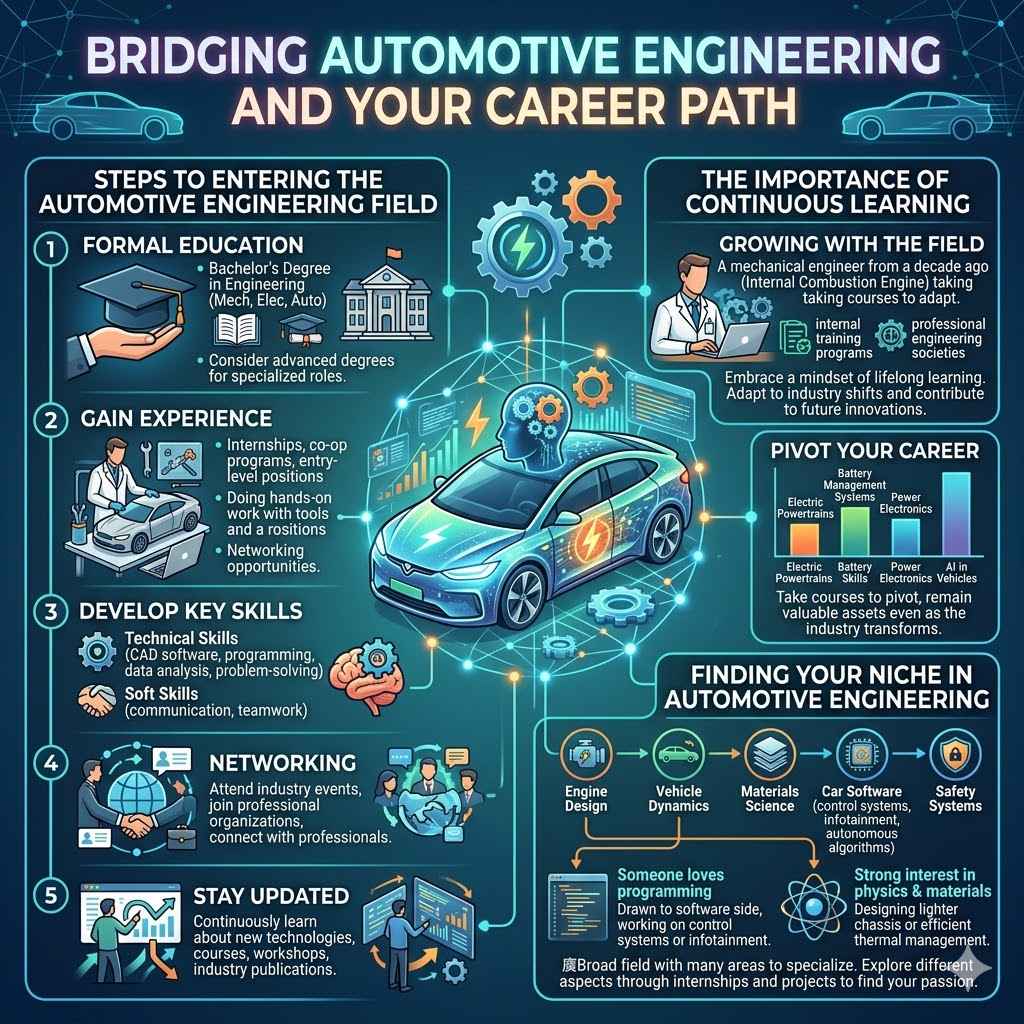
- Formal Education: Obtain a bachelor’s degree in engineering (Mechanical, Electrical, Automotive, or a related field). Consider advanced degrees for specialized roles.
- Gain Experience: Seek internships, co-op programs, or entry-level positions in the automotive industry. This provides practical, hands-on learning.
- Develop Key Skills: Focus on technical skills like CAD software, programming, data analysis, and problem-solving. Soft skills like communication and teamwork are also vital.
- Networking: Attend industry events, join professional organizations, and connect with professionals in the field. Building a network can open doors to opportunities.
- Stay Updated: Continuously learn about new technologies and industry trends through courses, workshops, and industry publications.
The Importance of Continuous Learning
The automotive industry is always changing, so continuous learning is essential. New technologies emerge rapidly, from advanced materials to AI in vehicles. Engineers need to stay updated to remain relevant and competitive.
This can involve taking professional development courses, attending workshops, or pursuing further certifications. Embracing a mindset of lifelong learning ensures you can adapt to industry shifts and contribute to future innovations. It’s about growing with the field.
Imagine a mechanical engineer who specialized in internal combustion engines a decade ago. With the shift towards EVs, they would need to adapt. This might involve taking courses on electric powertrains, battery management systems, and power electronics.
Many companies offer internal training programs, and professional engineering societies provide resources. This proactive approach to learning allows engineers to pivot their careers and remain valuable assets to their employers, even as the industry transforms.
Finding Your Niche in Automotive Engineering
Automotive engineering is a broad field with many areas to specialize in. You might be interested in designing engines, developing vehicle dynamics, working with materials, creating software for cars, or focusing on safety systems. Exploring different aspects of the field through internships and projects can help you find your passion.
Identifying your interests early on will guide your educational and career path, making your journey more focused and rewarding. Your unique skills and interests can help you find the perfect fit.
For instance, someone who loves programming might find themselves drawn to the software side of automotive engineering. They could work on developing the control systems for electric motors, the infotainment systems, or the algorithms for autonomous driving. Alternatively, someone with a strong interest in physics and materials might focus on designing lighter, stronger chassis components or developing more efficient thermal management systems.
The key is to identify what excites you most and pursue that path.
Frequently Asked Questions
Question: What kind of education is needed for automotive engineering?
Answer: A bachelor’s degree in mechanical engineering, electrical engineering, or automotive engineering is typically required. Some specialized roles might benefit from a master’s or doctoral degree.
Question: Are there many job opportunities for automotive engineers locally?
Answer: Yes, job opportunities often exist locally, especially in areas with manufacturing plants, dealerships, or specialized automotive businesses. Demand can vary by region.
Question: Is it hard to get a job in automotive engineering?
Answer: While competitive, with the right education, internships, and a focus on in-demand skills, it is achievable. Practical experience significantly improves job prospects.
Question: What are the most important skills for an automotive engineer?
Answer: Key skills include strong technical knowledge, problem-solving, attention to detail, teamwork, and good communication. Familiarity with relevant software is also crucial.
Question: How has automotive engineering changed in recent years?
Answer: It has seen major shifts towards electric vehicles, autonomous driving technology, and increased vehicle connectivity. Sustainability and advanced materials are also big focuses.
Summary
Automotive engineering is vital for our daily lives and local economies. It drives innovation in safety, efficiency, and new technologies like EVs and autonomous systems. Understanding Why is Automotive Engineering Important?
Local Career Impact shows that this field offers many job opportunities. Pursuing relevant education, gaining experience, and committing to continuous learning will set you on a path for a successful career in this exciting industry.