Is Automotive Technology a Type of Engineering? Guide
Automotive technology is technician education, rather than a formal engineering degree. Engineering often requires an ABET-accredited engineering program and, in many roles, a licensed-engineer path. Mixing them up can waste time, tuition, and career plans. This guide separates automotive technology from engineering and shows where they overlap.
Is automotive technology a type of engineering?
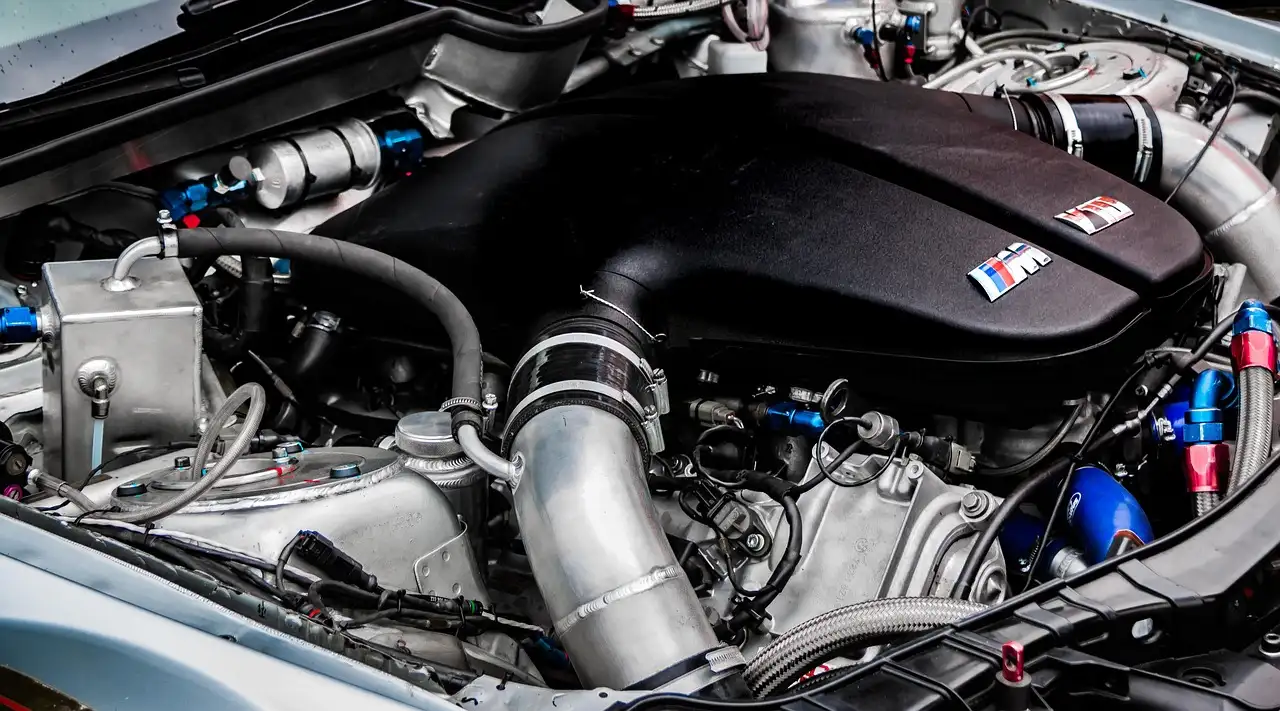
No. Automotive technology is engineering-adjacent training for technicians, while automotive engineering is a formal branch of vehicle engineering. That distinction matters because the first prepares you to diagnose, repair, and service vehicles, while the second prepares you to design, develop, and validate vehicle systems. (en.wikipedia.org)
The confusion comes from the word “technology.” Here, it does not mean an engineering discipline. It means applied technical training centered on tools, service procedures, and diagnostics for real vehicles.
What automotive technology means
Automotive technology prepares students for careers as automotive technicians. BCC says the program develops operational principles, service sequences, and diagnostic techniques. That points to repair workflow, not engineering design work. (bcc.cuny.edu)
Typical study includes internal combustion engines, hydraulic brake systems, steering and suspension basics, and electrical test equipment. Students learn to read wiring schematics, use scan tools, and interpret fault codes. BCC also notes scan-tool and oscilloscope use, plus hydraulic pressure calculations for drum and disc brakes.
ASE Education Foundation accreditation suggests that a technician program meets an industry-recognized quality standard. Employers use that as a clue that the curriculum covers core service skills in a structured way.
What automotive engineering means
Automotive engineering is a branch of vehicle engineering. It incorporates mechanical, electrical, electronic, software, and safety engineering, and it applies to motorcycles, automobiles, and trucks.
This is a design and development field. Coursework and projects often focus on vehicle architecture, powertrain systems, controls, electronics integration, durability, and validation. Automobile engineering also teaches manufacturing, designing, mechanical mechanisms, and operations.
ISO 26262 matters here because it is an automotive functional safety standard used in safety compliance discussions. Engineers use it when they design systems that must fail predictably, especially in electronic control and software-heavy vehicles. (en.wikipedia.org)
What is the difference between automotive technology and automotive engineering?

Automotive technology trains you to service vehicles; automotive engineering trains you to create and refine them. The first is technician-focused and shorter. The second is a formal engineering path with deeper math, more theory, and more design responsibility.
Think in terms of intent. Technician programs teach how to restore a vehicle to working condition. Engineering programs teach why a vehicle behaves as it does, how to improve it, and how to prove that the design meets requirements.
Degree depth, math, and daily work
Automotive technology is often a roughly 1-2 year associate or certificate path. Automotive engineering usually takes a 4-6 year program. That extra time matters because engineering work depends on calculus, physics, systems analysis, and design validation.
Technology students spend more time in the shop. Engineering students spend more time in classrooms, labs, CAD environments, simulation tools, and project work tied to design and testing.
What employers usually mean
When employers hire for automotive technology roles, they usually want hands-on service skill: diagnosis, repair, inspection, and customer-facing communication. Common titles include technician, diagnostician, test technician, and service manager.
When employers hire for engineering roles, they usually want product development skill: analysis, design, testing, integration, compliance, and documentation. Those jobs may sit in OEMs, suppliers, testing labs, or research groups.
What do you learn in each program?
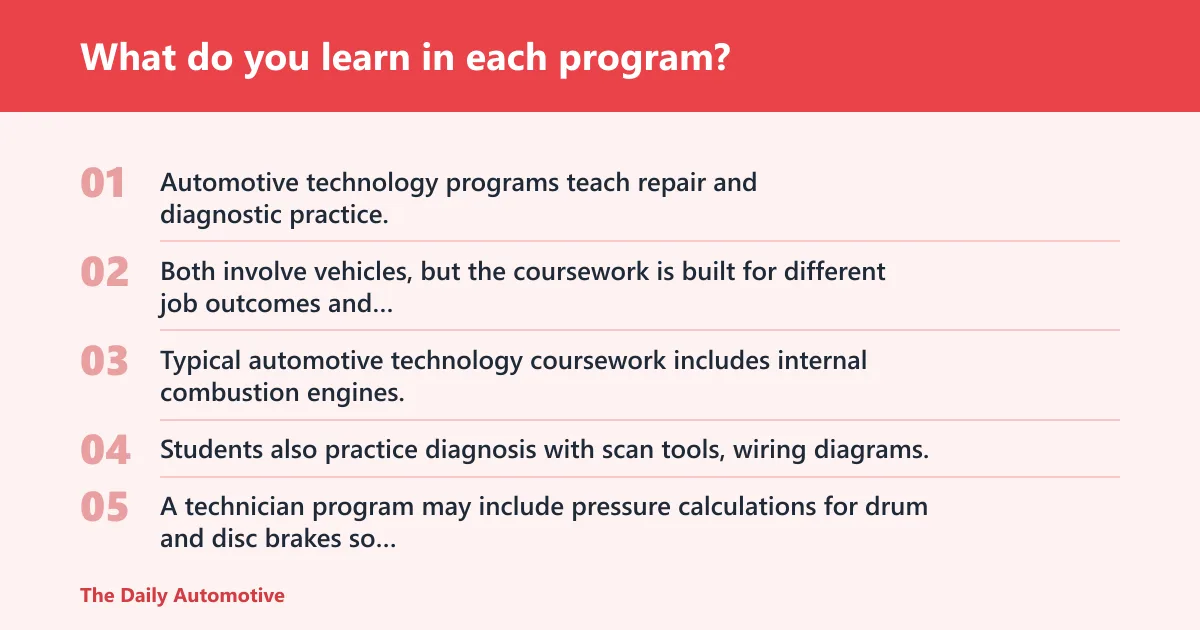
Automotive technology programs teach repair and diagnostic practice, while automotive engineering programs teach design, analysis, and development. Both involve vehicles, but the coursework is built for different job outcomes and different levels of technical math.
Core classes in automotive technology
Typical automotive technology coursework includes internal combustion engines, brake systems, drivetrain service, electrical systems, HVAC basics, suspension, steering, and shop safety. Students also practice diagnosis with scan tools, wiring diagrams, and electrical test equipment.
Hydraulic brake systems are a clear example. A technician program may include pressure calculations for drum and disc brakes so students can diagnose faults and confirm proper operation. The goal is safe service and accurate repair.
Core classes in automotive engineering
Automotive engineering classes often include mechanics, thermodynamics, materials, controls, electronics, software, and vehicle dynamics. Students also study manufacturing methods, system integration, and testing methods that verify whether a design meets performance targets.
Because automotive engineering sits inside vehicle engineering, it can include subsystems and modification work that connects mechanical and electronic systems. That is especially important in EVs, driver-assist features, and software-managed powertrains.
Why math depth changes the degree path
Technology programs use applied math for measurements, pressure, voltage, and diagnostics. Engineering programs need more advanced mathematics because they model how systems behave before a vehicle is built.
A common first-timer mistake is assuming shop skill and engineering math are interchangeable. A student can be excellent at tracing a parasitic draw and still need years of study before handling control-system design or vehicle safety validation.
Automotive technology vs. automotive engineering: side-by-side decision table
| Path | Degree length | Math depth | Lab/shop time | Typical coursework | Tools used | Job titles | Salary ceiling | Best-fit student profile |
|---|---|---|---|---|---|---|---|---|
| Automotive technology | 1-2 year associate or certificate path | Applied algebra, measurements, pressure, voltage | High; hands-on shop training is central | Repair, maintenance, diagnostics, service sequences, internal combustion engines, brakes, electrical systems | Scan tools, oscilloscope, wiring schematics, electrical test equipment, service manuals | Automotive technician, diagnostician, test technician, service manager | Strong earning potential in senior diagnostic or management roles, but typically below engineering design leadership | Student who wants direct vehicle repair work and fast entry into the service bay |
| Automotive engineering | Typically 4-6 years | Higher-level calculus, physics, modeling, systems analysis | Moderate; labs matter, but classroom and design work dominate | Design, development, vehicle dynamics, controls, electronics, software, safety engineering, manufacturing | CAD, simulation software, test instrumentation, data acquisition, validation tools | Automotive engineer, systems engineer, validation engineer, design engineer | Generally higher long-term ceiling because it opens design, development, and management tracks | Student who wants to design, analyze, and improve vehicle systems before they reach production |
Can automotive technology lead to an engineering career?
Yes, but not by itself. Automotive technology can be a route toward engineering-adjacent work and, with additional schooling, toward engineering roles. It is not the same as earning an engineering degree.
Some technicians move into test technician, diagnostician, or service management roles. BCC also notes that further training can lead to careers in engineering and technical education. The bridge usually comes through transfer credit, a bachelor’s degree, or a later engineering program.
How technician skills help later
Technician training gives you practical context that helps in engineering meetings and validation work. A person who has traced wiring faults, checked sensor signals, or diagnosed brake issues understands how design choices appear in the field.
That matters in EVs and software-heavy vehicles, where hardware, control logic, and diagnostics are tightly connected. Still, the engineering credential is what qualifies someone for most design and development roles.
How do safety standards and modern electronics blur the line?
Modern vehicles make the overlap more visible, but they do not erase the boundary. Automotive technology and automotive engineering both touch electronics, diagnostics, and safety, yet they approach those topics from different job goals.
Shared exposure to electronics and diagnostics
Automotive technology includes scan tools, oscilloscope use, wiring schematics, and electrical test equipment. That is practical fault-finding work. Automotive engineering uses similar systems, but for design verification, control tuning, and compliance testing.
Suppose a car has an intermittent no-start fault and a voltage drop in a harness. A technician traces the fault and repairs the vehicle. An engineer may be asked why the harness design allowed that failure mode and how the next revision should prevent it.
Why ISO 26262 is part of engineering conversations
ISO 26262 is tied to automotive functional safety, which is an engineering concern. It helps teams think about hazards, fault tolerance, and the safety implications of software and electronics.
Technicians should know the service side of safe repair. Engineers must help ensure the vehicle was designed to meet safety targets in the first place. Those are connected tasks, not identical disciplines.
What careers come from automotive technology?
Automotive technology can lead to technician careers that are directly tied to repair and service. Common roles include automotive technician, diagnostician, test technician, service advisor, and service manager.
Those jobs fit students who want to work on actual vehicles, use diagnostic tools daily, and build competence through hands-on problem solving. Some graduates later move into training, fleet service, or engineering-adjacent support roles.
Which degree is better for working on cars: technology or engineering?
If the goal is to repair and diagnose cars, automotive technology is the better fit. If the goal is to design and develop cars or vehicle systems, automotive engineering is the better fit. The right choice depends on whether you want the shop or the design office.
For many students, the decision is simple: choose technology for immediate service work, and choose engineering for product development and higher math. Neither path is “better” in general. They prepare you for different work.
Frequently asked questions
Is automotive technology the same as mechanical engineering?
No. Mechanical engineering is a broader engineering field that can include vehicles, but it also covers machines, energy systems, structures, and many other areas. Automotive technology is a technician program focused on vehicle service, not a general engineering degree.
What do you learn in an automotive technology degree?
You learn service sequences, diagnostics, repair procedures, internal combustion engines, brakes, electrical systems, and shop safety. Programs often include scan-tool use, oscilloscope work, wiring schematics, and hydraulic pressure calculations for drum and disc brakes.
Does automotive technology include diagnostics and electrical systems?
Yes. Diagnostics is a core part of automotive technology, and electrical systems are central to modern technician training. Students commonly use scan tools, wiring diagrams, oscilloscope tests, and other electrical test equipment to locate faults and verify repairs.
Products related to this article
Sponsored / affiliate links. As an Amazon Associate I earn from qualifying purchases. I may earn additional commission from eligible campaigns.