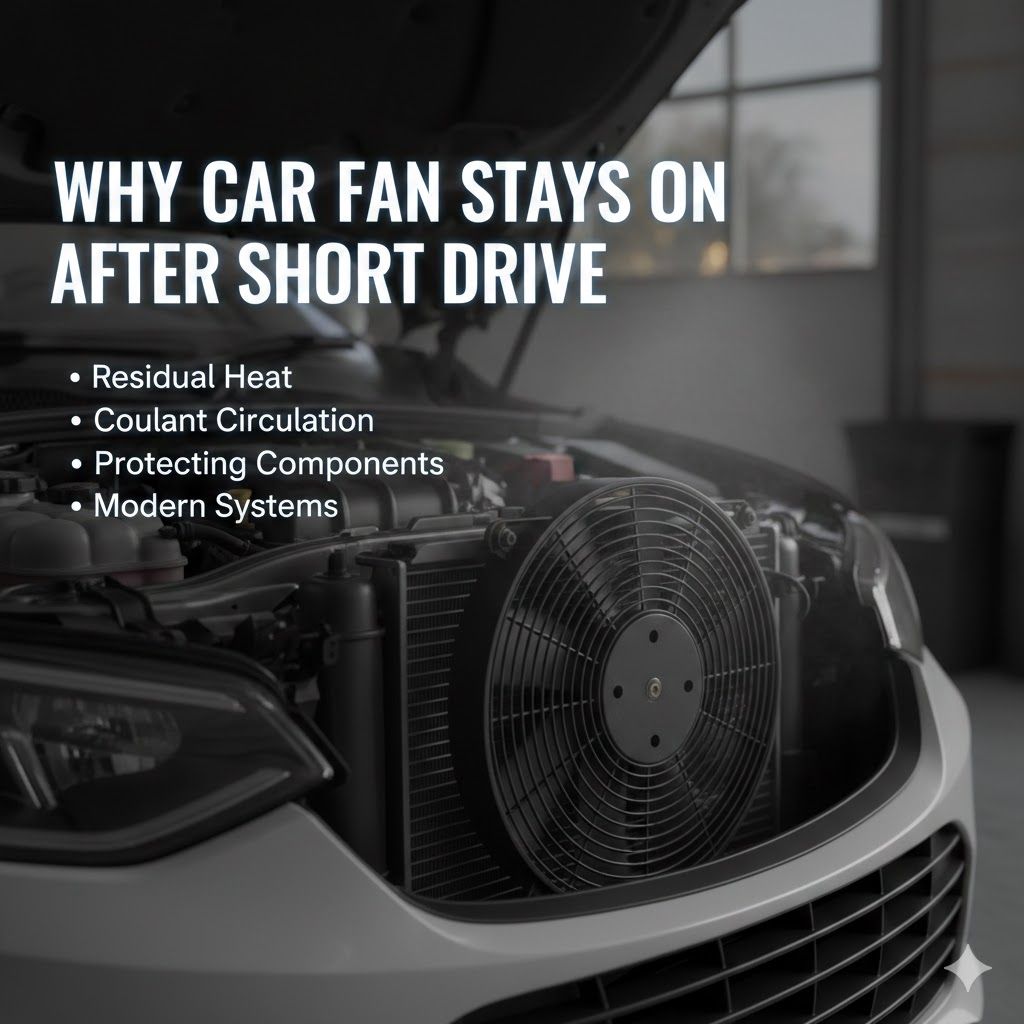
Why Car Fan Stays On After Short Drive
It’s a bit puzzling when your car’s fan keeps running even after you’ve turned the engine off, especially after just a quick trip. For many car owners, this situation can be a little confusing or even concerning. But don’t worry, it’s a common thing many people experience.
This post will help you figure out precisely Why Does Car Fan Stay On After Short Drive? We’ll break it down simply, step by step, so you can understand what’s happening with your car and what to do about it.
Understanding Your Car’s Cooling Fan Operation
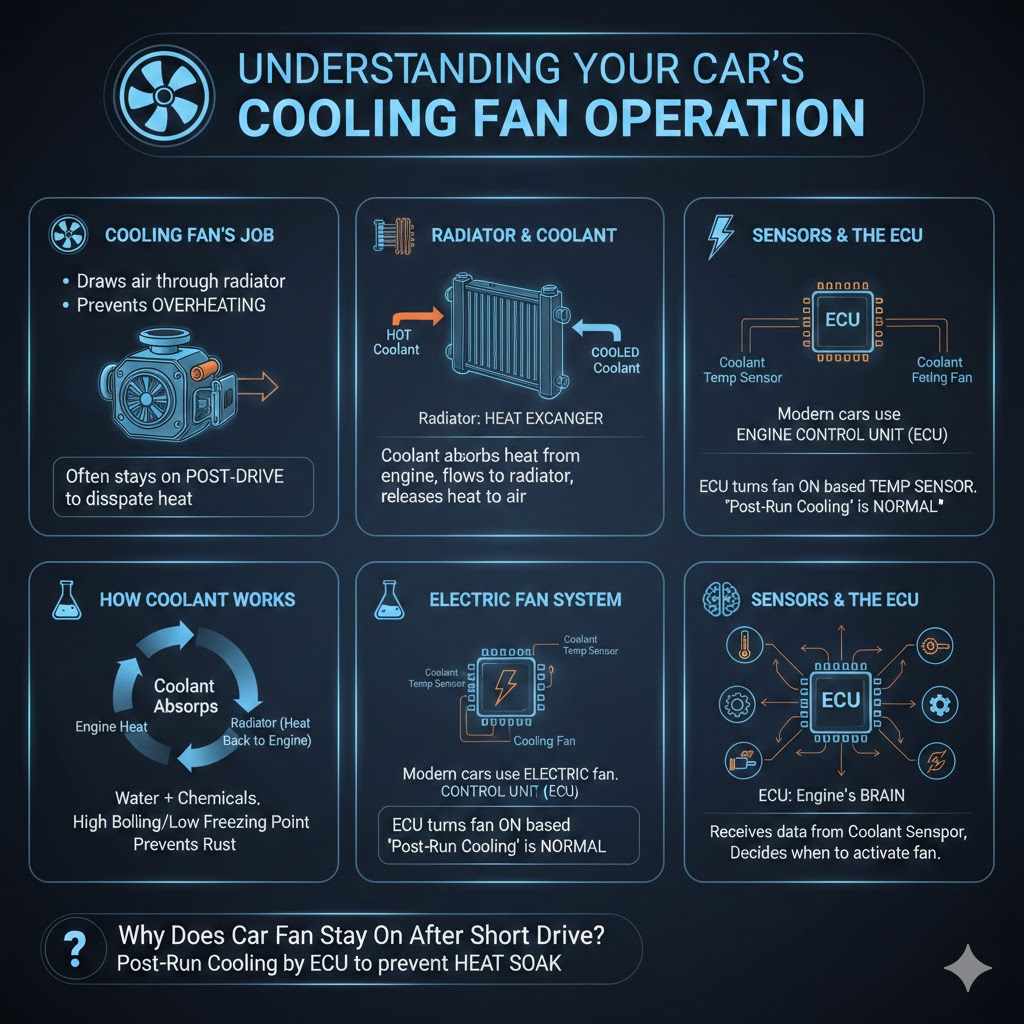
Your car’s cooling fan is a vital part of the engine’s temperature control system. Its main job is to draw air through the radiator, helping to keep the engine from overheating. This fan typically turns on automatically when the engine reaches a certain temperature.
It’s designed to work hard to protect your engine.
Sometimes, after a short drive, the engine might still be quite warm. Even if you’ve turned the car off, the residual heat needs to dissipate. The cooling fan can stay on for a while longer to help cool down the engine components.
This helps prevent heat-related damage. It’s a protective measure.
The Role of the Radiator and Coolant
The radiator acts like a heat exchanger. Coolant, a special fluid, circulates through the engine, absorbing heat. This hot coolant then flows into the radiator.
Inside the radiator, the coolant passes through thin tubes. Air flows over these tubes, which cools down the coolant. This cooled coolant then goes back to the engine to absorb more heat.
The cooling fan is crucial because it helps move air through the radiator, especially when the car is not moving or moving at slow speeds. Without enough airflow, the coolant wouldn’t cool down effectively. This could lead to the engine getting too hot.
The fan ensures there’s always sufficient cooling, even in stop-and-go traffic.
How Coolant Works
Coolant, also known as antifreeze, is a mixture of water and chemicals. It has a much higher boiling point than plain water and a lower freezing point. This means it can handle a wide range of temperatures without boiling over or freezing.
It also contains additives that prevent rust and corrosion inside the cooling system.
When the engine runs, it generates a lot of heat. The coolant absorbs this heat. It then travels to the radiator.
Here, heat is released from the coolant into the surrounding air. This process repeats continuously as long as the engine is running and the cooling system is functioning correctly. A healthy coolant level is key.
The Electric Cooling Fan System
Most modern cars use an electric cooling fan instead of a belt-driven one. This fan is controlled by the car’s computer, often called the Engine Control Unit (ECU). The ECU monitors the engine temperature using sensors.
When the temperature goes above a certain point, the ECU signals the fan to turn on.
When you turn off the engine, the ECU might still detect that the engine is hot. In such cases, it can keep the fan running for a short period. This is called “intermittent fan operation” or “post-run cooling.” It’s a normal function designed to prevent heat soak.
This is a common reason Why Does Car Fan Stay On After Short Drive?
Sensors and the ECU
The Engine Control Unit (ECU) is like the brain of your car’s engine. It receives information from many different sensors located throughout the engine. One of the most important is the coolant temperature sensor.
This sensor tells the ECU how hot the engine is.
Based on the readings from the coolant temperature sensor and other data, the ECU makes decisions about how the engine should run. This includes controlling the cooling fan. If the engine is running hot, the ECU will turn on the fan.
If the engine is cool, it will keep the fan off.
Common Reasons for the Fan Remaining On
Several factors can cause your car’s cooling fan to stay on longer than expected, even after a short drive. The most frequent reason is simply that the engine is still too hot to cool down immediately. This is especially true on warm days or if the car was idling for a while.
Another possibility is related to the car’s battery. Electric cooling fans use electrical power. If the car’s battery is not holding a charge well, the fan might run longer to try and cool the engine before the power runs out.
This is less common but worth considering.
Engine Temperature After a Short Drive
Even a brief drive can heat up an engine significantly. The combustion process creates a lot of heat. If you’ve been driving in city traffic with frequent stops and starts, or if you’ve driven uphill, the engine might be working harder and generating more heat.
When you stop the car, the heat from the engine block and other components continues to radiate outwards. The cooling system’s job is to dissipate this heat. The fan plays a role in this even after the engine is off.
It’s like a hot pot cooling down; it doesn’t instantly become cold.
Electrical System Issues
The cooling fan is powered by your car’s electrical system, specifically the battery and alternator. If there’s a problem with these components, it could affect how the fan operates. For instance, a failing alternator might not be recharging the battery effectively.
This could lead to the fan drawing more power than usual.
Sometimes, a faulty fan relay or fuse can cause the fan to stay on continuously. These components control the flow of electricity to the fan. If they get stuck in the “on” position, the fan will keep running.
This is a common electrical fault.
Faulty Thermostat
The thermostat is a valve that controls the flow of coolant between the engine and the radiator. If the thermostat is stuck closed, it prevents hot coolant from reaching the radiator. This causes the engine to overheat.
The cooling fan will then run constantly to try and compensate.
A thermostat that is stuck open might allow coolant to flow too freely, making it harder for the engine to reach its optimal operating temperature. While this usually leads to an engine running too cool, it can sometimes indirectly affect fan operation if the system isn’t regulated properly.
Issues with the Cooling Fan Motor or Relay
The electric cooling fan has its own motor. If this motor is starting to fail, it might behave erratically. It could also draw too much current, causing the fan to run longer than necessary.
This is especially possible if the fan blades are obstructed or if the motor is worn out.
The fan relay is an electrical switch that turns the fan on and off. If this relay is faulty or “sticky,” it might remain engaged even when the ECU tells it to disengage. This can cause the fan to run all the time.
A blown fuse related to the fan could also cause it to stay on, though this is less common.
Ambient Temperature and Driving Conditions
On a very hot day, the ambient temperature will significantly impact how quickly your engine cools down. If it’s already hot outside, the cooling fan will likely need to work harder and longer to bring the engine temperature to a safe level. This is a normal response to hot weather.
Driving conditions also play a role. If you’ve been driving in heavy traffic, stop-and-go situations, or climbing steep hills, your engine has been working harder. This generates more heat, and the cooling system needs more time to dissipate it.
So, the fan running longer makes sense in these scenarios.
How to Check Your Car’s Cooling Fan
Checking your car’s cooling fan is relatively straightforward, but it requires some basic caution as engine components can be hot. The first step is to listen for the fan. After driving, turn off the engine and listen carefully.
You should hear it spin down if it was running, or it might continue to run for a few minutes.
You can also check the fan manually, but only when the engine is completely cool. Carefully reach near the fan blades (with the engine off and cool!) and try to spin them by hand. They should move freely.
If they feel stiff or jammed, there might be a mechanical issue with the fan motor or its housing.
Visual Inspection of the Fan and Radiator
A visual inspection can reveal obvious problems. Look at the fan blades for any signs of damage or obstruction. Ensure nothing is caught in the fan, like leaves, plastic bags, or debris.
Also, check the radiator for any leaks or damage to its fins. Dirty or bent fins can reduce airflow.
The radiator itself should be clean. If it’s covered in dirt, bugs, or debris, it won’t be able to dissipate heat effectively. This can make the cooling fan work harder and run longer.
You might need to gently clean the radiator fins.
Checking the Coolant Level
The coolant level is critical for proper engine cooling. With the engine completely cool, locate the coolant reservoir (usually a translucent plastic tank). Check the level against the “min” and “max” marks.
If it’s low, you’ll need to add the correct type of coolant.
Never open the radiator cap when the engine is hot, as pressurized hot coolant can spray out and cause severe burns. Always wait for the engine to cool down completely before checking or adding coolant. Low coolant can cause overheating, which makes the fan run more.
Listening for Unusual Noises
When the fan is running, listen for any strange sounds. A healthy cooling fan should make a steady whirring noise. If you hear grinding, squealing, or clicking sounds, it might indicate a problem with the fan motor bearings or a loose component.
These noises can signal an impending failure.
These unusual noises are a good clue to a potential issue. They might not always directly explain why the fan stays on, but they point to a fan that isn’t operating perfectly. Addressing these noises early can prevent bigger problems.
When to Seek Professional Help
While some fan behavior is normal, there are times when you should definitely take your car to a mechanic. If the fan is constantly running even when the engine is cold, or if it doesn’t turn on at all when the engine is hot, these are clear signs of a problem that needs expert attention.
If you notice coolant leaks, steam coming from under the hood, or your temperature gauge is consistently reading in the red zone, these are serious indicators of an overheating problem. In such cases, it’s best to stop driving and have your car inspected by a qualified technician immediately.
Overheating Symptoms to Watch For
Your car’s dashboard has a temperature gauge. If it consistently points to the high end or the warning light for temperature comes on, this indicates overheating. Other signs include a sweet smell from the engine bay (often due to leaking coolant), steam or visible smoke from under the hood, and poor engine performance.
If you experience any of these symptoms, it’s crucial to address them promptly. Ignoring overheating can lead to severe engine damage, which can be very expensive to repair. It’s always better to be safe than sorry when it comes to your engine’s health.
Diagnostic Tools and Techniques
Mechanics use specialized diagnostic tools to identify problems with the cooling system and the fan. These tools can read error codes stored in the car’s computer, which can point directly to faulty sensors or control modules. They can also test the fan motor, relay, and wiring harness for proper function.
These tools help pinpoint the exact cause of the issue, rather than just guessing. A mechanic can also perform pressure tests on the cooling system to check for leaks that you might not see. This thorough approach ensures accurate diagnosis and repair.
Examples of Fan Behavior and Solutions
Let’s look at a couple of common situations and what they might mean. Imagine you drive for just 10 minutes to the store on a warm day. After parking and turning off the engine, you hear the fan running for about 5 minutes.
This is usually normal. The engine was hot from driving, and the fan is cooling it down.
On the other hand, if you drive for only 5 minutes and then hear the fan running for 20 minutes after turning off the engine, that’s not typical. It suggests something might be wrong, perhaps a faulty sensor telling the fan it’s hotter than it really is, or a relay that isn’t shutting off properly.
Scenario 1: Normal Operation on a Hot Day
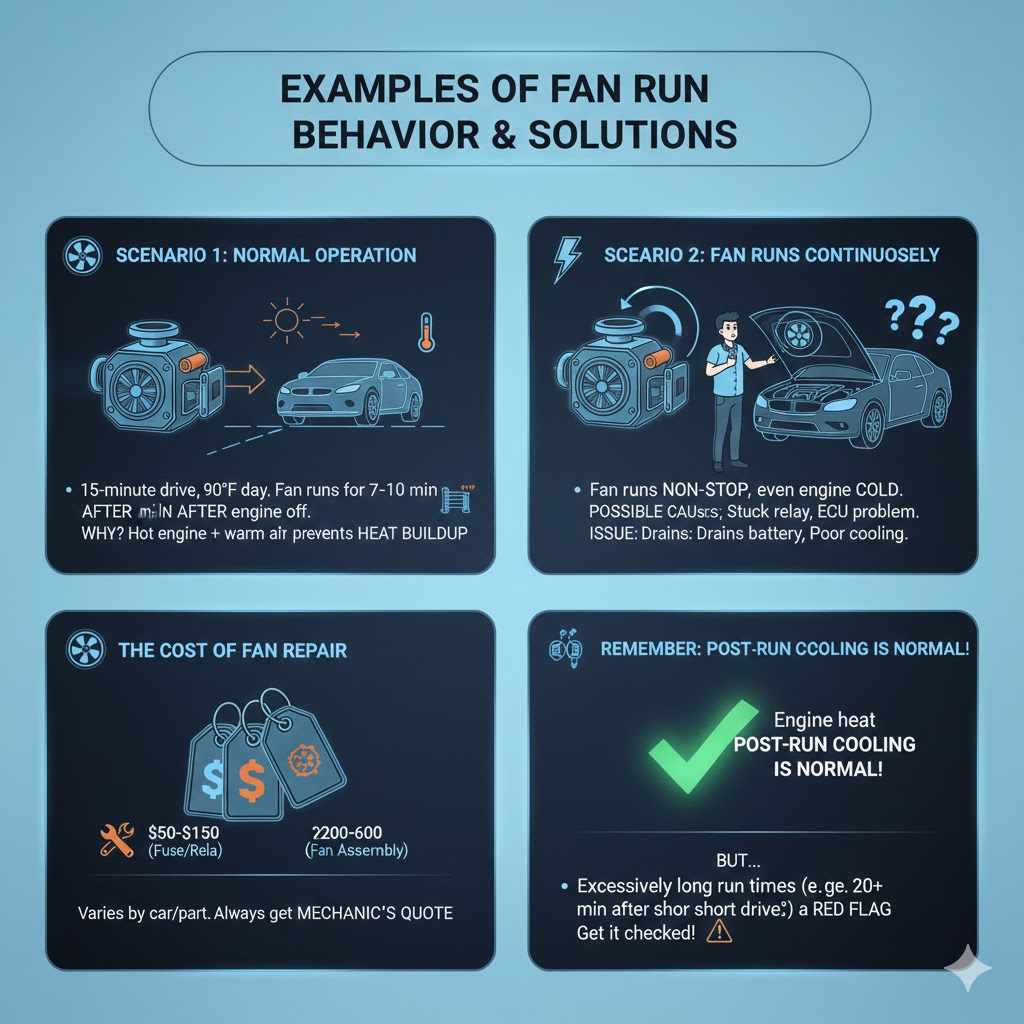
A driver takes a 15-minute trip on a 90-degree Fahrenheit day. After parking and turning off the engine, the cooling fan continues to run for about 7-10 minutes. This is a perfectly normal scenario.
The engine reached its operating temperature, and the outside air is warm, so the fan needs extra time to dissipate the heat effectively.
The car’s computer monitors the temperature even after the engine is off. If it remains above a certain threshold, it will keep the fan running to prevent heat buildup. This ensures the engine components don’t get stressed by excessive residual heat.
Scenario 2: Fan Runs Continuously
A driver notices their car’s fan is running constantly, even when the engine is cold or has just been started. This is a sign of a potential issue. It could be a stuck fan relay, a faulty coolant temperature sensor reporting an abnormally high temperature, or a problem with the ECU itself.
In such a case, it’s best to have the car inspected by a mechanic. A continuously running fan can drain the car battery quickly, leaving you stranded. It also means the cooling system might not be operating as intended, even if the fan itself is functional.
The Cost of Fan Repair
The cost to fix a cooling fan issue can vary widely. A simple fix, like replacing a blown fuse or a faulty relay, might only cost $50 to $150. Replacing the entire cooling fan assembly, which includes the motor and blades, can range from $200 to $600, depending on the car make and model.
If the problem is a faulty coolant temperature sensor or a more complex issue with the ECU, the repair cost can be higher. It’s always a good idea to get a quote from your mechanic before agreeing to any work.
Frequently Asked Questions
Question: Why does my car’s fan stay on after I turn it off?
Answer: Your car’s fan stays on after you turn it off because the engine is still hot. The fan helps to cool down the engine components and the radiator, preventing heat-related damage. This is a normal function for many cars.
Question: Is it bad if my car’s fan runs for a long time?
Answer: It’s usually okay if the fan runs for a few minutes after you turn off the engine, especially on a hot day or after hard driving. However, if it runs for an excessively long time, or continuously, it might indicate a problem that needs checking.
Question: How long should the car fan stay on after turning off the engine?
Answer: Typically, the fan will run for 5 to 10 minutes after the engine is turned off. The exact time depends on how hot the engine is and the ambient temperature. It’s designed to run until the engine temperature drops to a safe level.
Question: What happens if the car’s fan doesn’t turn on at all?
Answer: If the fan doesn’t turn on when your engine is hot, your engine can overheat. This can lead to serious damage. It’s important to get this checked immediately by a mechanic.
Question: Can I just disconnect the cooling fan?
Answer: No, you should never disconnect the cooling fan. It is essential for preventing your engine from overheating, especially in traffic or warm weather. Disconnecting it can cause severe and costly engine damage.
Conclusion
Seeing your car’s fan continue to run after a short drive is often just the engine doing its job to stay cool. It’s a normal process designed to protect your engine from heat. If the fan runs for a reasonable time, especially on warm days, it’s likely functioning as intended.