3 Best Back Seat Fans for Car Use (2026): We Compared
The best back seat fan for car use is the one that fits your rear-seat layout and power access: clip-on for one child seat, dual-head for two passengers, and a long-cord 12V or USB model for third rows. Pick the wrong setup and you get dead spots, loud airflow, and kids or pets stuck in hot, stale air. This guide compares 3 rear-seat fan picks by mounting fit, power source, noise, and passenger type.
Quick comparison
| Product | Badge | Best for | Price | ||
|---|---|---|---|---|---|
 |
Kwak’s Car Fan for Back Seat Clip-on USB, 3-Speed QuietKwak’s | Our pick | USB clip-on fan · 3 speeds · reversible mount | $9.99
Price as of 25 Oct 2026
|
View |
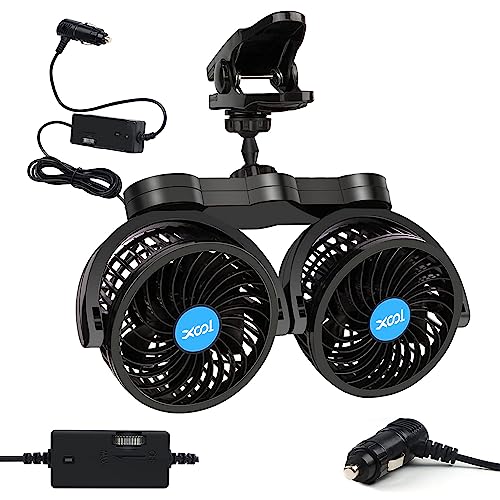 |
XOOL Clip Car Fan, Adjustable Dual Head 4 Inches 12V FanXOOL | Also great | 12V clip fan · dual head · 360° rotation | $26.99
Price as of 25 Oct 2026
|
View |
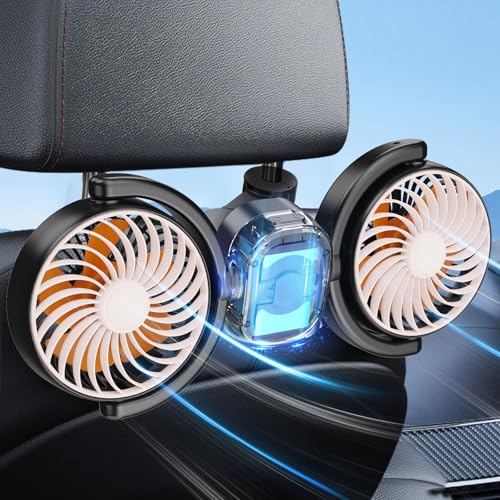 |
Dealswin Rechargeable Car Fan for Back Seat, Battery andDealswin | Also great | Rechargeable dual-head fan · 3 speeds · 360° rotation | $22.79
Price as of 25 Oct 2026
|
View |
The trade-off is simple. The easiest fan to power is not always the one that reaches the back row cleanly. Rear seats often miss the main AC stream, so the right choice depends on whether you need a short clip-on for one seat, a dual-head layout for two passengers, or a stronger 12V option for longer runs.
How we chose
These picks were compared on four practical points: mounting fit, power source, cord reach, and how well the airflow matches a specific rear-seat job. Noise matters here too, but only in context. A quiet fan for a sleeping child is a different buy from a stronger fan for a dog crate or third-row bench.
We also separated fans by use case instead of treating all rear-seat fans as interchangeable. That matters because headrest bar spacing, clip style, and outlet location decide whether a fan works cleanly or turns into a dangling-cord hassle.
Spec notes below come from the product details provided by the manufacturers and retailers, along with published buyer feedback where available.
USB fan: best for easy power access
USB fans make the most sense when the car already has a reachable USB port, a reliable USB adapter, or a power bank you are willing to keep charged. The Kwak’s clip-on USB fan is a budget-style example here: it uses a USB plug-in, offers three wind speeds, and has a cord of about 55 inches, which can help with placement in the second row.
This type works well when you want a simple fan for one rear passenger or a rear-facing infant seat without adding a bulky 12V plug. The reversible mount is useful if the same fan needs to aim at a child seat one day and a passenger the next.
The drawback is power reality. USB looks tidy on paper, but rear-seat routing can still fail if the port is too far forward, if the adapter is already in use, or if the cable has to cross a seat edge in a way that creates tension. A USB fan also depends on the quality of the adapter or port supplying it.
Say your toddler rides in a booster behind the passenger seat and the only rear power source is a front console USB port. A 55-inch cord may still reach, but only if you route it cleanly and the seatback shape leaves enough slack for the clip to sit flat.
12V fan: best for stronger airflow
The strongest-case buy is usually a 12V fan that plugs directly into the cigarette-lighter socket, especially when the rear row needs more than light circulation. The XOOL clip fan uses 12V power, has dual heads, and offers stepless speed regulation, so it can give more control over output than a fixed-speed budget unit.
That matters in larger cabins, SUVs, and vehicles where factory vents do not reach the farthest seat. The dual-head layout can send air to two occupants at once, and the clamp mount helps keep the fan fixed once you find the right angle.
The drawback is compatibility and power access. Some trucks and commercial vehicles use 24V systems, so a 12V fan may need a converter. Even in a normal passenger vehicle, the socket location may force awkward cable routing if the rear row is far from the outlet.
Suppose the third row holds one child and one pet crate, and the only socket is in the front console. A 12V fan with strong output helps, but only if the cord reaches without stretching across a seat where it could snag during entry or exit.
Dual-head fan: best for two rear passengers
Dual-head designs suit sibling seats, a child plus a pet, or a wider bench where a single airstream leaves one rider warm. The XOOL dual-head fan and the Dealswin rechargeable dual-head fan both aim in more than one direction, which makes them better for coverage than a single-head unit when two spots need cooling.
Trending Car lists a dual-head model with 120° head rotation and 360° base rotation, which is the kind of motion that helps when the rear row has staggered occupants. The point is not raw airflow alone. It is whether the fan can split that airflow where two people sit.
The drawback is that dual-head fans are more dependent on placement. They can cover more area, but they can also become overkill for a rear-facing infant seat where one focused stream is all that is needed.
A common first-timer mistake is buying a dual-head fan for a single infant seat and assuming more heads automatically mean better cooling. In practice, that can create extra noise and more setup time without adding much useful airflow for one rear-facing carrier.
Back seat fan matrix
The right rear-seat fan depends on who sits back there, how the seat is mounted, and how far the nearest power source sits from the fan. This matrix translates those details into usable buying rules instead of generic airflow claims.
| Rear-seat scenario | Right fan type | Minimum cord length | Preferred mounting style | Acceptable noise range | Common failure modes |
|---|---|---|---|---|---|
| Rear-facing infant | Single-head clip-on USB fan | At least 55 inches | Headrest-rod clip with adjustable angle | Quiet enough for naps; under 30dB is a strong target | Clip interference with infant seat shell, airflow aimed too high, cord rubbing the seatback |
| Booster-seat child | Single-head or dual-head USB fan | 55 inches or more if the port is forward of the seat | Reversible or clip-on mount that clears shoulder belt use | Quiet to moderate; louder airflow is acceptable for awake kids | Headrest post spacing too wide or too narrow, fan aimed at face instead of torso, loose cable near buckles |
| Pet or third-row passenger | Dual-head 12V fan | Long enough to reach the rear outlet without tension; 70.86 inches is a useful reference point | Clamp or headrest mount with stable base rotation | Moderate noise is usually acceptable; quiet helps on long trips | Outlet too far away, 24V truck mismatch, airflow blocked by cargo or seatbacks |
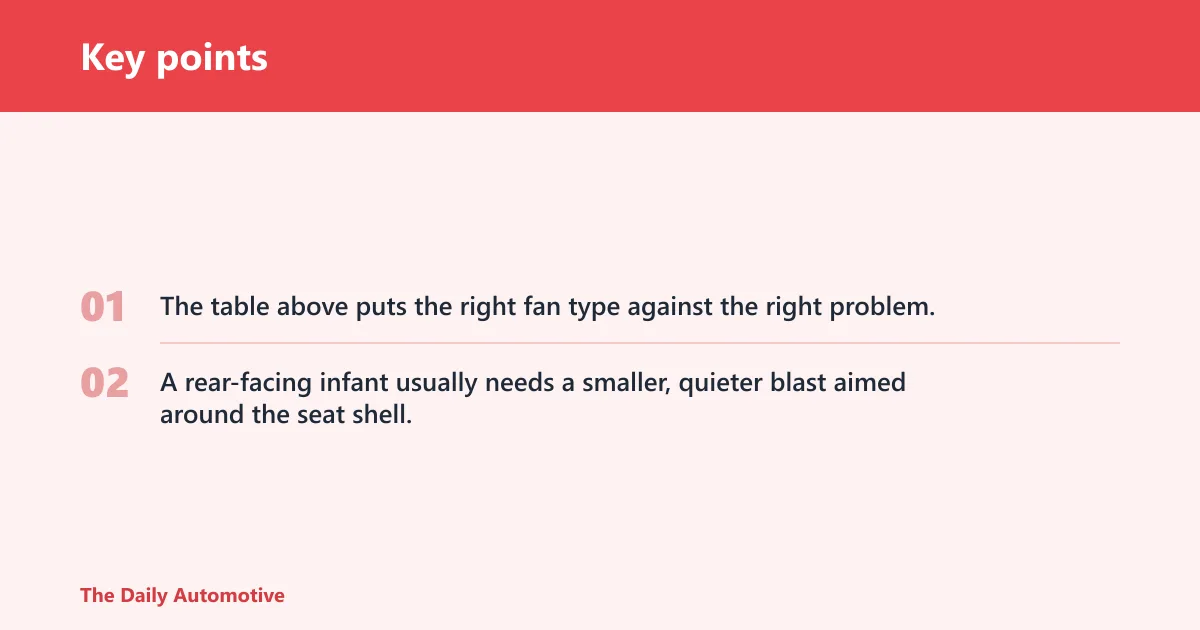
The table above puts the right fan type against the right problem. A rear-facing infant usually needs a smaller, quieter blast aimed around the seat shell, while a pet or third-row passenger benefits more from reach and stronger output than from a tiny clip-on fan.
Will it fit your headrest posts?
Fit is one of the most ignored reasons back-seat fans disappoint. Headrest bar spacing can limit compatibility, and many buyers only discover that after the fan arrives. A measured range such as 3.9 to 5.9 inches, which The Tools Trunk cites for one model, is the kind of detail you should check against your vehicle before buying.
The mount itself matters just as much as the spacing. A clip that works on plain metal bars may fail if the seat has thick plastic trim, a fixed headrest, or a child seat that occupies the same area. Some fan clips also sit too close to the seatback, which can make the head angle useless even if the bars technically fit.
- Measure the distance between the headrest bars on the rear seat.
- Check whether the bars are exposed enough for a clip to grip cleanly.
- Confirm that the fan can tilt toward the passenger without hitting the seat shell.
- Make sure the cord can route away from buckles, latches, and armrests.
That checklist matters more with infant seats than with adult passengers. A fan can fit the bars and still be a bad match if the child seat blocks the clip or changes the airflow angle so much that the fan only cools the upholstery.
What is the best back seat fan for a car?
The best back seat fan for a car is usually a clip-on model with the right power source for your cabin and the right reach for your rear row. For a single child seat, a USB clip-on is often the cleanest fit. For two passengers or a larger cabin, a dual-head 12V fan is usually the stronger choice.
Kwak’s clip-on USB fan: best for budget buyers
This Kwak’s fan is the best value-style pick for families who want a simple rear-seat fix without paying for a heavier setup. Based on the listed specs, it uses a USB plug-in, has three speeds, a 55-inch cord, and a reversible mount that can work with headrest rods in cars, SUVs, and trucks.
It is a strong fit for one child seat or a passenger sitting directly behind the front row. The adjustable angle helps aim airflow where factory vents miss, and the lower-cost format makes it easier to treat as a second-row helper rather than a full-cabin cooling answer.
The honest drawback is that this is still a single-head USB fan. It is not the strongest choice for a third row, and it depends on a usable USB power path. If the port is too far forward, cable routing becomes the main problem instead of airflow.
XOOL dual-head 12V fan: best for families
This XOOL fan is the best fit for families who need more coverage in the rear row. The 12V plug, dual-head layout, 360° rotation, and stepless speed regulation make it better suited to two passengers, a wider bench, or a back seat that does not get enough help from the factory vents.
The clamp mount and two adjustable heads matter when siblings sit apart or when one passenger needs a calmer stream than the other. In practical terms, this is the sort of fan that gives you more placement options before you even start changing speed.
The drawback is that the 12V design is only as good as the outlet setup. It may be awkward in vehicles with poor socket placement, and it may not suit 24V trucks without a converter. It is also more fan than some infant-seat setups actually need.
Dealswin rechargeable dual-head fan: best for trucks and third rows
This Dealswin fan is the best option for buyers who want the flexibility of a rechargeable model along with dual-head airflow. The listed 3000mAh battery and claimed up to 12 hours per charge make it attractive when rear-seat power access is awkward or when the fan may need to move between vehicles.
The dual-head layout and 360° rotation help it serve a third row, a pet crate, or a second row that needs airflow from a different angle. The headrest-rod mount also helps placement in vehicles where the fan needs to sit higher and aim farther back.
The drawback is the one that matters most for rechargeable fans: runtime varies with speed, and battery output can fall off before the trip ends if you run the fan hard. Rechargeable models make sense for short outings, backup use, or vehicles with poor outlet access, but they are a weaker choice if the rear seat needs reliable cooling for long stretches.
Which one should you buy?
If your budget is tight and you just need one rear seat covered, start with the Kwak’s USB clip-on. It is the simplest way to get targeted airflow into the back row without dealing with a bulky power setup.
If you are buying for kids in different seats, choose the XOOL dual-head 12V fan. It offers the best mix of coverage and power control for a family cabin, especially when one rear passenger is sleeping and another is awake.
If your problem is a third row, a cargo-style rear setup, or occasional use across more than one vehicle, the Dealswin rechargeable fan makes more sense. Just treat the battery as a convenience feature, not a guarantee of full-trip output.
For buyers deciding between USB and 12V, the rule is practical: pick USB when the power source is close and tidy, and pick 12V when you need more output and cleaner long-distance reach. If your vehicle has an awkward outlet location, cord length becomes as important as airflow.
One more rule matters. If the fan has to sit near a rear-facing infant seat, choose the quietest workable option and keep the airflow gentle. If it is for pets or a third row, you can accept a little more noise in exchange for broader coverage.
Should I choose a USB or 12V backseat fan?
Choose USB if your car has an easy rear charging path, a strong adapter, or a short cable run. Choose 12V if you want stronger airflow and your socket is close enough to support clean routing. The difference is less about power labels and more about where the plug sits in your cabin.
Do dual-head car fans cool the whole back seat better than single-head fans?
Often, yes, but only when two rear occupants actually need separate airflow. Dual-head fans give better coverage across a wider bench or between two seats. A single-head fan can still be the better buy for one infant seat, where focused and quieter airflow matters more than coverage.
Will a backseat fan fit my headrest posts?
Maybe, but you should measure first. Bar spacing, exposed metal length, and clip clearance all affect fit. A fan can look universal and still fail on seats with fixed headrests, thick trim, or child seats that block the mounting area. Measure before you buy, not after it arrives.
How quiet are car fans for rear passengers?
Quiet matters most when the back seat includes a sleeping child, a pet, or a long drive with repeated naps. The same source lists one quiet model under 20dB, and The Tools Trunk lists another under 30dB. Lower noise is usually easier to live with, but stronger airflow can bring more sound with it.
Can a car fan help keep kids or pets cooler on road trips?
Yes, especially when factory vents do not reach the rear row well. A dedicated fan helps move air into a rear-facing seat, booster seat, pet crate, or third row where hot pockets often build up. It is not a substitute for vehicle cooling, but it can reduce stagnant air around the rider.
What size cord do I need for a rear seat fan?
Choose the longest cord that still routes cleanly. For many second-row installs, 55 inches is a helpful minimum reference point, since the Kwak’s fan uses that length. For farther back use, The Tools Trunk lists 70.86 inches for Hayousui, which is closer to what many third-row or cargo-area installs need.
Are rechargeable car fans worth it for back seat use?
They are worth it when you need cordless placement, occasional use, or a backup fan for a vehicle with awkward outlets. The trade-off is runtime. A rechargeable model with a 3000mAh battery and a claimed up to 12 hours per charge can still lose practical output if you run it on higher speeds for long trips.
Products related to this article
Sponsored / affiliate links. As an Amazon Associate I earn from qualifying purchases. I may earn additional commission from eligible campaigns.