Why Does My AC Get Warm When Idling: Easy Fixes
It can be really frustrating when your car’s air conditioning seems to work fine when you’re cruising down the road but then starts blowing warm air when you stop at a red light. You might wonder, “Why Does My AC Get Warm When Idling? Easy Fixes” are even possible.
This is a common issue that catches many drivers off guard. Don’t worry, though. Most of the time, this problem isn’t as complicated as it sounds.
We’re going to walk through what’s happening and show you how to fix it with simple steps.
Understanding AC System Cooling
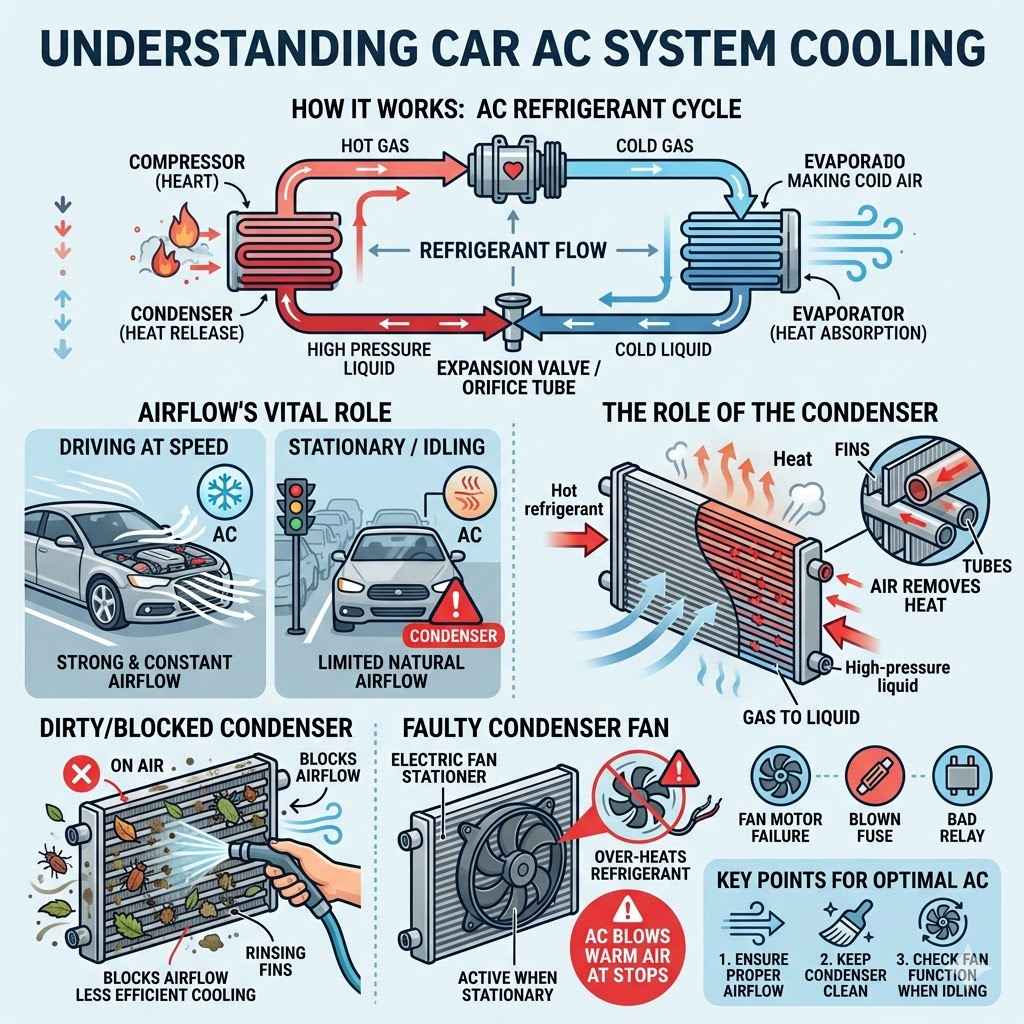
Your car’s air conditioning system is a marvel of engineering, designed to keep you cool even on the hottest days. It works by circulating a special fluid called refrigerant. This fluid absorbs heat from inside your car and then releases it outside.
This process happens in a closed loop, with different parts of the system playing vital roles. The compressor is like the heart of the system, pushing the refrigerant around. The condenser, usually in front of your car, cools the hot refrigerant into a liquid.
Then, the expansion valve or orifice tube controls the flow, and finally, the evaporator, located inside your dashboard, absorbs the heat, making the air cold.
When your car is moving, there’s a lot of air naturally flowing through the engine compartment and over the condenser. This airflow is super important because it helps the hot refrigerant release its heat efficiently. Think of it like a fan blowing on a hot object to cool it down.
The faster the air moves, the quicker it cools. This is why your AC might feel great when you’re driving at highway speeds. The air movement is strong and constant.
The Role of the Condenser
The condenser is a radiator-like component that sits at the front of your vehicle, often right in front of the main engine radiator. Its job is to get rid of the heat that the refrigerant has picked up from inside the car’s cabin. When the hot, high-pressure refrigerant gas from the compressor flows through the condenser’s tubes, air passes over its fins.
This air removes the heat from the refrigerant, causing it to change from a gas to a high-pressure liquid.
If the condenser is dirty or blocked by debris like leaves, bugs, or even plastic bags, air can’t flow through it properly. This means the refrigerant can’t cool down as effectively. Even if the refrigerant is circulating, if it can’t shed its heat, the system won’t be able to cool the air inside your car very well, especially when there’s no natural airflow from driving.
A common reason for a condenser to be blocked is simply a buildup of road grime and natural debris over time. Many car washes offer a service to clean the condenser fins, or you can carefully rinse it yourself with a garden hose from the back side. It’s important not to use a high-pressure washer, as this can bend the delicate fins and make the problem worse.
Condenser Fan Function
When your car is stationary, like at a stoplight or in traffic, there’s no natural airflow from driving to cool the condenser. This is where the condenser fan comes in. Most cars have electric fans that are designed to pull or push air through the condenser and radiator when the vehicle isn’t moving.
These fans are usually controlled by sensors that monitor the temperature of the AC system or the engine. When the temperature gets too high, the fan kicks on automatically.
If this fan isn’t working correctly, or if it’s not turning on when it should, the condenser won’t get enough airflow when you’re idling. This means the refrigerant will stay hotter than it should, and the AC system won’t be able to produce cold air. You’ll notice the air temperature rising as you sit still, and it might start to feel cool again once you start driving and the natural airflow returns.
Diagnosing a faulty condenser fan involves checking if it spins when the AC is on and the car is idling. Sometimes, a blown fuse or a bad relay can prevent the fan from operating. Other times, the fan motor itself might have failed.
A mechanic can easily test these components to determine the cause of the fan’s failure.
Refrigerant Level and Leaks
The amount of refrigerant in your car’s AC system is critical for it to function properly. Refrigerant is the lifeblood of the AC, and if the level is too low, the system simply cannot cool the air effectively. Low refrigerant is almost always a sign of a leak somewhere in the AC system.
The refrigerant itself doesn’t get used up; it’s contained within the sealed system. So, if it’s low, it has to be escaping.
When the refrigerant level drops, the pressure within the system decreases. This lower pressure means the refrigerant can’t absorb as much heat from the cabin air as it should. The compressor might also cycle on and off more frequently, which can sometimes be a sign of low refrigerant.
You might also notice that the AC blows cooler, but not as cold as it used to, and that the problem worsens when idling.
Finding AC leaks can be tricky. Technicians often use special UV dye that’s added to the refrigerant. After running the AC for a while, they use a UV light to scan the system for leaks, which will glow brightly.
Small leaks can be repaired by replacing O-rings, hoses, or even components like the condenser or evaporator if they are damaged. Topping up refrigerant without fixing the leak is only a temporary solution.
Signs of Low Refrigerant
One of the first signs that your refrigerant level is low is a gradual decrease in cooling performance. The air coming from your vents might feel cool, but not ice-cold, especially on a hot day. You might also notice that the air gets noticeably warmer when you’re stopped or driving slowly.
If you can access your AC system’s pressure gauges, a low-pressure reading when the compressor is running is a strong indicator of low refrigerant.
Another common symptom is frost or ice forming on the AC lines or components under the hood. This happens because the refrigerant is not circulating properly, causing it to expand and cool the surrounding metal too much. While this might seem counterintuitive to a cooling problem, it’s actually a sign that the system is not operating efficiently due to the low charge.
You might also hear unusual noises from the compressor, like clicking or hissing sounds, as it struggles to maintain pressure.
It’s important to remember that AC systems are sealed. If your refrigerant is low, there’s a leak. Simply adding more refrigerant without finding and fixing the leak is like putting a band-aid on a deep cut.
The problem will return, and you’ll continue to have cooling issues. Professional diagnosis is recommended to ensure all leaks are identified and repaired properly.
Common Leak Points
AC systems have many connections and components where leaks can occur. Common culprits include the rubber hoses that carry the refrigerant. Over time, these hoses can become brittle and crack, or the seals at the connection points can wear out.
The O-rings, which are small rubber gaskets used at various connection points, are also frequent leak sources.
The AC compressor itself can develop leaks, particularly from its shaft seal. The condenser and evaporator, being exposed to road debris and vibration, can also develop leaks over time. Even seemingly minor damage to these components can create small holes that allow refrigerant to escape.
A thorough inspection by a trained technician is often necessary to pinpoint the exact location of a leak.
For example, a common repair involves replacing a leaking Schrader valve on a service port. These are like the valve stems on your tires and can degrade over time, allowing small amounts of refrigerant to escape. Another frequent issue is a leak at the connection where a new component, like a compressor or condenser, is installed.
Ensuring proper sealing and torque is crucial during repairs.
Other Potential Issues
While condenser issues and low refrigerant are the most frequent reasons for AC warming at idle, other problems can also contribute. Sometimes, the AC system might be overcharged with refrigerant, which can also cause cooling problems. An overcharged system can lead to excessive pressure, making it difficult for the compressor to operate efficiently and reduce its cooling capacity.
Another component to consider is the expansion valve or orifice tube. This part controls the flow of refrigerant into the evaporator. If it gets clogged with debris or malfunctions, it can restrict the refrigerant flow, leading to poor cooling.
The evaporator itself, which is inside your car’s dashboard and cools the air, can also get dirty or clogged with debris, reducing airflow and cooling efficiency.
Finally, a failing AC compressor can be the root cause. The compressor is responsible for circulating the refrigerant. If it’s not pumping effectively, the entire system will suffer.
These issues can sometimes be identified by specific sounds or performance changes in the AC system, but often require professional diagnosis.
Airflow Restrictions Inside the Cabin
The air you feel coming out of your car’s vents doesn’t just magically appear cold. It’s drawn from the cabin through a filter and then pushed back out. The cabin air filter is designed to trap dust, pollen, and other debris, keeping the air inside your car clean.
If this filter becomes clogged, it severely restricts airflow into the AC system.
When airflow is restricted, the evaporator core, which is supposed to get cold and cool the air passing over it, doesn’t receive enough warm air to work with efficiently. This means the air that does manage to get through will not be cooled as much. You might notice reduced airflow from the vents, and the air that does come out might feel lukewarm, especially when the system is working hardest, such as at idle.
Replacing a cabin air filter is usually a very simple DIY task that most people can do with basic tools. You can typically find the filter behind the glove box or under the dashboard. Checking your car’s owner’s manual will show you its exact location.
A clean filter ensures that your AC system can effectively draw in cabin air and cool it down.
Issues with the AC Compressor
The AC compressor is the heart of your car’s air conditioning system. It’s driven by the engine, typically through a belt, and its main job is to compress the refrigerant, turning it from a low-pressure gas into a high-pressure liquid. This compression process also increases the temperature of the refrigerant, which is then sent to the condenser to release heat.
If the compressor is failing, it won’t be able to perform its job effectively. This can manifest in several ways. You might hear strange noises, such as grinding or squealing, when the AC is running.
The compressor clutch, which engages and disengages the compressor from the engine, might also be failing. If the clutch isn’t engaging properly, the compressor won’t turn, and you’ll get no cooling at all.
A worn-out compressor might still circulate refrigerant, but at lower pressures and volumes than it should. This leads to reduced cooling performance, especially under load. The problem might be more noticeable at idle because the engine speed is lower, and the compressor might not be receiving enough power to operate optimally.
Replacing an AC compressor is usually a significant repair due to its complexity and the need to evacuate and recharge the system with refrigerant.
Easy Fixes and Maintenance Tips
The good news is that many of the reasons your AC might get warm when idling have straightforward solutions. Regular maintenance is your best defense against these kinds of problems. Simple checks and cleaning can often prevent more expensive repairs down the line.
You don’t always need a professional mechanic to address these common AC annoyances.
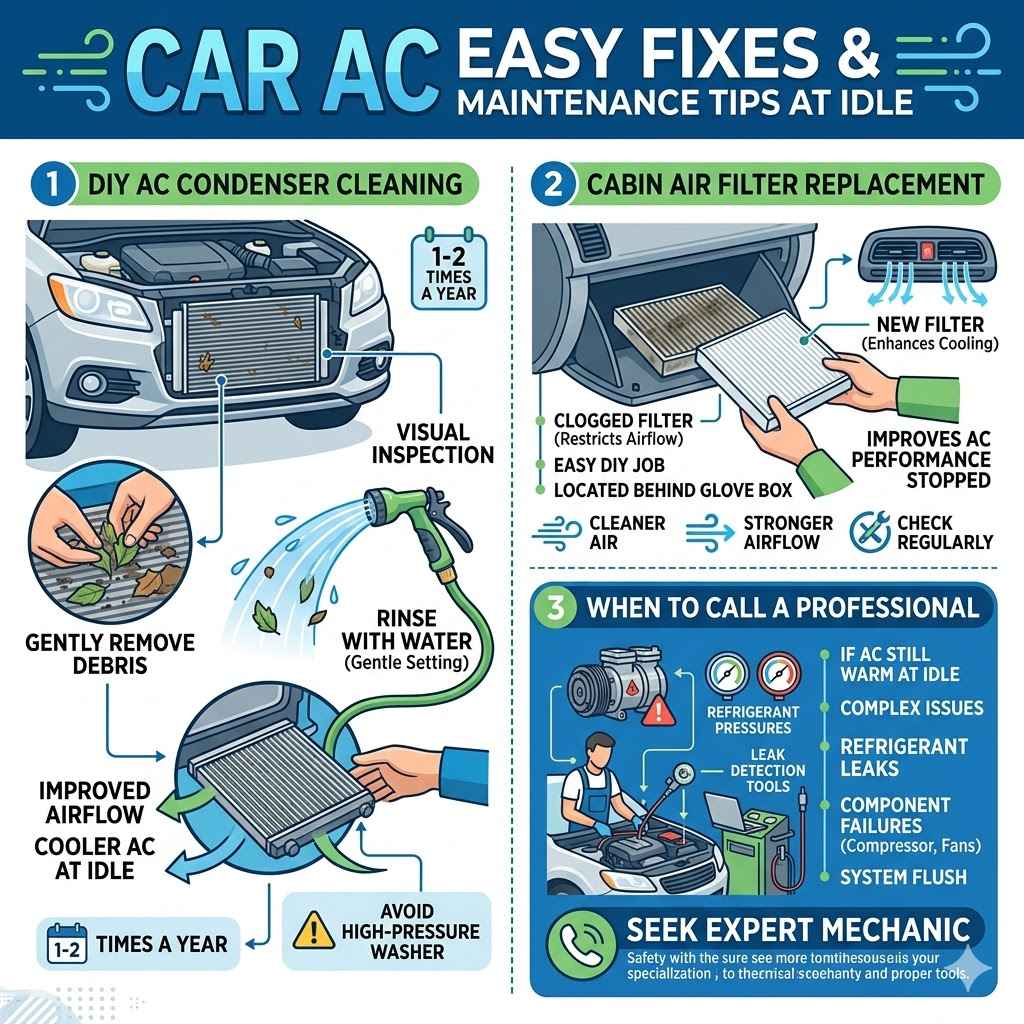
One of the easiest things you can do is keep the front of your car clean. Periodically inspect your condenser for debris like leaves, bugs, or dirt. Gently rinse it with a garden hose from the back if you can access it.
If your cabin air filter hasn’t been changed in a while, replacing it is a quick and inexpensive way to improve airflow. These small steps can make a big difference in how well your AC performs, especially when you’re stopped.
DIY Condenser Cleaning
Cleaning your car’s AC condenser is a task that most car owners can handle themselves. The condenser looks like a radiator and is typically located at the front of the vehicle, in front of the main engine radiator. It has many thin fins designed to dissipate heat from the refrigerant flowing through it.
Over time, these fins can become clogged with road grime, leaves, bugs, and other debris. This blockage restricts airflow, which is essential for the condenser to do its job. When you’re driving, the natural airflow from the car moving helps cool the condenser.
However, when you’re idling, if the condenser is dirty, the fans may not be able to compensate for the lack of natural airflow, leading to warm air from your AC.
To clean it, start by visually inspecting the condenser. If you see significant debris, you can try to carefully pick out larger pieces with your fingers or a soft brush. Then, using a garden hose with a gentle spray setting (not a high-pressure washer, as this can bend the delicate fins), spray water through the condenser from the back side, pushing the debris outwards.
Allow it to air dry. Doing this regularly, perhaps once or twice a year, can significantly improve your AC’s efficiency at idle.
Cabin Air Filter Replacement
The cabin air filter is a crucial component for maintaining good air quality inside your car and ensuring your AC system runs efficiently. Its primary function is to filter out dust, pollen, soot, and other airborne pollutants before the air enters your car’s interior. However, it also plays a role in the performance of your AC system.
When the cabin air filter becomes clogged with dirt and debris, it restricts the amount of air that can be drawn into the AC system. This reduced airflow means the evaporator core inside your car can’t cool the air as effectively. You might notice weaker airflow from the vents, and the air that does come out might not feel as cold as it should, particularly when the AC is working hard, such as when you’re idling in traffic.
A severely clogged filter can even cause your AC to blow warm air at idle.
Replacing the cabin air filter is usually a straightforward DIY job. Most car manufacturers place the filter in an accessible location, often behind the glove compartment or under the dashboard. Consult your car’s owner’s manual for the exact location and
When to Call a Professional
While many AC issues can be addressed with simple DIY steps, there are times when you’ll need to consult a professional mechanic. If you’ve cleaned your condenser and replaced your cabin air filter, and your AC still blows warm at idle, it’s time to seek expert help. Issues involving refrigerant levels, leaks, or component failures are often best left to trained technicians.
A professional mechanic has specialized tools and knowledge to accurately diagnose complex AC problems. They can safely check refrigerant pressures, detect hard-to-find leaks using specialized equipment, and test the functionality of components like the compressor, condenser fan, and expansion valve. Attempting to repair these issues without the proper equipment and knowledge can be dangerous due to the high pressures and potentially hazardous nature of refrigerants.
For instance, if your AC system is low on refrigerant, a mechanic will not only recharge it but also perform a thorough leak detection to find and fix the source. They can also perform a system flush if contamination is suspected or replace faulty components like a bad compressor clutch or a failing pressure switch. It’s crucial to have these more advanced repairs done by a qualified professional to ensure your AC system is repaired correctly and safely.
Frequently Asked Questions
Question: Why does my car’s AC get warm only when I’m stopped
Answer: This often happens because when you’re driving, the airflow over the AC condenser is high, which cools the refrigerant. When you stop, this natural airflow is gone, and if the condenser fan isn’t working properly or the condenser is dirty, it can’t cool the refrigerant enough, leading to warm air.
Question: Can I just add more refrigerant if my AC is low
Answer: While adding refrigerant might temporarily help, it’s not a long-term solution if your system is low. Low refrigerant is almost always a sign of a leak. The refrigerant can escape, and simply topping it up means the leak will continue to cause problems.
Question: How often should I clean my car’s AC condenser
Answer: It’s a good idea to inspect and clean your AC condenser at least once a year, perhaps in the spring before the hot weather hits. If you live in an area with a lot of debris, like fallen leaves, you might need to do it more often.
Question: What are the symptoms of a bad AC compressor
Answer: Symptoms of a bad AC compressor can include strange noises like grinding or squealing when the AC is on, poor cooling performance especially at idle, or the AC clutch not engaging properly. The compressor is vital for circulating refrigerant.
Question: Is it expensive to fix an AC system that blows warm at idle
Answer: The cost can vary greatly depending on the cause. Simple fixes like cleaning the condenser or replacing a cabin air filter are very inexpensive. However, replacing a compressor or fixing a refrigerant leak can be more costly, often ranging from a few hundred to over a thousand dollars.
Conclusion
Addressing why your AC gets warm when idling is often simpler than you think. By understanding the importance of airflow to the condenser and ensuring your cabin air filter is clean, you can often resolve common cooling issues. Keeping your condenser free of debris and regularly replacing the cabin filter are key DIY maintenance tasks.
If these steps don’t solve the problem, it’s time to consult a professional for deeper diagnosis and repair of components like the compressor or refrigerant leaks.