Why Is My Car AC Spitting Ice Flakes? Quick Solutions
It can be pretty surprising and a bit worrying when your car’s air conditioner suddenly starts spitting out ice flakes instead of cool air. For many folks, especially those new to car care, figuring out Why Is My Car AC Spitting Ice Flakes? Quick Solutions can feel like a tricky puzzle. You just want to be comfortable on a hot day, not deal with a snowy car interior! Don’t worry, though. This guide is here to break down the common reasons this happens and give you simple steps to fix it. We’ll look at what might be causing the ice and how you can get your AC blowing cold and clear again.
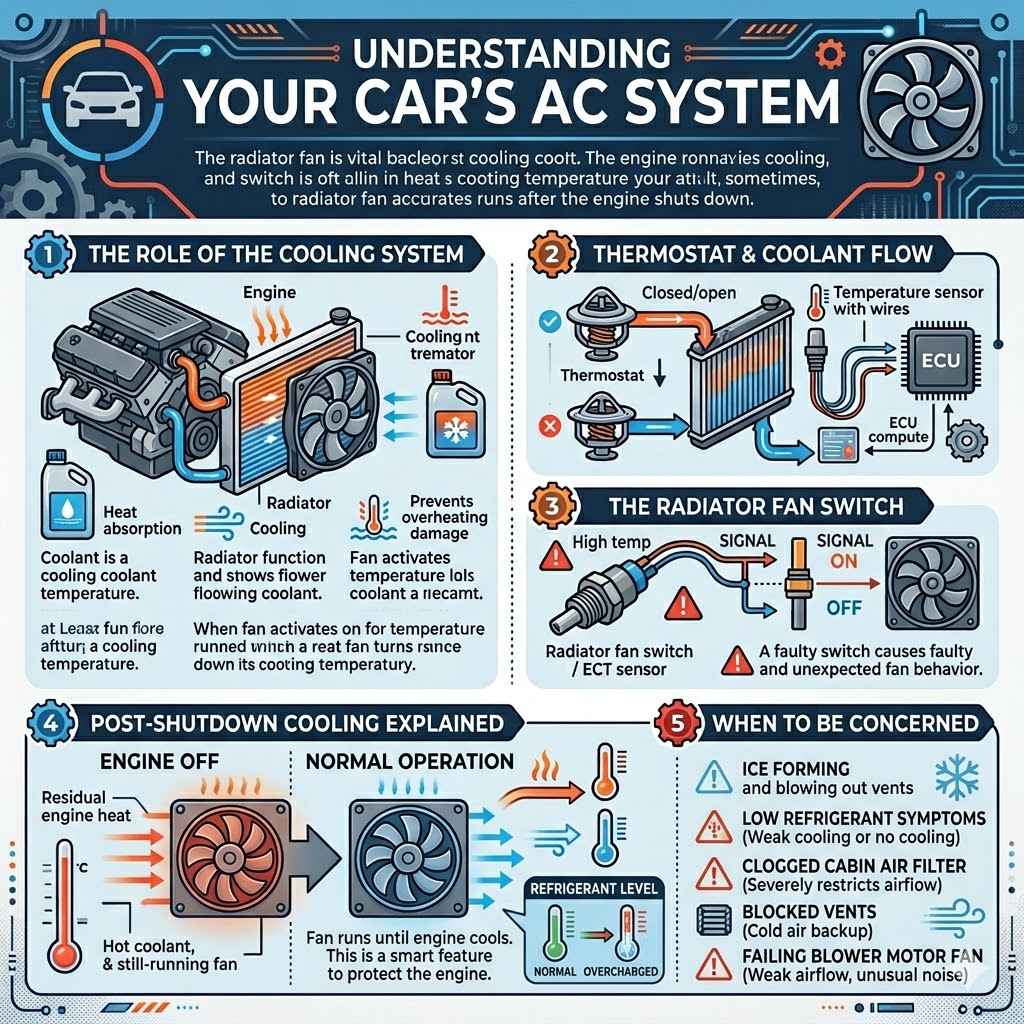
Understanding Your Car’s AC System
Your car’s air conditioning system is a clever network of parts working together to cool the air inside your vehicle. It uses a refrigerant, which is a special fluid, to absorb heat from the cabin and then release it outside. Think of it like a refrigerator, but for your car. This process involves several key components.
A properly functioning AC system keeps you comfortable during hot weather. When ice starts forming and blowing out, it means something isn’t quite right within this complex system. It can be caused by a few different issues, and knowing them helps you find the solution faster.
How Refrigerant Affects Your AC
Refrigerant is the lifeblood of your car’s AC. It’s a chemical that changes from a liquid to a gas and back again to move heat. When the refrigerant level is just right, the system works perfectly.
If there’s too much refrigerant, it can cause problems. The excess refrigerant can build up pressure. This pressure can make the evaporator coil, the part that cools the air, get too cold. When it gets too cold, moisture in the air freezes on it, forming ice.
This overcharging can happen if someone adds refrigerant without properly measuring it. It’s like trying to fill a glass too full; it just spills over and causes a mess. Too much of a good thing can definitely cause your AC to act up.
What is Refrigerant?
Refrigerant is a chemical substance that absorbs and releases heat as it changes between liquid and gas states. It’s essential for the cooling cycle in your car’s AC. Common refrigerants used in cars include R-134a and newer types like R-1234yf. They are specifically designed to work under the pressures and temperatures found in automotive AC systems. Without it, your AC simply can’t cool your car.
The Role of Airflow in AC Operation
Airflow is just as important as refrigerant. The AC system needs good airflow to work efficiently. This means air needs to move freely over the evaporator coil so heat can be transferred effectively.
When airflow is restricted, the evaporator coil can get too cold. This is because the cold air is trapped and can’t escape to the cabin. Just like a fan blowing on an ice cube will melt it faster, good airflow helps prevent the coil from freezing over. Blocked airflow is a common culprit for ice formation.
Signs of Low Refrigerant
While too much refrigerant can cause ice, too little can also lead to issues, though usually not ice blowing out. Signs of low refrigerant include weak cooling or no cooling at all. However, in some specific circumstances, a system with a leak that’s been partially refilled might have an imbalance causing ice.
Evaporator Coil Problems
The evaporator coil is a critical part of your car’s AC system. It’s located inside your car’s dashboard. This is where the magic of cooling happens.
When the warm air from your car’s cabin is pulled into the AC system, it passes over this cold evaporator coil. As the air goes over the coil, the heat from the air transfers to the refrigerant inside the coil. This process cools the air before it’s blown back into your car.
If the evaporator coil itself has issues, like damage or blockage, it can affect how it cools. A damaged coil might leak refrigerant, and a dirty coil won’t transfer heat properly. This can lead to the coil getting too cold and freezing up.
What is the Evaporator Coil?
The evaporator coil is a small, finned radiator that sits inside your car’s dashboard. It’s a key component in the AC system where the refrigerant absorbs heat from the cabin air. As refrigerant flows through the coil, it absorbs heat and turns into a gas. This process makes the coil very cold, which then cools the air passing over it.
Ice Buildup on the Evaporator Coil
When the evaporator coil gets too cold, moisture from the air condenses on it. If the temperature drops low enough, this condensed moisture freezes, forming ice. This ice can build up over time.
Eventually, the ice can become thick enough to block the airflow. This is when you might start seeing ice flakes being blown out of your vents. It’s a clear sign that the coil is freezing.
Common Evaporator Coil Issues
The most common issue with the evaporator coil that leads to ice is dirt and debris buildup. Over time, dust, leaves, and other particles can get pulled into your AC system and stick to the coil. This insulation prevents proper heat transfer.
Another issue can be a refrigerant leak. If the system is leaking refrigerant, the pressure and temperature within the coil can become unstable, leading to freezing. Sometimes, the coil itself can be physically damaged, though this is less common.
Airflow Blockages in Your AC System
Airflow is super important for your car’s AC to work right. Imagine trying to breathe through a straw; it’s hard, and you don’t get much air. The same idea applies to your car’s AC.
Your AC system needs air to flow smoothly over the cold parts so it can cool the air. If something is blocking the air, it can’t get cooled properly. Worse, it can make the cold parts freeze up.
When air can’t move, the cold from the evaporator coil gets stuck. This makes the coil so cold that the moisture in the air turns into ice. That ice can then break off and blow out of your vents.
The Cabin Air Filter’s Role
The cabin air filter is like a gatekeeper for the air entering your car’s AC system. Its main job is to catch dust, pollen, leaves, and other small particles before they can get into the cabin. It also protects the sensitive components of your AC system.
When this filter gets clogged with dirt and debris, it acts like a barrier. Air struggles to pass through it. This severely restricts the airflow to your AC’s evaporator coil. A dirty cabin air filter is one of the most common reasons for poor AC performance and ice formation.
How Clogged Vents Cause Problems
Even if your cabin air filter is clean, other parts of the AC system can get blocked. The vents themselves, where the cool air comes out, can sometimes get stuffed with debris or have something lodged in them.
If the vents are blocked, the cool air can’t escape the system. This causes a backup of cold air inside the AC unit. Similar to a blocked cabin air filter, this trapped cold air can lead to the evaporator coil freezing over.
Checking for Debris in the AC Ducts
Sometimes, the problem isn’t just the filter or the vents. Small animals, like mice, can get into your car’s AC ducts and build nests. Leaves and other debris can also get pushed deep into the ducts over time.
This debris can obstruct airflow significantly. You might hear strange noises or notice a musty smell if there’s something like this lurking in your AC ducts. Clearing out any blockages here is crucial for proper airflow.
The Function of Your Blower Motor Fan
The blower motor fan is the unsung hero of your car’s AC. It’s the part that actually pushes the air through your AC system and out of the vents into the car’s cabin. Without it, you wouldn’t feel any cool breeze at all.
This fan is responsible for drawing air in through the cabin air filter and pushing it over the cold evaporator coil. Then, it sends that now-cooled air out through the dashboard vents to where you can feel it. It’s a constant circulation process that keeps you comfortable.
If this fan isn’t working correctly, airflow will be weak or nonexistent. This directly leads to the AC system’s components not functioning as they should, and it can cause them to freeze up.
What is the Blower Motor Fan?
The blower motor fan is an electric motor with a fan attached. It’s usually located behind the dashboard, often near the cabin air filter. When you turn on your AC or heater and select a fan speed, you’re telling this motor to spin. The faster it spins, the more air it pushes.
Symptoms of a Failing Blower Motor Fan
A failing blower motor fan might make unusual noises, like grinding or squealing. You might also notice that the airflow from your vents is weak, even when you have the fan speed set to high. Sometimes, the fan might stop working altogether or only work on certain speeds.
When the blower motor fan isn’t pushing enough air, the evaporator coil doesn’t get the airflow it needs. This can cause it to get too cold, leading to the ice formation you’re seeing.
Troubleshooting a Weak Fan Speed
If you’re experiencing weak airflow, a good first step is to check your cabin air filter. If it’s dirty, replacing it can solve the problem. If the filter is clean, the issue might be with the blower motor itself or its resistor.
A blower motor resistor controls the different fan speeds. If it fails, you might only have high speed working, or no speeds at all. A mechanic can test these components to diagnose the exact problem.
Common Causes for Ice in Your Car AC Vents
Seeing ice flakes coming from your car’s AC vents is a common problem, but it can be caused by a few different issues. Pinpointing the exact reason helps you fix it quickly. These causes often relate to the basic functions of your AC system: cooling, airflow, and proper pressure.
When your car’s AC starts blowing ice, it usually means one of the key components isn’t working as it should. This could be a problem with how much refrigerant is in the system, or if air can move freely. Sometimes, it’s something simple, and other times it might point to a more involved repair.
We’ll look at the most frequent reasons this happens and what you can do about them. Understanding these causes is the first step to getting your AC back to blowing nice, cool, and ice-free air.
Overcharging the AC System with Refrigerant
One of the most common reasons for your car’s AC to spit ice is that it’s been overcharged with refrigerant. This means there’s simply too much of that special cooling fluid in the system. When there’s too much, it can cause a cascade of problems.
The refrigerant needs to flow through the system at the right pressure. When there’s an excess, the pressure can become too high, especially in the evaporator coil. This high pressure and the resulting extremely low temperature are what cause ice to form.
Imagine trying to squeeze too much water through a narrow pipe; it builds up pressure and can cause problems. The same principle applies here. This often happens after someone tries to “top off” their AC system without knowing the exact amount it needs.
The Danger of Too Much Refrigerant
Having too much refrigerant in your AC system isn’t just about ice. It can put a lot of strain on the system’s components. The compressor, which is like the heart of the AC system, can be damaged by overcharging.
High pressures can also cause leaks in hoses, seals, or other parts of the system. Over time, this can lead to more serious and expensive repairs. It’s important that the refrigerant level is precise for optimal performance and longevity of your AC.
How Overcharging Leads to Freezing
When the AC system is overcharged, the refrigerant doesn’t have enough space to properly convert between liquid and gas states as it moves through the different parts. Specifically, in the evaporator coil, where the cooling happens, the refrigerant stays too cold for too long.
This prolonged extreme cold causes the moisture in the air passing over the coil to freeze. This ice buildup can then start to break off and get blown out of the vents. It’s a direct consequence of an imbalanced system.
When to Suspect Overcharging
If your AC recently had refrigerant added, and then started blowing ice shortly after, overcharging is a strong possibility. Also, if you notice that your AC is blowing very cold initially but then starts sputtering ice, it could be a sign.
It’s best to have your AC system serviced by a professional who can measure the refrigerant levels accurately. They use special gauges to ensure the system is charged to the manufacturer’s exact specifications.
Faulty Orifice Tube or Expansion Valve
The orifice tube and expansion valve are small but vital parts of your AC system. They control the flow of refrigerant into the evaporator coil. They are essentially regulators, making sure just the right amount of refrigerant enters the coil at the right pressure.
If either of these components is faulty, it can disrupt the refrigerant flow. This disruption can cause the refrigerant to enter the evaporator coil too quickly or at the wrong pressure. When this happens, the coil can become too cold, leading to ice formation.
Think of these as tiny traffic cops for your refrigerant. If the traffic cop is directing too many cars through a small opening at once, it causes congestion and problems, just like too much refrigerant can cause freezing.
What is an Orifice Tube or Expansion Valve?
An orifice tube or expansion valve is a metering device in the AC system. Its purpose is to reduce the high-pressure liquid refrigerant coming from the condenser into a low-pressure liquid/gas mixture before it enters the evaporator coil. This pressure drop is what allows the refrigerant to get extremely cold and absorb heat.
How a Malfunctioning Valve Causes Ice
If the orifice tube or expansion valve is stuck open or not regulating properly, it can allow too much refrigerant to flow into the evaporator coil. This leads to excessive cooling of the coil. The coil’s surface temperature drops too low, causing the moisture in the air to freeze on contact.
Conversely, if these valves are partially blocked, it can also disrupt the normal refrigerant cycle and lead to abnormal temperatures and pressures, potentially causing freezing issues as well.
Symptoms of a Bad Orifice Tube or Expansion Valve
Besides ice blowing out of the vents, a faulty orifice tube or expansion valve can cause your AC to blow warm air intermittently. You might also notice that the cooling performance is inconsistent. Sometimes, you might hear unusual hissing or gurgling sounds from the AC system.
If you’ve ruled out other common causes like a dirty filter or low refrigerant, and your AC still has freezing issues, these components are prime suspects.
Dirty Evaporator Coil and Blocked Airflow
We touched on this earlier, but it’s worth emphasizing because it’s so common. The evaporator coil is where your AC gets its cooling power. For it to work efficiently, air needs to flow over it smoothly.
Over time, dust, dirt, and debris can accumulate on the fins of the evaporator coil. This buildup acts like insulation, preventing the heat from the cabin air from transferring to the refrigerant. This makes the coil work harder and can cause it to get too cold.
When the coil gets too cold because of this blockage, the moisture in the air condenses and freezes. This ice can grow, block airflow even more, and eventually break off into ice flakes. It’s a cycle that needs to be broken.
Accumulation of Dirt and Debris
Think of your cabin air filter as the first line of defense. However, some smaller particles can still get past it and settle on the evaporator coil. Over months and years, this accumulation becomes significant.
This dirt doesn’t just reduce cooling efficiency; it actively insulates the coil, making it a prime spot for ice to form. The more debris there is, the more likely you are to experience freezing issues.
Impact on Airflow
When ice forms on the evaporator coil, it physically blocks the path of air. This means less air can pass through the coil and into your car’s cabin. You’ll notice a significant drop in the amount of air coming from your vents.
This reduced airflow is a symptom of the ice buildup, but it also makes the problem worse. Less air passing over the coil means the coil gets even colder, leading to more ice formation. It becomes a vicious cycle.
Simple Solutions to Try First
The easiest thing to check and often fix is your cabin air filter. Replacing a dirty cabin air filter can immediately improve airflow and help prevent future freezing. Most cars have an easily accessible cabin air filter, often behind the glove box.
If the filter is clean, the problem might be deeper within the AC system, requiring professional cleaning of the evaporator coil itself.
Low Refrigerant Level with a Leak
While overcharging can cause ice, a low refrigerant level due to a leak can also lead to ice formation, though it’s a bit less straightforward. When refrigerant leaks out, the system’s pressure drops.
Normally, a drop in refrigerant leads to weak or no cooling. However, in some specific scenarios, a partially leaked system can still create conditions for ice. This might happen if the system is struggling to maintain the correct pressure and temperature balance.
It’s like trying to keep a room at a specific temperature with a leaky window. The heating or cooling system has to work harder, and sometimes the temperature can swing wildly, leading to unexpected results.
Understanding Refrigerant Leaks
Refrigerant leaks can happen in various parts of the AC system, including hoses, seals, O-rings, and even the condenser or evaporator coils themselves. These leaks allow the refrigerant to escape into the atmosphere.
Not only is this bad for the environment, but it also compromises the AC system’s ability to cool your car effectively. The system needs a precise amount of refrigerant to operate correctly.
How Low Refrigerant Can Still Cause Ice
In a system with a slow leak, the refrigerant might still be circulating, but at a lower pressure. This can sometimes cause the expansion valve or orifice tube to freeze up. When the metering device freezes, it restricts refrigerant flow, causing the evaporator coil to get abnormally cold.
This abnormal cold can then lead to moisture freezing on the coil, resulting in ice flakes being blown out. It’s a complex interaction of pressure, temperature, and flow.
What to Do About Leaks
If you suspect a refrigerant leak, the first step is to have the system pressure tested. A mechanic can pinpoint the leak and repair it. Once repaired, the system can be evacuated and recharged with the correct amount of refrigerant.
It’s important to fix the leak before adding more refrigerant, otherwise, you’ll just be topping off a system that will continue to lose its cooling power.
Quick Solutions and Troubleshooting Steps
When you see ice flakes coming from your car’s AC vents, it’s natural to want a fast fix. Fortunately, some of the most common causes have simple solutions you can often tackle yourself. Others might require a visit to your mechanic.
The key is to start with the easiest things first. Often, a simple check of a part you can access easily can save you time and money. If those don’t work, then you can move on to looking at more complex issues.
This section will walk you through a step-by-step process to troubleshoot why your car’s AC is spitting ice and what you can do to resolve it. We’ll cover checks you can do and when it’s time to call in the pros.
Check and Replace the Cabin Air Filter
This is often the first and easiest thing to check when your car’s AC isn’t working right or is blowing ice. The cabin air filter cleans the air that enters your car’s interior through the AC and heating system. When it gets clogged with dirt and debris, it severely restricts airflow.
Restricted airflow means the evaporator coil can’t release its cold air effectively. This causes the coil to get too cold, and that’s when ice forms. A simple filter replacement can often fix this problem entirely.
Locate Your Cabin Air Filter
Your cabin air filter is usually located behind the glove compartment, under the dashboard, or sometimes under the hood near the windshield. Consult your car’s owner’s manual if you’re unsure.
Most modern cars have easily accessible cabin air filters. You’ll typically need to open the glove box and might need to push in on the sides to drop it down. Sometimes, there are a few clips or screws to remove.
Inspect the Filter for Dirt and Debris
Once you have the filter out, hold it up to a light. If you can’t see much light through it, or if it’s caked with dirt, leaves, and bugs, it’s time for a new one.
A heavily soiled filter looks dirty and feels thick with debris. You might even see larger particles like leaves or grass stuck in it. If it looks like this, it’s definitely restricting airflow.
Install a New Cabin Air Filter
Purchase a new cabin air filter that matches your car’s make and model. They are relatively inexpensive and readily available at auto parts stores.
Once you have the new filter, note the airflow direction arrow on it. Install the new filter in the same orientation as the old one. Most filters slide in easily.
Inspect Vents for Obstructions and Ice Buildup
Sometimes, the problem is more visible right at the vents. Debris can get stuck in the vent openings, or you might be able to see ice directly where the air comes out.
While you can’t always see deep into the ductwork, a quick visual inspection of the vents is a good idea. If you see obvious blockages or ice, it gives you a clue about where the problem lies.
Visually Check Air Vents
Look closely at all the air vents inside your car. Are there any leaves, dirt, or other objects blocking the openings? Sometimes, small items can fall into the vents.
If you see something lodged in a vent, try to carefully remove it with tweezers or a small, non-metallic tool. Be gentle to avoid damaging the vent or pushing the object further in.
Look for Visible Ice Inside the Vents
If the AC has been off for a while and you still see ice or frost inside the vents, it indicates significant freezing has occurred. This suggests a more serious issue within the AC system itself.
Seeing ice directly inside the vents is a clear sign that the evaporator coil is freezing over. It means that the temperature has dropped too low for too long.
Run the Fan Only (No AC) to Defrost
If you suspect ice buildup in your vents or on the evaporator coil, turn off the AC but keep the fan running on high. Do this for about 10-15 minutes. This will help melt any ice that has formed.
Running the fan without the AC engaged circulates normal air temperature through the system. This gentle warmth is usually enough to melt away ice. It’s a good first step after noticing ice.
Run the AC Fan on High with AC Off
This is a continuation of the defrosting process. If you suspect ice buildup, the best immediate action is to let the ice melt. Running the fan without the compressor engaged is the safest and most effective way to do this.
This allows the warmth of the outside air, or the residual warmth within the car, to gently thaw the frozen components. It’s crucial to let the system fully defrost before attempting to run the AC again.
Turn Off the AC Compressor
Locate your AC controls and ensure the AC button is off. You want the fan to run, but you don’t want the compressor to be actively cooling.
The goal here is to circulate air without further chilling the evaporator coil. This process helps to prevent more ice from forming while you’re trying to melt existing ice.
Set Fan Speed to High
Turn your fan speed control to the highest setting. A higher airflow will help to speed up the melting process by circulating more air over the iced-up components.
A strong airflow is key to efficient defrosting. It ensures that the warm air reaches all parts of the evaporator coil and any other areas where ice might have formed.
Allow Sufficient Time for Thawing
Let the fan run for at least 15-30 minutes, or even longer if necessary. You might see water dripping from under your car; this is normal as the ice melts.
Patience is important here. Trying to use the AC again before all the ice has melted could worsen the problem and potentially damage components.
Consider a Professional AC Recharge Service
If you’ve checked the cabin air filter, inspected the vents, and run the fan to defrost, and the problem persists, it’s likely time to consult a professional. Overcharging, refrigerant leaks, or issues with the expansion valve or orifice tube are not DIY repairs for most people.
A qualified mechanic has the specialized tools and knowledge to diagnose and repair these complex issues safely and effectively. They can accurately measure refrigerant levels, detect leaks, and replace faulty components.
Professional Leak Detection
If your AC is icing up or not cooling well, a mechanic can perform a pressure test to check for refrigerant leaks. They use special equipment that can detect even small leaks.
They can also use UV dye injected into the system, which will glow under a UV light, making leaks easily visible. This thorough approach ensures all potential leak points are found.
Accurate Refrigerant Charging
Mechanics use electronic scales and manifold gauges to ensure the AC system is recharged with the exact amount of refrigerant specified by the vehicle manufacturer. This prevents overcharging or undercharging.
Correct refrigerant levels are critical for both performance and the longevity of your AC system. An experienced technician will ensure this is done precisely.
Component Testing and Replacement
If the issue is with the expansion valve, orifice tube, or blower motor, a mechanic can test these components to determine if they are faulty. They can then
These are often more complex repairs that require specific tools and knowledge of the AC system’s electrical and mechanical workings.
Technical Deep Dive: Refrigerant and Pressure Dynamics
Understanding how refrigerant behaves under different pressures and temperatures is key to grasping why your car’s AC might spit ice. The AC system is designed to operate within a specific range of pressures. Deviations from this range, whether too high or too low, can lead to problems like freezing.
The refrigerant cycles through the system, changing states from liquid to gas and back. These changes happen at precise temperatures and pressures. When these conditions are thrown off, the system’s delicate balance is disrupted, and abnormal events like ice formation can occur.
This section explores the technical aspects of refrigerant, pressure, and how they interact within your car’s AC system to cause or prevent ice buildup. It’s a bit more technical, but it provides a fuller picture of what’s happening under the hood.
The Refrigerant Cycle Explained
The air conditioning system in your car works like a closed loop. A special chemical called refrigerant circulates through this loop. This refrigerant is what makes the cooling possible.
The cycle begins with the compressor. The compressor takes the refrigerant, which is a low-pressure gas, and squeezes it. This compression makes the refrigerant a high-pressure, hot gas.
This hot gas then flows to the condenser, which is usually located at the front of your car. Here, it cools down and turns into a high-pressure liquid. The liquid refrigerant then moves through an expansion device (either an orifice tube or an expansion valve).
This device drastically reduces the pressure of the refrigerant, making it very cold. This cold, low-pressure liquid/gas mixture then enters the evaporator coil inside your car’s dashboard. As warm air from the cabin blows over the evaporator coil, the heat from the air transfers to the cold refrigerant, cooling the air.
The refrigerant absorbs the heat and turns back into a low-pressure gas. This gas then returns to the compressor, and the cycle starts all over again. It’s a continuous process of heat absorption and release.
Phase Change of Refrigerant
The magic of refrigeration happens because of the refrigerant’s ability to change its state from liquid to gas and back. This is called a phase change.
When refrigerant is a liquid under high pressure, it’s relatively stable. When its pressure is suddenly reduced (by the expansion valve), it boils and turns into a gas. This boiling process requires energy, which it takes from the surrounding air. This is what makes the air cold.
Conversely, when the gaseous refrigerant is compressed, its temperature rises, and it condenses back into a liquid when it releases heat to the outside air. This cycle of phase changes is the core of how your AC cools.
Pressure and Temperature Relationship
There’s a direct link between the pressure of the refrigerant and its boiling point. At higher pressures, refrigerants boil at higher temperatures. At lower pressures, they boil at lower temperatures.
In the evaporator coil, the goal is to have the refrigerant boiling at a temperature below the freezing point of water (0°C or 32°F) so it can freeze moisture out of the air. This happens because the system is designed to maintain a low pressure in the evaporator.
If the pressure in the evaporator is too low, or if the refrigerant itself is too cold to begin with due to other issues, it can lead to excessive freezing.
Evaporator Pressure and Ice Formation
The evaporator coil is where the cooling actually happens inside your car. It’s designed to be cold enough to condense moisture from the air, which then usually drains away. However, if the pressure within the evaporator becomes too low, the refrigerant can get too cold, causing ice to form.
This low pressure can occur for several reasons, often related to airflow or refrigerant charge. When the evaporator coil drops below freezing and stays there for too long, any moisture that condenses on it will freeze and build up as ice.
Think of it like putting a cold soda can in a freezer for too long; water will freeze on the outside. The evaporator coil is essentially doing that with the air passing through it, but because it’s a controlled process, it should only condense water, not freeze it solid.
Low Evaporator Pressure Explained
Evaporator pressure is dictated by the rate at which refrigerant boils and absorbs heat, as well as the rate at which it’s removed by the compressor. If airflow over the evaporator is poor (e.g., due to a clogged cabin filter), heat transfer is reduced. This means the refrigerant doesn’t boil off as quickly, and the coil can get excessively cold, leading to low pressure and freezing.
Also, if the system is overcharged with refrigerant, it can lead to abnormally high pressures in the system, but paradoxically, it can also cause the refrigerant to remain too cold and lead to freezing in the evaporator due to poor heat exchange.
The Freezing Point Threshold
The freezing point of water is 0°C (32°F). For ice to form on the evaporator coil, its surface temperature must drop below this threshold. Automotive AC systems are designed to operate with evaporator temperatures in the range of 0°C to 10°C (32°F to 50°F) for optimal cooling without freezing.
When the coil temperature drops significantly below this range, ice formation becomes inevitable. This usually means the system is either not removing heat effectively (due to airflow issues) or is being over-cooled (due to refrigerant issues).
High-Side and Low-Side Pressures
AC systems have two pressure sides: the high side and the low side. The compressor builds high pressure on the “high side” (leading to the condenser). The expansion device creates low pressure on the “low side” (leading to the evaporator).
Monitoring these pressures with gauges is how technicians diagnose problems. If the low-side pressure is abnormally low while the high-side pressure is also abnormal, it points to a specific set of issues, often related to refrigerant charge or restrictions.
The Role of the Expansion Valve/Orifice Tube in Pressure Regulation
The expansion valve (or orifice tube, depending on the system design) is critical for regulating the pressure and flow of refrigerant into the evaporator coil. It acts as a bottleneck, controlling how much liquid refrigerant enters the cold side of the system.
When this component functions correctly, it ensures the refrigerant enters the evaporator at the right pressure to boil and absorb heat efficiently without freezing. If it malfunctions, it can disrupt this precise balance.
A stuck-open expansion valve will let too much refrigerant in, causing the evaporator to get too cold. A partially clogged valve can restrict flow, leading to a pressure drop and also causing freezing.
How Pressure Regulation Prevents Ice
The expansion valve’s main job is to maintain a specific low pressure in the evaporator coil. This low pressure allows the refrigerant to boil and absorb heat at the correct, cold temperature (above freezing).
By precisely controlling the amount of refrigerant entering the evaporator, the valve ensures that the refrigerant is completely vaporized by the time it leaves. If too much liquid refrigerant remains, it can contribute to freezing.
Malfunctions and Their Consequences
If the expansion valve or orifice tube is faulty, it can lead to several issues:
Stuck open: Too much refrigerant enters the evaporator, causing it to get excessively cold and freeze up.
Stuck closed or partially blocked: Not enough refrigerant enters the evaporator, leading to poor cooling and potentially some abnormal temperature fluctuations that could, in some cases, lead to minor freezing.
Leaking seals: Can cause refrigerant loss and affect system pressure.
Diagnosing these issues requires specialized pressure gauges and an understanding of how these components should function under various operating conditions.
Real-World Scenarios and Fixes
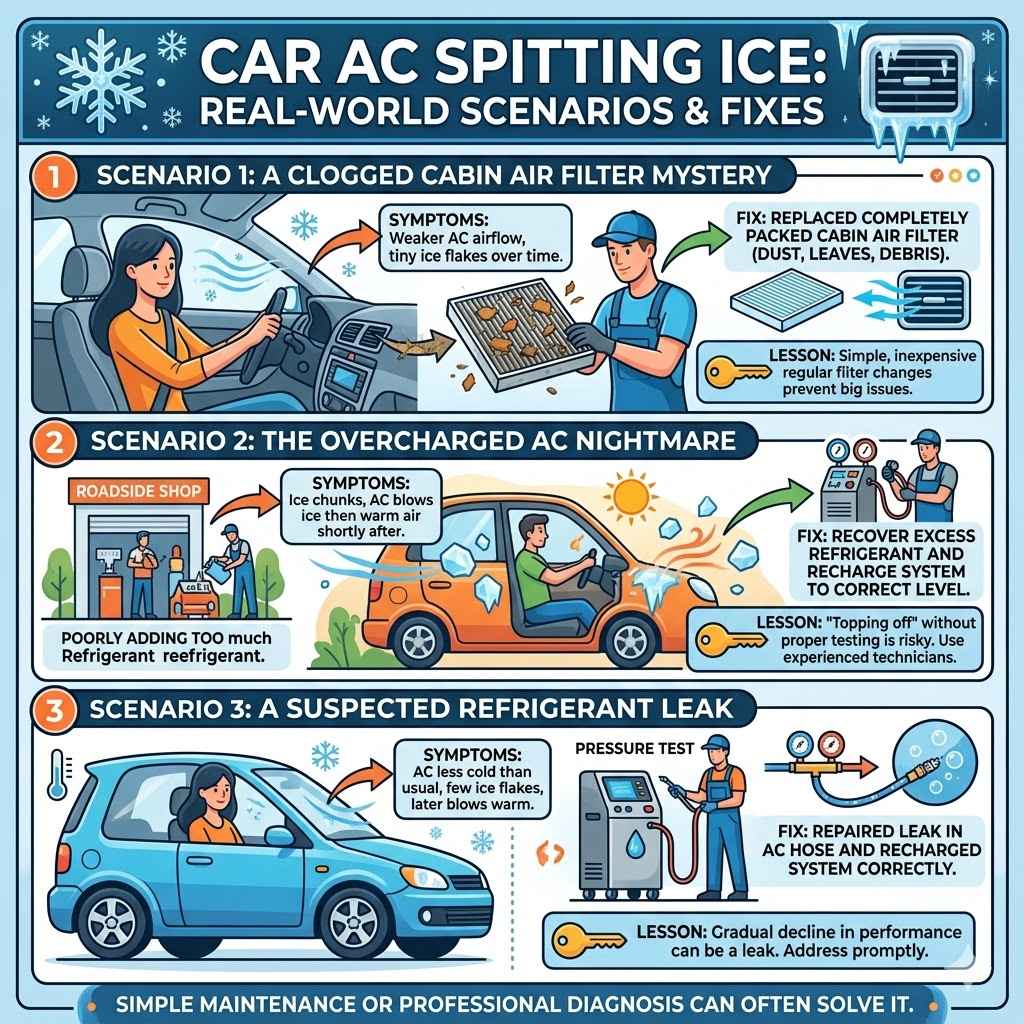
Sometimes, understanding a problem comes down to seeing how it plays out in real life. Here are a few scenarios where car owners encountered the issue of their AC spitting ice, and how they resolved it. These examples highlight common causes and practical solutions.
These scenarios show that while the problem can seem daunting, the fixes are often straightforward, involving simple maintenance or professional diagnosis. They offer a glimpse into how everyday drivers have tackled this issue.
Scenario 1 A Clogged Cabin Air Filter Mystery
Sarah noticed her car’s AC blowing weaker and weaker over the summer. One hot afternoon, she saw a few tiny ice flakes coming from her vents. She was worried about a major AC repair.
Her mechanic suggested a simple check of her cabin air filter first. It turned out the filter was completely packed with dust, leaves, and debris. After replacing it, her AC started blowing strong and cold again, with no ice.
This case showed Sarah that a simple, inexpensive part could cause big issues if neglected. She learned the importance of regular filter changes.
Scenario 2 The Overcharged AC Nightmare
John had his car’s AC system “topped off” at a roadside shop before a long trip. A few days later, driving through hot weather, he noticed ice chunks blowing out of his vents. The AC blew ice for a bit, then blew warm air.
He took it to a trusted mechanic who explained the previous shop likely overfilled the system. The excess refrigerant caused pressure problems and freezing. The mechanic had to recover the excess refrigerant and then recharge the system to the correct level.
John learned that “topping off” without proper testing can be risky. He realized the importance of using experienced technicians for AC service.
Scenario 3 A Suspected Refrigerant Leak
Maria’s car AC had been blowing cold, but not as cold as usual for a few weeks. Then, one morning, she saw a few ice flakes. She thought maybe it was just a bit too cold outside.
However, the problem continued, and the AC started blowing warm. Her mechanic performed a pressure test and found a small leak in one of the AC hoses. After repairing the leak and recharging the system with the correct amount of refrigerant, her AC worked perfectly again, with no more ice.
This showed Maria that even a gradual decline in cooling performance could be a sign of a leak, and addressing it promptly prevented further damage.
Frequently Asked Questions
Why is my car AC spitting ice flakes only sometimes?
Answer: This often happens when the AC system is borderline. It might be due to intermittent airflow issues, slight fluctuations in refrigerant levels, or the system operating near its freezing point. The problem might be more noticeable when conditions are just right for ice to form.
Can I just keep clearing the ice and using my AC?
Answer: While clearing ice might offer temporary relief, it’s not a long-term solution. Continuing to use the AC with ice buildup can strain components, lead to further damage, and eventually cause the system to fail. It’s best to find and fix the root cause.
How much does it cost to fix an AC system that’s spitting ice?
Answer: The cost varies widely depending on the cause. Replacing a cabin air filter is usually very inexpensive. More complex issues like refrigerant leaks or faulty valves can range from a few hundred to over a thousand dollars, depending on the parts and labor involved.
Is it safe to drive my car if the AC is spitting ice?
Answer: While it’s not usually dangerous to drive, it means your AC system is not working correctly. Continuing to use it could lead to more significant and expensive damage to the system. It’s best to get it checked out sooner rather than later.
What is the most common fix for a car AC spitting ice?
Answer: The most common and easiest fix is usually replacing a dirty cabin air filter. If that doesn’t solve the problem, issues with refrigerant levels or airflow restrictions are the next most frequent culprits.
Wrap Up
Seeing ice in your car’s AC vents means your system is working too hard to cool. It’s often caused by a blocked cabin air filter, too much refrigerant, or airflow problems. Simple steps like changing the filter or letting the system defrost can help. If the issue persists, it’s wise to see a mechanic. Getting your AC fixed ensures comfortable drives and protects your car.