Why Is the Auto Repair Industry Slowing Down? 2025-2026 Data
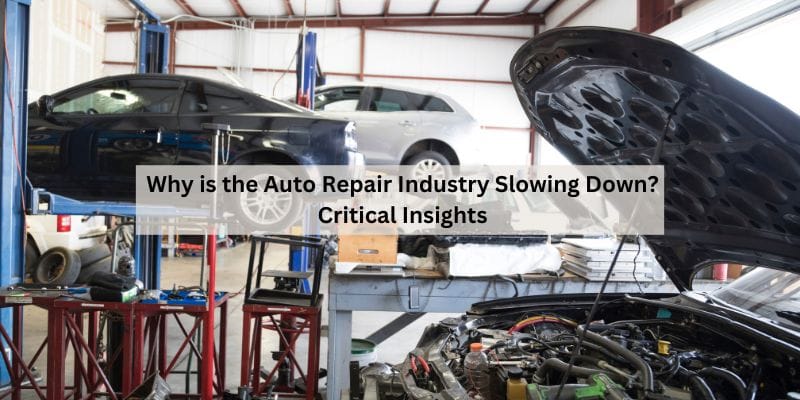
The auto repair industry isn’t shrinking overall — it generated $89.6 billion in 2025 — but real consumer spending on maintenance and repair actually fell in 11 of 13 major U.S. markets in 2025 versus 2024, even as the average vehicle on the road hit a record 12.8 years old. The slowdown many shops feel is real, but it’s driven by a specific mismatch: cost-of-living pressure delaying repairs on an aging fleet that technically needs more of them, plus a technician shortage that’s leaving thousands of jobs unfilled every year.
This guide breaks down the real 2025-2026 data behind the slowdown — the technician shortage numbers, why consumer spending is falling despite an aging fleet, and what shops are doing to adapt.
Quick Answer
Auto repair isn’t collapsing — it’s a $89.6 billion industry (2025) — but real spending on maintenance/repair fell in most major markets in 2025, and the U.S. is short about 20,780 auto technicians a year (TechForce Foundation, 2026), with collision repair even worse at just 42% of demand filled. Deferred maintenance from cost-of-living pressure, not a shrinking need for repairs, is the main driver.

The Shift in Auto Repair Demand
Consumer behavior is the biggest short-term driver. Facing higher costs of living, many drivers are postponing non-urgent maintenance and repairs — oil changes stretched past the recommended interval, brake jobs delayed, check-engine lights ignored until they become emergencies. This isn’t the same as needing fewer repairs; it’s deferred demand that tends to show up later as more expensive emergency work.
Vehicle technology is also changing the mix of work. Modern cars run more onboard diagnostics and require manufacturer-specific tools and software to service correctly, which some independent shops haven’t yet invested in — pushing that work toward dealerships and larger chains instead of reducing it industry-wide.
Economic Factors at Play
Independent repair shops already operate on thin margins — roughly 6-12% net, with labor eating close to half of every repair bill. That leaves little room to absorb a drop in ticket volume, which is why even a modest pullback in consumer spending is felt immediately at the shop level.
Impact of Inflation
Rising costs for parts, shop rent, and labor get passed through to repair bills. When customers are also facing higher costs elsewhere, bigger repair estimates are exactly the kind of expense that gets postponed first.
Fuel Costs and Consumer Spending
Higher fuel costs can reduce how much people drive, which modestly reduces wear-related repair needs — but this effect is smaller than the deferred-maintenance effect above, since routine maintenance intervals are based on time and mileage regardless of driving style.
Workforce Challenges: The Real Technician Shortage Numbers
This is where the industry’s numbers are the most striking. According to the TechForce Foundation’s 2026 Technician Supply, Demand & Opportunity report, the U.S. needs about 70,865 new automotive technicians a year but is on pace to train only around 50,085 — a shortfall of roughly 20,780 technicians annually, filling just 71 of every 100 open positions.
Collision repair is worse: the sector needs 73,354 new entrant technicians between 2025 and 2029, but supply covers only about 42% of annual demand, and collision has the highest turnover rate of any automotive sector at 60.7%. Across all TechForce-tracked sectors combined, the five-year cumulative shortfall reaches 1.2 million workers, with an estimated $7.42 billion a year in lost wage output to the U.S. economy.
Low starting wages relative to the skill required, a wave of experienced technicians retiring, and fewer young people entering trade programs all feed this gap. Shops that are short-staffed can’t take on as many jobs per day, which shows up as longer wait times and turned-away business even when demand for repairs is steady.
The Role of Electric Vehicles
EVs need less routine maintenance than gas vehicles — no oil changes, fewer moving parts in the drivetrain, and regenerative braking that reduces brake wear. That’s a real, structural reduction in a portion of traditional repair-shop revenue as EV adoption grows, though EVs still need tires, suspension work, cabin filters, and 12V battery service like any other vehicle.
The bigger near-term issue is training: many technicians aren’t yet certified to safely service high-voltage EV systems, creating a second, EV-specific skills gap layered on top of the general technician shortage above.
Supply Chain Disruptions
Parts availability issues that began during the pandemic haven’t fully resolved for every part category. When a shop can’t get a part quickly, repair timelines stretch and costs rise — which reinforces the same deferred-maintenance cycle described above, since a longer, pricier repair is easier to postpone.
Insurance and Accident Trends
Insurers have tightened claims scrutiny in recent years, and rising repair costs (parts, labor, and calibration of driver-assistance sensors after even minor collisions) have pushed premiums higher. Some drivers respond by raising their deductible or dropping collision coverage on older cars, which shifts more repair costs directly onto the customer — another point where a repair can get postponed rather than paid for out of pocket.
Technological Innovations
Better diagnostic tools mean technicians can often identify a problem faster and more accurately than a decade ago, which is a genuine productivity gain. But those same tools require ongoing investment and training, and shops that fall behind on equipment can struggle to service newer vehicles at all — pushing that work toward better-equipped competitors rather than eliminating it.
Is Auto Repair Spending Actually Declining? What 2025 Data Shows
Yes, in most markets — but with a genuine paradox behind it. Real (inflation-adjusted) consumer spending on vehicle maintenance and repair fell in 11 of 13 major U.S. markets surveyed in 2025 compared with 2024. At the same time, the average vehicle on U.S. roads reached a record 12.8 years old in 2024, with nearly 30% of all vehicles now 16 years or older — and older vehicles objectively need more frequent and more complex repairs, not fewer.
The likely explanation is deferred maintenance: drivers are keeping older cars longer and delaying repairs because of cost-of-living pressure, not because their cars genuinely need less work. That deferred work doesn’t disappear — it tends to resurface later as bigger, more expensive repairs once a minor issue is ignored long enough to cause secondary damage.
| Factor | What the Data Shows |
|---|---|
| Technician shortage | ~20,780 fewer auto techs trained than needed each year (TechForce, 2026) |
| Collision repair gap | Only ~42% of annual demand filled; 60.7% turnover, highest of any sector |
| Consumer spending | Real spending fell in 11 of 13 major markets in 2025 vs. 2024 |
| Aging vehicle fleet | Average vehicle age is a record 12.8 years; ~30% of vehicles are 16+ years old |
| Industry revenue | $89.6 billion generated in 2025 across ~302,754 U.S. auto repair businesses |
Strategies for Adaptation
Shops responding to this environment are diversifying into services less exposed to deferred-maintenance cycles (inspections, fleet contracts, ADAS calibration), investing in technician recruitment and retention to close the staffing gap directly, and adding EV certification training so they aren’t shut out of that growing segment. None of these fixes the underlying spending pullback, but they reduce how exposed a shop is to it.
If you’re weighing a career in this field despite the shortage numbers above, our breakdown of the pros and cons of automotive engineering and other careers similar to automotive mechanic cover pay and outlook in more detail. And if you’re a customer wondering why a shop quoted a diagnostic fee before even touching your car, see what a diagnostic fee for car repair actually covers.
Frequently Asked Questions
Why Is the Automotive Industry Declining?
It isn’t declining in overall revenue — $89.6 billion in 2025 — but real consumer spending on maintenance and repair fell in 11 of 13 major markets in 2025 versus 2024, driven by deferred maintenance during a period of higher living costs, combined with a technician shortage of roughly 20,780 workers a year.
Why Is the Automotive Industry So Slow Right Now?
Many shops feel slower demand because customers are postponing non-urgent repairs, not because vehicles need less work — the average U.S. vehicle is now a record 12.8 years old. Staffing shortages also mean some shops can’t take on as many jobs per day even when demand is steady.
What Is the Future of the Auto Repair Industry?
Demand for repairs isn’t going away — an aging fleet guarantees ongoing work — but the mix is shifting toward EV service, advanced diagnostics, and driver-assistance calibration. Shops that invest in technician training and EV certification are better positioned than those that don’t.
What Is the Outlook for the Auto Repair Industry in 2025-2026?
The Bureau of Labor Statistics projects about 70,000 automotive technician job openings a year through 2034, with roughly 4% employment growth. The near-term challenge is staffing that demand, not a lack of repair work to do.
Why Are Auto Mechanics Quitting or Leaving the Industry?
Wages that haven’t kept pace with the skill and tooling investment required, physically demanding work, and better pay in other skilled trades all contribute. Collision repair specifically has a 60.7% turnover rate, the highest of any automotive sector tracked by TechForce Foundation.
The Bottom Line
The auto repair industry isn’t shrinking — it’s a $89.6 billion business with an aging vehicle fleet that guarantees ongoing demand. What’s actually happening is a mismatch: real consumer spending pulled back in 2025 as drivers deferred repairs under cost-of-living pressure, while a technician shortage of roughly 20,780 workers a year makes it harder for shops to serve the demand that does show up. Shops that invest in recruiting, training, and EV readiness are the ones best positioned to weather it.
Products related to this article
Sponsored / affiliate links. As an Amazon Associate I earn from qualifying purchases. I may earn additional commission from eligible campaigns.