Why Is Vomiting So Scary: Essential Survival Guide
Vomiting can be incredibly scary due to the loss of control, the unpleasant physical sensations, and the underlying fear of illness. This guide helps you understand why it feels so frightening and provides strategies to cope and manage it effectively.
Feeling Freaked Out by Puking? You’re Not Alone.
Have you ever felt a wave of panic when you start to feel sick to your stomach? You’re not the only one. Many people find vomiting a truly terrifying experience. It’s more than just feeling a bit unwell; it’s often accompanied by a deep sense of unease and a struggle to regain control over your own body. This can be especially unsettling when it happens unexpectedly, leaving you feeling helpless. We’ll dive into why this happens, what your body is doing, and how you can feel more prepared and less scared. Let’s turn that anxiety into understanding and confidence.
Understanding the Gut-Brain Connection: Why We Feel Scared
The connection between your gut and your brain is super important. When your stomach or intestines feel irritated, they send signals to your brain. Your brain then interprets these signals and can trigger a feeling of dread or anxiety. This is your body’s way of saying, “Something’s not right, be alert!” This alarm system, while useful, can certainly make the feeling of impending vomiting feel much scarier than it might otherwise.
The Body’s Alarm System
Think of your brain as the control center. When your stomach is upset, it’s like a fire alarm going off. The alarm isn’t just about the physical sensation; it’s also about what that message means for your overall well-being. This primal response is designed to protect you from potential harm, like ingesting something toxic.
Loss of Control: A Major Fear Factor
A big reason why vomiting feels so scary is the overwhelming sense of lost control. Suddenly, your body takes over, and you can’t stop what’s happening. This feeling of being a passenger in your own body can trigger anxiety, especially if you’re in a public place or if you’re generally someone who likes things to be orderly and predictable.

What’s Happening Inside Your Body When You Vomit
Vomiting, also known as emesis, is a complex process. It’s your body’s forceful way of emptying the stomach. This usually happens when something irritates your stomach lining or when your brain receives signals that something is wrong.
The Vomiting Reflex
The actual act of vomiting is triggered by a specific part of your brain called the vomiting center. It’s located in the brainstem. This center receives signals from various sources, including:
Irritants in your stomach or intestines.
Signals from your inner ear (which is why motion sickness can make you feel nauseous and vomit).
Certain medications or toxins in your bloodstream.
Emotional triggers, like fear or disgust.
When this center is activated, it causes a series of muscle contractions. First, your diaphragm and abdominal muscles contract forcefully. At the same time, your stomach muscles relax, and the top part of your stomach (near the esophagus) also loosens. This combination pushes the stomach contents up and out through the esophagus and mouth.
Why Nausea Comes First
Nausea is often the first warning sign of vomiting, and it’s a sensation that your brain interprets as a signal to prepare for vomiting. It feels like that unsettling queasy feeling in your stomach. This feeling is also controlled by your brain, but it’s more of a preparatory signal before the main event.
Common Triggers for Vomiting
Understanding what causes vomiting can help you anticipate and manage it better. Triggers can range from simple stomach bugs to more complex conditions.
Illnesses and Infections
Stomach Flu (Gastroenteritis): This is a very common cause, often triggered by viruses like norovirus or bacteria. It usually comes with diarrhea, stomach cramps, and fever.
Food Poisoning: Eating contaminated food can quickly lead to vomiting as your body tries to expel the harmful bacteria or toxins.
Other Infections: Infections in other parts of the body, like a severe ear infection or even a bad cough, can sometimes trigger vomiting, especially in children.
Dietary Factors
Overeating: Eating too much food can distend your stomach, leading to discomfort and potentially vomiting.
Indigestion and Heartburn: Severe discomfort from indigestion or acid reflux can sometimes lead to nausea and vomiting.
Food Intolerances or Allergies: If you consume something your body can’t handle, like lactose or gluten for some people, it can cause digestive upset, including vomiting.
Motion Sickness
This happens when there’s a conflict between what your eyes see and what your inner ear senses about movement. This mismatch can confuse your brain and trigger nausea and vomiting, especially during car rides, boat trips, or plane journeys.
Medications and Treatments
Chemotherapy: A well-known side effect of cancer treatments is nausea and vomiting.
Certain Drugs: Some medications, like strong painkillers or antibiotics, can have nausea as a side effect.
Other Causes
Stress and Anxiety: For some people, intense stress or anxiety can manifest physically, leading to nausea and even vomiting. This is often called a stress response.
Migraines: Severe headaches, particularly migraines, can be accompanied by intense nausea and vomiting.
Pregnancy: Morning sickness, which can occur any time of day, is very common in early pregnancy.
Coping with the Fear: Practical Strategies
Knowing what to do and having a plan can make a huge difference in managing the fear associated with vomiting. Here are some strategies that can help:
During an Episode
1. Stay Calm: Take slow, deep breaths. Focus on breathing in through your nose and out through your mouth. This might sound impossible, but even a few deep breaths can help ease panic.
2. Find a Safe Space: If possible, go somewhere private and comfortable, like a bathroom. Having control over your immediate surroundings can reduce anxiety.
3. Stay Hydrated (Carefully): Once you’ve vomited, your body needs fluids. Start with small sips of clear liquids like water, ice chips, or electrolyte drinks. Avoid gulping.
4. Rest: Lie down and try to relax. Your body needs energy to recover, and resting is the best way to do that.
Before an Episode (Prevention and Preparation)
1. Identify Triggers: If you know certain foods, smells, or situations make you feel sick, try to avoid them.
2. Eat Bland Foods: If you have an upset stomach, stick to bland foods like crackers, toast, rice, or bananas (BRAT diet).
3. Stay Hydrated: Drink plenty of fluids throughout the day, especially if you’re feeling generally unwell.
4. Manage Stress: Practice relaxation techniques like meditation, yoga, or deep breathing exercises regularly.
5. Prepare a “Vomit Kit”: For those who experience frequent vomiting (e.g., due to illness or pregnancy), having a small bag ready with essentials can be comforting. This might include:
A small trash bag or container.
Wet wipes.
Mouthwash or mints.
A clean cloth.
A bottle of water.
After an Episode
1. Replenish Fluids Gradually: Continue to sip clear liquids.
2. Eat Lightly: Once you feel ready, start with very small amounts of bland food.
3. Listen to Your Body: Don’t push yourself. Rest is key to recovery.
4. Seek Medical Advice: If vomiting is severe, persistent, or accompanied by other concerning symptoms (like high fever, severe abdominal pain, or blood), it’s important to contact a healthcare professional.
When to Seek Medical Help
While vomiting is often a temporary and uncomfortable experience, there are times when it signals something more serious. Don’t hesitate to call your doctor or go to an urgent care center if you experience any of the following:
Severe or Persistent Vomiting: If you can’t keep any fluids down for more than 24 hours.
Signs of Dehydration: This includes reduced urination, dry mouth, dizziness, or extreme thirst.
Vomiting Blood: This can look like fresh red blood or dark, coffee-ground-like material.
Severe Abdominal Pain: Pain that is sharp, sudden, or unbearable.
High Fever: A temperature of 102°F (39°C) or higher.
Confusion or Drowsiness: Sudden changes in mental state.
Vomiting After a Head Injury: This could indicate a more serious issue.
Your doctor can help determine the cause of your vomiting and recommend the best course of treatment. For more information on dehydration, you can refer to resources from the Centers for Disease Control and Prevention (CDC).
Calming Techniques for Nausea
Nausea often precedes vomiting, and managing this feeling can help reduce the overall anxiety. Here are some techniques that can help:
Acupressure: Applying pressure to specific points on your body may help relieve nausea. The Nei Guan point (P6) on the inner wrist is commonly used. It’s located about three finger-widths down from your wrist crease, between the two large tendons.
Ginger: Ginger has been used for centuries to calm upset stomachs. You can try ginger ale (look for one with real ginger), ginger tea, or ginger candies.
Peppermint: Peppermint can also be soothing. Peppermint tea or sucking on peppermint candies might help.
Distraction: Sometimes, focusing on something else can take your mind off the nausea. Watch a movie, read a book, or listen to music.
Fresh Air: If a strong smell is contributing to your nausea, try to get some fresh air. Opening a window or stepping outside for a moment can be helpful.
Understanding Different Types of Vomiting
It’s helpful to know that vomiting isn’t always a sign of a serious illness. Sometimes, it’s just your body’s reaction to something minor.
Simple Stomach Upset vs. Serious Illness
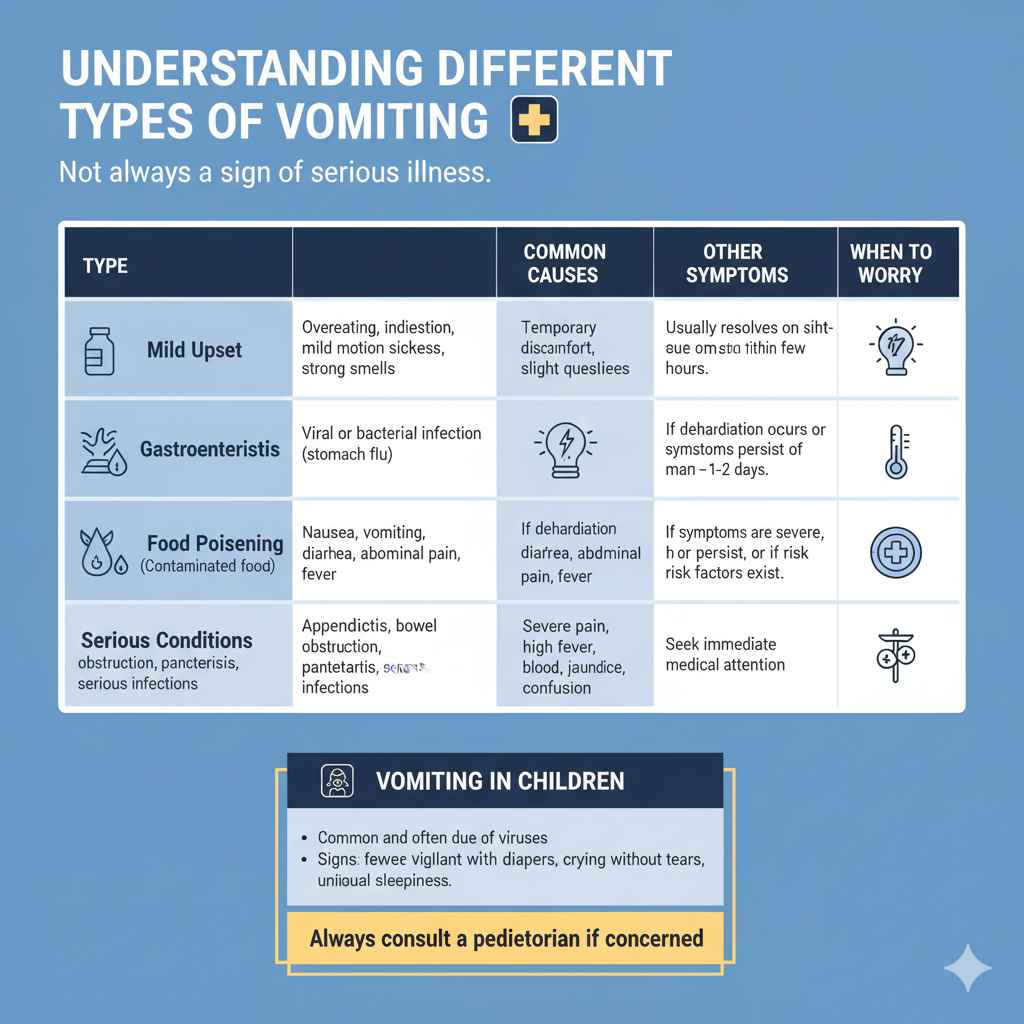
| Type | Common Causes | Other Symptoms | When to Worry |
|---|---|---|---|
| Mild Upset | Overeating, indigestion, mild motion sickness, strong smells | Temporary discomfort, slight queasiness | Usually resolves on its own within a few hours. |
| Gastroenteritis | Viral or bacterial infection (stomach flu) | Diarrhea, cramps, fever, nausea | If dehydration occurs or symptoms persist for more than 1–2 days. |
| Food Poisoning | Contaminated food | Nausea, vomiting, diarrhea, abdominal pain, fever | If symptoms are severe, bloody, or persist, or if risk factors exist. |
| Serious Conditions | Appendicitis, bowel obstruction, pancreatitis, serious infections | Severe pain, high fever, blood, jaundice, confusion | Seek immediate medical attention. |
Vomiting in Children
Vomiting in children is common and often due to viruses. However, it’s important to be extra vigilant with dehydration. Signs in children include fewer wet diapers, crying without tears, and unusual sleepiness. Always consult a pediatrician if you have concerns about your child’s vomiting.
Frequently Asked Questions (FAQs)
Q1: Why does the smell of certain things make me feel like I need to vomit?
A: Strong smells can trigger your brain’s nausea response. Your brain can associate certain scents with danger or something that might be harmful, leading to a feeling of sickness. This is a protective mechanism.
Q2: Is it bad to hold in vomit if I feel the urge?
A: Trying to hold in vomit can actually make you feel worse and can sometimes lead to more forceful vomiting later. It’s usually best to let your body do what it needs to do. Find a comfortable place if you can, and let it happen.
Q3: What are “dry heaves”?
A: Dry heaves happen when your body goes through the motions of vomiting (contractions) but nothing comes up. This can occur when your stomach is empty or if the trigger for vomiting is very strong but there’s nothing to expel. It can be just as uncomfortable and distressing as actual vomiting.
Q4: Can anxiety cause vomiting?
A: Yes, absolutely. For some people, intense anxiety or stress can trigger physical symptoms, including nausea and vomiting. This is sometimes called a stress response or psychosomatic vomiting.
Q5: How long does vomiting usually last?
A: For simple causes like a stomach bug or overeating, vomiting usually lasts for a few hours to a day. If it continues for longer, or if you can’t keep fluids down, it’s important to seek medical advice to rule out more serious issues.
Q6: What’s the difference between nausea and vomiting?
A: Nausea is the feeling of being sick to your stomach, a queasy sensation that you might vomit. Vomiting is the physical act of expelling stomach contents. Nausea often comes before vomiting, but you can feel nauseous without actually vomiting.
Q7: Are there any quick fixes for immediate nausea relief?
A: While there’s no magic cure, focusing on shallow breathing, sipping cool water slowly, or trying acupressure on your wrist can sometimes offer temporary relief from nausea. Distraction can also be very effective.
Building Confidence: You Can Handle This
Vomiting is a natural bodily function, even if it feels scary. By understanding why it happens, what your body is going through, and having some simple strategies in your pocket, you can feel much more prepared. Remember that most episodes of vomiting are temporary and resolve on their own. Knowing when to seek medical help is also a sign of strength and good self-care. You’ve got this!
Conclusion
Feeling scared when you have to vomit is a completely normal reaction. It taps into our deepest fears of losing control and facing illness. But by arming yourself with knowledge about the gut-brain connection, understanding common triggers, and practicing simple coping techniques, you can significantly reduce that fear. Remember to stay hydrated, listen to your body, and never hesitate to reach out to a healthcare professional if you’re concerned. With preparation and understanding, you can face these moments with more confidence and less dread. You’re capable of managing this uncomfortable experience when it arises.