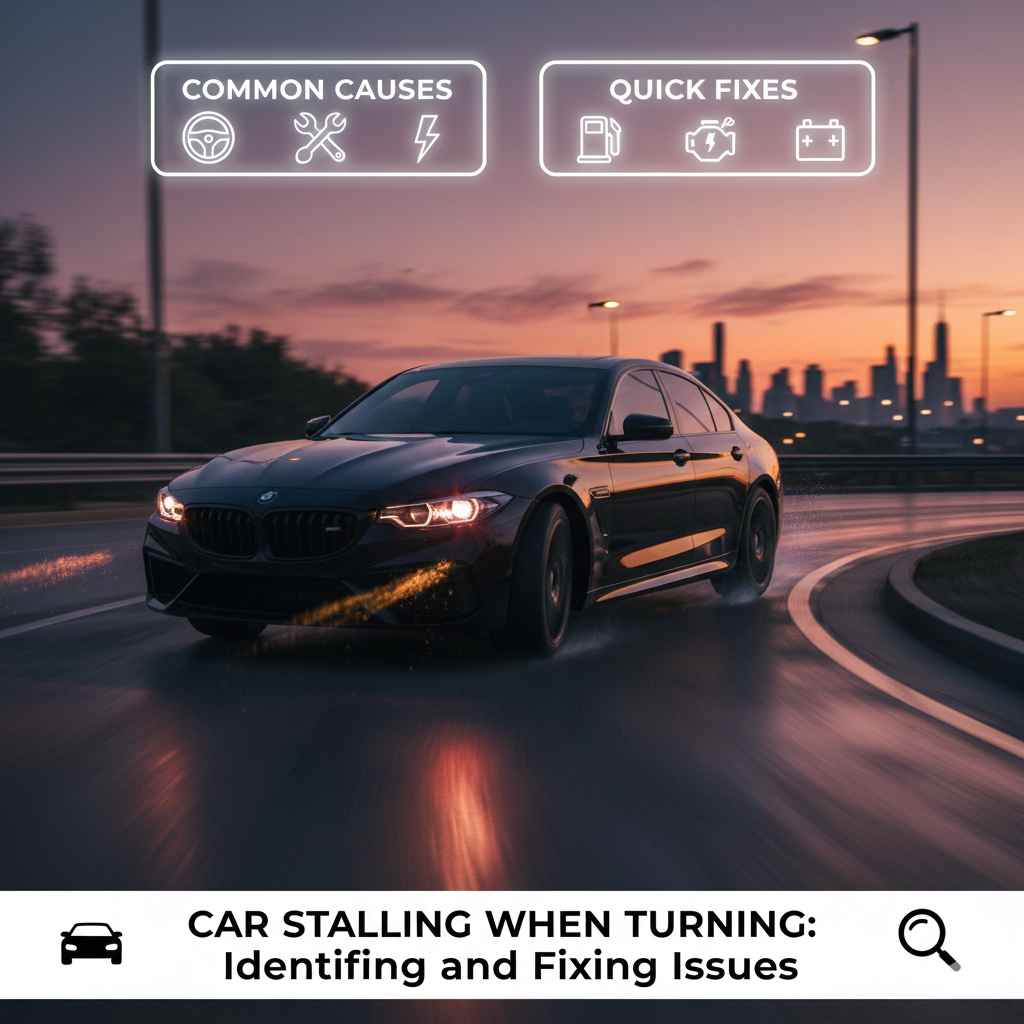
Car Stalling When Turning: Identifying and Fixing Issues
If your car stalls only while turning at low speed or with accessories on, suspect idle-control, steering-load, vacuum, or charging faults before replacing major parts. If you ignore it, you can end up with repeat near-stalls, dead batteries, unsafe parking-lot moves, and parts swapped for the wrong fault. This guide explains why turning adds engine load, how to trace the fault from symptoms to simple checks, and when the steering system itself is part of the problem.
Why a turn can stall the engine


A turn can stall an engine because steering input adds load right when the engine has the least idle margin. At parking-lot speed, the engine is already near its lowest stable speed. Add hydraulic steering drag, an electric assist demand, A/C load, or a voltage drop, and a weak idle system can quit.
How steering load changes idle demand
At idle, the ECU is balancing air, fuel, and spark with very little reserve. When you turn the wheel, the steering system asks for extra torque. On hydraulic systems, the pump takes power from the engine through the belt drive. On electric systems, current demand can pull voltage down if the charging system is weak.
That matters because a generic stall guide often treats every stall the same. A stall that appears only while parking or making tight turns usually points to a fault that shows up under low-speed load rather than at cruising speed.
Why low-speed maneuvers expose weak idle control
Idle problems are easiest to miss on the highway. Once the engine is spinning faster and airflow is higher, a dirty throttle body, weak idle air control valve, or small vacuum leak may hide. During a slow turn, the engine may dip below stable idle for a second and shut off.
Say your sedan idles at a stoplight with a slight shake, then dies only when you turn into a parking space with the wheel near center and the A/C on. That pattern points more toward idle control or voltage reserve than a fuel pump that fails only at speed.
What changes if the stall happens only at full lock
Full lock is a useful clue. If the engine dies only when the wheel reaches the stop, the steering load itself becomes suspect. On hydraulic power steering, that can mean excessive pump drag, a slipping belt, low fluid, or a pressure-control fault. On electric assist, it can mean a current spike or a module problem that hits at maximum demand.
What the stall pattern tells you
The exact pattern matters more than the word “stall.” A stall that happens only while turning, only at idle, only with accessories on, or only at full lock points you toward different systems. Use the symptom pattern first, then test the likely subsystem instead of replacing parts at random.
Stall patterns and likely causes
| Symptom pattern | Likely subsystem | Quick check | Next test |
|---|---|---|---|
| Stalls only when turning at low speed | Idle control, throttle body, steering load, charging reserve | Watch for idle dip as the wheel turns | Scan codes and check idle airflow, charging voltage, and steering load |
| Stalls only at full lock | Hydraulic steering pump drag or electric assist current draw | Listen for belt squeal, pump groan, or voltage drop | Check fluid level, belt condition, and power steering pressure or assist data |
| Stalls only at idle or parking speeds | Idle air control valve, dirty throttle body, vacuum leak | Look for rough idle or hissing | Inspect intake plumbing and clean the throttle body if needed |
| Stalls with headlights, A/C, or rear defroster on | Alternator voltage drop or weak battery reserve | Check battery warning light and dimming lamps | Measure charging voltage under load |
| Stalls after the engine is hot | Crankshaft position sensor heat-soak issue | Notice whether restart is poor after a short stop | Check for crank sensor codes and hot-no-start data |
| Sputters, then stalls under load | Fuel pump or restricted fuel filter | Note hesitation before shutdown | Check fuel pressure and filter history |
Does power steering make a car stall?
Yes. Power steering can make a car stall when the engine is already idling low or the charging system is weak. Hydraulic steering systems can add belt drag and pump load. Electric assist systems can add current demand. The steering system is a common trigger when the stall appears only during a turn, especially at parking speeds or full lock.
Hydraulic steering load and belt drag
Hydraulic power steering uses engine power to drive the pump. If the fluid is low, the belt is loose, or the pump is binding, the extra load can drag engine speed down enough to stall an already marginal idle. A groan, belt chirp, or heavy steering feel supports that path.
Pay attention to whether the stall happens right as the wheel reaches the stop. That timing often points to steering load rather than a generic fuel issue. A highway-speed fuel problem usually shows up under sustained throttle, not during a brief full-lock maneuver in a lot.
Electric assist faults and voltage sensitivity
Electric power steering does not load the engine through a belt, but it can expose voltage problems. A weak alternator, a poor battery, or a bad ground can let system voltage sag when the steering motor draws current. That drop may coincide with dimming lights, a battery warning light, or a stall during a tight turn.
Picture a compact car that idles fine in Park, then dies when you turn the wheel at the curb with the headlights and blower on. That points toward a voltage problem or an electric assist demand issue more than a fuel pump that only fails at speed.
Signs the steering system is the trigger
Look for steering clues before you chase engine parts. Heavy steering, whining from the pump, jerky assist, a slipping belt, or a stall only at the end of travel all suggest the steering load is part of the problem. If the wheel feels normal and the stall also happens while sitting still, the idle system deserves more attention.
What engine faults are most likely?
The most likely engine-side causes are idle control faults, unmetered air, bad air metering, crank signal loss, voltage drop, and fuel delivery problems. Turning does not create those faults, but it can expose them because the engine has less reserve at low speed and idle than it does on the road.
Idle air control valve and dirty throttle body
The idle air control valve helps maintain stable idle at low throttle. A dirty throttle body can do the same thing by restricting the air the engine needs at a stop. If the engine stalls while creeping, stopping, or turning into a space, these are common first checks.
Look for a low, unstable idle, stalling after coming off the brake, or a throttle body coated with carbon. On many vehicles, a dirty throttle body and idle-system issue look similar from the driver’s seat.
Vacuum leaks
A vacuum leak lets unmetered air enter the engine, which can make idle unstable and cause a stall at low speed. A hissing sound near intake hoses, brake booster plumbing, or intake gaskets is a useful clue. Vacuum leaks are common on vehicles with 100,000+ miles as rubber parts age and crack.
Because a turn often happens right after deceleration or braking, the engine may already be on the edge of a stable idle. That is why a small leak can show up during maneuvering even when the car seems fine at cruise.
Mass airflow sensor problems
A mass airflow sensor measures incoming air. Bad data can skew the air-fuel mixture and cause a stall, especially at idle or light throttle. A dirty MAF sensor can sometimes be cleaned with MAF-safe cleaner spray, but the sensor should not be guessed at or sprayed with the wrong product.
If the engine hesitates, then recovers, then stalls during a gentle turn, MAF trouble is worth checking alongside intake leaks. The ECU may be correcting for bad airflow data until steering load makes the margin disappear.
Crankshaft position sensor failure
The crankshaft position sensor tells the ECU piston position. If it loses signal, the engine can shut off. Heat-related failures can be misleading because the car may restart after cooling briefly, which makes the problem look random instead of sensor-related.
A stall that appears after the engine is hot, then clears for a short drive, is a stronger crank sensor clue than a turn-only complaint by itself. Use that pattern, not the steering event alone, to sort the cause.
Alternator voltage drop
The alternator charges the battery while the engine runs. If it fails, voltage can drop below a critical level and the engine dies. A battery warning light is a key clue, especially if the stall happens with headlights, rear defrost, blower, or steering assist drawing extra power.
Low voltage can act like an engine problem because the ECU, ignition, fuel control, and electric assist all depend on stable power. A turn that coincides with a voltage dip can be the last push that shuts the engine off.
Fuel pump pressure loss
A fuel pump delivers fuel at the correct pressure. If it weakens, the engine may sputter before the stall. A failing fuel pump can cause stalling, especially under load at highway speeds, but a weak pump can still show up at low speed if pressure is already marginal.
Fuel filter restriction can also play a part. FixMyCar notes blocked fuel filters can restrict fuel enough to make a car stall, and older cars may have a serviceable in-line fuel filter replaced every 30,000-60,000 miles. Some sources list fuel filter replacement intervals in a wide range, depending on vehicle design.
What should you check first?
Start with the symptom pattern, then verify the basics: trouble codes, charging voltage, intake leaks, and steering clues. That order helps you separate a true steering-load fault from an idle or voltage problem that only appears during a turn. It also keeps you from swapping the wrong part first.
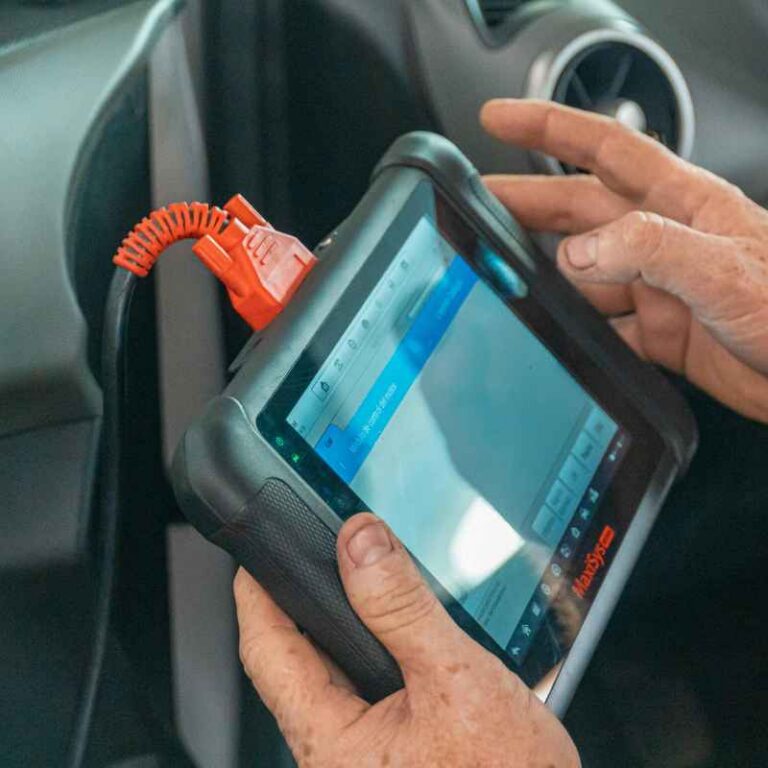
- Scan for trouble codes and freeze-frame data.
- Check battery condition and charging voltage with the engine running.
- Inspect the intake tract for loose hoses, cracked boots, or a hissing vacuum leak.
- Look at the throttle body for heavy carbon and the MAF sensor for dirt or contamination.
- Note whether the stall happens only at full lock, only with accessories on, or only when hot.
- Listen for pump whine, belt squeal, or steering heaviness that points to hydraulic load.
Scan data matters because ECU errors can incorrectly detect a mechanical fault and cause stalling. That means codes should be read in context, not treated as a parts list. A code for airflow, crank signal, or charging performance can fit a turn-related stall better than a random guess based on the last part replaced.
Suppose the engine dies only when you park with the wheel at full lock, and the battery light flickers as you turn. That combination should push charging and steering-load checks ahead of fuel pump replacement. If the engine also sputters before dying, fuel pressure deserves a closer look too.
Can you keep driving after one stall?
A single stall can be a warning even if the car restarts. If it happened once, inspect it soon. If it happens repeatedly, or if restart is poor, stop driving and have the car checked. Repeated stalling during turns can make parking, merging, and low-speed traffic moves unsafe.
Steering and braking usually still work after a stall, but they feel heavier because engine assist is gone. That alone is enough reason to avoid assuming the problem is minor. If the stall is tied to hot restarts, battery warning lights, or a worsening idle, the risk is higher.
When one stall is still a warning
If the engine died once during a tight turn and then ran normally, treat it as an early fault. A dirty throttle body, weak idle control, small vacuum leak, or charging issue can start this way. Do not wait for the pattern to grow into repeated shutdowns.
When repeated stalls mean stop driving
Stop driving if the engine stalls more than once, stalls in traffic, or dies every time you turn the wheel near full lock. That pattern can leave you stuck in a driveway, a parking lot, or an intersection. It also raises the odds of a steering-load problem or charging failure.
Why poor restart behavior changes the answer
If the engine cranks slowly, restarts only after waiting, or will not restart at all, the diagnosis shifts toward voltage, sensor, or fuel delivery trouble. A crankshaft position sensor, alternator, or fuel pump fault can all create a confusing restart pattern. In that case, a professional inspection is the safer choice.
Frequently asked questions
Why does my car stall when I turn the wheel?
Turning adds load right when idle reserve is smallest. On hydraulic steering, the pump and belt can drag engine speed down. On electric assist systems, a voltage drop can do the same. If the stall happens only during slow turns, idle control, vacuum leaks, and charging issues move up the list.
Can power steering problems make a car stall when turning?
Yes. A hydraulic pump can overload a weak idle, and a slipping belt can make the engine stumble at full lock. Electric assist can also trigger stalls if the charging system cannot hold voltage under steering demand. Steering heaviness, groaning, or dimming lights make that path more likely.
Does stalling when turning point to a bad idle air control valve?
It can. A bad idle air control valve or a dirty throttle body can leave the engine with too little airflow to recover when steering load rises at low speed. If the car stalls while creeping, stopping, or turning into a space, idle-system checks belong near the top of the list.
Could a vacuum leak cause stalling only at low speed or while turning?
Yes. A vacuum leak often shows up at idle and light throttle, where unmetered air has a bigger effect. A hiss near hoses or intake gaskets is a clue. At highway speed, the engine may have enough airflow and throttle opening to mask the problem.
Why does my car stall when turning at low speed but not on the highway?
Low-speed turns expose a weak idle because the engine has little reserve. The highway gives you higher rpm, more airflow, and more stable fuel control, so the fault may hide there. That pattern fits idle control, vacuum leaks, charging issues, or steering-load drag better than a pure high-speed fuel failure.
Can a failing alternator cause stalling when turning with the headlights on?
Yes. A failing alternator can drain the battery until voltage drops below a critical level and the engine dies. Headlights, blower load, rear defrost, and electric steering all increase demand. If the battery warning light appears or the lights dim during a turn, check charging voltage first.
Products related to this article
Sponsored / affiliate links. As an Amazon Associate I earn from qualifying purchases. I may earn additional commission from eligible campaigns.