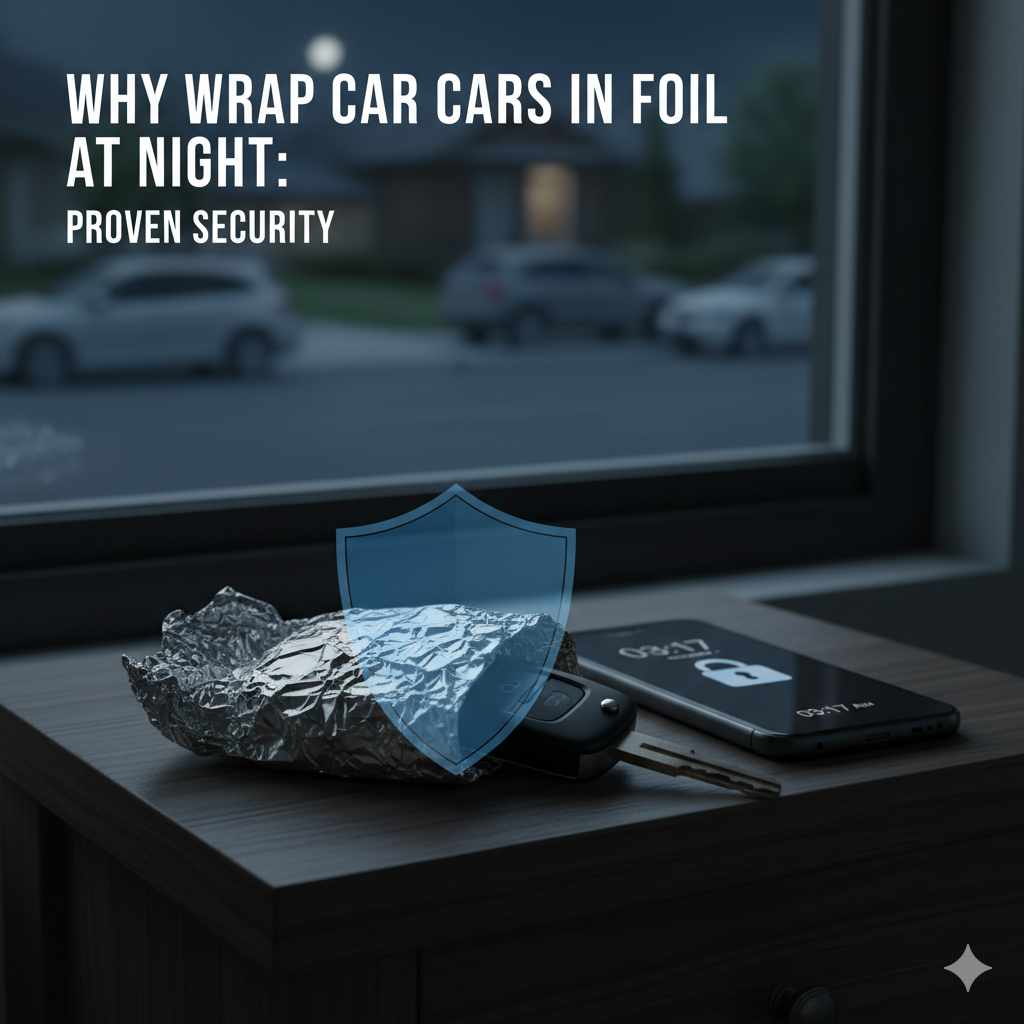
Why Wrap Car Keys in Foil at Night: Proven Security
Wrap your car keys in foil at night to block “relay attacks.” This simple trick stops thieves from electronically extending your key’s signal, preventing them from unlocking and starting your car without the physical key. It’s an easy, proven security boost for keyless entry systems.
Ever worry about your car being stolen right from your driveway, even if it has a fancy keyless entry system? It’s a common concern for many car owners today. Those sleek key fobs that let you unlock your doors with a simple press seem like magic, but they can sometimes make our cars more vulnerable. Thieves have found clever ways to exploit these systems, and it can leave you feeling exposed and helpless. But what if I told you there’s a super simple, budget-friendly trick that can add a solid layer of security to your car keys overnight?
It involves something most of us have right in our kitchen: aluminum foil! You’re probably wondering, “Really? Foil?” Yes, really. This guide will break down exactly why wrapping your car keys in foil at night is a surprisingly effective security measure. We’ll cover how it works, what you need, and how easy it is to implement. Plus, we’ll answer some common questions you might have. Let’s get your car secured the easy way!
Understanding Keyless Entry and Its Risks
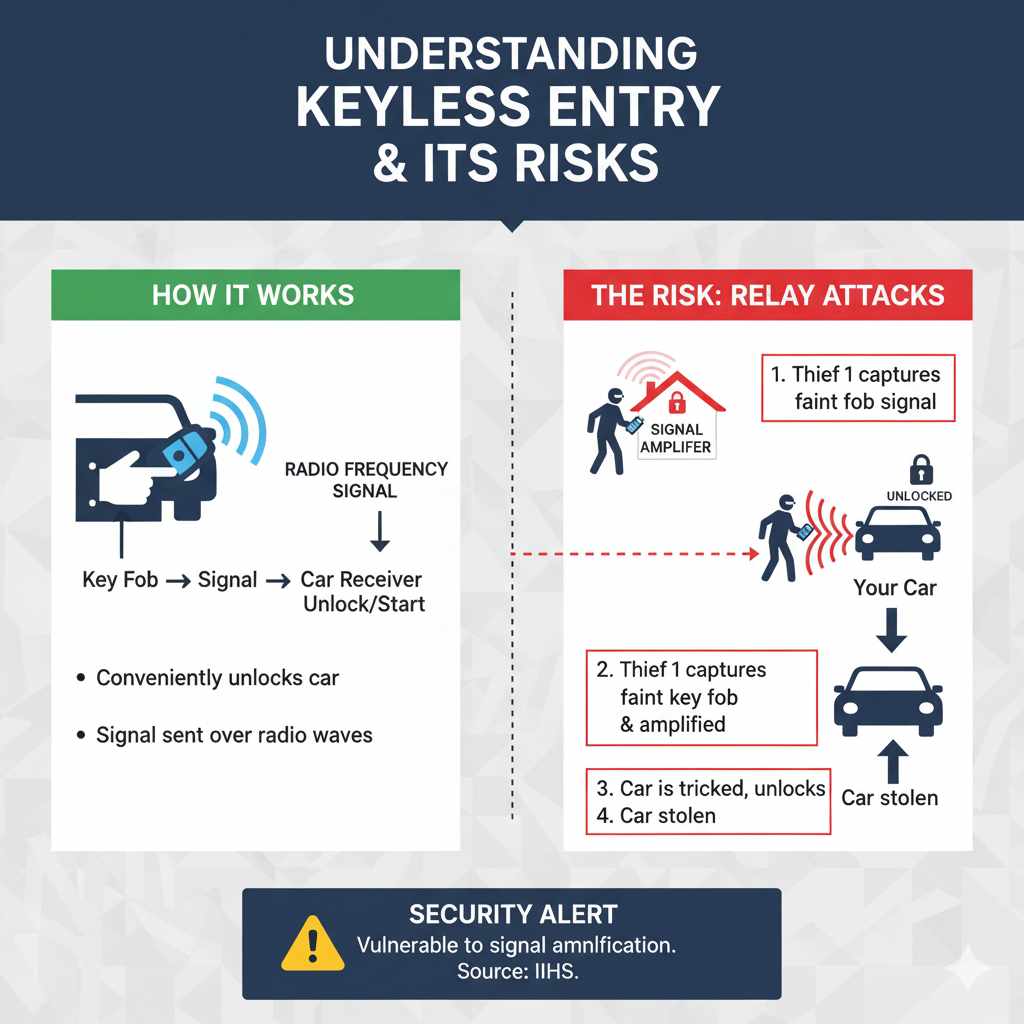
Modern cars are packed with advanced technology, and keyless entry systems are a prime example. These systems use radio frequencies to communicate between your car and your key fob. When you press a button on your fob or even approach your car, it sends out a signal. Your car’s receiver picks up this signal, verifies it, and unlocks the doors or allows you to start the engine. It’s incredibly convenient, making fumbling for keys a thing of the past for many of us.
However, this convenience comes with a new set of security challenges. The signals emitted by key fobs can be intercepted and amplified by thieves. This is where the term “relay attack” comes in. Imagine this: a thief stands near your house with a device that can pick up the faint signal from your key fob inside your home. They then use another device, possibly with an accomplice standing near your car, to relay and amplify that signal. Your car thinks your key fob is right next to it and unlocks itself, allowing the thief to drive away with your vehicle.
This type of theft is becoming increasingly common. According to the Insurance Institute for Highway Safety (IIHS), vehicles with keyless entry systems are often targeted because of this vulnerability. It’s a frustrating situation because it doesn’t involve breaking into your car physically; the car is essentially tricked into thinking the key is present. The good news is that we can take simple steps to counteract this threat.
How Aluminum Foil Blocks Key Fob Signals
So, how does humble aluminum foil come to the rescue? It all comes down to the properties of the metal. Aluminum foil is a conductor, which means it can block electromagnetic signals. When you wrap your key fob completely in aluminum foil, you create a barrier that prevents its radio frequency (RF) signals from escaping. Think of it like a Faraday cage on a small scale.
A Faraday cage is an enclosure made of conductive material that can block electromagnetic fields. When an external field is applied to the cage, the charges within the conductor redistribute themselves in such a way as to cancel out the field’s effect inside the cage. In our case, the aluminum foil acts as the conductive material, and the key fob is inside this makeshift cage. Any signals your key fob tries to emit are absorbed and contained by the foil, rendering them undetectable to potential thieves and their relay devices.
This simple act of wrapping your key fob effectively shields it from being “read” or amplified by unauthorized equipment. It’s a low-tech solution to a high-tech problem, and that’s what makes it so brilliant for everyday car owners.
Why Wrap Your Car Keys in Foil at Night?
The nighttime is a particularly vulnerable period for car security. Thieves often operate under the cover of darkness, and your car is typically parked at your home for extended periods, including overnight. During these hours, your key fob, even when dormant, can still emit a low-level signal that thieves can exploit.
Relay attacks often happen when the car owner is asleep. A thief might park outside your home and use a scanning device to detect the signal from your keys inside. If they can capture and relay this signal, they can unlock and start your car without you even knowing. By wrapping your keys in foil before you go to bed, you ensure that this vital signal is contained throughout the night, significantly reducing the risk of your car being targeted by this specific method.
This proactive step should be a regular part of your routine if you own a vehicle with keyless entry. It’s a small effort that provides substantial peace of mind, ensuring your vehicle remains secure while you rest.
What You Need: Simple Steps to Foil-Wrap Your Keys
The beauty of this security measure is its simplicity and affordability. You likely already have everything you need in your home. Here’s what to gather and how to do it:
Materials You’ll Need:
- Aluminum Foil: Standard kitchen aluminum foil is perfect. Heavy-duty foil can also work but isn’t necessary.
- Your Car Key Fob: The electronic key you use to unlock and start your car.
Step-by-Step Instructions:
- Prepare Your Workspace: Find a clean, flat surface. You don’t want to accidentally drop your keys or lose them.
- Cut a piece of Aluminum Foil: Tear off a piece of aluminum foil large enough to comfortably wrap your key fob. Aim for a piece that’s about twice the size of your fob.
- Place Your Key Fob: Lay your car key fob in the center of the aluminum foil.
-
Fold Securely: This is the crucial part. You need to ensure there are no gaps where the signal can escape.
- Fold the foil over the key fob, like you’re wrapping a gift.
- Tuck in the sides.
- Fold it multiple times to create a thick, complete barrier. Ensure the entire fob is encased.
- You can use multiple layers if you feel it’s necessary, or if your foil is very thin.
- Secure if Needed: If the foil seems a bit loose, you can use a small piece of tape to hold it in place. However, a snug wrap is usually sufficient.
- Store Safely: Place the wrapped key fob in a drawer, on a shelf, or in a metal tin for an extra layer of security. Avoid leaving it near windows or doors.
It takes less than a minute to do, and the peace of mind it provides is invaluable. Remember to unwrap your keys when you need to use them and re-wrap them as soon as you’re done!
Additional Security Tips for Keyless Entry Fobs
While wrapping your keys in foil is a fantastic primary defense against relay attacks, combining it with other security practices will enhance your car’s protection even further. Think of these as building a stronger fortress around your vehicle.
Here are some additional tips to bolster your security:
- Use a Signal-Blocking Pouch or Tin: If you prefer a more permanent solution than foil, you can purchase specialized signal-blocking pouches or even an empty metal tin. These are designed specifically to block RF signals from key fobs. Many companies that sell car accessories offer these. A quick search online will reveal many options, like those from Wirecutter’s recommendations for Faraday bags.
- Store Keys Away from Doors and Windows: Even if your keys aren’t wrapped, storing them in a location far from the exterior walls of your home can make it more difficult for thieves to capture their signal. Keep them in a drawer in the center of your house or in a cupboard in a back room.
- Try the “Off” Button Trick: Some key fobs have a physical button that can disable the fob entirely when held down for a few seconds. Check your car’s manual to see if yours does and how to activate it overnight. This completely stops the fob from transmitting any signals.
- Disable Keyless Entry (if possible): Many modern cars allow you to disable the keyless entry system through the car’s infotainment system settings. Consult your owner’s manual for instructions specific to your make and model. This is a more advanced step but can be very effective.
- Be Mindful of Key Fob Placement: Avoid leaving your key fob near where your car is parked, especially if your car is parked in a garage attached to your house. The signal can sometimes travel through walls.
- Park Smart: While not directly related to the fob, parking in a well-lit area or a secure garage can deter thieves.
- Consider a steering wheel lock: For an added physical deterrent, a steering wheel lock can make it harder for thieves to drive your car away, even if they manage to bypass the electronic security.
By implementing a combination of these strategies, you can significantly enhance the security of your vehicle and reduce the chances of it becoming a target.
Aluminum Foil vs. Signal-Blocking Pouches: A Comparison
Aluminum foil is a fantastic DIY solution, but some car owners might be curious about commercially available products like signal-blocking pouches. Both have their pros and cons, and the best choice often comes down to personal preference and convenience.
Here’s a quick comparison:
| Feature | Aluminum Foil | Signal-Blocking Pouch |
|---|---|---|
| Cost | Extremely low (you likely already own it) | Moderate (ranges from $10 – $30+) |
| Effectiveness | Very effective when wrapped correctly and densely. Can be compromised by tears or gaps. | Highly effective, designed specifically for signal blocking. Typically includes multiple layers of protective material. |
| Convenience | Requires re-wrapping daily/as needed. Can look messy if not folded neatly. | Easy to use – just place fob inside and close. Can be kept with keys. |
| Durability | Tears easily, needs regular replacement. | More durable and long-lasting. |
| Portability | Can be bulky if wrapped many times. | Designed to be compact and carried with keys. |
| Aesthetics | Functional, not particularly stylish. | Often comes in various designs and colors. |
Ultimately, both methods work by creating a barrier against radio frequency signals. If cost is a major concern and you don’t mind the daily ritual, aluminum foil is an excellent and proven choice. If you prefer a more permanent, user-friendly, and perhaps stylish solution, a signal-blocking pouch is a worthwhile investment.
The Science Behind Faraday Cages and RF Shielding
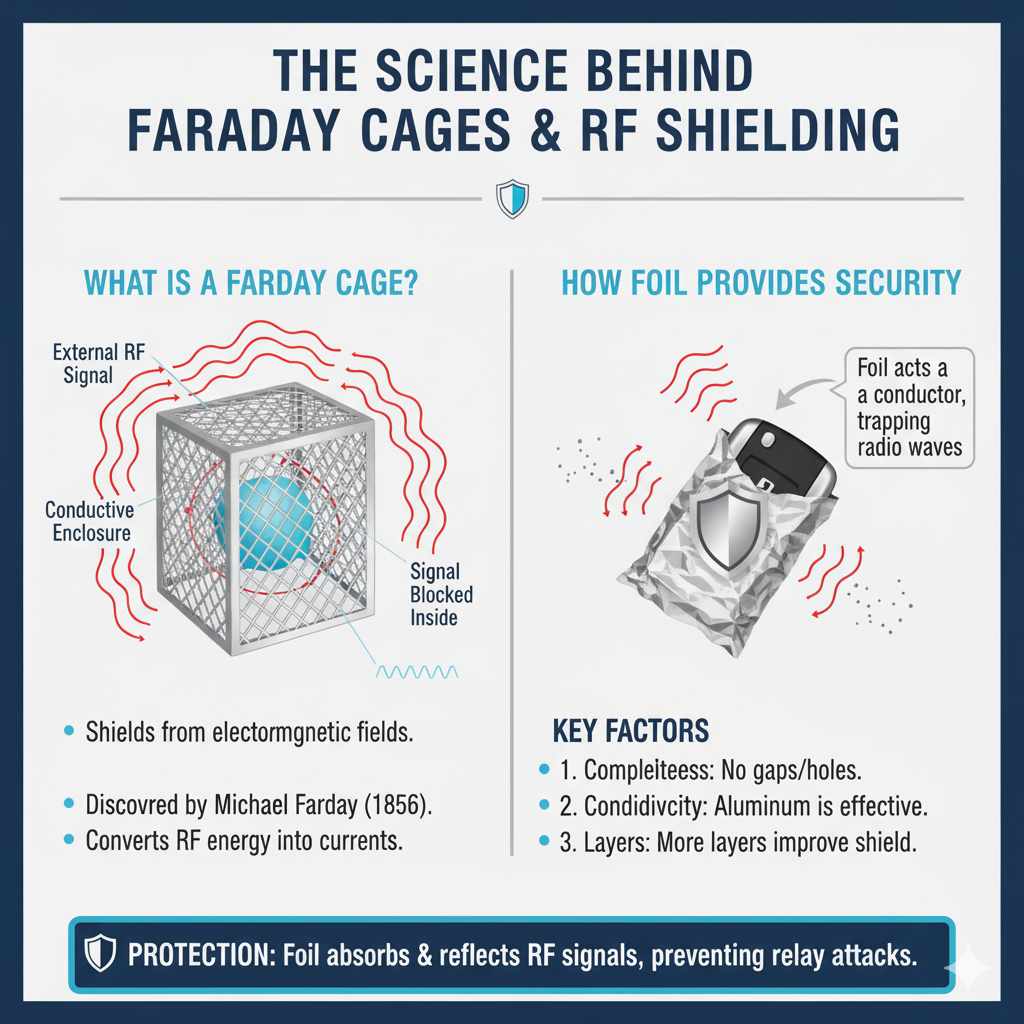
To truly appreciate why foil works, let’s briefly touch upon the science behind Faraday cages, which is the principle at play here. A Faraday cage is named after Michael Faraday, an English scientist who discovered this phenomenon in 1836. He found that a conductive enclosure shields its interior from external electromagnetic fields. This works because when an external electric field hits the conductive material (like your aluminum foil or a dedicated Faraday cage), it causes the electrons in the conductor to redistribute. This redistribution creates an opposing electric field that cancels out the external field within the enclosure.
Radio frequency (RF) waves, which are used by your key fob to communicate with your car, are a form of electromagnetic radiation. They have specific frequencies. When these waves encounter a conductive material like aluminum foil, they induce currents in the foil. If the foil completely encloses the source of the RF signal (your key fob), these induced currents help to dissipate the energy of the RF waves and prevent them from propagating outward. Essentially, the foil absorbs and reflects the RF energy, trapping it inside the foil wrap.
The effectiveness of any Faraday cage, including a foil wrap, depends on a few factors:
- Completeness of the Enclosure: The cage must be complete, with no significant gaps or holes. Any opening can allow RF signals to leak in or out. This is why a dense, multi-layered wrap is important for aluminum foil.
- Conductivity of the Material: Aluminum is a good conductor, making it effective. Other conductive materials like copper or silver also work, but aluminum is readily available and affordable.
- Thickness of the Material: While foil is thin, its conductivity is sufficient for the frequencies used by key fobs. Using multiple layers or heavier-duty foil can improve shielding by providing a denser barrier.
For keyless entry systems, which operate at specific RF frequencies, a well-wrapped aluminum foil acts as a sufficient Faraday cage to block these signals. It’s a fascinating application of physics that directly benefits our everyday security.
Common Concerns and FAQs
It’s natural to have questions when trying a new security technique. Here are some common queries about wrapping car keys in foil:
Q1: Will wrapping my keys in foil damage them?
A1: No, wrapping your car keys in aluminum foil will not damage them. The foil is a passive conductor and does not emit any energy or alter the electronics of your key fob. It simply acts as a barrier to block signals.
Q2: How many layers of foil do I need?
A2: Ensure your key fob is completely encased and that there are no gaps. Typically, a secure wrap with 2-3 layers of standard aluminum foil is sufficient. If your foil is very thin, you might want to use an extra layer or two. The key is complete coverage and a dense barrier.
Q3: What if the foil tears?
A3: If the foil tears, it compromises the shield’s integrity and the signal could potentially escape. It’s a good idea to check the foil wrap periodically, especially if you handle your keys frequently. If it tears, simply re-wrap it tightly.
Q4: Does this method work for all keyless entry systems?
A4: This method is highly effective against “relay attacks” which exploit the radio frequency signals of keyless entry systems. It is designed to block the signals that allow unauthorized access. However, it won’t protect against other forms of theft, like a tow truck physically removing your car.
Q5: Should I leave my keys wrapped in foil all the time?
A5: You’ll need to unwrap your keys to start your car or unlock it. The recommendation is to wrap them in foil at night when parked at home, and also any time you leave them unattended for extended periods, especially when you are not near your car. Re-wrap them as soon as you are done using them.
Q6: Are there any other materials that work like foil?
A6: Yes, other conductive materials can create a Faraday cage effect. Empty metal tins (like cookie tins or ammo cans), dedicated signal-blocking pouches, or even old credit cards (for their magnetic strip shielding, though less effective for RF) can offer some protection. However, aluminum foil is the most accessible and commonly recommended DIY material.
Q7: What if my car has a physical key and not a fob?
A7: If your car uses a traditional metal key with no electronic components, then this particular security measure is not applicable. However, older vehicles are generally less vulnerable to electronic theft methods like relay attacks. For those with newer cars that have a keypad or ignition with a separate USB port for a key, the core principle of blocking RF signals still applies to an electronic keyless fob.
Protecting Your Investment: Peace of Mind for Your Vehicle
Owning a car is a significant investment, and keeping it safe is a top priority for every owner. Keyless entry systems, while wonderfully convenient, have opened doors for new kinds of threats. Relay attacks are a real concern that can lead to the theft of your vehicle without any forced entry. Fortunately, you don’t need expensive gadgets or complex installations to add a powerful layer of security.
By understanding how your key fob communicates and how simple materials like aluminum foil can interfere with that communication, you can take proactive steps to protect your car. Wrapping your keys in foil at night is an easy, inexpensive, and proven method to make your vehicle a much harder target for thieves. It’s a practical application of basic physics that offers tangible security benefits. Combined with other smart practices, like storing keys away from entry points or using a dedicated signal-blocking pouch, you can dramatically reduce the risk.
Don’t let the fear of car theft overshadow the convenience of modern technology. Take a few moments each day to secure your keys.