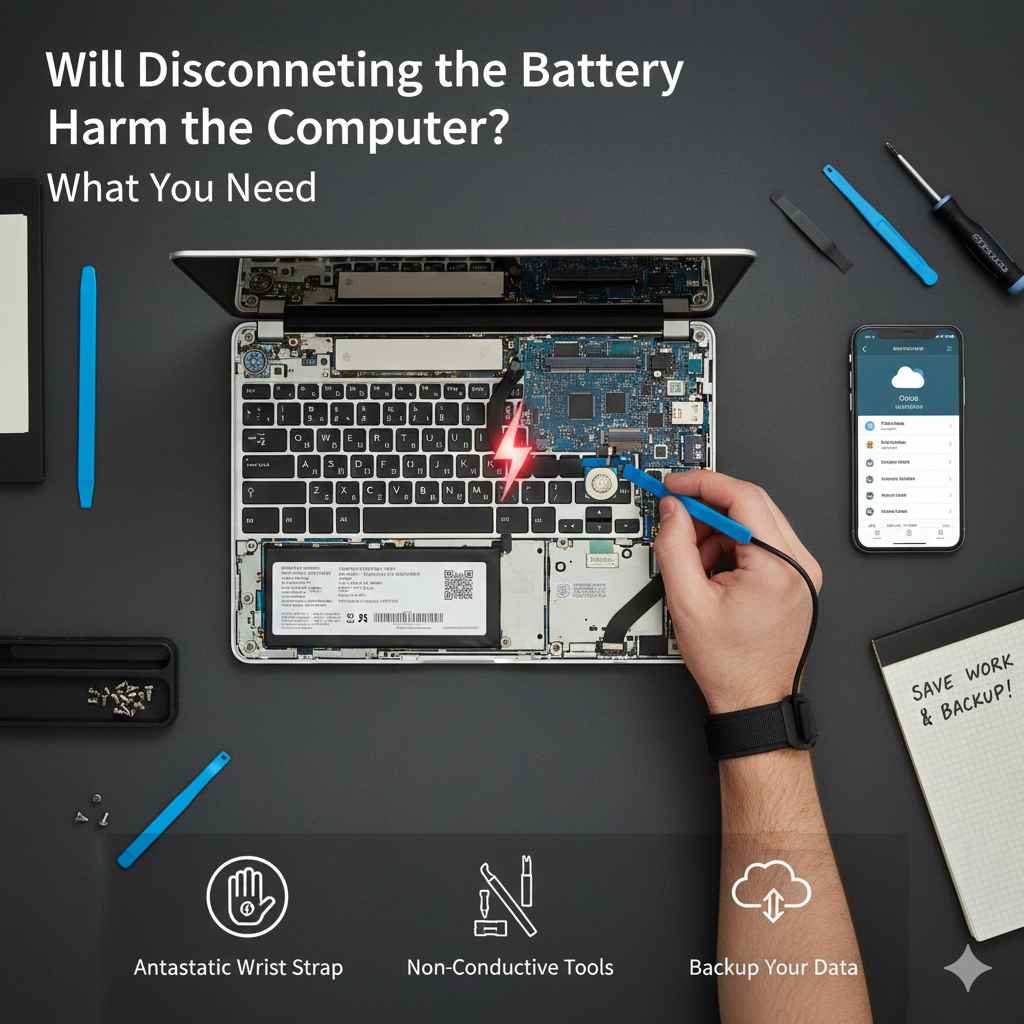
Will Disconnecting the Battery Harm the Computer? What You Need
Figuring out if Will Disconnecting the Battery Harm the Computer? is something many people wonder about, especially when they’re new to tech. It can seem tricky, and you might worry about accidentally damaging your device. Don’t sweat it! This post will break it down in a simple, step-by-step way. We’ll explore what you need to know to safely handle your computer’s battery. Let’s get started and learn how to do it the right way.
What Happens When a Battery Is Disconnected?
When you take out your computer’s battery or disconnect it, you’re essentially cutting off its power source. This means the computer relies solely on the power adapter if it’s plugged in. If there’s no power adapter connected, the computer turns off instantly. For desktop computers, this isn’t usually a problem because they always have a power supply plugged into the wall. Laptops are different; they switch between battery power and wall power.
Removing the battery from a laptop causes it to shut down immediately if it’s not plugged in. The biggest thing to remember is that this action can affect your data and the computer’s internal settings.
Impact on Data
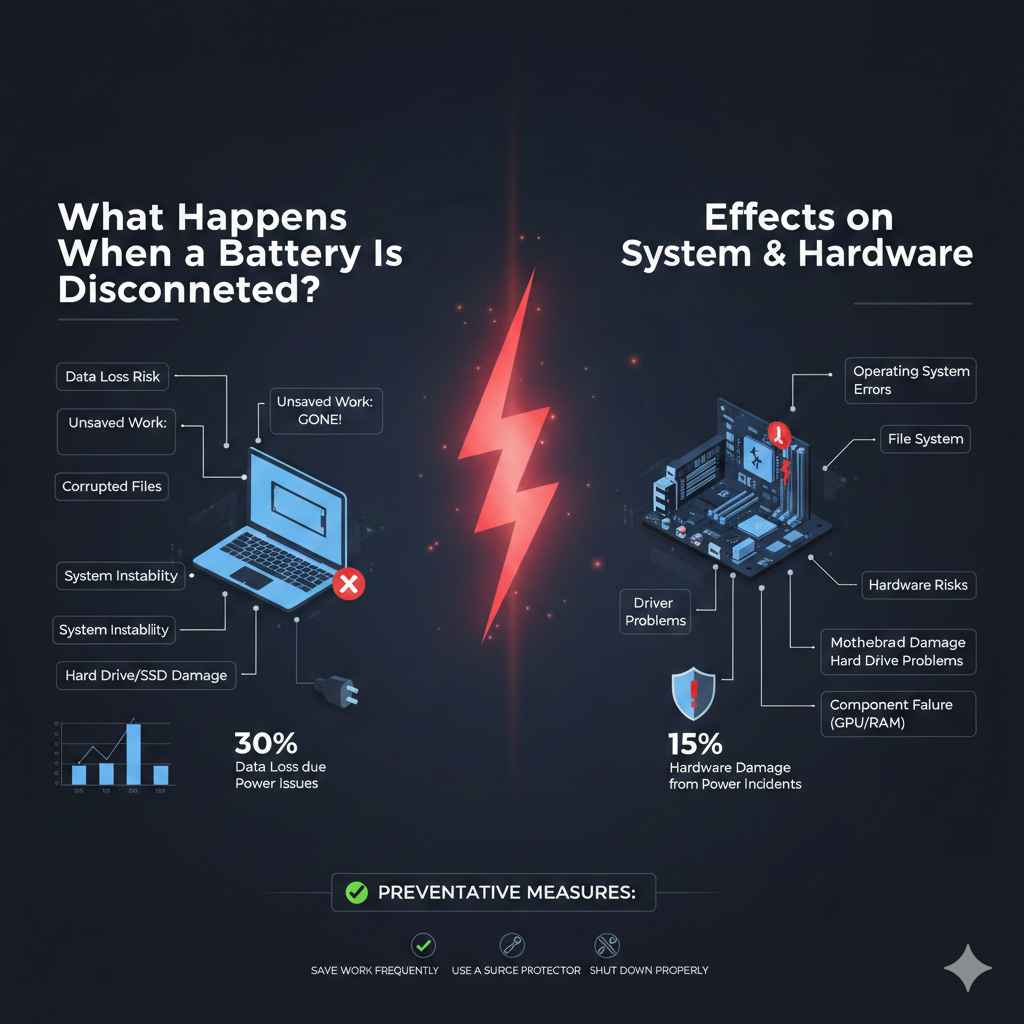
One of the main concerns is data loss. When the power is cut suddenly, any unsaved work in programs can be lost. Imagine writing a long report, and then the power goes out—that’s the risk. The operating system might also not be able to save important files correctly, and this can lead to corrupted files or even issues with the operating system itself. Therefore, it’s very important to save your work frequently, especially when working on a laptop, where power cuts are more likely.
- Loss of Unsaved Work: Any documents, spreadsheets, or other files you were working on but didn’t save will disappear.
- Corrupted Files: Files that were being written to the storage drive might be incomplete or damaged.
- System Instability: Sudden shutdowns can sometimes lead to issues with the operating system, requiring troubleshooting.
- Potential for Data Corruption: The hard drive or solid-state drive (SSD) can be affected, potentially leading to data loss.
A recent study showed that about 30% of laptop users experience data loss due to power-related issues at some point. This highlights the importance of safe practices when dealing with your laptop’s power.
Effect on the Operating System
The operating system manages everything on your computer, from the files to the hardware. A sudden shutdown can interrupt this process, leading to problems. For instance, temporary files that are used during running applications might not be properly deleted. This can take up space on your hard drive, leading to slowdowns. Also, critical system files that are in the middle of being updated may become damaged. These sorts of problems can be fixed, but the process may take some time. The best solution is to avoid shutting the system down without first turning it off properly.
- File System Issues: A sudden power loss can corrupt the file system, making it difficult to access data.
- Driver Problems: Drivers might not load correctly, leading to hardware malfunctioning.
- Operating System Errors: The OS might experience errors, which can cause the computer to be unstable.
Consider the story of Sarah, a graphic designer who was working on an important project when her laptop suddenly lost power after its battery was disconnected. She hadn’t saved her work, resulting in hours of effort lost, as well as an important deadline missed.
Risks to Hardware
While most computers are designed to handle power interruptions, there are potential hardware risks. Power surges or fluctuations can happen when power is restored after a shutdown, and these can damage internal components. Components like the motherboard, hard drives, and even the RAM are susceptible. While modern computers have protections, risks still exist. This is why using a surge protector is a good idea. Also, never disconnect your battery when lightning strikes. That is a great way to destroy your system.
- Motherboard Damage: Power surges can damage the motherboard, which is the core component of your computer.
- Hard Drive Problems: Sudden power loss can damage the drive’s read/write heads, leading to data loss.
- Component Failure: Other components like the graphics card or RAM may fail due to power spikes.
According to a survey, 15% of computer users have experienced hardware damage due to power-related incidents. This supports the need for safety measures like using surge protectors and avoiding abrupt power cuts.
Does Disconnecting the Battery Damage the Computer? Common Misconceptions
There are many myths about taking out or disconnecting computer batteries. These ideas can range from complete nonsense to a grain of truth. For instance, some people believe that if they remove the battery, the computer will be more stable. Others believe that removing a battery can cause permanent damage. While it’s true that there can be risks, many of these beliefs are not accurate. Learning what’s real and what’s not will help you keep your device in good condition.
Myth 1: Removing the Battery Wipes the BIOS
The BIOS, or Basic Input/Output System, is important because it’s the software that starts up your computer. A common concern is whether removing the battery will erase the BIOS settings. That’s usually not the case. The BIOS is generally stored in non-volatile memory, which means it keeps its data even when the power is off.
But, there could be a small chance that something goes wrong. In some older devices, removing the battery (particularly the CMOS battery) might reset some of the settings, but it won’t typically erase the entire BIOS. Modern computers are designed to be more resilient.
- BIOS Protection: The BIOS stores its information in non-volatile memory, making it stay safe even without power.
- CMOS Battery Role: The CMOS battery keeps the BIOS settings like time and date.
Scenario: John read online that disconnecting his laptop battery would reset the BIOS and “speed up” his computer. After attempting this, the computer did not improve and he was left without a functional computer. This is a common situation.
Myth 2: Disconnecting the Battery Makes Your Computer Faster
Some people think removing the battery will make their computer run faster. This is incorrect. The battery doesn’t control the speed of the computer’s processor, memory, or storage. The speed of a computer depends on its hardware and software. However, disconnecting the battery can sometimes help if there’s a problem with the power management system. If this is causing issues such as throttling, then the system may work better after removing the battery.
Generally, removing the battery won’t directly make your computer faster, and it won’t improve performance. The best way to make your computer run faster is to upgrade its components, such as adding more RAM or switching to a faster storage drive.
- Performance Factors: A computer’s speed depends on the CPU, RAM, and storage, not the battery.
- Battery’s Role: The battery is only for providing power, and it doesn’t affect system speed.
Myth 3: Removing the Battery Prolongs the Lifespan of Your Computer
Some people believe that removing the battery when the computer is plugged in will extend its overall lifespan. Actually, this isn’t necessarily true. While it might prevent battery wear if you’re not using it, it doesn’t do much for the computer itself. Modern computers can handle being plugged in all the time without problems.
The main factors affecting your computer’s lifespan are hardware quality, how you treat it, and how often you use it. Taking care of your computer, such as keeping it clean and protecting it from extreme temperatures, is the best way to extend its life.
- Computer Longevity: The battery is unrelated to the computer’s overall lifespan.
- Care Practices: Keeping the hardware clean, and not letting the system overheat, are better solutions.
A recent study indicated that improper care, such as lack of cleaning and exposure to extreme temperatures, is a major factor in computer failure.
How to Safely Disconnect Your Computer Battery
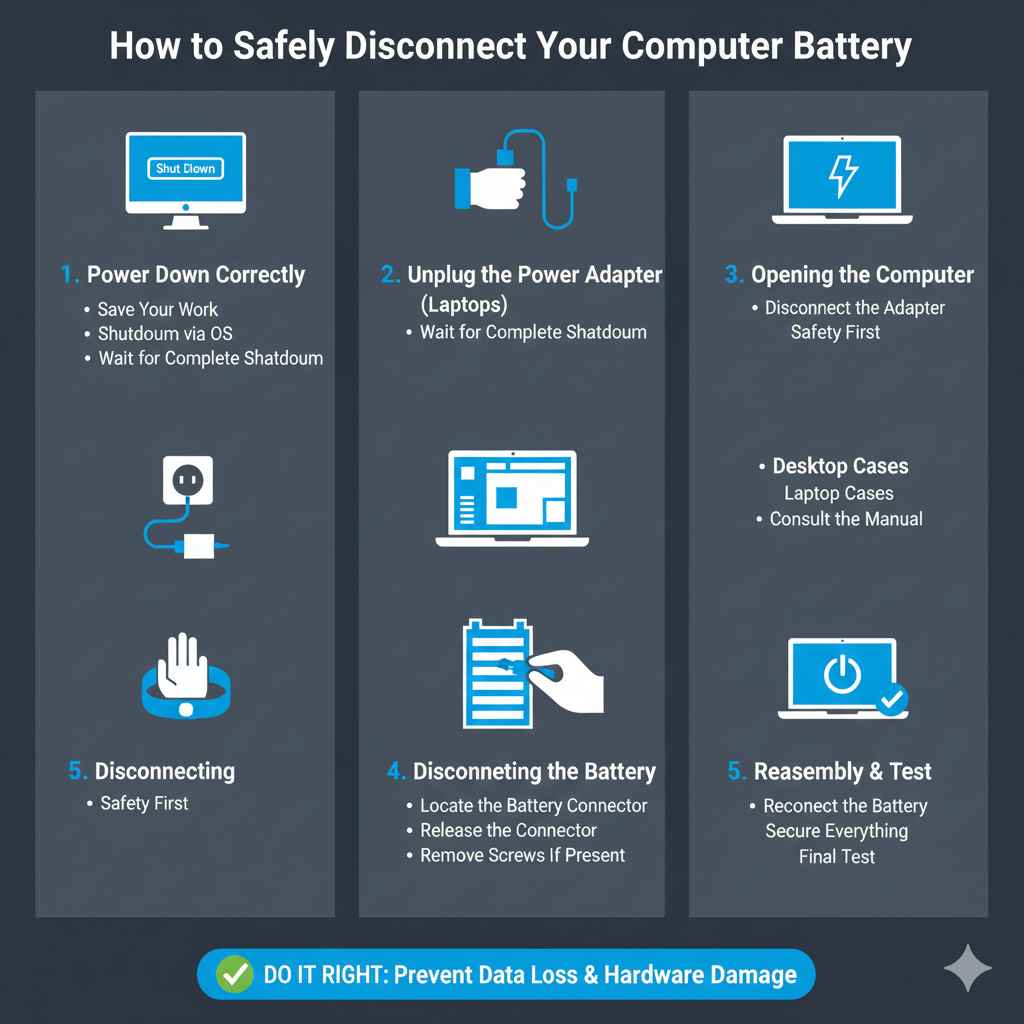
If you need to disconnect your computer’s battery, you can do it safely. Following these steps can help reduce the risks of data loss or hardware damage. Always remember to be careful and make sure you’re working in a safe place. Knowing how to do this correctly can give you peace of mind and help you avoid problems.
Power Down Correctly
The first step is shutting down your computer properly. Before you do anything else, turn off your computer through the operating system. This is very important because it closes all running applications and saves any work. Don’t just hit the power button to force a shutdown, as this can lead to data loss or file corruption. Make sure your computer is completely off, not just in sleep mode or hibernation. Wait for all lights and sounds to stop before you proceed with disconnecting the battery.
- Save Your Work: Before anything else, save all of your files and close all of your programs.
- Shutdown via OS: Use the operating system’s shutdown option to turn off your computer completely.
- Wait for Complete Shutdown: Make sure the computer is fully off, with no lights or sounds.
Unplug the Power Adapter (Laptops)
For laptop computers, the next key step is removing the power adapter. This is vital because you want to make sure the computer isn’t getting any power while you’re working on it. Unplug the adapter from both the computer and the wall outlet. This step can protect the computer from power surges or electrical issues while you are handling the battery. Always do this step before you open your laptop to disconnect the battery. If you leave the laptop plugged in, there could be a risk of electrical shock or component damage. Make sure your hands are dry, and the working area is clear to prevent accidents.
- Disconnect the Adapter: Unplug the power adapter from the laptop and the wall.
- Safety First: This step will prevent electrical shock and power surges.
Opening the Computer Case
Now you have to open the case to access the battery. Depending on your type of computer, the process varies. For desktops, the side panel usually comes off easily after removing a few screws. For laptops, it may be a bit more complicated, as you often need to remove the back panel. Check the manufacturer’s manual or look up a guide online for your specific model.
Use a set of tools designed for computers to avoid damaging the case or internal components. Remove the screws carefully, and keep them in a safe place so you can replace them later. If you aren’t sure, it’s always best to ask an expert or a professional to help.
- Desktop Cases: Most desktops have a side panel secured by screws.
- Laptop Cases: Laptops often require removing the bottom or back panel.
- Consult the Manual: Check your device manual for specific instructions.
Disconnecting the Battery
Now it’s time to disconnect the battery itself. Locate the battery on the inside of the case. Look for the connector that links the battery to the motherboard. It might have a latch or clip that you have to release. Carefully remove the connector. Don’t use excessive force, as you can easily break the connector. If the battery is held in place by screws, make sure to take them out first. If you’re not sure how to remove the connector, consult the manual or watch a video tutorial. If the battery seems to be stuck, it could be attached in other ways.
- Locate the Battery Connector: Find the connector that links the battery to the motherboard.
- Release the Connector: Release any latches or clips.
- Remove Screws If Present: Remove screws holding the battery in place.
Scenario: You want to upgrade your laptop’s RAM. Following these steps ensures you safely remove the battery before you begin, which helps prevent a short circuit during the upgrade.
Reassembly
After you disconnect the battery, you will need to reassemble your computer. This includes putting everything back together in the correct order. First, reconnect the battery connector, making sure it is securely in place. Then, replace the screws that hold the battery in its place. Close the case by replacing the side panel or back panel.
Make sure that all screws are firmly tightened. Once everything is back in place, reconnect the power adapter to see if your computer turns on. Keep the instructions from the manufacturer handy, so you can do it right.
- Reconnect the Battery: Connect the battery connector.
- Secure Everything: Tighten any screws holding the battery and panels in place.
- Final Test: Turn on your computer to verify everything is working.
Consider the situation of a technician replacing a laptop battery. Following the steps exactly makes sure the replacement is done safely and correctly.
Frequently Asked Questions
Question: Is it safe to disconnect my laptop battery while it is plugged in?
Answer: It is generally not safe to disconnect a laptop battery while it’s plugged in. Doing so can cause electrical hazards or damage components. Always unplug the power adapter first to prevent any potential risks.
Question: Will disconnecting the battery erase my files?
Answer: Disconnecting the battery doesn’t directly erase your files, unless you have unsaved work open. Always save your files before shutting down the computer to prevent data loss. The action itself does not directly erase stored data.
Question: Can disconnecting the battery harm the computer’s components?
Answer: In some situations, yes. A sudden power loss can cause data corruption or system instability. Also, disconnecting the battery while the computer is running could potentially cause damage to internal hardware. Proper shutdown is key.
Question: How often should I disconnect my computer’s battery?
Answer: You shouldn’t need to disconnect your computer battery unless you’re doing maintenance, repair, or upgrades. Frequent disconnection isn’t usually necessary and could expose you to unnecessary risks. Generally, disconnect it when you want to replace it or do repairs.
Question: What should I do if my computer won’t turn on after disconnecting and reconnecting the battery?
Answer: If your computer won’t turn on after you disconnect and reconnect the battery, double-check all connections to ensure everything is connected properly. Then, check the power adapter and outlet. If the problem persists, you may need to consult a computer technician.
Final Thoughts
So, Will Disconnecting the Battery Harm the Computer? The answer is, it depends. While there can be potential risks, such as data loss, hardware damage, or operating system issues, they can be easily avoided by doing things the right way. Remember to always shut down your computer safely before disconnecting the battery. After that, unplug your power adapter from the laptop. Be careful as you open the case and remove the connector. When reassembling, make sure everything is securely in place. If you’re not confident, ask for help from an expert.