Will Low Oil Cause a Car Not to Start? Full Diagnostic Guide
Yes, low oil can cause a car not to start, but usually only once the level drops far enough to trip an oil-pressure safety cutoff or throw off variable valve timing, not from a quart or two below full. Most engines still crank and fire on a single quart low; the real no-start threshold is closer to the pickup tube running dry. This guide breaks down the exact mechanical chain from oil pressure to ECU shutdown, the difference between low oil and no oil, and a one-quart test you can run in your driveway to confirm oil is really the cause before you call a tow truck.

A-Premium
A-Premium 2.0L Engine Oil Dipstick - 23.78…
- [Vehicle Fitment-1]: Compatible with Audi A3 2009-2013 L4 2.0L, A3 Quattro 2009-2013 L4 2.0L, A4 2009-2016 L4 2.0L, A4 Quattro 200…
- [Vehicle Fitment-2]: Compatible with Volkswagen Beetle 2012-2016 L4 2.0L, CC 2012-2016 L4 2.0L, fit for Jetta 2008-2009 L4 2.0L, f…
- [Reference Part Number]: 06J115611F, 06J115611E, 06J115611L, 06J-115-611-E, 06J-115-611-L, 06J-115-611-F
Before diving into the engine internals, it’s worth noting that checking your oil level accurately is the first step in any diagnosis. A reliable dipstick makes this easy. The A-Premium engine oil dipstick is a direct replacement for many Audi and VW 2.0L engines, offering a clear, stainless steel measuring rod. If your current dipstick is broken, faded, or hard to read, a new one removes any guesswork when you’re trying to determine if oil is your problem.
The Direct Yes, But Only in Specific Scenarios
Low oil alone won’t stop a healthy engine from cranking. The starter motor doesn’t care about oil pressure; it just needs battery voltage. The engine will turn over, the pistons will move, and the fuel pump will prime. The problem emerges when the engine’s computer (ECU) detects a condition that could cause catastrophic damage and refuses to fire the spark plugs or injectors.
There are three main ways low oil leads to a no-start condition: loss of oil pressure that affects variable valve timing, physical resistance from a seized or locking engine, and safety cut-offs triggered by oil pressure sensors. Each scenario feels different when you turn the key, which is why understanding the symptoms matters more than memorizing a single answer.
How Oil Pressure Physically Enables Engine Start
Modern engines rely on oil pressure for more than just lubrication. The entire valvetrain, including variable valve timing (VVT) systems, runs on hydraulic pressure supplied by the oil pump. When oil levels drop below the pickup tube, the pump sucks air instead of oil. Pressure plummets, and components that depend on that pressure stop working correctly.
The Role of VVT Solenoids and the ECU
VVT solenoids are small electro-hydraulic valves that adjust camshaft timing based on commands from the ECU. They need a steady supply of pressurized oil to move the phasers that rotate the camshaft. When oil pressure is too low, these solenoids can’t actuate. The camshaft stays in a default position, which might be safe for idle but is wrong for starting.
Here’s where the ECU steps in. It monitors camshaft position sensors and compares them to the crankshaft position. If the timing is too far off, the ECU assumes a mechanical failure and cuts fuel and spark to protect the engine. You’ll get a crank but no start, and often a check engine light with a code like P0010 or P0011. That’s the engine’s way of saying, “I can’t verify the timing, so I won’t risk destroying myself.”
Why Low Oil Causes Compression Loss
Oil also plays a starring role in compression. The piston rings rely on a thin film of oil to seal against the cylinder walls. With very low oil, that seal degrades. Compression drops, and the engine loses the ability to build enough pressure to ignite the air-fuel mixture.
You can test this yourself with a compression gauge, but the symptom is usually obvious: the engine cranks faster than normal. It sounds almost like there’s no resistance. A healthy engine has a rhythmic resistance as each cylinder builds compression. A low-oil engine spins freely, and that’s a bad sign.
The Critical Difference: Low Oil vs. No Oil
People use “low oil” to describe everything from a quart down to bone dry. Those are very different situations, and treating them the same leads to confusion. Here’s a breakdown of what happens at each level.
| Condition | Oil Level | Will It Start? | What Happens | Damage Risk |
|---|---|---|---|---|
| Low Oil | 1-2 quarts below full | Yes, usually | Starts but may run rough, tick, or trigger warning lights under load | Moderate; accelerated wear, VVT issues |
| Critically Low | 3+ quarts below full | Sometimes | May crank but not fire due to low pressure; VVT codes likely | High; bearing damage, cam wear |
| No Oil | Empty or below pickup | No | No oil pressure; ECU may cut fuel; engine may seize | Severe; engine seizure, rod failure |
Low Oil: Starts, Then Damages
If you’re just a quart low, the car will start. It might idle fine and only show symptoms under hard acceleration or on a hot day. The oil pressure light might flicker at idle, which is your first real warning. Continuing to drive like this causes gradual wear on bearings and cam lobes, but it won’t leave you stranded at a stoplight.
This is the insidious part. The engine starts, so you assume everything is fine. But oil starvation at low levels creates hot spots, especially in turbocharged engines. A turbocharger spins at over 100,000 RPM and relies entirely on oil for cooling and lubrication. Low oil can cook a turbo in a matter of miles.
No Oil: Hydraulic Lock and Seizure
An engine with no oil is a different animal. If the oil level is so low that the pump can’t draw any fluid, you get zero pressure. The ECU sees this and may trigger a fuel cut-off. But if the engine was already running when the oil ran out, the damage is already done.
Seizure happens when metal parts get hot enough to weld themselves together. Pistons expand in their bores, bearings spin, and the crankshaft stops turning. When that happens, the starter motor can’t turn the engine. You’ll hear a single loud click or a slow, grinding groan, then nothing. That’s not a battery problem; that’s a mechanical failure.
Hydraulic lock is rarer but possible. If oil fills a cylinder (from a failed turbo seal or overfilling), the piston can’t compress the liquid on the compression stroke. The engine stops dead. Trying to force it with the starter can bend a connecting rod.
Can Low Oil Cause Overheating That Leads to a No-Start?
Indirectly, yes. Oil doesn’t just lubricate; it also carries heat away from the pistons, bearings, and camshaft on its way back down to the pan, where it sheds some of that heat before recirculating. When the level drops, there’s less oil in circulation to absorb that friction heat, and what’s left heats up faster and breaks down sooner. More friction generates more heat, the thinner oil protects less, and the cycle feeds itself even though your radiator, thermostat, and water pump are working exactly as they should.
This is why a low-oil car can run hot without a single coolant symptom. Left long enough, that extra heat can bake bearing surfaces, cause a rod to seize, or warp a component enough that the engine won’t turn over at all, a separate failure path from the ECU-triggered no-start covered above. If you’re seeing a high temperature gauge and a no-start together, check the dipstick before you assume it’s a coolant leak or a failed thermostat.
Diagnostic Decision Tree: Is It the Oil or the Battery?
Before you drain your bank account on a tow, run through this quick checklist. It separates oil issues from the more common electrical culprits.
Symptom 1: Engine Cranks But Won’t Fire
The starter spins the engine at a normal speed, but it never catches. Check the oil pressure light on the dash. If it’s on or flashing, you’ve found a prime suspect. Also look for a check engine light. If it’s blinking, the ECU is likely seeing a misfire or timing issue. Grab a code reader if you have one; codes like P0010, P0011, or P0340 point directly to oil pressure-related VVT problems.
If the oil light is off and the engine cranks normally, the problem is more likely fuel or spark. Check for a clogged fuel filter or a dead fuel pump before you start adding oil.
Symptom 2: No Crank, Only a Click
A single click from the starter solenoid usually means the battery is weak or the connections are corroded. But a seized engine sounds similar. Here’s the difference: a dead battery gives you a rapid clicking sound (the solenoid chattering) or a slow, dying groan. A seized engine gives one solid click, then silence.
Test the battery first. Jump-start the car. If it still won’t crank, try turning the crankshaft bolt by hand with a breaker bar. If it won’t budge, the engine is locked up, and oil starvation is a likely cause.
Symptom 3: Slow, Labored Cranking
This is the trickiest one. Slow cranking points to a weak battery, a failing starter, or high mechanical resistance. High resistance can come from thick oil (wrong viscosity), but it can also come from early-stage bearing damage caused by low oil. The bearings are rough, creating friction that the starter has to overcome.
If the battery tests fine and the starter is healthy, suspect internal engine issues. Pull the dipstick and check the oil level and condition. If it looks like sludge or is dangerously low, that’s your answer.
The 60-Second Oil Check That Saves Your Engine
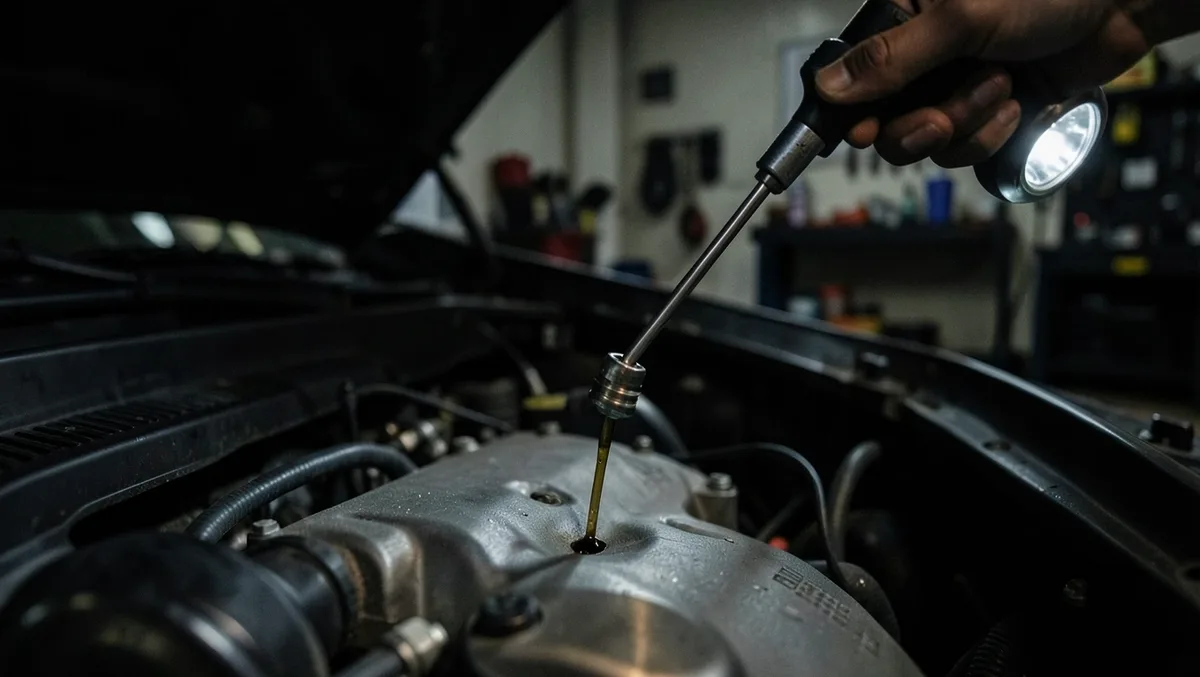
You don’t need a mechanic to check oil level. Park on level ground, wait a few minutes after the engine has been off, and pull the dipstick. Wipe it clean, reinsert it fully, and pull it out again. The oil should be between the min and max marks.
If it’s below the min mark, you’re low. If the dipstick comes out dry, you’re in serious trouble. Don’t start the engine. Add a quart of the correct viscosity oil (check your owner’s manual, usually 5W-30 or 0W-20 for modern engines) and recheck. This simple habit catches problems before they become catastrophic.
If your dipstick is cracked or the markings are worn off, replacing it is a cheap fix. A clear, accurate dipstick takes the guesswork out of this check.
Emergency Fix: The “One Quart Test” to Confirm Diagnosis
So the engine cranks but won’t start, and you suspect oil. Here’s a safe, definitive test. Add one quart of the correct oil through the filler cap. Wait a minute for it to drain into the pan, then try to start the engine.
If it fires up, you’ve confirmed low oil was the problem. The added oil raised the level enough for the pump to pick up fluid and build pressure. The VVT system can now actuate, the ECU sees correct timing, and it allows ignition.
If it still won’t start, you’ve ruled out low oil as the cause. Don’t keep adding oil; overfilling causes its own problems, including foaming and seal damage. Move on to checking fuel and spark.
This test works because it directly addresses the mechanical failure point. It’s not a permanent fix, though. If the engine was low enough to cause a no-start, it needs an oil change and an inspection for underlying issues like oil consumption or a leak.
Modern Safety Systems: Why Your Car Refuses to Start
Modern cars have layers of protection that older vehicles lack. The oil pressure sensor is a simple switch that closes when pressure drops below a threshold, usually around 5-10 psi at idle. When it closes, the ECU receives a signal. In many vehicles, the ECU uses this signal to cut fuel delivery to prevent engine damage.
This is a deliberate design choice. A car that won’t start is annoying, but a car that throws a rod through the block at 70 mph is dangerous. The ECU would rather strand you in a parking lot than let you destroy the engine.
Some vehicles also have a low oil level sensor in the pan, separate from the pressure sensor. If the level drops below a certain point, the ECU may limit engine speed or refuse to start. This is more common in luxury and performance cars, but it’s becoming standard across the industry.
If you’re dealing with a no-start and the oil pressure light is on, the system is doing exactly what it was designed to do. Don’t bypass it. Fix the oil level.
Other No-Start Culprits That Mimic Oil Issues
Oil isn’t the only thing that prevents starting, and it’s important not to tunnel-vision on it. Here are the usual suspects that produce similar symptoms.
- Battery: Low voltage or a dead cell. Check with a multimeter; should read 12.6 volts or higher.
- Starter motor: A worn solenoid or burnt brushes. Listen for a click but no engagement.
- Fuel pump: A failed pump means no fuel pressure. You’ll get a crank but no fire.
- Crankshaft position sensor: The ECU uses this to time ignition. If it fails, no spark.
- Immobilizer: A chipped key that isn’t recognized. The engine cranks but won’t start.
Each of these has a distinct diagnostic path. The oil check is just the first and cheapest test. If you want to dig deeper into the broader topic of oil-related starting failures, the oil-related no-start guide covers additional scenarios. For a related but different fluid issue, check out how low transmission fluid affects movement, since it’s a common point of confusion.
Prevention: The 3,000-Mile Rule vs. Synthetic Intervals
The old 3,000-mile oil change interval is outdated for most modern vehicles. Synthetic oils and improved engine designs have extended intervals to 5,000, 7,500, or even 10,000 miles. But those intervals assume normal driving conditions and no leaks.
The real rule is simpler: check your oil level at every other fuel fill-up. It takes a minute and costs nothing. If you’re burning oil (common in turbocharged engines), you’ll catch it early. If you have a slow leak, you’ll see the level drop before the warning light comes on.
The warning light is a last-resort alarm, not a maintenance reminder. By the time it illuminates, the pressure is already critically low. Relying on it is like waiting for the smoke alarm to tell you dinner is ready.
FAQs: Seized Engines, Overheating, and Warning Lights
Can adding oil to a seized engine fix it?
No. If the engine is seized, the damage is mechanical. Pistons are welded to cylinder walls or bearings have spun. Adding oil won’t un-seize it. You need a rebuild or a replacement engine.
Will the oil pressure light come on before the engine stops?
Usually, yes. The light triggers at low pressure, which happens before a complete seizure. But at high RPM, the time between the light coming on and catastrophic failure can be seconds. If the light comes on while driving, pull over and shut the engine off immediately.
Is it safe to drive with the oil light on?
No. Driving with the oil pressure light on is gambling with your engine. The light means pressure is too low to protect the bearings. Every mile you drive causes more wear. Stop the car and get it towed.
How much oil is too low to start?
There’s no exact number because it depends on the engine design and oil pan shape. Generally, if the dipstick is below the min mark, you’re in risky territory. If it’s completely dry, don’t attempt to start the engine.
Can a clogged oil filter cause a no-start?
Yes, indirectly. A severely clogged filter can restrict oil flow to the point where pressure drops. This triggers the same VVT and safety cut-off issues as low oil. It’s rare, but it happens, especially if the filter hasn’t been changed in a very long time.
Can Low Oil Cause My Engine to Overheat?
Yes. With less oil circulating, there’s less fluid to carry heat away from the pistons, bearings, and camshaft, so those parts run hotter and the oil itself breaks down faster. It’s a different heat source than a coolant leak or a bad thermostat, and in severe cases it can bake bearing surfaces or seize the engine before you ever see a coolant warning.
What Does an Oil Startup Mean When Working on a Car?
In shop terminology, an oil startup, or pre-oiling, means priming the engine’s oil galleries and bearings with pressurized oil before the first crank after an engine build, a major teardown, or long-term storage. Mechanics do this with a pre-oiler tool, or by disabling the ignition and cranking in short bursts to build oil pressure before the engine actually fires, so the bearings aren’t spun dry on that first start. It’s a preventive shop step, not something that happens automatically every time you turn the key.
Bottom Line: When to Call a Tow Truck
Here’s the practical takeaway for your specific situation.
- If the engine cranks normally but won’t start, and the oil light is on, add a quart and try again. If it starts, you’ve found the problem.
- If the engine won’t crank and you hear one solid click, check the battery first. If the battery is good, the engine may be seized.
- If the engine cranks slowly, check the oil level and condition. Thick, sludgy oil or low level means internal damage is possible.
- Never rely on the oil pressure light as your only warning. Check the dipstick regularly.
- If you’ve added oil and the car still won’t start, stop diagnosing and call a professional. You’ve ruled out the cheap fix.
- After a low-oil no-start, get the car towed to a shop. The engine needs a full oil change and an inspection for leaks or consumption issues.
- For related reading on how low oil affects a running engine, the stalling behavior guide explains the next stage of the problem.
Low oil is a preventable problem. A minute of checking the dipstick every week saves you from a tow truck, a rebuild, or a new engine. Treat it like checking your phone battery before a long drive, because the consequences of ignoring it are far worse.
Products related to this article
Sponsored / affiliate links. As an Amazon Associate I earn from qualifying purchases. I may earn additional commission from eligible campaigns.