Can Low Oil Cause Car to Jerk: Signs, Causes & Solutions
Yes. Low oil can make a car jerk, and a flashing oil light, knocking, or loss of power means stop driving immediately. Ignoring it can turn a simple top-off into bearing damage, seizure, or a dead engine. This guide separates low oil level from low oil pressure, shows non-oil lookalikes, and gives a symptom-to-action checklist.
Can low oil make a car jerk?

Yes. Low engine oil can cause jerking during acceleration, especially when the oil level drops far enough to reduce lubrication. But jerking does not automatically mean low oil, and it does not always mean the same thing as low oil pressure. Those two faults are related, but they are not the same diagnosis.
Low oil level versus low oil pressure
Low oil level means there is not enough oil in the sump, which you can confirm directly on the dipstick on most cars. Low oil pressure means the engine is not building or maintaining enough pressure to move oil through critical parts, which can happen even when the dipstick looks normal. A red oil pressure warning light means stop and switch off the engine.
That difference matters. A low level may be corrected with the right oil, but persistent low pressure points to a problem such as a worn oil pump, a clogged filter, or internal wear. If the oil pressure light comes on while driving, do not keep going to “see if it clears.”
When jerking points to lubrication trouble
Oil-related jerking often shows up under load, during acceleration, or when the engine is hot. Low oil can cause rough idle, hesitation, tapping, knocking, and overheating. Some engines, especially those that depend on oil pressure for variable valve timing, may hesitate or idle poorly before they set a warning light.
When jerking points elsewhere
Jerking during acceleration more often points to ignition, fuel, air, or transmission faults. Worn spark plugs can misfire under load. A weak fuel pump or dirty injector can cause hesitation. A slipping transmission or worn clutch can feel like an engine jerk during gear changes even when the oil level is fine.
Jerking + oil clues decision table
| Symptom pattern | Likely cause | Immediate risk level | First check | Next action |
|---|---|---|---|---|
| Jerk on acceleration | Low oil level, spark plugs, fuel delivery, or transmission load issue | Moderate | Check oil level on level ground with engine off | Top up if below MIN; if level is normal, inspect ignition and fuel |
| Rough idle | Low oil pressure, variable valve timing fault, misfire, or air leak | Moderate to high | Check for warning lights and listen for tapping or knocking | Do not ignore persistent idle shake; scan for faults and inspect oil pressure |
| Gear-change jerk | Transmission or clutch shudder | Moderate | Note whether the jerk happens only during shifts | Have the transmission or clutch checked before assuming an oil problem |
| Jerk with red oil light | Low oil pressure | Critical | Stop immediately and switch off the engine | Do not restart until the cause is found |
| Knocking plus jerk | Severe lubrication problem, bearing wear, or oil starvation | Critical | Shut the engine off | Do not drive; towing is the safe choice |
| Normal dipstick but oil light on | Low oil pressure, oil pump wear, or clogged filter | Critical | Do not rely on the dipstick alone | Stop driving and diagnose pressure, not just level |
| Hot-engine jerk | Oil thinning, low oil level, or VVT sensitivity on some engines | Moderate to high | Check oil level and note whether the problem appears after warm-up | Inspect for low level, wrong grade, or pressure loss |
| Jerk after recent oil top-up | Overfill, wrong oil grade, or unrelated fault | Moderate | Recheck the level against MIN and MAX | Drain excess oil if overfilled; if level is correct, look for another cause |
| Do not drive threshold | Red oil pressure light, loud knocking, or worsening rough running | Critical | Stop the engine now | Tow the vehicle |
| Safe to inspect threshold | Minor jerk with no warning light and no knocking | Lower | Check level, grade, and for leaks | Inspect carefully before any short, low-speed move |
What low oil does to engine behavior
Motor oil lubricates moving parts, carries heat away from them, and helps the engine run smoothly. When the level falls too low, metal parts lose their oil film and friction rises. That can create roughness, hesitation, and in severe cases engine seizure. Low oil can also lead to overheating.
Lubrication loss and friction
With less oil available, the oil pump may struggle to feed all the passages, especially during hard acceleration, cornering, or braking when oil sloshes away from the pickup. That is one reason low oil can show up as jerking under load before the engine sounds obviously damaged.
Heat buildup and rough running
Oil does more than reduce wear. It also helps carry heat away from internal parts. When oil level or pressure drops, temperature rises and the engine can start to feel rough, hesitate, or stumble. Bad oil can also lead to shaking, knocking, overheating, and misfire-related roughness.
Why some engines hesitate more when oil is low
Some engines use oil pressure to control variable valve timing. If the oil is low, the wrong grade, or breaking down, the system can react slowly and cause hesitation or a poor idle. That is why a low-oil symptom can look like a drivability fault instead of a simple fluid issue.
Say your sedan starts to jerk when you merge onto a highway after a long uphill climb. The engine is hot, the jerk appears under load, and the dash oil light stays off. That pattern makes low oil level or oil-grade trouble more likely than a transmission fault, but it still needs a level check before anything else.
What signs point to low oil?
Look for a red oil pressure light, knocking or tapping, a dipstick reading at or below MIN, and rough running that gets worse as the engine warms up. The most urgent sign is the red oil can symbol while driving. That means low oil pressure, not a casual reminder to top up later.
Red oil can warning light
The red oil pressure warning light means stop and switch off the engine. It does not mean “add oil at the next gas station” while you keep driving. A red oil pressure warning can mean low pressure even if the dipstick is normal.
Knocking, tapping, or rough idle
Low oil pressure can affect lubrication and engine behavior, and it may show up as knocking, tapping, or rough running. Loud knocking is especially serious. If the engine starts knocking, shut it off immediately; continuing to run it can push minor damage into a failed engine.
Dipstick reading at or below MIN
The dipstick is the direct way to confirm low oil on most vehicles. The oil should normally sit between the MIN and MAX marks. If it is at or below MIN, you may be dealing with a low level, but that still does not rule out a pressure problem if the warning light is on.
Hot-engine hesitation or stalling
A hot engine that begins to hesitate, stall, or jerk after warm-up can point to low oil, wrong viscosity, or oil-pressure-sensitive valve timing. It can also point elsewhere. Use the symptom pattern to decide whether the car needs a simple oil check or immediate shut-down.
How do you check oil the right way?
Check the oil on level ground with the engine off. Use the dipstick if the car has one, or follow the owner’s manual for the electronic oil-level display if it does not. Wipe the dipstick clean, reinsert it fully, then read it again before deciding whether to add oil.
Use the dipstick or the car’s electronic display
Some cars use an electronic oil level check instead of a dipstick. If so, follow the owner’s manual rather than guessing. If your car has a dipstick, use it as the direct reading. A dirty or partial pull can give a false result, so clean and reinsert it before reading.
Read the MIN and MAX marks correctly
The level should normally fall between MIN and MAX. If it is close to MIN, add oil gradually and recheck. If it is above MAX after topping up, remove the excess. Overfilling is not a harmless buffer; too much oil can create its own problems.
Top up gradually with the correct grade
Add the manufacturer-specified grade, and add it in small amounts rather than dumping in a full bottle. Recheck after each small top-up. That keeps the level from overshooting MAX and helps you avoid confusing an overfill problem with the original jerk.
Avoid overfilling
A common first-timer mistake is adding oil until the dipstick reads far above MAX, then assuming the issue is solved. Overfilled oil can foam, aerate, or create drivability problems of its own. If the level is only slightly low, a careful, gradual top-up is better than a fast fill.
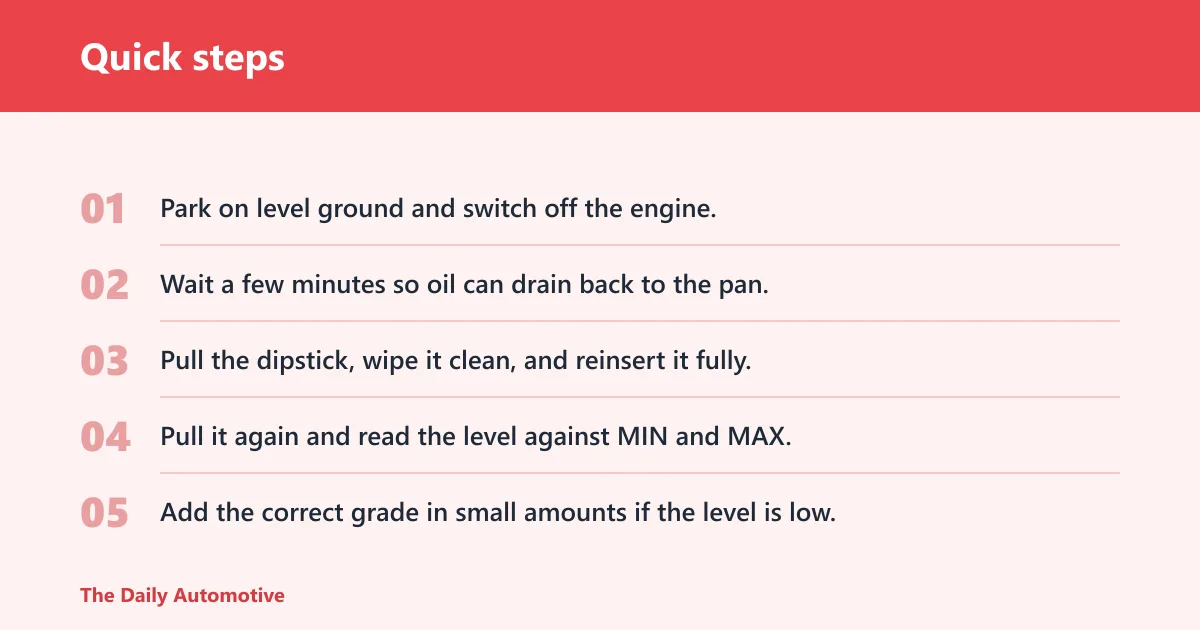
- Park on level ground and switch off the engine.
- Wait a few minutes so oil can drain back to the pan.
- Pull the dipstick, wipe it clean, and reinsert it fully.
- Pull it again and read the level against MIN and MAX.
- Add the correct grade in small amounts if the level is low.
- Recheck after each top-up and stop at the proper mark.
Suppose a compact SUV takes 0.5 quart to move the dipstick from just below MIN to the middle of the safe range. That is the kind of small, gradual adjustment you want. If the warning light is red or the engine is knocking, though, checking the level is no longer the main task.
What else can feel like low-oil jerking?
Several faults can mimic low-oil jerking. Spark plugs are a common one. Fuel delivery problems can cause hesitation under load. Transmission or clutch issues often show up during gear changes. On some engines, variable valve timing faults can overlap with oil-related symptoms and make diagnosis less obvious.
Spark plugs and misfire
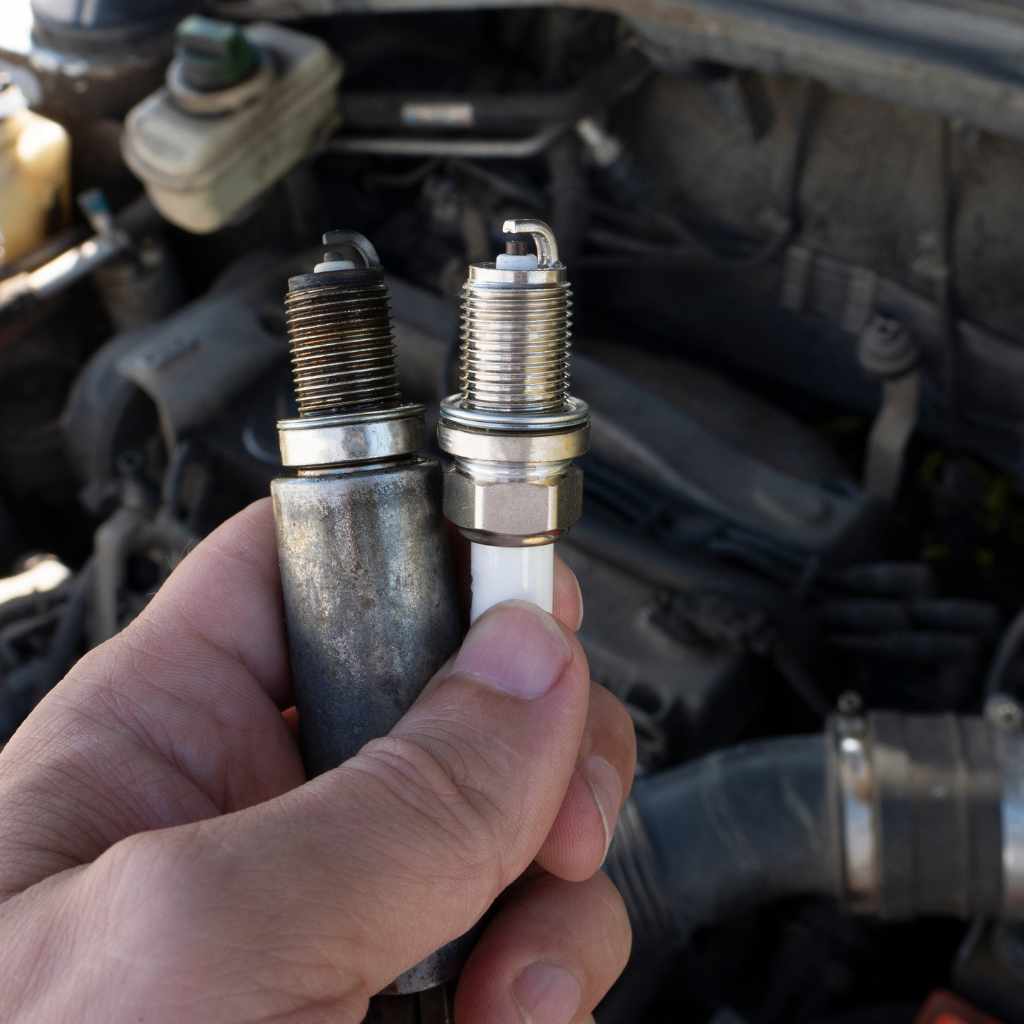
Worn or fouled spark plugs can misfire, especially during acceleration. That can feel like a jerk, stumble, or brief loss of power. If the oil level is normal and there is no oil pressure warning, ignition parts move higher on the list.
Fuel delivery problems
Fuel injectors and the fuel pump can mimic oil-related jerking. A weak fuel supply often shows up as hesitation under load, surging, or a flat spot when you press the accelerator. That pattern can look like low oil, but the fix path is different.
Transmission or clutch shudder
If the jerk happens mainly during gear changes, the transmission or clutch may be the real source. Worn components can feel like the engine is lurching even when the engine itself is fine. A level oil check will not cure a slipping clutch.
Variable valve timing faults
Some engines depend on oil pressure to move cam phasers and control timing. Low oil pressure can cause hesitation, rough idle, or fault codes that look like a sensor issue. If the level is correct but the symptoms persist, pressure and VVT diagnostics become more important than simply adding oil.
Frequently asked questions
Can low oil cause a car to jerk while accelerating?
Yes. Low engine oil can cause jerking during acceleration, especially if the oil level drops too far for proper lubrication. But acceleration jerk more often points to ignition, fuel, air, or transmission faults, so a level check should be the first step, not the only one.
How do I know if jerking is from low oil or a misfire?
Check the oil level first. If it is at or below MIN, low oil is a real possibility. If the level is normal and the jerk feels strongest during acceleration, a misfire from spark plugs, coils, or fuel delivery becomes more likely. A red oil light changes the answer completely.
Is it safe to drive if my car jerks and the oil light is on?
No. The red oil pressure warning light means stop and switch off the engine. Do not keep driving to “make it home.” If the engine is jerking and the oil light is on, the safest move is to shut it down and tow it.
What should I do first if my car starts jerking?
Look for the oil pressure light, then check whether the engine is knocking or running rough. If the red oil can symbol is on, stop immediately. If there is no warning light, check the oil level on level ground with the engine off before assuming the problem is only fuel or ignition.
Will adding oil fix a car that jerks?
It may, if the jerk comes from a low oil level. But adding oil is not a universal fix. If the level is already correct, if the light stays on, or if the jerking continues after topping up, the problem may be low oil pressure, overfill, or a non-oil fault.
Can low oil pressure cause rough idle or stalling?
Yes. Low oil pressure can cause rough idle, hesitation under load, and stalling on some engines, especially where variable valve timing depends on oil pressure. If the dipstick reads normal but the red oil light is on, do not assume the engine is safe; pressure diagnosis is needed.
Products related to this article
Sponsored / affiliate links. As an Amazon Associate I earn from qualifying purchases. I may earn additional commission from eligible campaigns.