Will My Car Battery Die Charging Phone Engine Off?
Many car owners wonder, “Will my car battery die charging phone engine off?” It’s a common worry, especially for those new to driving. You see your phone battery getting low, and the car is right there. It seems like a simple solution to plug in, but you hesitate.
Will you drain your car’s power and be stuck? Don’t worry, this guide breaks it down simply. We’ll explain exactly what happens and how to avoid any trouble, step by step.
Understanding Your Car Battery and Phone Charging
This section explains how your car’s electrical system works when the engine isn’t running and how charging your phone affects it. We’ll look at the battery’s role and the power draw from your phone charger.
The Car Battery’s Purpose
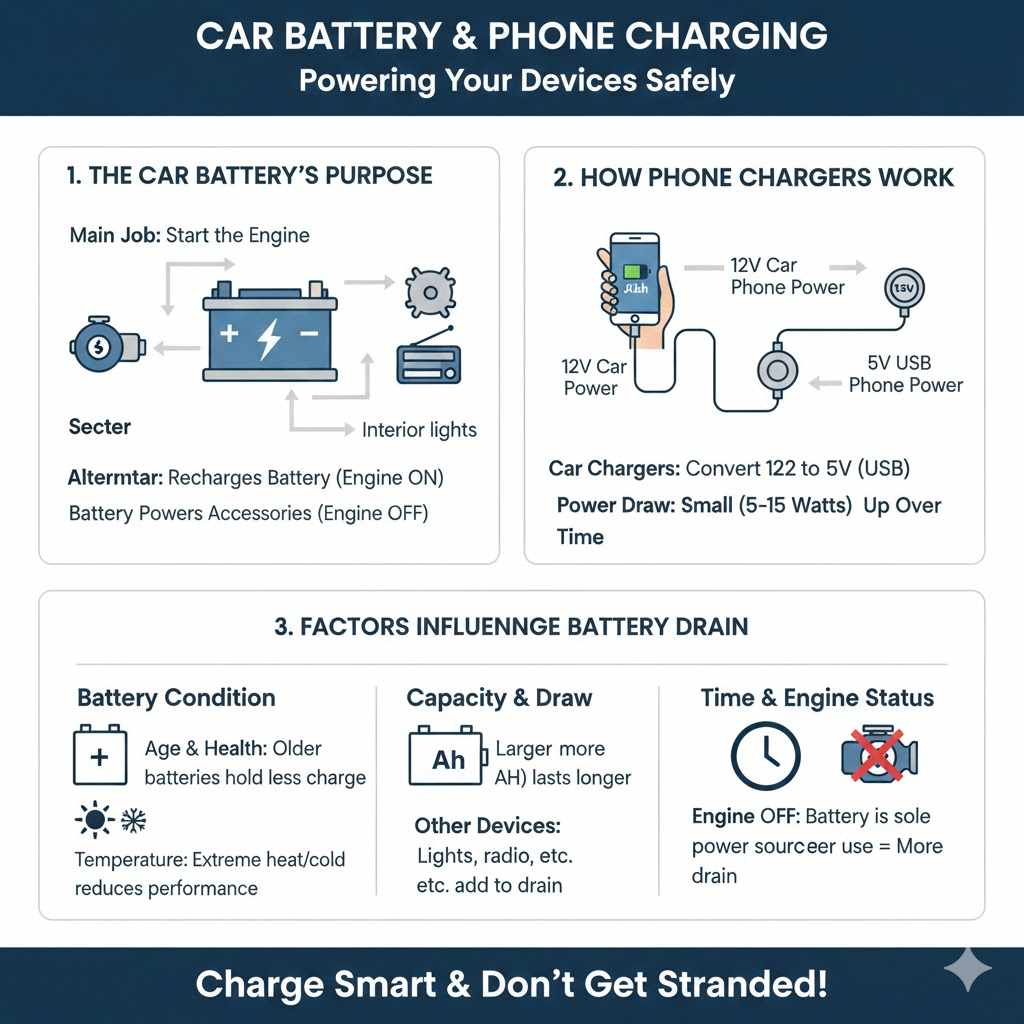
Your car battery is a rechargeable power source. Its main job is to start the engine. It sends a surge of electricity to the starter motor to get the engine turning.
Once the engine is running, the alternator takes over. The alternator generates electricity to power the car’s systems and recharge the battery.
When the engine is off, the battery is the sole provider of electrical power. It runs things like the interior lights, radio, and any accessories you might plug into a power outlet. This is why leaving these items on for too long with the engine off can drain the battery.
How Phone Chargers Use Power
Charging a smartphone or other portable device uses a small amount of electricity. Car chargers, often called cigarette lighter adapters or 12V adapters, convert the car’s 12-volt power into the 5-volt USB power needed by your phone. This conversion process itself requires energy.
The amount of power a phone charger uses is generally quite low. Most standard USB chargers draw between 5 to 15 watts. This is much less than what your headlights or radio consume.
However, even a small draw adds up over time.
Battery Drain Factors
Several factors influence how quickly your car battery drains. The age and condition of the battery are crucial. An older battery might not hold a charge as well as a new one.
The temperature outside also plays a role; extreme heat or cold can impact battery performance.
The capacity of your battery, measured in amp-hours (Ah), determines how much energy it can store. A larger capacity battery can power devices for longer before becoming significantly depleted. Also, other devices that might be drawing power simultaneously, even subtly, can contribute to the drain.
Will My Car Battery Die Charging Phone Engine Off?
This is the core question. We will explore the likelihood of your car battery dying just from charging a phone with the engine off. We will discuss how long you can safely charge your phone and the specific conditions that increase risk.
Battery Capacity and Phone Charging Time
Car batteries typically have a capacity ranging from 40 to 60 amp-hours (Ah). A typical smartphone charger might draw around 1 to 2 amps (A) at 12 volts. Let’s do a quick calculation.
If your battery is 50 Ah, and your charger draws 1 A, theoretically, it could power that draw for 50 hours.
However, this is an oversimplified view. You never want to drain a car battery completely. Discharging a lead-acid battery below 50% can significantly shorten its lifespan.
So, the practical limit is much less than the theoretical maximum.
Real-World Scenarios and Risks
In most everyday situations, charging your phone for an hour or two with the engine off will not kill your battery. The power draw is simply too small compared to the battery’s overall capacity.
The risk increases if:
- Your car battery is old or weak.
- You have multiple devices charging simultaneously.
- Other electrical accessories (like interior lights, radio left on) are also drawing power.
- You are charging for a very extended period, like overnight.
For example, imagine you are at a campsite and want to charge your phone. If you just plug it in for an hour while reading a book with a small reading light on, you are unlikely to have issues. However, if you do this for several hours, especially if the battery isn’t in peak condition, you might struggle to start your car later.
Estimating Safe Charging Times
As a general rule of thumb, most healthy car batteries can handle charging a phone for several hours without significant impact. Think of it this way: a car battery powers your car’s lights for a while if needed. Charging a phone is a much smaller load.
If your battery is in good shape, charging your phone for up to 3-4 hours should be perfectly fine. Beyond that, you might want to consider running the engine for a bit to let the alternator recharge the battery, or at least to give it a boost.
Factors Affecting Battery Health When Charging
Several elements can influence how much stress charging your phone puts on your car battery. Understanding these factors helps you make informed decisions about when and how long to charge.
Battery Age and Condition
The performance of your car battery degrades over time. A battery that is 5 years old will not hold a charge as effectively as a brand-new one. Older batteries have a reduced capacity and are more susceptible to being drained by small loads like a phone charger.
Regular battery checks at a mechanic can reveal its health. If your battery is nearing the end of its typical lifespan (usually 3-5 years), you should be more cautious about draining it, even with small devices.
Temperature Extremes
Both very hot and very cold temperatures can negatively impact battery performance. In extreme cold, chemical reactions inside the battery slow down, reducing its power output and capacity. In extreme heat, batteries can degrade faster.
If your car has been sitting in the freezing cold for hours, its ability to provide power will be diminished. Charging your phone in such conditions puts more strain on an already weakened battery. Similarly, a battery that’s been baking in the sun might not be as robust.
Other Electrical Loads
Your car’s electrical system has many components. When the engine is off, the battery powers things like the clock, alarm system, and any residual power used by electronics. If you have an aftermarket stereo or other add-ons, they might also draw a small amount of power.
So, while charging your phone is a specific load, it’s not the only one. If you also have interior lights on, or the radio was left playing for a while, the total drain on the battery is higher. This cumulative effect can hasten battery depletion.
Best Practices for Charging Your Phone
To ensure you don’t run into trouble, following a few simple practices can make all the difference. These tips help protect your battery while still allowing you to charge your devices.
Monitor Your Battery’s Status
If you are concerned about your battery, it’s wise to get it tested periodically. Many auto parts stores offer free battery testing. Knowing its general health can give you peace of mind.
You can also observe your car’s starting behavior. If it sounds slow to crank the engine, that’s a sign the battery might be weakening. In such cases, it’s best to avoid unnecessary drains.
Limit Charging Time When Engine Is Off
The most straightforward advice is to limit how long you charge your phone with the engine off. For short periods, like 30 minutes to an hour, it’s generally safe for most healthy batteries. If you need to charge for longer, consider running the engine periodically.
A good practice is to start the engine for 15-20 minutes every couple of hours if you plan to stay in the car for an extended period and need to charge your phone. This allows the alternator to replenish some of the battery’s charge.
Use a Quality Car Charger
Not all car chargers are created equal. A cheap, low-quality charger might be less efficient or could even draw more power than it should. Investing in a reputable brand can ensure it’s designed to draw power appropriately.
Some modern car chargers also have features like smart charging, which adjusts the power output based on the device’s needs, potentially being more efficient.
What To Do If Your Battery Dies
Sometimes, despite best efforts, a car battery can die. Knowing what to do in that situation is essential. We’ll cover the common solutions for a dead car battery.
Jump-Starting Your Car
The most common solution is to jump-start your car. This involves using jumper cables to connect your car’s battery to the battery of another vehicle. The running engine of the other car provides the power needed to start your engine.
It’s important to follow the correct procedure for jump-starting to avoid damage to either vehicle’s electrical system. Always connect the positive terminals first, then the negative terminals, and ensure the cables don’t touch each other or any other metal parts of the car.
Here are the general steps for jump-starting:
- Park the working vehicle close enough to yours so the jumper cables can reach both batteries.
- Turn off both engines and all electrical accessories in both cars.
- Attach one red (positive) clamp to the positive (+) terminal of the dead battery.
- Attach the other red clamp to the positive (+) terminal of the good battery.
- Attach one black (negative) clamp to the negative (-) terminal of the good battery.
- Attach the final black clamp to an unpainted metal surface on the engine block or chassis of the car with the dead battery, away from the battery itself. This acts as a ground.
- Start the engine of the working vehicle and let it run for a few minutes.
- Try to start the engine of the car with the dead battery.
- Once it starts, let both engines run for a few minutes.
- Carefully disconnect the jumper cables in the reverse order they were connected, ensuring they don’t touch.
Using a Portable Jump Starter
Portable jump starters are compact, battery-powered devices that can provide enough power to start a car without needing another vehicle. They are a convenient option for many drivers.
These devices often come with built-in cables and indicator lights to guide you through the process. They are a great tool to keep in your trunk for emergencies. Make sure to keep the portable jump starter charged.
When to Call for Professional Help
If you are unsure about jump-starting, or if jump-starting does not work, it’s time to call for roadside assistance or a towing service. They have the expertise and equipment to diagnose the problem and get you back on the road.
Sometimes, a dead battery is a symptom of a larger issue, like a faulty alternator or a wiring problem. Professionals can identify and fix these underlying causes. They can also replace your battery if it’s no longer functional.
Battery Drain Statistics and Real-World Data
Understanding common battery drain scenarios can offer valuable perspective. Statistics from automotive studies highlight typical power consumption patterns and battery lifespan.
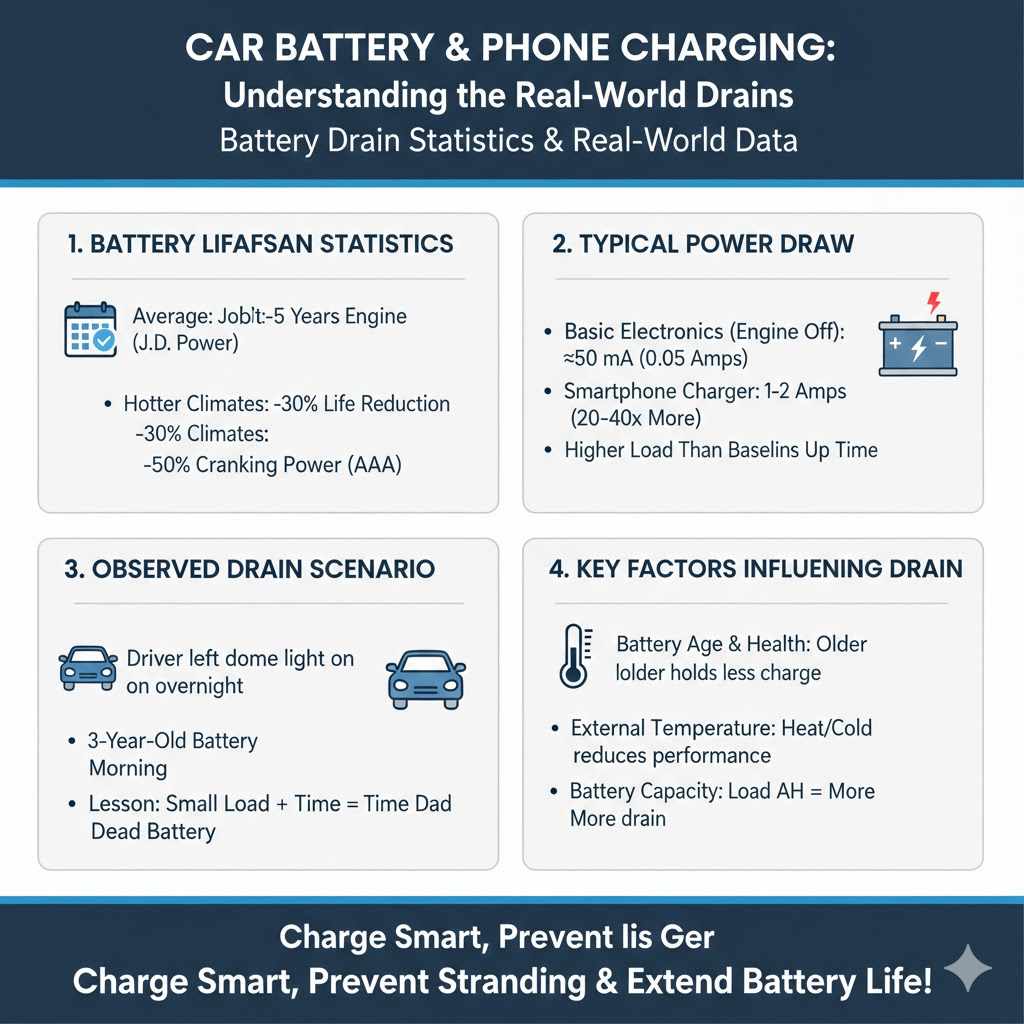
According to J.D. Power, the average lifespan of a car battery is around 3 to 5 years. Factors like climate, driving habits, and maintenance can influence this significantly.
For instance, in hotter climates, batteries tend to degrade faster due to heat exposure, potentially shortening their life by up to 30% compared to cooler regions.
A study by AAA found that a car’s battery can lose up to 50% of its cranking power in freezing temperatures. This means even a relatively healthy battery may struggle to start a car in extreme cold. The average power draw for a car’s basic electronics when the engine is off, like the clock and alarm, is about 50 milliamps (mA), which is 0.05 amps.
A smartphone charger drawing 1-2 amps is a significantly higher load than this baseline draw.
In one observed case, a driver left their interior dome light on overnight with the engine off. The battery, which was about 3 years old, was unable to start the car the next morning. This illustrates how even a small, constant load can drain a battery if left unattended for a prolonged period, especially if the battery is not in peak condition.
Frequently Asked Questions
Question: Can charging my phone drain my car battery completely?
Answer: It is highly unlikely for charging a single phone to drain a healthy car battery completely, especially if done for a short to moderate amount of time. Car batteries have significant capacity, and phone chargers draw relatively little power compared to other car functions.
Question: How long can I safely charge my phone with the engine off?
Answer: For a healthy car battery, you can typically charge your phone for 3-4 hours without significant concern. If your battery is older or you are in extreme temperatures, it’s wise to limit this time or run the engine periodically.
Question: What if my car battery is old and I need to charge my phone?
Answer: If your car battery is old, it’s best to be more cautious. Limit charging time to an hour or less, or consider running the engine for a short period to top up the battery before and during charging.
Question: Does fast charging my phone use more car battery power?
Answer: Fast charging does draw more power from the charger itself, but the total energy consumed from the car battery over a set time is generally similar to standard charging. The key factor is the duration of charging and the battery’s overall health.
Question: Will my car start after charging my phone if the engine was off?
Answer: In most cases, yes. If you charged your phone for a reasonable amount of time with a healthy battery, your car should still start. If you experience slow cranking or no start, the battery may be too drained, and you might need a jump start.
Summary
Charging your phone with your car engine off is generally safe for short periods. A healthy car battery has enough power to handle this small load without dying. However, for extended charging sessions, especially with an older battery or in extreme temperatures, it’s wise to run the engine periodically.
Monitor your battery’s condition and practice moderation to avoid any starting issues.