The Yellow Sports Car: What It Says About You and What to Consider Before Buying
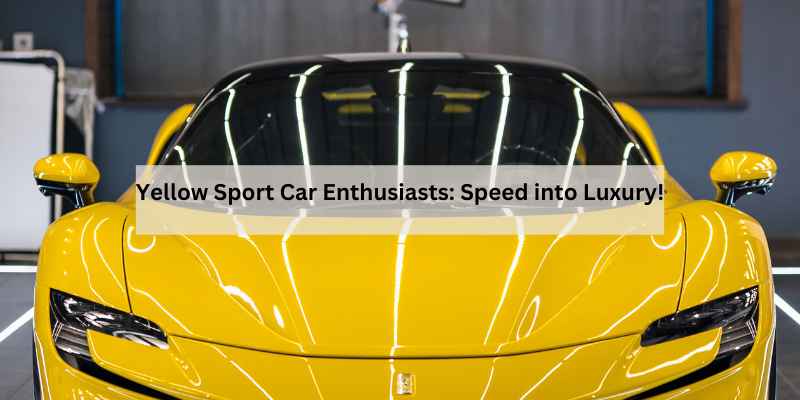
You know that moment. A yellow sports car pulls up next to you at a light, and you can’t help but look. It’s loud in color, often loud in sound, and impossible to ignore. Some people love that attention. Others secretly want it but worry about looking flashy. If you’ve been circling the idea of owning one, you probably have questions that go deeper than paint color.
This article walks through what a yellow sports car actually means on the road, how it holds up over time, and what you should check before you commit. You’ll get specific comparisons, honest trade-offs, and a few things dealers won’t tell you. By the end, you’ll know whether that bright paint job fits your life or if you should keep it as a weekend fantasy.

TGRCM-CZ
TGRCM-CZ 1/36 Scale Lamborghini Aventador LP770-4 Casting…
- 【5" Model Car】Package Car size: Approx. 4.8 * 1.9 * 1.2 inch. Package Weight: Approx 0.25 pounds. Suitable for playing. Great for…
- 【Good Quality, Realistic Interior】Toy Car was made of zinc alloy, with plastic parts, rubber tires. Detailed interior and exterior…
- 【Opening Doors, Pull Back】The two sides doors of pull back car could be opened. Put the car on the ground, hold down the body and…
If you’re shopping for a gift or a desk display rather than a full-size commitment, a detailed die-cast model like the TGRCM-CZ 1/36 Lamborghini Aventador gives you the thrill of the color without the insurance bill. It’s a solid way to test whether you actually like living with that shade before you spec one at a dealership.
The Psychology of Yellow: Why This Color Hits Different
Yellow sits at the brightest point of the visible spectrum. It’s the color your eye locks onto first, which is why school buses and warning signs use it. Put that on a low-slung two-door, and you’re making a statement whether you mean to or not.
Owners report different experiences. Some say strangers want to talk at every gas station. Others say they’ve been cut off more in traffic, likely because other drivers are distracted. There’s genuine research on this: yellow cars are statistically less likely to be involved in accidents because they’re more visible in peripheral vision. That’s a real safety point, not just marketing talk.
The flip side is that visibility cuts both ways. You won’t blend in at a parking lot, and you won’t sneak past a police cruiser. Speeding in a yellow sports car is a choice you’ll probably regret more often. If you value anonymity, this color works against you.
Maintenance and Care: What Yellow Paint Demands
Here’s the part most buyers don’t think about. Yellow paint shows dirt and swirl marks like no other color. Dark colors hide dust, white hides water spots, but yellow reveals every flaw under direct sunlight. You’ll be washing it more often than you planned.
Paint quality matters a lot here. Factory yellows from brands like Porsche (Racing Yellow) and Lamborghini (Giallo Orion) use multi-layer systems that hold up well. But cheaper aftermarket wraps or single-stage paints will fade unevenly, especially on horizontal panels. Check the paint depth with a gauge if you’re buying used. Anything under 100 microns on a yellow car is a red flag.
Ceramic coating is almost mandatory for yellow. It adds a layer of protection against UV fading and makes washing easier. Budget around $800 to $1,500 for a professional application. You can do it yourself for less, but the prep work is where most people fail. A good coating will keep that yellow from turning into a dull mustard shade after a few summers.
Resale Value and Market Reality
Let’s talk numbers. Yellow is a niche color, and the resale market treats it that way. On mainstream sports cars like the Ford Mustang or Chevrolet Corvette, yellow typically drops value faster than silver or gray. Buyers want neutral colors they can live with daily. On exotic cars, the opposite happens. A yellow Lamborghini or Ferrari often sells quicker because that’s the color people expect from a supercar.
Here’s a concrete example. A 2026 Corvette in yellow might sit on a dealer lot for 45 days, while the same car in red sells in two weeks. But a yellow 2026 Lamborghini Huracan will often command a premium over a white one. The rule is simple: the more exotic the car, the more yellow helps. The more practical the car, the more yellow hurts.
If you plan to keep the car for five years or more, resale matters less. If you’re someone who swaps cars every two years, you should factor in a 5-10% hit on a mainstream model. Negotiate harder on the purchase price to offset that future loss.
Comparing Yellow Sports Cars Across Categories
Not all yellow sports cars are equal. The experience changes dramatically based on what you buy. Here’s a breakdown of how yellow plays out across different segments.
| Category | Example Models | Yellow Impact | Best For | Watch Out For |
|---|---|---|---|---|
| Entry-Level | Mazda MX-5, Toyota GR86 | Fun and youthful, but limits used-buyer pool | Weekend canyon runs, first sports car | Hard to resell, shows imperfections quickly |
| Muscle Car | Ford Mustang, Dodge Challenger | Bold but polarizing; some love it, many don’t | Drag strips, car shows, loud personalities | Slower resale, attracts police attention |
| European Roadster | Porsche Boxster, BMW Z4 | Classic and sporty, fits the brand heritage | Top-down cruising, daily driving | Costly paint repair if scratched |
| Exotic Supercar | Lamborghini Huracan, Ferrari 488 | Expected and desirable, often boosts value | Status, collecting, weekend drama | Insurance premiums, maintenance costs |
| Electric | Tesla Model 3 Performance, Porsche Taycan | Modern and tech-forward, but less traditional | Daily commute with performance | Paint quality varies by brand |
Notice the pattern. Yellow works best where the car is already an event. It struggles when the car tries to be practical. Ask yourself honestly: do you want a car that gets noticed, or a car that gets you somewhere? Neither answer is wrong, but they lead to different choices.
Insurance and Practical Considerations
You might expect yellow to cost more to insure. It doesn’t, at least not directly. Insurance companies don’t charge extra for paint color. They care about horsepower, theft rates, and your driving record. A yellow Corvette costs the same to insure as a gray one, assuming identical specs.
That said, yellow cars do get more tickets. One study from a UK insurance firm found that yellow vehicles were pulled over 23% more often than white ones. Whether that’s profiling or just visibility, the result is the same: your premiums might climb after a few citations. Drive accordingly.
Parking is another issue. Yellow stands out in a crowded lot, which makes it easier for others to spot it. That cuts both ways. It’s easier to find your car, but also easier for a thief to identify it as a target. Use common sense about where you park and what you leave inside.
Questions People Actually Ask About Yellow Sports Cars
Does yellow paint fade faster than other colors?
Yes, if it’s a cheap single-stage paint. Modern factory yellows use UV-stable clear coats that last a decade or more. The real risk is on older cars or aftermarket resprays. Park in the shade when possible and apply a ceramic coating to extend the life. A yellow car that lives in a garage will look new for years.
Can I wrap my current car yellow instead of buying new?
Absolutely. A quality vinyl wrap costs between $2,500 and $4,500 depending on the car size. It protects the original paint and you can remove it later. The downside is that wraps don’t last as long as paint, typically 3-5 years before edges peel. Also, a wrap won’t look as deep and glossy as a proper paint job. It’s a good compromise if you’re not sure about committing to yellow forever.
What’s the best yellow shade for resale?
Factory shades like Porsche Racing Yellow or Lamborghini Giallo Modena hold value best. They’re recognizable and associated with specific brands. Avoid neon or lime-adjacent yellows on anything but an exotic. A muted yellow like the one on the 2026 Nissan Z looks classy but still sells well. When in doubt, go with what the factory offered, not a custom mix.
Are yellow sports cars harder to sell?
On mainstream models, yes. On exotics, no. The buyer pool is smaller for yellow, but the buyers who want it are usually serious. You might wait longer for the right offer, but you’ll often get closer to your asking price. List it during spring and summer when buyers are thinking about fun cars, not winter storage.
Does yellow affect the car’s performance?
No. Paint weight is negligible, and color has zero impact on aerodynamics or engine output. The only performance difference is psychological. A bright yellow car feels faster than a silver one, even when the speedometer says otherwise. If that sensation makes you enjoy driving more, that’s a real benefit.
What to Do Before You Buy
You’ve done the research. You’ve looked at the photos. Now you need a plan before you hand over money.
- Check your insurance quote first. Yellow won’t raise rates, but the car model will. Get a number before you fall in love.
- See the color in person. Photos lie, especially with yellow. Look at it under direct sun, overcast sky, and at night. Fluorescent showroom lighting makes everything look good.
- Ask about paint history. If buying used, request a paint thickness gauge reading. Inconsistent readings mean previous bodywork, which matters more on a bright color.
- Budget for detailing supplies. You’ll need a quality wash mitt, pH-neutral soap, and a drying towel. Yellow shows water spots, so plan for that routine.
- Consider a paint protection film on the front bumper and hood. Rock chips on yellow are more visible than on darker colors. A $1,500 investment now saves headaches later.
- Test drive in traffic. See how it feels to be noticed. Some people love it, some people shrink. You need to know which one you are before you sign.
- If you’re buying a gift for a child or a collector, the Lamborghini Aventador model is a safe way to share the yellow sports car experience without the six-figure price tag. It has opening doors and pull-back action, so it’s not just a static display piece.
Owning a yellow sports car is a personality test as much as a purchase. It says you’re comfortable being seen, that you value joy over blending in. That’s not true for everyone, and that’s fine. But if you’ve read this far, there’s a good chance you already know which category you fall into.
For more context on how yellow cars compare to other colors, check out our neon yellow car guide. And if you’re still deciding between a muscle car and a true sports car, our muscle car comparison covers the key differences. The right answer depends on your roads, your budget, and how much attention you actually want.
Products related to this article
Sponsored / affiliate links. As an Amazon Associate I earn from qualifying purchases. I may earn additional commission from eligible campaigns.