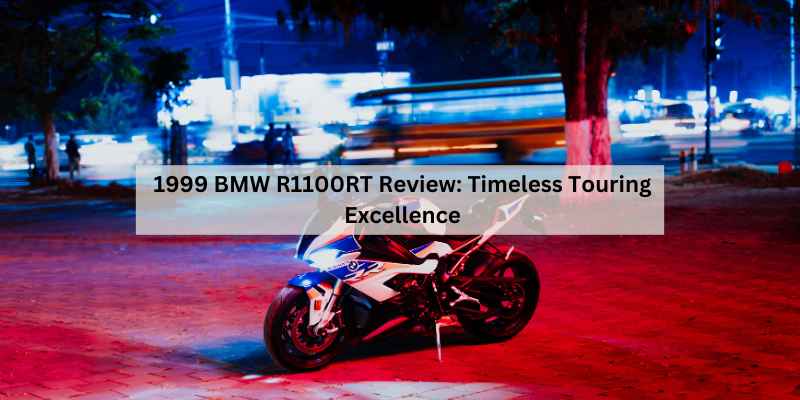
1999 BMW R1100RT Review: The Oilhead Touring Sweet Spot
You see a 1999 BMW R1100RT for sale with 60,000 miles on the clock. The price is tempting, the paint is shiny, and the saddlebags are huge. But a little voice in your head asks if this is a smart buy or a money pit waiting to happen. The oilhead RT has a reputation for being a brilliant touring bike, yet it also has a few known weak points that can turn a great deal into a garage ornament.
This review cuts through the forum chatter and gives you the straight story on the 1999 model specifically. You will learn what changed that year, how the bike actually rides, which faults to hunt for during an inspection, and what it costs to keep one on the road. By the end, you will know if this particular RT is the right machine for your miles.

YINETTECH
YINETTECH Blank Uncut Key Blade Right Groove…
- Compatibility: Designed specifically for right-groove ignition systems.
- Compatible with BMW R-Series: R850R, R1100S, R1100RS, R1100GS, R1100R, R1100RT, R1150R, R1150GS, R1150RS, R1150RT, R1200C, R1200IN…
- Compatible with K-Series: K1200R, K1200GT, K1200LT.
If you are buying one, you will likely need a spare key. The previous owner often only hands over one. A YINETTECH blank key blade made for the right-groove ignition system lets a locksmith cut a duplicate without paying dealer prices. It is a small item that solves a practical problem before it becomes a headache.
1999 Model Year: What Changed and Why It Matters
The R1100RT debuted in 1996, but the 1999 model is the one to target. BMW revised the engine control unit mapping for smoother low-speed throttle response, which fixed the jerky on-off feel that plagued the earlier bikes. The 1999 also got a stronger alternator output, a change that matters if you run heated grips, auxiliary lights, and a GPS all at once.
There is a persistent myth that all oilhead RTs are identical. They are not. The 1996 to 1998 bikes had a weaker wiring harness for the alternator, and the connectors were known to melt under load. BMW updated the harness in 1999. This is the single biggest reason to choose a 1999 over an earlier bike. The later bikes are not immune to electrical gremlins, but they are far less prone to this specific failure.
Another change for 1999 was the switch to a different clutch pushrod seal. The earlier seal leaked gearbox oil onto the clutch plates, causing slipping and requiring a full clutch replacement. The 1999 seal is more robust. It is not a perfect fix, but it drastically reduced the frequency of this expensive repair.
Engine, Gearbox, and Real-World Performance
The 1085cc flat-twin produces 92 horsepower at 7,250 rpm and 72 lb-ft of torque at 5,500 rpm. Those numbers look modest on paper, but the engine’s character is what wins riders over. The boxer twin pulses with a lazy, torquey beat. You do not need to rev it hard to make progress. Roll on the throttle at 3,000 rpm in fifth gear and it pulls smoothly without complaint.
The five-speed gearbox is a mixed bag. The shift action is notchy when cold, and you will occasionally find a false neutral between fourth and fifth if you rush the shift. Once the oil warms up, it settles down. Clutch pull is light, though the engagement point is narrow. New riders will stall it a few times before they get used to it.
Vibration is present but well controlled. There is a gentle buzz through the handlebars between 4,000 and 4,500 rpm, which corresponds to about 70 mph in fifth gear. It is not annoying, but it is there. The mirrors stay clear enough to identify a car behind you, which is more than many bikes can claim.
Fuel Economy and Touring Range
Fuel economy is one of the RT’s strongest suits. Expect 42 to 46 mpg in mixed riding. On a steady highway run at 65 to 70 mph, you can see 50 mpg if you keep the throttle steady. The 6.6-gallon fuel tank gives you a real-world range of 280 to 300 miles before the reserve light comes on.
The fuel injection system is reliable when it works, but it has a quirk. If the bike sits for more than a month, the injectors can clog. A bottle of fuel system cleaner and a good long ride usually clears it up. If it does not, the injectors are easy to remove and clean yourself, saving a shop bill.
Handling, Telelever, and the Braking Debate
The Telelever front suspension is the defining feature of this bike. It separates braking forces from suspension movement, which means the front end does not dive hard under braking. This design gives the bike a planted, stable feel that inspires confidence in corners. You can brake late into a turn and the bike stays composed.
The Paralever rear suspension does a good job of controlling shaft drive torque reaction. You will feel the bike squat slightly under hard acceleration, but it does not try to stand up or jack the rear end like older shaft-drive BMWs. The standard suspension is on the soft side. It soaks up highway miles beautifully but gets a bit wallowy if you push hard on twisty back roads.
Now the controversial part: the servo-assisted brakes. The 1999 RT has an integrated ABS system with a servo motor that boosts braking power. The system works brilliantly when functioning correctly. A light two-finger pull produces strong, confident stopping power. The problem is the failure mode. If the servo unit dies, the brakes lose power assist, and you are left with a hard lever and reduced stopping force. It is a known issue, and replacement servo units are expensive.
Many owners delete the servo system entirely, converting to non-servo brakes. This is a popular DIY fix because it simplifies the system and removes the most failure-prone component. The trade-off is that you lose ABS. For a dedicated touring bike, that is a real consideration, but many riders find the reliability gain worth it.
The 1999 R1100RT Buying Checklist: 10 Critical Checks
You need to inspect a used RT methodically. Here are the ten things to check before handing over cash.
- Alternator output: Start the bike and measure voltage at the battery. It should read 13.8 to 14.2 volts at idle. Anything less suggests a failing alternator or regulator.
- Wiring harness connectors: Look at the three-pin connector near the alternator. If it shows signs of melting or discoloration, walk away or negotiate hard.
- Final drive play: Put the bike on the center stand and grab the rear wheel at the 12 and 6 o’clock positions. Any play means the final drive bearings are worn, a costly repair.
- ABS servo operation: Turn the ignition on and listen for the servo pump to prime. It should run for a few seconds and then stop. If it does not run, the servo is dead.
- Clutch spline wear: This is hard to check without disassembly, but you can listen for a clicking or grinding noise when engaging first gear. A worn spline requires a gearbox removal.
- Valve cover gaskets: Look for oil weeping around the valve covers. Leaks here are common and cheap to fix, but they indicate general maintenance neglect.
- Fuel lines: Check the rubber lines under the tank for cracks. Old fuel lines can split and cause a fire risk.
- Pannier locks: The locks on the side cases are known to seize. Test all of them with the key.
- Center stand: Ensure it springs back up fully. A weak spring is a hazard.
- Service history: Look for records of valve shim adjustments. This is a required service every 12,000 miles, and if it is missing, the bike has been neglected.
The Alternator and Wiring Harness
The alternator issue deserves its own section because it is the most common electrical failure. The 1999 model produces 700 watts, which is plenty for most accessories. The problem is the connector. It sits in a spot where it collects road grime and moisture. Over time, the connector corrodes, increases resistance, and melts.
You can retrofit a heavier-gauge wire and a better connector as a preventative measure. This is a cheap fix that takes an afternoon. If you buy a 1999, do this before you take a long trip.
Final Drive and ABS Servo Unit
The final drive is a known weak point across the oilhead range. The bearings can fail without much warning, and when they do, the rear wheel locks up. Check for any signs of oil leakage around the final drive housing. A small weep is a warning sign; a puddle is a dealbreaker.
The ABS servo unit is the other big-ticket item. A replacement unit from BMW costs more than the bike is worth. The good news is that the conversion to non-servo brakes is well documented. You need a master cylinder from a non-ABS R1100RT or R1150RT, new brake lines, and a few hours of labor. Many owners report this conversion improves brake feel because the servo system can feel wooden and over-assisted.
Cost of Ownership: Parts, Servicing, and Insurance
Owning a 1999 R1100RT is not cheap, but it is predictable. Here is a breakdown of the common expenses you should budget for.
| Item | Typical Part Cost | Labor Hours | Notes |
|---|---|---|---|
| Clutch replacement | $400 – $600 | 6 – 8 hours | Gearbox must be removed. Often done with rear main seal. |
| Alternator replacement | $300 – $500 | 2 – 3 hours | Upgraded wiring harness recommended at the same time. |
| Brake servo unit | $1,200+ (dealer) | 3 – 4 hours | Non-servo conversion is a popular, cheaper alternative. |
| Final drive rebuild | $250 – $400 (parts) | 2 – 3 hours | Requires specialized tools for bearing removal. |
| Valve shim adjustment | $60 (shims) | 2 – 3 hours | DIY-friendly if you have feeler gauges and a calculator. |
| Full service (fluids, filters, plugs) | $150 – $250 | 3 – 4 hours | Easy to do yourself with basic tools. |
Insurance is surprisingly affordable. Because the bike is old and has a low declared value, comprehensive coverage is cheap. You will pay more for a sportbike than for this touring machine. The RT is seen as a low-risk bike by insurers.
Parts availability is good. BMW still stocks many mechanical parts, and the aftermarket is strong for wear items like brake pads and tires. You will not be stranded looking for a clutch cable, but some body panels are getting hard to find in good condition.
1999 R1100RT vs. R1150RT: Should You Upgrade?
The R1150RT arrived in 2026 with a larger 1130cc engine, a six-speed gearbox, and a revised fairing. It produces more power and torque, and the extra gear makes highway cruising more relaxed. The 1150 also has better wind protection and a more modern dash layout.
However, the 1150 is heavier and feels more top-heavy at low speeds. The 1100 is the lighter, nimbler bike. For riders who spend most of their time on tight back roads, the 1999 is the better choice. For slab-heavy touring, the 1150 has the edge.
The 1150 also has its own set of problems. The final drive issues are more prevalent on the 1150, and the servo brake failures are just as common. The 1999 is not inherently more reliable than the 1150; it just has different failure points that are often cheaper to fix.
If you are on a budget, the 1999 is the smarter buy. You save money upfront, and the cost of ownership is lower because the parts are cheaper. The 1150 is a better bike, but it is not a dramatically better bike. The 1999 remains the sweet spot of the oilhead range.
Owner Community Verdict: What Riders Really Say
Spend time on BMW forums and you will notice a pattern. Owners of the 1999 R1100RT love the engine and the handling, but they complain about the electrical gremlins and the servo brakes. The most common DIY fix is the servo delete, followed by the alternator connector upgrade.
Another popular upgrade is replacing the stock handlebars with a set that has more pullback. The stock bars are fine for average-height riders, but taller riders often find them too far forward. A set of bar risers or aftermarket bars can transform the riding position.
The general consensus is that the bike is reliable if you address the known weak points proactively. The engine is nearly bulletproof. The gearbox is clunky but durable. The final drive is the wildcard, but regular inspection and oil changes keep it alive.
Rider Fit: Ergonomics for Different Body Types
The seat height is 30.7 inches, which is low for a touring bike. Riders with a 30-inch inseam can flat-foot both feet. Riders with shorter legs will find it manageable, but you may be on your toes at stops. The seat is wide, which spreads the load but also makes it harder to reach the ground.
The handlebar reach is neutral. You sit upright with a slight forward lean. The foot pegs are positioned directly below you, which is comfortable for most people. Taller riders over 6 feet may find the legroom tight on long days. A set of lowered foot pegs can help.
The windscreen is adjustable, but the range of adjustment is limited. At 5’10, the stock screen puts the airflow right at helmet level, which creates buffeting. A taller aftermarket screen solves this problem. This is one of the most common first upgrades owners make.
Final Verdict: Is the 1999 R1100RT Still Worth Buying?
Yes, if you go in with your eyes open. The 1999 R1100RT is a fantastic touring motorcycle that can be had for a fraction of its original price. It offers a smooth, torquey engine, excellent handling, and genuine long-distance comfort. The bike is not fast, but it is fast enough to keep up with traffic and enjoy a spirited ride.
The drawbacks are the aging electrical system, the servo brakes, and the potential for final drive failure. These are not dealbreakers if you budget for them and address them proactively. The bike rewards an owner who is willing to turn a wrench.
If you find a well-maintained 1999 with service records, buy it. If you find a cheap one with no history, assume it needs the full checklist of repairs and negotiate the price accordingly. The 1999 model is the best of the R1100RT generation, and it remains a relevant and enjoyable touring bike today.
1999 BMW R1100RT Technical Specifications
Here are the key numbers you need to know.
- Engine: 1085cc air/oil-cooled flat-twin
- Power: 92 hp at 7,250 rpm
- Torque: 72 lb-ft at 5,500 rpm
- Transmission: 5-speed, shaft drive
- Final drive: Paralever
- Front suspension: Telelever
- Rear suspension: Paralever single-sided swingarm
- Brakes: Dual 305mm discs front, single 276mm rear, servo-assisted ABS
- Wheelbase: 58.5 inches
- Seat height: 30.7 inches
- Fuel capacity: 6.6 gallons
- Weight: 617 lbs (wet)
- Alternator: 700 watts
Frequently Asked Questions
What is the difference between a 1998 and a 1999 R1100RT?
The 1999 model received an updated engine control unit for smoother throttle response, a stronger alternator, and a revised clutch pushrod seal. The wiring harness for the alternator was also upgraded to prevent connector melting. These changes make the 1999 more reliable than earlier models.
How many miles can a 1999 R1100RT last?
With proper maintenance, the engine can easily exceed 100,000 miles. The key is regular oil changes and valve shim adjustments. The final drive is the weak point, but if you inspect it regularly and replace the oil every 12,000 miles, it can last as long as the engine.
Is the servo-assisted ABS on the 1999 R1100RT reliable?
No, it is the most common major failure point. The servo unit can fail, leaving you with reduced braking power. Many owners convert to non-servo brakes for reliability. This is a well-documented DIY project.
What is the best aftermarket upgrade for a 1999 R1100RT?
The most impactful upgrades are replacing the stock windscreen with a taller aftermarket unit, upgrading the alternator wiring connector, and converting the brakes to non-servo. These three changes address the bike’s biggest weaknesses and improve the riding experience significantly.
What should I pay for a 1999 BMW R1100RT in 2026?
Prices vary by condition and mileage. A clean, well-maintained example with under 50,000 miles typically sells for $3,000 to $4,500. A bike with high mileage or known issues can be found for under $2,000. Always budget for at least $500 in immediate maintenance.
Final Thoughts and Practical Tips
- Buy the 1999 model over earlier years due to the electrical and clutch improvements.
- Budget for a non-servo brake conversion if the ABS unit shows any signs of trouble.
- Inspect the final drive for play and oil leaks before every long trip.
- Upgrade the alternator wiring connector as a preventative measure.
- Plan for a taller windscreen if you are over 5’9 and do a lot of highway miles.
- Keep a spare key blank on hand; losing the only key is a common and expensive problem.
- The 1999 R1100RT is a capable, comfortable touring bike that rewards a hands-on owner.
Products related to this article
Sponsored / affiliate links. As an Amazon Associate I earn from qualifying purchases. I may earn additional commission from eligible campaigns.