2026 BMW 335i Engine Specs: The N54 Buyer’s Guide
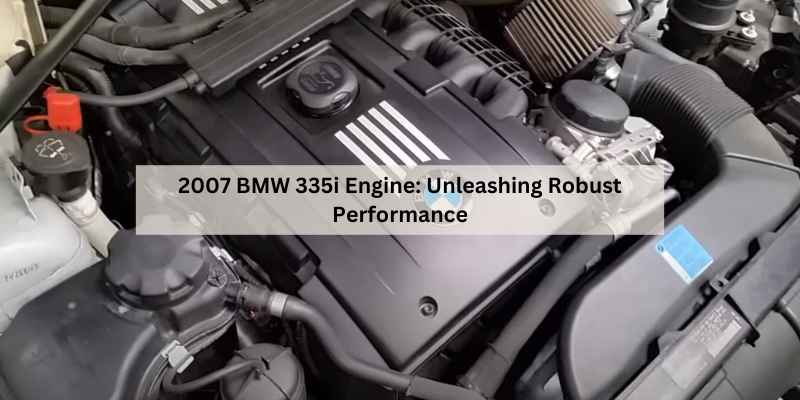
The 2026 BMW 335i is a car that makes people do irrational things. You see one on the highway, hear that distinct turbo whistle, and suddenly you’re searching classifieds at midnight. The reason is the engine bay. Under that hood sits the N54, a 3.0-liter twin-turbo inline-6 that changed what people expected from a sports sedan. It delivered German engineering with a punch that embarrassed cars costing twice as much.
But the specs on paper only tell part of the story. The N54 is powerful, but it’s also demanding. It has known weak points that will cost you money if you ignore them. This guide walks through the exact 2026 BMW 335i engine specs, what they mean for daily driving, and what you should budget for before you hand over cash. You’ll learn the real 0-60 times, the oil capacity, and exactly why this engine still has a cult following almost two decades later.
If you’re looking at a 335i that’s already past 100,000 miles, the valve cover is a common failure point. The plastic warps and the gasket leaks oil onto the hot exhaust manifold. A replacement like the MITZONE N55 valve cover kit is a direct fit for many later models, but for the 2026 N54, you’ll want to verify the part number matches your production date. It’s a job you can do in a driveway with basic tools.
2026 BMW 335i Engine Specifications (At a Glance)
Here are the headline numbers every owner should memorize. These are the factory figures from BMW’s official documentation for the US-market 2026 model year.
| Specification | Value |
|---|---|
| Engine Code | N54B30 |
| Configuration | Inline-6, Twin-Turbocharged |
| Displacement | 2,979 cc (3.0-liter) |
| Bore x Stroke | 84.0 mm x 89.6 mm |
| Compression Ratio | 10.2:1 |
| Valvetrain | DOHC, 24 valves, VANOS |
| Fuel System | Direct Injection (HPFP) |
| Horsepower | 300 hp @ 5,800 rpm |
| Torque | 300 lb-ft @ 1,400-5,000 rpm |
| Redline | 7,000 rpm |
| Transmission | 6-Speed Manual or 6-Speed Auto |
| Drivetrain | Rear-Wheel Drive (xDrive optional) |
| Oil Capacity (with filter) | 6.5 quarts (6.1 liters) |
The torque curve is the secret. Peak torque arrives at just 1,400 rpm and holds flat until 5,000. That means you don’t need to rev it out to feel fast. Pull away from a stoplight in third gear and it still surges forward. This is why the N54 feels quicker than the 300 hp number suggests.
The N54 Engine: Configuration and Architecture
The N54 is a closed-deck cast iron block with an aluminum cylinder head. That’s an old-school heavy setup, but it’s also why the engine survives serious power upgrades. The block is essentially overbuilt for the factory output. The twin-turbo setup uses two small Mitsubishi TD03 turbos, each feeding three cylinders. Small turbos spool fast, which is why the torque hits so early.
Direct injection was cutting-edge for 2026. BMW paired it with a high-pressure fuel pump (HPFP) that runs at pressures up to 2,900 psi. This gives precise fuel metering and helps the engine make power efficiently. But it’s also the N54’s biggest reliability headache, which we’ll get to shortly.
VANOS is BMW’s variable valve timing system. It adjusts both intake and exhaust camshafts continuously. Combined with the turbos, this lets the engine breathe efficiently across the entire rev range. The valvetrain is robust, but the timing chain guides are a known wear item after 100k miles. Listen for a rattling noise on cold start.
Detailed Performance Specs (0-60, Top Speed, Quarter Mile)
Numbers from the factory brochures are one thing. Real-world tests from 2026 magazines tell the truth. The 335i with the 6-speed manual hit 60 mph in 4.8 seconds. The automatic was slightly slower at 5.0 seconds, but it shifted smoothly and matched the manual in most rolling tests. The quarter-mile was a consistent 13.4 seconds at 104 mph.
Top speed is electronically limited to 130 mph (155 mph with the optional Sport Package). The limiter is the only thing stopping the car; the engine has enough steam to push well past 160 mph if you remove it. The 0-60 time is impressive, but the real story is the 5-60 mph passing time. That’s around 5.5 seconds, because the turbos spool instantly.
Fuel economy is not a reason to buy this car. The EPA rated it at 18 mpg city and 26 mpg highway. In real driving, expect 20-22 mpg on the highway and closer to 15 mpg in stop-and-go traffic. If you drive hard, those numbers drop fast. The direct injection helps, but the turbochargers drink fuel when they’re spooling.
Oil, Fluids, and Service Intervals (With Costs)
This engine is sensitive to maintenance. Skipping oil changes is the fastest way to kill an N54. The factory interval was 15,000 miles, but that’s too long. Most independent BMW shops recommend 7,500 miles or once a year, whichever comes first.
Oil Capacity and Recommended Viscosity
The N54 takes 6.5 quarts of oil with a new filter. BMW specifies LL-01 approved oil in 5W-30 or 0W-40 viscosity. Castrol Edge 5W-30 and Mobil 1 0W-40 are common choices. A full oil change with a Mann filter runs about $80 if you DIY, or $150 at an independent shop. Don’t use cheap oil; the turbochargers rely on clean oil to stay cool.
Check the oil level every other fuel fill-up. The N54 has a known appetite for oil between changes, especially if it’s been tracked. Burning a quart every 3,000 miles is within BMW’s spec, but that’s a lot to swallow. If you’re burning more than that, look for leaks at the valve cover gasket or oil filter housing gasket.
Coolant and Other Fluid Specs
The cooling system holds 2.2 gallons (8.4 liters) of BMW blue coolant mixed 50/50 with distilled water. The electric water pump is a known failure point, often dying without warning between 60,000 and 100,000 miles. If your temperature gauge spikes, pull over immediately. Replacing the pump and thermostat runs $600-$800 at a shop.
Brake fluid is DOT 4, and the clutch (if manual) uses the same fluid. The power steering fluid is CHF 11S, a special synthetic fluid. Don’t substitute ATF; it will damage the seals. The rear differential takes 1.1 quarts of 75W-90 gear oil.
Common N54 Engine Problems and Reliability Concerns
Let’s be honest about the N54. It’s a brilliant engine that had a rough childhood. The 2026 model year is the worst for reliability, simply because BMW was still learning how to build direct-injected turbo engines at scale.
High-Pressure Fuel Pump (HPFP): This is the big one. The HPFP fails frequently, causing long cranks, rough idle, and a check engine light. BMW extended the warranty to 100,000 miles for this part, but if you’re buying a 2026 today, that warranty is long gone. A replacement pump costs $700-$1,000 installed. You can’t avoid this; just budget for it.
Wastegate Rattle: The turbo wastegates develop play over time. You’ll hear a metallic rattle at idle and when you lift off the throttle. It’s annoying but not immediately fatal. Eventually, the turbos lose boost and need replacement. New turbos are $2,500-$4,000 installed. Many owners upgrade to single-turbo kits at this point, which cost more but eliminate the problem permanently.
Carbon Buildup: Direct injection means fuel never washes the intake valves. Oil vapor and combustion byproducts bake onto the valves, restricting airflow. This causes rough idle, misfires, and reduced power. The fix is walnut blasting, which costs $400-$600. Plan on doing this every 50,000 miles. If the previous owner didn’t do it, budget for it immediately.
Also watch for the oil filter housing gasket leaking, which is a $200 fix, and the mechatronic unit in the automatic transmission, which can fail and cost $1,500. The N54 isn’t cheap to maintain, but it’s predictable. If you know what’s coming, you can plan for it.
Tuning Potential and Aftermarket Support
This is where the N54 shines. It’s one of the most tunable engines BMW ever made. A simple piggyback ECU tune, like the JB4, adds 60-70 horsepower with zero hardware changes. That takes you from 300 hp to 370 hp for about $500. A custom flash tune from a shop like MHD does the same thing and adds features like launch control.
With downpipes and an intercooler, the N54 makes 400+ horsepower reliably. The stock turbos are the limiting factor; they run out of breath around 420 hp. Beyond that, you’re looking at upgraded turbos or a single-turbo conversion. The closed-deck block handles 600+ hp without internal modifications. That’s why so many N54s end up as drag cars.
The aftermarket is mature. You can find every part imaginable, from oil catch cans to full turbo kits. Prices are reasonable because the platform is so popular. Just remember: every horsepower you add increases the strain on the fuel system and cooling system. Upgrade those first if you plan to push past 400 hp.
2026 335i vs. The Competition (Audi S4 & Mercedes C350)
In 2026, the 335i had two main rivals: the Audi S4 and the Mercedes C350. The specs tell a clear story.
| Specification | 2026 BMW 335i | 2026 Audi S4 | 2026 Mercedes C350 |
|---|---|---|---|
| Engine | 3.0L Twin-Turbo I6 | 4.2L V8 | 3.5L V6 |
| Horsepower | 300 hp | 340 hp | 268 hp |
| Torque | 300 lb-ft | 302 lb-ft | 258 lb-ft |
| 0-60 mph | 4.8 sec | 5.1 sec | 5.9 sec |
| Fuel Economy (City/Hwy) | 18/26 mpg | 14/20 mpg | 17/25 mpg |
The Audi S4 had more horsepower, but it was heavier and the V8 drank fuel like a sailor. The 335i was quicker in real-world driving because of its massive low-end torque. The Mercedes C350 was the sensible choice—smooth, reliable, and comfortable—but it was also seconds slower to 60 mph. The BMW offered the best blend of performance and efficiency, which is why it dominated sales in this segment.
The S4’s V8 has timing chain issues that cost $5,000+ to fix. The C350 is more reliable but boring to drive. The 335i is the enthusiast’s pick, even with its quirks. If you want a daily driver that feels like a sports car, the BMW wins. If you want to avoid repair bills, buy the Mercedes.
Final Verdict: Is the 2026 335i Engine Still Relevant?
Yes, but with caveats. The N54 is a legend because it proved BMW could build a turbo engine that was both powerful and tunable. It changed the company’s direction for the next decade. But it’s not a car for someone who wants to set a budget and forget it. This engine demands attention.
If you’re handy with a wrench and willing to learn, the 2026 335i is a rewarding project car. It’s also a great way to get 400 hp for under $10,000 total investment. If you just want a reliable daily driver, look elsewhere. The naturally aspirated 328i from the same year is far less troublesome, though much slower.
Before you buy, check the VIN. The 10th character of the VIN indicates the model year (7 for 2026). The 8th character is the engine code; for the N54, it should be a specific letter that matches the production date. You can verify this with a free BMW VIN decoder online. It’s worth the two minutes to confirm you’re getting the twin-turbo engine and not a base 328i.
Here are the practical takeaways if you’re still interested:
- Budget $1,500 for immediate maintenance (oil, filters, walnut blasting) on any 2026 335i.
- Replace the HPFP and water pump preemptively if they haven’t been done.
- Check for wastegate rattle on the test drive; it’s a negotiation point.
- Plan for a $600 carbon cleaning every 50,000 miles.
- Buy a good scan tool; you’ll need it to read codes on this car.
- Find a BMW specialist, not a dealership, for repairs.
- Get a tune; it transforms the car and costs less than a set of tires.
The 2026 335i isn’t for everyone. It’s for people who understand that a car’s personality comes with a maintenance bill attached. The N54 is a masterpiece with a temper. If you can handle it, you’ll own one of the most rewarding engines of the modern era.
Products related to this article
Sponsored / affiliate links. As an Amazon Associate I earn from qualifying purchases. I may earn additional commission from eligible campaigns.
 4.5V Engine Oil Pump, Electric Oil Change Fluid Evacuators,Electric Fluid Transfer Pump for Engine Oil, Equipped With 3 Pipes-Low Noise(no batteries included)
 MSMUSAS 2026 New Engine Oil Dipstick Oil Level Dipstick - Replace Part 120 589 07 21 00, 120589072100 - Compatible with Mercedes-Benz R500 2006-2007