2026 BMW M3 0-60 Times: Real Test Data vs. What You’ll Actually Get
You’ve just found a clean 2026 M3 with the S65 V8 and you’re already planning the pull onto the freeway. But the spec sheet says 4.0 seconds to 60 mph, and your buddy’s C63 says otherwise. The truth is more complicated than a single number, and it’s worth understanding before you start bragging or, worse, betting.
This breakdown covers independent magazine tests, the real gap between the DCT and the 6-speed manual, quarter-mile trap speeds, and how it stacks up against its main rivals. You’ll also learn why your personal 0-60 time might be half a second slower than the press cars, and what you can actually do about it.

BMW
BMW genuine fuel filler cap
- For: 128i, 135i, 2 Series (all), 323i, 325i, 325xi, 328i, 328xi, 330i, 330xi, 335i, 335is, 335xi, 4 Series (all), 528i, 528ix, 535…
Think of this as the owner’s manual for acceleration, not a marketing brochure.
2026 BMW M3: The Definitive 0-60 mph Breakdown
Official vs. Independent Test Results
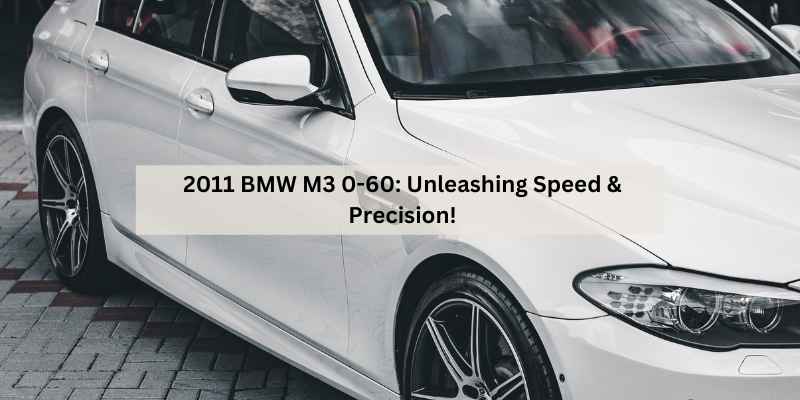
BMW quoted 4.0 seconds for the 2026 M3 with the M-DCT and 4.2 seconds with the manual. Those numbers come from ideal conditions: a prepped surface, optimal temperatures, and a professional driver abusing the launch control system.
Independent tests tell a slightly different story. Motor Trend recorded a 4.0-second run to 60 mph in a DCT-equipped coupe. Car and Driver managed 4.1 seconds. Road & Track got 4.2 seconds. The manual transmission cars consistently land in the 4.3 to 4.5-second range in independent testing.
The variance isn’t a conspiracy. Magazine testers use VBOX units, which measure speed via GPS and account for rollout differently than the factory instrumentation. A 4.0-second time with a 1-foot rollout is roughly a 4.2-second time without it. Keep that in mind when comparing numbers.
One thing worth noting: the 2026 model year carried over the same S65 V8 and transmission options as 2026. The notable update was the move to the CIC iDrive system with a faster processor and a better navigation interface. It doesn’t affect acceleration, but it does make the cabin feel less dated than earlier cars.
DCT vs. Manual Transmission: Which is Faster?
The M-DCT (dual-clutch transmission) is the quicker option, and it’s not close. The gearbox shifts in about 80 milliseconds under full throttle, faster than any human can manage.
Here’s what independent testing shows:
- M-DCT 0-60 mph: 4.0 to 4.1 seconds (with launch control)
- 6-speed manual 0-60 mph: 4.3 to 4.5 seconds
- M-DCT quarter mile: 12.3 to 12.5 seconds at 115-117 mph
- Manual quarter mile: 12.6 to 12.8 seconds at 113-115 mph
The DCT also holds gears better through corners and never misses a shift. The manual gives you more involvement, but you’ll lose three to four tenths in a straight line. If you’re chasing numbers, the DCT is the only choice.
One caveat: the DCT’s launch control is finicky. It requires the car to be at operating temperature, traction control fully off, and the shift lever in the correct position. If you skip a step, the system won’t engage and you’ll bog off the line.
Quarter-Mile Performance and Trap Speeds
The 0-60 time tells you about launch grip. The quarter-mile tells you about top-end power. The 2026 M3’s S65 V8 makes 414 horsepower and 295 lb-ft of torque, and it needs revs to deliver. The power peak hits at 8,300 rpm, which means you have to hold gears longer than you might expect.
Independent quarter-mile tests for the DCT car consistently show 12.4 seconds at 116 mph. That trap speed is the real story. A 116 mph trap indicates a car that will keep pulling hard at triple-digit speeds, not one that runs out of breath after 60 mph.
The manual car traps slightly lower, around 114 mph, because of the time lost between shifts. The gap is small, but it’s consistent across every test.
For context, the 0-100 mph time for the DCT car lands around 8.8 seconds. That’s a useful number if you’re merging onto a highway or planning a track day. The M3 feels quicker from 60 to 100 mph than it does from 0 to 60 because you’re already in the meat of the powerband.
How the 2026 M3 Stacks Up Against Its Rivals
The 2026 M3 competed in a brutal segment. The Audi RS5 and Mercedes-Benz C63 AMG both targeted the same buyers, but they took very different approaches to speed.
2026 BMW M3 vs. Audi RS5 vs. Mercedes-Benz C63 AMG
The RS5 used a naturally aspirated 4.2-liter V8 making 450 horsepower, but it carried a heavy all-wheel-drive system. The C63 AMG used a hand-built 6.2-liter V8 with 451 horsepower and sent it to the rear wheels through a traditional automatic.
| Metric | 2026 BMW M3 (DCT) | 2026 Audi RS5 | 2026 Mercedes C63 AMG |
|---|---|---|---|
| 0-60 mph (independent) | 4.0 – 4.1 sec | 4.3 – 4.4 sec | 4.1 – 4.2 sec |
| Quarter mile | 12.4 sec @ 116 mph | 12.7 sec @ 112 mph | 12.4 sec @ 117 mph |
| Horsepower | 414 hp | 450 hp | 451 hp |
| Torque | 295 lb-ft | 317 lb-ft | 443 lb-ft |
| Curb weight | 3,700 lbs | 4,000 lbs | 3,900 lbs |
| Drivetrain | RWD | AWD | RWD |
The M3 wins the 0-60 sprint against the RS5 because it’s lighter and the DCT launches harder. The RS5’s AWD system helps off the line, but the extra 300 pounds of hardware hurts it in every other metric.
The C63 is the M3’s closest rival. Its massive torque advantage makes it feel faster in everyday driving, and its trap speed is slightly higher. But the M3 holds its own in a straight line and absolutely dominates on a road course where the S65’s top-end power and the DCT’s quick shifts come into play.
One honest observation: the C63’s 6.2-liter engine is a monster, and its mid-range punch makes the M3 feel like it needs to be wound out. But the M3 rewards a skilled driver. You have to work for the speed, which is exactly why many enthusiasts prefer it.
Real-World Factors That Alter Your 0-60 Time
Magazine numbers come from a prepped drag strip with optimal conditions. Your driveway is not that. Several variables will change your results, and knowing them saves you from chasing a number you’ll never hit.
Temperature and elevation. The S65 V8 is naturally aspirated, so it loses power in hot, thin air. On a 90-degree summer day at 5,000 feet of elevation, you could be down 30 to 40 horsepower compared to a 60-degree day at sea level. That’s enough to add half a second to your 0-60 time.
Tire condition and compound. The factory Michelin Pilot Sport PS2 tires are old technology. A fresh set of modern performance tires, like Michelin Pilot Sport 4 S, will improve your launch grip significantly. A worn set will spin through first and second gear, costing you time and embarrassing you at the stoplight.
Fuel quality. The M3 requires premium fuel, and it runs a high 12.0:1 compression ratio. If you’re running 87 octane, the engine management will pull timing and you’ll lose power. Use 93 octane if you want the full 414 horsepower.
Launch technique. The DCT’s launch control is the most consistent way to launch, but it’s not foolproof. The manual requires a delicate balance of throttle and clutch slip. Too much throttle and you spin the tires; too little and you bog. Practice in a safe, empty area before you try to impress anyone.
The S65 V8 Engine: Power Delivery and Launch Technique
The S65 is a motorsport-derived engine, and it behaves like one. It makes peak power at 8,300 rpm and redlines at 8,400. There’s very little torque below 4,000 rpm, which means you have to keep the engine spinning to make progress.
For a quick launch in the DCT car, follow these steps:
- Turn the traction control fully off (press and hold the DSC button for about 5 seconds).
- Put the gear selector in the S mode and push it forward for the highest shift point.
- Press the brake pedal firmly with your left foot.
- Press the accelerator pedal to the floor with your right foot.
- Release the brake when the revs stabilize around 4,000 rpm.
The system will manage wheelspin, but it’s not magic. On cold or damp pavement, the car will still light up the rear tires. The M3’s limited-slip differential helps, but it can’t overcome physics.
For the manual car, the technique is different. You’ll want to rev to around 3,500 rpm and slip the clutch quickly while feeding in throttle. The goal is to get the car moving without breaking traction. It takes practice, and most owners report their best times come after several attempts.
Pro tip: don’t launch the car repeatedly. The S65’s rod bearings are a known weak point, and hard launches put additional stress on the drivetrain. A few runs at a track day are fine; don’t make a habit of it on the street.
Best Modifications to Improve Your 2026 M3’s Acceleration
The S65 responds well to a few targeted upgrades. Here’s what actually works, based on real-world owner data and dyno tests.
Tires are the single best upgrade. A set of 265/35R19 or 275/30R19 tires at the rear with a modern compound will cut your 0-60 time by a couple tenths just from better launch grip. This is the cheapest and most effective change you can make.
A tune helps, but not as much as you’d think. A proper ECU tune from a reputable shop like BPM Sport or ESS Tuning adds about 20 to 25 horsepower and improves throttle response. Expect a 0.1 to 0.2-second improvement in the quarter mile. It’s not a night-and-day difference, but it makes the car feel more eager.
An exhaust system frees up top-end power. The factory exhaust is restrictive. A cat-back system with an X-pipe can add 10 to 15 horsepower, mostly above 7,000 rpm. The sound improvement alone is worth it, even if the performance gain is modest.
Removing weight works too. The factory seats are heavy. Swapping in lightweight buckets saves 30 to 40 pounds. Removing the spare tire and tools saves another 30 pounds. You won’t feel the difference in a single pull, but it adds up over a track session.
If you’re considering a remap, you can see what a typical owner reports in this M3 remap review.
One warning: don’t buy a cold air intake expecting big gains. The S65’s stock airbox is already well-engineered, and most aftermarket intakes add less than 5 horsepower while increasing intake noise. You’re paying for sound, not speed.
Frequently Asked Questions about the 2026 M3
Is the 2026 M3 faster than the 2026 or 2026 model?
No. The powertrain is identical across the 2026, 2026, and 2026 model years. The 2026 update was limited to the iDrive system and minor interior trim changes. All three years produce the same 414 horsepower and run the same times.
Can the 2026 M3 beat a modern V8 muscle car in a drag race?
Depends on the car. A current Mustang GT or Camaro SS will beat the M3 in a straight line, mostly due to more torque and better launch traction. The M3’s advantage is its chassis and braking, not its straight-line speed. On a road course, the M3 will hold its own.
What is the top speed of the 2026 M3?
The electronically limited top speed is 155 mph. With the optional M Driver’s Package, the limiter is raised to 174 mph. The car has enough power to reach that speed, but it takes a long stretch of road.
Does the 2026 M3 have launch control on the manual transmission?
No. Launch control is only available on the M-DCT equipped cars. Manual transmission cars rely on your ability to modulate the throttle and clutch. Some owners install a throttle pedal spacer to improve feel, but it’s not a mechanical advantage.
Will a 2026 M3 with high mileage still hit the factory 0-60 time?
Only if it’s been properly maintained. The S65’s valve clearances need to be checked every 30,000 miles, and the spark plugs should be replaced at 45,000 miles. A poorly maintained engine will be down on power. If the car has over 100,000 miles, check the service history carefully before you buy.
Final Verdict: Is the 2026 M3 Still Quick Today?
The 2026 M3 is not a modern supercar, but it’s still a genuinely quick car. A 4.0-second 0-60 time is faster than most new cars on the road, and the S65 V8’s top-end rush is something you simply don’t get from turbocharged engines.
It’s not the fastest car in its segment anymore, and it never had the brutal low-end torque of the C63. But the combination of a high-revving V8, a brilliant chassis, and a world-class dual-clutch gearbox makes it a rewarding car to drive fast. The numbers are good, but the experience is better.
One last thing: keep the fuel filler cap in good condition. A loose or cracked cap triggers a check-engine light and can affect fuel pressure. A genuine BMW replacement cap is cheap insurance, and you can check if dealer service is required for the rest of the car.
If you’re chasing a specific time, start with fresh tires and good fuel. Practice your launch technique. Then accept that your real-world number might be a couple tenths slower than the magazine tests. It’s still fast enough to embarrass most things on the road, and it’ll do it with a soundtrack that no modern turbocharged car can match.
For related maintenance, understanding the oil service reset procedure on the 3-series can help you keep track of intervals.
Products related to this article
Sponsored / affiliate links. As an Amazon Associate I earn from qualifying purchases. I may earn additional commission from eligible campaigns.