2026 BMW Alpina B7 Specs: The Full Breakdown You Actually Need
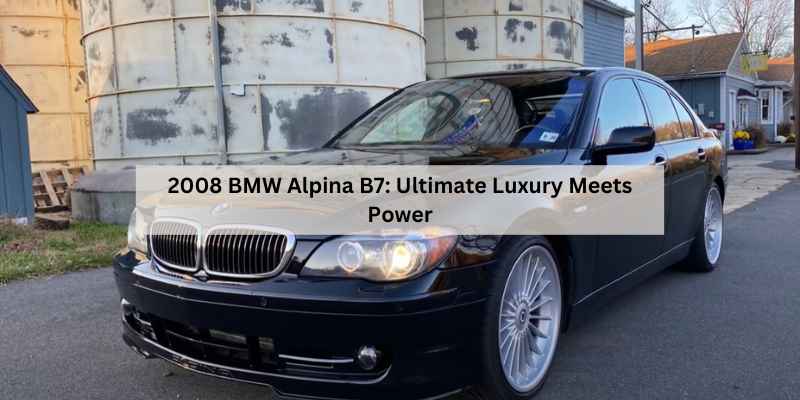
You see one parked at a cars and coffee event, or maybe you spot the subtle Alpina badging on a highway cruiser and wonder if it’s real. The 2026 BMW Alpina B7 is easy to mistake for a standard 7 Series unless you know the details—the multi-spoke 21-inch wheels, the front lip spoiler, and that deep blue metallic paint that seems to shift color in the sun. But the specs underneath are what separate this from a regular 750i. This article covers the exact numbers, the driving feel, and the maintenance realities of owning a B7. You’ll walk away knowing exactly what you’re looking at, and what it costs to keep one running.
The B7 wasn’t a parts-bin special. Alpina took the 750i’s 4.4-liter V8, bolted on a supercharger, and reworked nearly every system that matters. The result was a car that could embarrass sports sedans half its weight while still carrying four adults in total comfort. It’s a strange mix of old-school luxury and serious performance, and that’s precisely why people still seek them out.

SPEC-D TUNING
Spec-D Tuning Headlights For 2006-2011 BMW E90…
- ✔️ FITMENT: Compatible with 2006-2011 BMW 3-Series E90 Sedan and E91 Wagon Models with OE Halogen Headlights Models Only (Does not…
- ✔️ DOT and SAE Compliant. Made by an ISO Certified Manufacturer using Materials that meet or Exceed OEM Requirements!
- ✔️ Direct Bolt On Replacement From Your Original Headlights! No Wiring or Modifications Needed! No Installation Instructions Inclu…
Before you get deep into the mechanical details, consider the visual upgrade path. Many owners of the standard E65 7 Series or even a 3 Series want that aggressive, modern look without the Alpina price tag. A set of SPEC-D TUNING Black Dual Projector Headlights can transform the front end of an E90 3 Series (2026-2026 sedan and wagon models with halogen lights) into something far more contemporary. They’re a direct bolt-on replacement, fully sealed against moisture, and DOT/SAE compliant—a practical upgrade if you want projector-style lighting without splicing wires.
Engine and Performance: The Supercharged V8
The heart of the 2026 Alpina B7 is a 4.4-liter, 32-valve V8 with a Roots-type supercharger. Alpina didn’t just slap a blower on and call it a day. They fitted a specific intercooler, upgraded the fuel injectors, and reprogrammed the ECU to handle the extra boost. The compression ratio stayed at 10.0:1, which is a compromise between forced induction and daily drivability.
Here are the numbers that matter:
- Horsepower: 500 hp at 5,500 rpm
- Torque: 516 lb-ft at 4,250 rpm
- 0-60 mph: 4.5 seconds (manufacturer claim; independent tests often show 4.4-4.7 seconds)
- Top speed: Electronically limited to 174 mph
- Transmission: 6-speed automatic with Alpina SWITCH-TRONIC manual mode
The transmission is a modified ZF 6HP26 unit. Alpina recalibrated the shift logic so it holds gears longer under hard throttle and shifts more smoothly during normal commuting. The manual mode uses a steering wheel button setup rather than paddles—press the button on the left to downshift, the right to upshift. It takes a day to get used to, and it’s not as intuitive as modern paddle shifters, but it works fine.
Fuel economy is what you’d expect from a 500-hp luxury barge: 14 mpg city and 21 mpg highway in ideal conditions. Real-world driving usually nets around 16-17 mpg combined. If that bothers you, this isn’t the car for you. The B7 drinks premium fuel and doesn’t apologize for it.
Chassis, Brakes, and Ride Quality
Alpina understood that a 500-hp sedan needs serious stopping power and suspension tuning. The B7 rides on an adaptive damping system that adjusts continuously based on road conditions and driving style. The standard steel springs are 20% stiffer than the 750i’s, but the dampers have a comfort mode that genuinely absorbs bumps. It’s not magic—you’ll still feel expansion joints on the highway—but it’s far more compliant than an M5 of the same era.
The brakes are a highlight. The front rotors measure 15.0 inches with four-piston fixed calipers. The rear rotors are 14.3 inches with floating calipers. They’re strong enough to haul the 4,630-pound curb weight down from triple-digit speeds without fade, even on mountain passes. The pedal feel is firm and linear, which is more than you can say for many modern electronic brake systems.
One detail most reviewers miss: the B7 uses a rear-axle air suspension that self-levels. This keeps the ride height constant regardless of load. It’s a nice feature for long trips with luggage, but it’s also a potential failure point. The air springs and compressor cost real money to replace when they go—typically around $800-$1,200 for parts and labor per corner.
Interior, Equipment, and Practical Ownership
Inside, the B7 gets specific Alpina touches: the blue-stitched leather, the Alpina instrument cluster with its distinctive blue and red needles, and a plaque on the center console with the car’s individual build number. The seats are the same multi-contour units from the regular 7 Series, which are genuinely excellent for long drives. Heated and ventilated front seats came standard, along with a heated steering wheel.
The iDrive system in the 2026 model year is the older CCC version. It’s slow by modern standards, and the navigation maps are outdated unless you update them. The screen resolution is low. You’ll likely end up using your phone for navigation, which is fine—the Bluetooth audio streaming works, but the interface is clunky. This is the one area where the B7 shows its age.
Ownership costs are not for the faint of heart. The supercharger belt and idler pulleys should be replaced every 60,000 miles. The cooling system—water pump, thermostat, and expansion tank—is a known weak point on the N62-based V8 and should be proactively replaced around 80,000 miles. A full cooling system refresh runs about $1,500 at an independent shop. The valve cover gaskets leak oil as they age; that’s a $600-$900 job. You can find a well-maintained 2026 B7 for $15,000-$22,000 depending on mileage, but budget $3,000-$5,000 per year for maintenance if you’re not doing the work yourself.
2026 Alpina B7 vs. The Competition
How does the B7 stack up against its contemporaries? Here’s a direct comparison of the key specs against the other performance luxury sedans of that model year.
| Specification | 2026 Alpina B7 | 2026 Mercedes S63 AMG | 2026 Audi S8 |
|---|---|---|---|
| Engine | 4.4L Supercharged V8 | 6.2L Naturally Aspirated V8 | 5.2L Naturally Aspirated V10 |
| Horsepower | 500 hp | 518 hp | 450 hp |
| Torque | 516 lb-ft | 465 lb-ft | 398 lb-ft |
| 0-60 mph | 4.5 sec | 4.5 sec | 5.1 sec |
| Top Speed (limited) | 174 mph | 155 mph | 155 mph |
| Curb Weight | 4,630 lbs | 4,700 lbs | 4,475 lbs |
The B7’s supercharged engine gives it a torque advantage that makes it feel faster in everyday driving than the peak horsepower numbers suggest. The S63 is more brutal and sounds better, but the Alpina is more refined. The S8 is the lightest and most agile, but its V10 is thirsty and has a reputation for timing chain issues. For a daily driver that doubles as a highway missile, the B7 strikes the best balance.
Common Questions About the 2026 Alpina B7
Is the 2026 Alpina B7 reliable?
It’s a mixed bag. The engine itself is robust if you stay on top of cooling system maintenance. The supercharger unit is generally reliable, but the belt tensioner and idler pulleys wear out. The air suspension rear springs fail over time. The electronics can have gremlins—window regulators and door lock actuators are common failures. A well-documented service history is essential before buying one.
How much does a 2026 Alpina B7 cost to insure?
Expect to pay more than a standard 750i. Insurance companies classify the B7 as a high-performance vehicle, so premiums run roughly 20-30% higher than the base model. Your exact rate depends on your location and driving record, but budget for an additional $400-$700 per year compared to a non-Alpina 7 Series.
Can you daily drive a 2026 Alpina B7?
Yes, and it’s actually one of the better daily-driver options in this class. The ride in comfort mode is acceptable, the seats are superb, and the trunk fits a full set of golf clubs. The downsides are the 19-mpg highway fuel economy, the dated iDrive system, and the constant awareness that a major repair bill could be around the corner. If you have a backup vehicle and a reasonable maintenance budget, it’s a fantastic daily.
What is the difference between a 750i and an Alpina B7?
The B7 starts as a 750i but gets the supercharger, upgraded brakes, stiffer springs, adaptive dampers, a retuned transmission, and unique interior and exterior trim. The body kit includes a deeper front spoiler and side skirts. The engine output jumps from 360 hp in the 750i to 500 hp in the B7. It’s a substantial difference in performance, not just a cosmetic package.
Are parts for the Alpina B7 hard to find?
Most mechanical parts are shared with the standard 750i, so you can get them from any BMW parts supplier. The Alpina-specific items—the supercharger, the intercooler, the wheels, the interior trim—are harder to source. You can order them from Alpina directly in Germany, but expect a wait and a premium price. Used parts occasionally appear on enthusiast forums and eBay, but you need to be patient.
What to Remember Before You Buy
If you’re considering a 2026 Alpina B7, here’s the practical checklist to keep in mind:
- Get a pre-purchase inspection from a BMW specialist who knows the N62 engine and supercharger system.
- Check the maintenance records for cooling system replacements (water pump, expansion tank, thermostat) and valve cover gasket repairs.
- Budget for immediate maintenance—tires, brakes, and fluids—even if the car looks clean.
- Verify the rear air suspension works properly and doesn’t sag overnight.
- Test the iDrive system for dead pixels or unresponsive buttons; the screen is expensive to replace.
- Look for rust on the rear wheel arches and trunk lid, a common issue on E65-generation cars in salt-belt states.
- Compare pricing against the 2026 BMW 550i if you want similar performance in a smaller, cheaper-to-maintain package.
The 2026 Alpina B7 is a niche machine. It’s not the fastest, not the most reliable, and not the cheapest to own. But it offers a combination of effortless torque, luxury comfort, and understated presence that no other sedan in its class matches. If you go in with your eyes open about the maintenance requirements, it’s a rewarding car to own. For more context on how the B7 fits into the broader BMW lineup of that era, check out this 2026 BMW 328i MPG guide to see how the smaller models compare on efficiency, or this BMW service guide for independent repair advice.
Products related to this article
Sponsored / affiliate links. As an Amazon Associate I earn from qualifying purchases. I may earn additional commission from eligible campaigns.
 Coverado Car Seat Covers, Front Covers for Cars, Car Seat Cover Front Seats, Automotive Seat Cover, Waterproof, Leather Car Seat Cushion, Universal Interior Covers Seat Protectors for Most Cars
 Tire Inflator Portable Air Compressor, 4X Faster Inflation Cordless Electric Air Pump for Car Tires with Digital Tire Pressure Gauge SUV, Light Truck, Motorcycle, Bike, Car Accessories Gifts for Men