2026 Ford Edge Oil Capacity: Complete Specs and DIY Guide
You bought a 2026 Ford Edge and now you’re staring at the owner’s manual, wondering if the oil capacity listed there is actually correct. Or maybe you’re planning your first DIY oil change and don’t want to underfill or overfill. Either way, you need the exact numbers, the right oil type, and the torque specs that most guides skip.
This guide covers both engines offered in the 2026 Edge — the 3.5L V6 and the 3.7L V6 — with precise capacities, recommended oil viscosities, and filter part numbers. You’ll also get a full step-by-step DIY procedure, the drain plug torque spec, how to reset the oil life monitor, and a realistic cost comparison between doing it yourself and paying a shop.
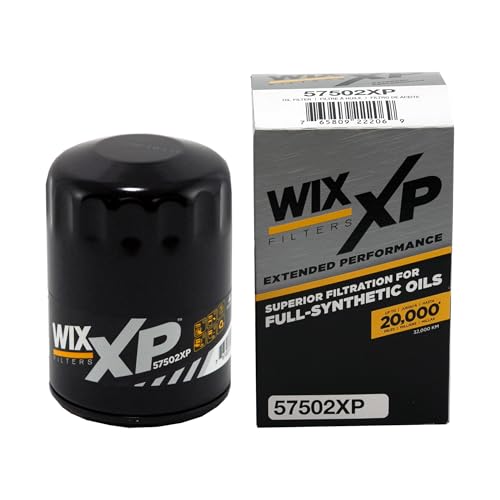
Wix
WIX 57502XP WIX XP Oil Filter Replacement,…
- ENGINEERED FOR SYNTHETIC OILS: Superior filtration for severe conditions; Designed to handle the demands of synthetic motor oils i…
- ADVANCED FILTRATION EFFICIENCY: Next-gen synthetic-blended media with natural fibers eliminates the need for wire backing. 99% eff…
- EXTENDED PERFORMANCE: Outperforms OE standards with up to 20,000-mile change intervals—ideal for synthetic oil users
If you’re doing the work yourself, pairing the right oil with a quality filter matters. The WIX 57502XP filter is built for synthetic oils and handles extended change intervals well, which makes it a solid choice for this engine.
2026 Ford Edge Engine Options (3.5L vs. 3.7L)
The 2026 Edge came with two engines. The base model had a 3.5L Duratec V6 producing 285 horsepower. The Sport trim stepped up to a 3.7L V6 with 305 horsepower. Both are solid engines, but they have different oil capacities and slightly different filter positioning.
You need to know which engine you have before buying oil. Check your VIN or look under the hood — the engine code is stamped on a tag near the front of the engine bay. The 3.5L has the code 6G and the 3.7L has the code G. Get this wrong and you’ll either overfill or underfill by roughly half a quart.
Both engines use the same oil filter thread and mounting location, which simplifies things if you’re buying parts. But the capacities differ, so pay attention to the next two sections.
Exact Oil Capacity and Type for the 3.5L V6
The 3.5L V6 holds 5.5 quarts (5.2 liters) of oil including the filter. That’s the total fill capacity when you replace the filter during an oil change. If you somehow drain without removing the filter, you’ll only get about 5 quarts back in, but don’t do that — always change the filter.
Ford specifies SAE 5W-20 for this engine. The manual calls for a synthetic blend meeting Ford specification WSS-M2C945-A. You can use full synthetic 5W-20 without any issues — it exceeds the spec and provides better protection in extreme temperatures.
Here’s a real-world consideration: if you live in a hot climate like Arizona or Texas, some owners switch to 5W-30 for better high-temperature protection. That’s a common practice, but it’s not what Ford recommends. The variable cam timing (VCT) system is calibrated for 5W-20, and the oil pressure tolerances are tight. Stick with 5W-20 unless you’re tracking the car or towing at maximum capacity in 110-degree heat. Even then, the gains are marginal.
Exact Oil Capacity and Type for the 3.7L V6
The 3.7L V6 in the Edge Sport holds 6.0 quarts (5.7 liters) with a new filter. That’s half a quart more than the 3.5L, so don’t mix them up.
Oil type is the same: SAE 5W-20 meeting Ford spec WSS-M2C945-A. The 3.7L has the same VCT system as the 3.5L, so the same viscosity rules apply. Full synthetic is fine, and honestly, it’s what I’d recommend for this engine. The 3.7L runs hotter under load, and synthetic oil handles thermal breakdown better.
One thing to watch on the 3.7L: the oil pan is slightly deeper, which means the drain plug sits lower. If you’ve got aftermarket skid plates or a lowered suspension, be careful with jack placement. Use ramps instead of a floor jack if you can.
Recommended Oil Filters and Drain Plug Torque Specs
The stock oil filter for both engines is the Motorcraft FL-500S. It’s a good filter, but it’s not the only option. The WIX 57502XP is a direct replacement that’s engineered for synthetic oils. It uses a synthetic-blended media that’s 99% efficient at 23 microns, and it’s rated for up to 20,000-mile intervals if you’re running full synthetic. That’s overkill for a 5,000-mile change, but the extra filtration capacity doesn’t hurt.
Here’s the torque spec that most guides skip: the drain plug on both engines requires 20 ft-lbs (27 Nm). Don’t guess this one. Too loose and it’ll drip. Too tight and you’ll strip the aluminum oil pan threads — a repair that costs several hundred dollars. Use a torque wrench for this. It takes ten seconds.
For the oil filter, hand-tighten it until the gasket touches, then turn it another 3/4 turn. That’s the standard for spin-on filters. Don’t use a filter wrench to tighten it; you’ll crush the housing and make the next change miserable.
Here’s a quick reference table for the specs:
| Specification | 3.5L V6 | 3.7L V6 |
|---|---|---|
| Oil capacity (with filter) | 5.5 quarts | 6.0 quarts |
| Oil type | SAE 5W-20 | SAE 5W-20 |
| Ford spec | WSS-M2C945-A | WSS-M2C945-A |
| Oil filter | Motorcraft FL-500S | Motorcraft FL-500S |
| Drain plug torque | 20 ft-lbs (27 Nm) | 20 ft-lbs (27 Nm) |
| Engine code | 6G | G |
Step-by-Step Oil Change Procedure (DIY)
Changing the oil on a 2026 Edge is straightforward. You’ll need about an hour the first time, less after that. Here’s the full procedure.
Tools and Supplies Needed
- 5.5 or 6.0 quarts of 5W-20 oil (depending on your engine)
- Oil filter (Motorcraft FL-500S or WIX 57502XP)
- 15mm socket or wrench for the drain plug
- Oil filter wrench (for removal only)
- Torque wrench
- Drain pan (at least 8 quarts capacity)
- Funnel
- Ramps or floor jack with jack stands
- Latex or nitrile gloves
Draining the Old Oil
Warm up the engine for 2-3 minutes. Warm oil drains faster and carries more suspended contaminants. Don’t run it longer than that — hot oil burns.
Get the car on ramps or jack stands. The drain plug is on the passenger side of the oil pan, facing downward. Position the drain pan underneath, then loosen the plug with the 15mm socket. Turn it counterclockwise until it’s free, then pull it away quickly. The oil will come out in a rush, so keep your hand clear.
Wait until the oil flow slows to a drip. This takes 3-5 minutes. While it drains, move to the filter.
Replacing the Filter and Refilling
The oil filter is on the front of the engine, low on the passenger side. Reach up from underneath and turn it counterclockwise with the filter wrench. It’ll spill some oil, so keep the drain pan under it. Once it’s off, wipe the mounting surface clean with a rag.
Lubricate the new filter’s rubber gasket with a bit of fresh oil. This prevents the gasket from sticking and makes the next removal easier. Screw it on by hand until the gasket touches the engine block, then tighten another 3/4 turn.
Now reinstall the drain plug. Clean the threads, then torque it to 20 ft-lbs. Don’t overthink this — just use the torque wrench.
Lower the car and fill with oil. Use a funnel and pour in about 80% of the capacity first (4.4 quarts for the 3.5L, 4.8 quarts for the 3.7L). Check the dipstick, then add the rest slowly. Run the engine for 30 seconds, shut it off, wait 2 minutes, and check the dipstick again. Top off if needed.
How to Reset the Oil Life Monitor
The 2026 Edge has an intelligent oil life monitor that tracks driving conditions, not just mileage. After an oil change, you need to reset it. Here’s how:
- Turn the ignition to the ON position (don’t start the engine).
- Press the gas pedal three times within 10 seconds.
- Watch the message center — it should display “Oil Life 100%” to confirm the reset.
That’s it. No hidden menus, no button combinations. If it doesn’t work, make sure the car is in Park and the ignition is in the ON position — not accessory mode.
Oil Change Intervals and Maintenance Schedule
Ford’s official recommendation is an oil change every 7,500 miles or 12 months, whichever comes first. That’s under normal driving conditions. The oil life monitor adjusts this based on your actual driving — short trips, cold starts, and towing will bring the interval down to around 5,000 miles.
Here’s my honest take: 7,500 miles is fine if you’re using full synthetic and mostly highway driving. But if you do a lot of stop-and-go city driving, cut that to 5,000 miles. The VCT system runs on oil pressure, and degraded oil causes sluggish cam phasing, which you’ll feel as a slight hesitation off the line. Cheap insurance to change it sooner.
If you’re curious about how this compares to other Ford models of the same era, the 2026 F-150 oil type guide covers a similar 5.0L engine with comparable intervals.
What Happens If You Use the Wrong Oil?
Using 5W-30 instead of 5W-20 won’t blow up your engine. But it’s not harmless either. The VCT system relies on precise oil pressure to advance and retard cam timing. A thicker oil at operating temperature means higher oil pressure, which can make the VCT response feel lazy. You’ll notice a slight dip in fuel economy and a marginal increase in valve train noise on cold starts.
Going the other way — using 0W-20 or a thinner oil — is riskier. Thinner oil provides less film strength at high temperatures, which increases wear on the cam journals and rod bearings. If you’re tracking the car or towing in summer heat, that’s a real concern.
The bottom line: use 5W-20. It’s what the engine was designed for, and the VCT calibration assumes that viscosity. Deviating from it for convenience is a bad trade.
DIY vs. Professional Oil Change Cost Comparison
Let’s run the numbers for a 2026 Edge with the 3.5L engine.
| Cost Item | DIY | Shop |
|---|---|---|
| Oil (5.5 qt full synthetic) | $35-$45 | Included |
| Oil filter | $8-$12 | Included |
| Labor | $0 (your time) | $25-$50 |
| Disposal fee | $5 (recycle center) | Included |
| Total | $48-$62 | $60-$100 |
DIY saves you $20-40 per change, but you’re supplying the tools, the time, and the mess. If you don’t already own a torque wrench and jack stands, that’s a one-time cost of about $80 that eats into the savings for the first couple of changes. Still, over three or four changes a year, DIY wins by a clear margin.
One thing a shop does that DIY can’t match: they’ll spot other issues — leaking coolant, worn belts, brake wear. The Edge has a known water pump issue that you can read about in the Ford Edge water pump guide. A shop might catch that early. That’s worth something.
Frequently Asked Questions
Can I use full synthetic oil in my 2026 Ford Edge?
Yes. Ford specifies a synthetic blend, but full synthetic 5W-20 exceeds that spec. It provides better high-temperature stability and longer drain intervals. The WIX XP filter is designed for synthetic oils, so it’s a good pairing if you’re making the switch.
How do I check the oil level correctly?
Park on level ground, turn off the engine, and wait 2-3 minutes for the oil to settle. Pull the dipstick, wipe it clean, reinsert it fully, then pull it again. The level should be between the MIN and MAX marks. Don’t check it right after driving — the reading will be low because oil is still in the upper engine.
What happens if I overfill the oil?
Overfilling by more than half a quart causes the crankshaft to churn the oil, which aerates it. Aerated oil doesn’t lubricate well and can cause hydraulic lifter noise. If you overfill, drain the excess via the drain plug — don’t siphon through the dipstick tube, it’s too narrow.
Is the oil capacity the same for towing?
No. The capacities listed above are for standard operation. If you regularly tow at or near the Edge’s maximum rating, Ford recommends the same 5.5 quarts (3.5L) or 6.0 quarts (3.7L), but you should shorten the change interval to 5,000 miles. Towing generates more heat, which degrades oil faster.
Can I switch to 5W-30 for high mileage?
Some owners switch to 5W-30 on high-mileage engines to reduce oil consumption. It’s a common trick, but it’s not necessary on the 3.5L or 3.7L unless you’re seeing significant oil burn. If the engine is consuming oil, fix the root cause (usually valve seals or PCV valve) rather than masking it with thicker oil. Stick with 5W-20.
Final Verdict
Here’s what you actually need to remember for your 2026 Ford Edge:
- The 3.5L V6 takes 5.5 quarts of 5W-20; the 3.7L V6 takes 6.0 quarts.
- Always use SAE 5W-20 meeting Ford spec WSS-M2C945-A — full synthetic is fine.
- Torque the drain plug to 20 ft-lbs — don’t guess it.
- Hand-tighten the filter plus 3/4 turn; never use a wrench to tighten.
- Reset the oil life monitor by pressing the gas pedal three times with the ignition on.
- Change intervals: 7,500 miles for normal driving, 5,000 miles for severe conditions or towing.
- DIY saves $20-40 per change, but a shop catches other issues you might miss.
That’s the complete picture. You’ve got the specs, the procedure, and the practical advice. Go change that oil.
Products related to this article
Sponsored / affiliate links. As an Amazon Associate I earn from qualifying purchases. I may earn additional commission from eligible campaigns.