2026 Ford F-150 Oil Type: Complete Guide for Every Engine
You just rolled past 100,000 miles and the dashboard oil light flickered for a second on a cold morning. Or maybe you bought a used 2026 F-150 last week and the previous owner left no maintenance records. Either way, you are staring at a wall of oil bottles at the auto parts store, and the wrong choice costs you an engine. This guide covers the exact 2026 Ford F-150 oil type for every engine option, the correct capacities, filter part numbers, and the step-by-step procedure to change it yourself. You will also learn what to do about the common leaks that show up on high-mileage trucks.
Owners of this generation truck face a few specific issues. The EcoBoost engines are sensitive to oil quality, and the 5.0 V8 has a known thirst for oil if you ignore the change interval. The good news: this is one of the easiest trucks to service in your driveway. You need basic hand tools, about 30 minutes, and the right oil. Let’s get into the specifics so you can stop guessing and start driving.
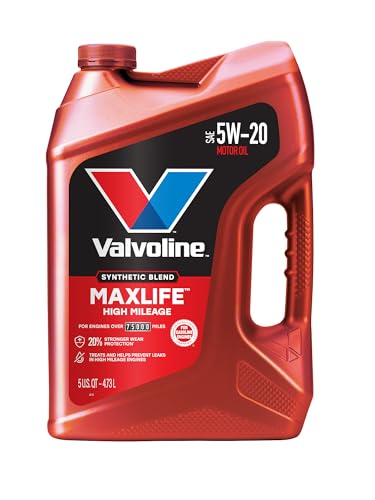
Valvoline
Valvoline MaxLife High Mileage 5W-20 Synthetic Blend…
- Formulated for engines with 75,000 miles or more, Valvoline MaxLife High Mileage synthetic blend is formulated with seal condition…
- Delivers 20% better wear protection and 15% better sludge defense than industry standards to help prevent engine breakdown
- Extra detergents safeguard against friction, corrosion and deposits to keep high-mileage engines clean
For trucks pushing past 75,000 miles, a high-mileage synthetic blend like Valvoline High Mileage with MaxLife Technology SAE 5W-20 is a smart pick. The seal conditioners help soften dried-out gaskets, which directly addresses the valve cover seepage common on this model. The extra detergents also clean out sludge left behind by years of conventional oil changes.
2026 Ford F-150 Engine Options Overview
Ford offered four engines in 2026, and each one has a slightly different oil requirement. Do not assume they all take the same fluid. The engines are:
- 3.7L Ti-VCT V6 – the base engine, naturally aspirated
- 3.5L EcoBoost V6 – twin-turbocharged, most popular option
- 5.0L Ti-VCT V8 – the Coyote, naturally aspirated
- 6.2L V8 – the Boss, only in Raptor and heavy-duty payload packages
The 3.7L and 6.2L are less common, but they are out there. The 3.5 EcoBoost gets the most attention because turbochargers run hotter and cook oil faster. That matters for your viscosity choice and your change interval.
2026 F-150 Oil Type by Engine (5W-20 vs. 5W-30)
Ford specifies 5W-20 for the 3.7L, 5.0L, and 6.2L engines. The 3.5L EcoBoost is the exception. It calls for 5W-30. The owner’s manual is clear on this, and you should follow it. Using 5W-20 in an EcoBoost can lead to lower oil pressure at operating temperature, especially when the turbos are spooling hard.
3.5L EcoBoost V6 Oil Specs
The EcoBoost requires a full synthetic 5W-30 that meets Ford specification WSS-M2C946-A. This is non-negotiable. The turbocharger bearings spin at speeds over 100,000 RPM, and they need the film strength of a full synthetic. A conventional blend will break down and leave carbon deposits on the turbo shafts, which eventually leads to seal failure and blue smoke out the tailpipe. Use a quality full synthetic like Mobil 1 or Pennzoil Ultra Platinum. The oil capacity is 6 quarts with the filter.
3.7L Ti-VCT V6 Oil Specs
This engine takes 5W-20 and holds 6 quarts. Ford recommends a synthetic blend, but a full synthetic is fine and actually better if you live in a cold climate. The Ti-VCT system relies on oil pressure to adjust cam timing, so keep the level full. Low oil on this engine causes a rough idle and a check engine light with camshaft timing codes (P0010-P0024).
5.0L V8 Oil Specs
The 5.0 Coyote also uses 5W-20 and holds 8 quarts. This is a big sump, which helps with cooling. Ford specifies the same WSS-M2C945-A spec. Many owners switch to 5W-30 in this engine for high-mileage use, and we will cover that in the FAQ section. For stock driving, stick with 5W-20. The oil capacity difference matters when you are buying jugs at the store – you need two 5-quart jugs and you will have 2 quarts left over.
6.2L V8 Oil Specs
The 6.2L Boss V8 takes 6 quarts of 5W-20. This engine is built for heavy duty and towing, so it has a heavy-duty oil cooler. It is also the most forgiving of the four engines regarding oil type, but you should still use a synthetic blend minimum. The Raptor version of this truck gets driven hard off-road, and the oil takes a beating from constant high RPM. Change it every 5,000 miles if you off-road regularly.
Complete Oil Capacity Chart (Quarts with Filter)
| Engine | Viscosity | Capacity (Quarts) | Oil Type Required | Ford Spec |
|---|---|---|---|---|
| 3.7L V6 | 5W-20 | 6.0 | Synthetic Blend or Full Synthetic | WSS-M2C945-A |
| 3.5L EcoBoost V6 | 5W-30 | 6.0 | Full Synthetic Only | WSS-M2C946-A |
| 5.0L V8 | 5W-20 | 8.0 | Synthetic Blend or Full Synthetic | WSS-M2C945-A |
| 6.2L V8 | 5W-20 | 6.0 | Synthetic Blend or Full Synthetic | WSS-M2C945-A |
One quick note on the 3.5 EcoBoost: it holds 6 quarts, but the oil filter housing holds almost a full quart on its own. When you drain the oil, the filter housing will still be full. You have to remove the filter housing cap to drain that out, or you will be adding the new oil to a system that still has old oil in the filter. More on that in the change procedure below.
Best Oil Filters for 2026 F-150 (OEM and Aftermarket)
The factory filter is the Motorcraft FL-500-S. It is a high-quality filter with a silicone anti-drainback valve, and it is cheap. You can buy it at any Ford dealer or online for under $10. There is no reason to pay more for a premium filter on this truck, but there are good aftermarket options if you prefer them.
- Motorcraft FL-500-S – OEM, best fit, correct bypass valve pressure
- Wix 57356 – excellent build quality, heavier canister, good for extended intervals
- Fram Ultra XG10575 – synthetic media, 99% filtration efficiency, good for full synthetic oil
- Mobil 1 M1-210 – solid choice, anti-drainback valve works well for cold starts
All four engines use the same filter part number, which simplifies things. The FL-500-S threads onto a metal adapter on the 3.7L, 5.0L, and 6.2L. The 3.5 EcoBoost uses a cartridge filter inside a plastic housing on top of the engine. That housing takes a specific filter, the Motorcraft FL-2069-A, which is a different part number entirely. Do not mix these up.
Oil Change Interval: Ford’s Recommendation vs. Real-World Driving
Ford says you can go 7,500 miles between oil changes on the 2026 F-150, but that number assumes normal driving conditions. The owner’s manual defines severe service as frequent towing, extended idling, extreme cold, dusty roads, or short trips under 10 miles. If you drive like that, Ford recommends 5,000 miles.
Here is the reality. Most 2026 F-150s on the road today have over 100,000 miles. The oil life monitor in the truck is a countdown timer based on driving habits, and it is fairly accurate, but it does not measure oil shearing or fuel dilution. The EcoBoost engines are notorious for fuel dilution – gasoline gets past the piston rings and thins the oil. If you smell fuel on the dipstick, change the oil immediately, regardless of what the monitor says.
My recommendation for a high-mileage truck: change the oil every 5,000 miles with a full synthetic. The extra $15 per change is cheaper than replacing a timing chain or turbocharger. If you tow heavy trailers or drive in stop-and-go city traffic, drop that to 4,000 miles. The 5.0 V8 can stretch to 6,000 miles if you use a full synthetic and the oil monitor shows 30% or less life remaining.
Step-by-Step Oil Change Guide with Torque Specs
This job takes about 30 minutes on a cold engine. Warm oil drains faster, but hot oil burns you. Let the truck sit for 15 minutes after a drive, then start.
- Gather supplies: oil, filter, 15mm socket for the drain plug, oil filter wrench, drain pan, and a torque wrench.
- Raise the truck. You can slide under a stock 2026 F-150 without jack stands if you are slim, but it is tight. Use ramps for the front wheels – it is safer and gives you room to work.
- Remove the skid plate. The 3.5 EcoBoost and 6.2L have a metal skid plate held by 8mm bolts. The 5.0 and 3.7 have a plastic aero panel. Remove it and set it aside.
- Drain the oil. Loosen the drain plug with a 15mm socket. The plug is on the passenger side of the oil pan. Turn it counterclockwise and let the oil drain into the pan. The torque spec for the drain plug is 20 ft-lbs. Do not overtighten it – the aluminum pan strips easily.
- Replace the filter. On the 3.7L, 5.0L, and 6.2L, the filter is on the front of the engine, accessible from below. Spin it off by hand or with a wrench. Coat the new filter gasket with fresh oil, spin it on until the gasket touches, then tighten 3/4 turn. For the 3.5 EcoBoost, remove the plastic housing cap on top of the engine (32mm socket), pull out the old cartridge, and replace it. Torque the housing cap to 18 ft-lbs – it cracks if you overtighten it.
- Refill with oil. Pour in the correct amount. Start with 5 quarts, then check the dipstick and add the rest slowly. The 5.0 V8 needs 8 quarts, so you will use both jugs.
- Check for leaks. Start the engine, let it run for 30 seconds, then shut it off. Look under the truck for drips. Check the dipstick level and top off if needed.
One tip: write the date and mileage on the oil filter with a permanent marker. It takes two seconds and saves you from guessing later.
How to Reset the Oil Life Monitor
After you change the oil, you have to reset the monitor or the truck will keep nagging you. The process is simple but specific to the 2026 model.
- Turn the ignition to the ON position. Do not start the engine.
- Press the gas pedal and brake pedal simultaneously for 15 seconds.
- Watch the message center. It will display ‘Oil Life Reset In Progress’.
- Release both pedals. The display will show ‘Oil Life 100%’.
If that does not work (some trucks have a different cluster), use the steering wheel buttons. Navigate to Settings > Vehicle > Oil Life, then press and hold the OK button until it resets. The pedal method works on most 2026 models, but the menu route is the fallback.
Common Oil Leaks and High-Mileage Maintenance Tips
By 100,000 miles, the valve cover gaskets on the 5.0 V8 start to seep. You will notice a burning oil smell when you stop after a long drive, and a thin film of oil on the exhaust manifold. The fix is a new gasket set, about $40 in parts and two hours of labor. Catch it early before oil drips onto the alternator and destroys it.
The 3.5 EcoBoost has a known issue with the vacuum pump seal on the rear of the engine. It leaks oil down the bellhousing and looks like a rear main seal leak, but it is a $15 seal instead of a $1,500 transmission removal. Check the weep hole on the bottom of the bellhousing. If oil drips from there, replace the vacuum pump o-ring first before assuming the worst.
Rear main seals fail on high-mileage trucks of any brand. The 2026 F-150 is no exception, but it is less common than the valve cover leaks. If you see oil pooling between the engine and transmission, have a shop diagnose it before you tear everything apart. The rear main seal replacement requires dropping the transmission, which is a big job.
For high-mileage trucks, switch to a high-mileage oil formulation. The seal conditioners in oils like the Valvoline MaxLife mentioned earlier actually work to soften hardened rubber seals. It is not a magic fix for a torn seal, but it prevents future leaks and reduces oil consumption from normal wear. Pair that with a good F-150 undercarriage diagram to identify your engine and oil pan layout before you start the job.
Frequently Asked Questions
Can I use 5W-30 in a 5.0L V8?
Yes, but only under specific conditions. Ford designed the 5.0 to run on 5W-20 for maximum fuel economy. If you have a high-mileage engine that burns oil, switching to 5W-30 can reduce consumption because the thicker oil seals the rings better. It is safe for the engine – the bearing clearances are the same as the 5.0 in the Mustang, which runs 5W-30. Just know you will lose about 1-2% fuel economy. Do not switch back and forth; pick one and stick with it.
How many quarts does a 3.5 EcoBoost take?
The 3.5 EcoBoost takes 6 quarts of 5W-30 with a new filter. That includes the oil in the filter housing. If you only drain the pan and not the filter housing, you will add 6 quarts and overfill by nearly a quart. Always remove the filter housing cap to drain it completely, then add 5.5 quarts, check the dipstick, and top off.
What happens if I use the wrong viscosity?
Using a thicker oil like 10W-30 in a 2026 F-150 makes the engine work harder to pump it, especially in cold weather. You will notice slower starts and slightly lower fuel economy. Using a thinner oil like 5W-20 in the EcoBoost is worse – it can cause low oil pressure warnings and premature turbo bearing wear. The engine will not blow up immediately, but you are shortening its lifespan. Follow the spec for your engine.
Final Verdict: Best Oil for Your 2026 F-150
For a stock 2026 F-150 with under 75,000 miles, use Motorcraft 5W-20 synthetic blend and the FL-500-S filter. It is cheap, meets Ford spec, and works perfectly. For trucks over 75,000 miles, step up to a high-mileage full synthetic like the Valvoline MaxLife. The extra cost is worth the leak prevention and wear protection. For the EcoBoost, never use anything less than a full synthetic 5W-30.
Here is what to remember:
- The 3.5 EcoBoost takes 5W-30 full synthetic; all other 2026 engines use 5W-20.
- Oil capacities: 6 quarts for the 3.7, 3.5 EcoBoost, and 6.2. The 5.0 takes 8 quarts.
- Drain plug torque is 20 ft-lbs; the EcoBoost filter housing cap is 18 ft-lbs.
- Use the Motorcraft FL-500-S filter, or a Wix/Fram/Mobil 1 equivalent.
- Change oil every 5,000 miles on high-mileage trucks, not the 7,500 Ford claims.
- Reset the oil life monitor with the gas and brake pedal method after each change.
- Watch for valve cover gasket leaks on the 5.0 and vacuum pump seal leaks on the EcoBoost.
If you are doing your first oil change on this truck, check out our step-by-step oil change guide for extra photos and troubleshooting tips. And if you are comparing this truck to a newer model, the 2026 F-150 5.0 oil capacity article shows how the specs changed with the aluminum body generation.
Products related to this article
Sponsored / affiliate links. As an Amazon Associate I earn from qualifying purchases. I may earn additional commission from eligible campaigns.
 A-Premium 3.3L 3.5L Engine Oil Dipstick Compatible with Ford F-150 F150 2018-2023, Transit-150 Transit-250 2021-2022, Transit-350 HD 2020-2022, Engine Oil Measuring Rod Dip Stick
 MSMUSAS 2026 New Engine Oil Dipstick Oil Level Dipstick - Replace Part 120 589 07 21 00, 120589072100 - Compatible with Mercedes-Benz R500 2006-2007