2026 Honda CR-V Oil Type: The Complete Guide to 0W-20, Capacity, and DIY Changes
You’re staring at the oil aisle, and there are forty different jugs staring back. The owner’s manual says 0W-20, but your buddy swears 5W-30 is better for high mileage. Your CR-V’s engine light isn’t on, but the Maintenance Minder says 15% oil life, and you’re not sure if that means change it now or next week. I’ve been there, and the good news is this is one of the easiest cars to get right.
This guide covers the exact oil specification for the 2026 CR-V, the real reason Honda demands 0W-20, the precise capacity for both engine options, and a step-by-step DIY change walkthrough that includes the Maintenance Minder reset procedure most other guides skip. You’ll also learn what happens if you use the wrong viscosity, how to check the dipstick properly, and which mistakes cause expensive damage.

Bosch
BOSCH 3323 Premium Engine Oil Filter With…
- Exclusive FILTECH media technology screens out and holds on to up to 14 grams of dirt and particles, preventing it from circulatin…
- OE fit ensured through strong steel base plates and housings that prevent warpage, leaks, and poor fit
- Silicone anti-drain back valve ensures engine receives a supply of clean oil when the vehicle is started
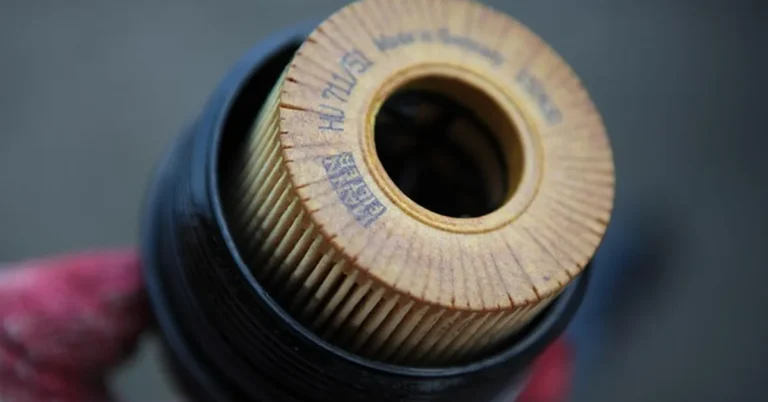
Before diving into the spec details, a quick word on filters. The factory filter is fine, but a quality aftermarket option like the BOSCH 3323 Premium Engine Oil Filter uses a silicone anti-drain back valve that keeps oil in the filter when the engine sits. That means less dry-start wear on cold mornings. It’s a small upgrade that costs a few dollars more and is worth it if you plan to keep the car past 150,000 miles.
Why the Right Oil Matters for Your 2026 CR-V
The 2026 CR-V came with two engines: the 2.4L K24W9 four-cylinder in most trims, and the 1.5L turbo in the Touring model. Both engines were designed around a specific oil viscosity. Honda engineers didn’t pick 0W-20 at random—they chose it for the hydraulic variable timing control (VTC) actuator and the fuel economy targets.
Here’s where it gets interesting. The VTC actuator on the K24W9 uses oil pressure to adjust camshaft timing. If the oil is too thick when cold, the actuator can make a rattling noise on startup, especially in cooler weather. That’s a common complaint on forums, and it’s almost always from owners who switched to 5W-30 or 10W-30. The oil pump simply can’t push thick oil through the small passages fast enough at startup.
There’s also the fuel economy angle. Thicker oil creates more drag on moving parts. The difference between 0W-20 and 5W-30 might only cost you 1-2 MPG, but over 10,000 miles a year, that’s real money. And the EPA ratings for the CR-V were certified with 0W-20 in the crankcase.
The Only Oil Spec You Need (0W-20 vs. 5W-30)
Let’s settle this debate right now. The 2026 Honda CR-V requires SAE 0W-20 oil that meets API SN or higher and ILSAC GF-5 standards. That’s the spec printed inside the owner’s manual, and it’s non-negotiable if you want the engine to perform as designed.
Can you use 5W-30 in an emergency? Sure, if it’s all you have and you’re stranded. But it’s not a long-term solution. The thicker oil will reduce fuel economy slightly, may cause VTC actuator noise on cold starts, and in extreme cold weather, it can lead to inadequate lubrication during the first few seconds after startup. The oil pump has to work harder, and the engine has to push through more resistance.
What about high-mileage formulations? If your CR-V has over 100,000 miles, a high-mileage 0W-20 is a reasonable choice. It contains seal conditioners that can help reduce minor leaks. Just make sure it still meets the API SN and ILSAC GF-5 ratings. Don’t step up to 5W-30 just because the odometer is high—that’s an old mechanic’s myth that doesn’t apply to modern engines with tight tolerances.
| Oil Viscosity | Recommended? | Cold Start Performance | Fuel Economy Impact | VTC Actuator Noise Risk |
|---|---|---|---|---|
| 0W-20 (API SN / ILSAC GF-5) | Yes—factory spec | Excellent, flows well at -30°F | Baseline | None |
| 5W-30 | Not recommended | Good, but thicker at cold temps | 1-2 MPG worse | Possible on cold starts |
| 0W-16 | No—too thin for this engine | Excellent, but insufficient film strength | Slightly better, but risky | Not applicable |
| 10W-30 | No—way too thick | Poor in winter | 2-3 MPG worse | Likely |
One more thing on oil standards. Look for the API donut symbol and the ILSAC starburst on the bottle. These certifications guarantee the oil has passed specific tests for wear protection, sludge prevention, and fuel economy. A generic “synthetic blend” without these marks isn’t worth the risk, even if it’s cheaper.
Exact Oil Capacity and Filter Part Numbers
You need the right amount of oil, and that depends on which engine you have. Here are the exact figures.
2.4L K24W9 Engine Specifications
The 2.4L engine holds 4.5 quarts of oil with a filter change. Without a filter change, it’s about 4.2 quarts, but you should always change the filter with the oil, so plan on 4.5 quarts. The drain plug is a 17mm bolt, and it should be torqued to 29 lb-ft. The oil filter is the standard Honda thread (20mm), and the OEM part number is 15400-PLM-A02. The Bosch 3323 is a direct replacement.
You’ll find the engine code printed on a sticker on the valve cover. It’ll say K24W9 clearly. If you see K24Z7, that’s from the previous generation—different engine, different oil spec. The 2026 model is definitely K24W9 for the non-turbo trims.
1.5L Turbo (If Applicable) Specifications
The 1.5L turbo in the Touring trim also uses 0W-20, but the capacity is slightly different. It holds 4.2 quarts with a filter change. The drain plug is the same 17mm size with the same 29 lb-ft torque spec. The oil filter is the same thread and part number as the 2.4L, so you don’t need a different filter for the turbo model.
The turbo engine runs hotter, so check the oil level more frequently. Turbos can burn a little oil between changes, especially if you drive aggressively. A quick dipstick check every other fuel fill-up is a good habit.
How Often to Change the Oil (Maintenance Minder Explained)
Honda doesn’t use a fixed mileage interval anymore. The Maintenance Minder system calculates oil life based on your driving conditions. It monitors engine temperature, RPM, vehicle speed, and time since the last reset. The result is a percentage that counts down from 100% to 0%.
Here’s the part most people get wrong. The system might say 15% oil life at 7,500 miles if you do mostly highway driving. But if you do mostly stop-and-go city driving, it might hit 15% at 5,000 miles. That’s the system working as intended. The “severe service” schedule in the owner’s manual is a backup for people who never let the system work, but the Maintenance Minder already accounts for severe conditions.
Should you change the oil at exactly 15%? No. Honda recommends changing it when the oil life hits 15% or less, but you have a buffer. The system will start displaying a maintenance code (like A1 or B1) that tells you what’s due. Change it when you see that code, or within 500 miles of it appearing. Don’t push it past 0%—that’s when the oil has exceeded its safe service life.
One caveat: if you do a lot of short trips (under 10 miles) in cold weather, the Maintenance Minder might not account for fuel dilution. Gasoline can seep past the piston rings into the oil when the engine never fully warms up. If you have a 1.5T and do mostly short trips, consider changing the oil every 5,000 miles regardless of what the minder says.
Step-by-Step DIY Oil Change Guide
Changing the oil on a 2026 CR-V is a 30-minute job with basic hand tools. Here’s the complete walkthrough, including the reset procedure that most guides forget.
Tools and Supplies Needed
- 4.5 quarts of 0W-20 oil (for the 2.4L) or 4.2 quarts (for the 1.5T)
- Bosch 3323 or equivalent oil filter
- 17mm socket or wrench for the drain plug
- Oil filter wrench (a cap-style wrench that fits 20mm threads works best)
- Drain pan with at least 6-quart capacity
- New crush washer for the drain plug (Honda part 94109-14000)
- Funnel for filling
- Shop rags or paper towels
Draining the Old Oil Safely
Start by warming the engine for 2-3 minutes. Warm oil flows faster and carries more suspended contaminants. Don’t drive the car—just let it idle. Then park on level ground, engage the parking brake, and chock the rear wheels.

Slide under the car and locate the drain plug. It’s on the passenger side of the oil pan, pointing toward the rear. Position the drain pan underneath, then loosen the plug with the 17mm socket. Turn it counterclockwise by hand once it’s loose—it’s under pressure from the oil, so keep your fingers clear. Let the oil drain for at least 10 minutes. While it drains, move the filter location.
The oil filter is on the front of the engine, down low. It’s a black canister about 3 inches in diameter. Use the filter wrench to loosen it, then spin it off by hand. Expect a splash of oil when it comes off—have the drain pan ready. Wipe the filter mounting surface with a clean rag to remove any old gasket material.
Install the new filter by smearing a thin coat of fresh oil on the rubber gasket, then threading it on by hand until it makes contact. Tighten it an additional 3/4 turn. Don’t use a wrench to over-tighten—hand tight plus 3/4 turn is correct.
Replace the drain plug with the new crush washer. Torque it to 29 lb-ft. If you don’t have a torque wrench, snug it firmly and then add a quarter turn. Over-tightening can strip the oil pan threads, which is a costly repair.
Lower the car and fill with oil. For the 2.4L, pour in 4.5 quarts. For the 1.5T, pour in 4.2 quarts. Replace the filler cap, start the engine, and let it idle for 30 seconds. The oil pressure light should go out within a few seconds. Shut the engine off and wait 5 minutes for the oil to settle.
Now check the dipstick. Pull it out, wipe it clean with a lint-free rag, reinsert it fully, and pull it out again. The oil level should be between the lower and upper marks. If it’s at the lower mark, add a half quart. If it’s at the upper mark, you’re good. Do not overfill—excess oil can cause foaming and aeration, which damages bearings over time.
Resetting the Maintenance Minder Light
This is the part that stumps everyone. After an oil change, you need to reset the Maintenance Minder. Here’s how:
- Turn the ignition to ON (don’t start the engine).
- Press the “Info” button on the steering wheel until the oil life percentage appears on the display.
- Press and hold the “Info” button for about 10 seconds.
- The display will start blinking. Release the button.
- Press and hold the “Info” button again for 5 seconds.
- The oil life should reset to 100%. If it doesn’t, repeat the process.
If your CR-V has the touchscreen infotainment, the reset is done through the settings menu on the screen, not the steering wheel. Go to Settings, then Vehicle, then Maintenance Minder, and select “Reset.” It takes about 15 seconds.
Common Mistakes to Avoid (Overfilling, Wrong Filter)
The most common DIY mistake is overfilling. The difference between 4.5 and 5 quarts seems small, but that extra half quart can push the oil level above the full mark. The crankshaft will churn the oil, creating foam that doesn’t lubricate properly. You’ll notice a rough idle and maybe a slight oil smell. If you overfilled, drain a little out—don’t drive it.
Using the wrong filter is another issue. Some aftermarket filters are shorter or have a different bypass valve setting. The Bosch 3323 matches the OEM dimensions exactly, so it’s a safe bet. Avoid the cheap no-name filters at discount stores—they often lack the anti-drain back valve, which means the filter is empty at startup and the engine runs dry for a second.
Forgetting the crush washer is a classic leak source. The old washer gets compressed and won’t seal properly on the second use. A new one costs about a dollar. Replace it every time.
Finally, don’t trust the “lifetime” oil filter marketing. There’s no such thing. Change the filter with every oil change, period.
Frequently Asked Questions
Can I use 5W-30 instead of 0W-20 in my 2026 CR-V?
You can, but you shouldn’t. The engine was designed for 0W-20. Using 5W-30 reduces fuel economy by 1-2 MPG, increases the risk of VTC actuator rattle on cold starts, and may cause the oil pressure to be higher than the engine’s hydraulic system expects. If you’re in a bind and 0W-20 isn’t available, 5W-30 is acceptable for one oil change, but switch back as soon as possible.
How do I check the oil level correctly?
Park on level ground, turn the engine off, and wait 5-10 minutes for the oil to drain back into the pan. Pull the dipstick, wipe it clean, reinsert it fully, and pull it out again. The oil level should be between the two marks. Check it when the engine is warm, not cold—cold oil reads higher and can fool you into thinking you have more than you do.
Is full synthetic oil required, or can I use a blend?
Honda specifies 0W-20, and most 0W-20 oils are full synthetic or a synthetic blend. The owner’s manual doesn’t require full synthetic, but it’s recommended for the 1.5T engine because it runs hotter. A quality synthetic blend like the ones from major brands meets the spec. Full synthetic offers better protection at extreme temperatures and lasts longer, so it’s worth the extra cost if you plan to keep the car.
What happens if I don’t reset the Maintenance Minder?
Nothing catastrophic, but the system will keep showing the old oil life percentage, and you’ll get a reminder to change the oil that’s already done. The display will eventually show a negative percentage, which is annoying. More importantly, if you don’t reset it, you’ll lose track of the actual oil life for the next interval. Reset it every time.
Where is the engine code located on my 2026 CR-V?
Open the hood and look at the top of the engine. There’s a white or silver sticker on the valve cover that says “K24W9” or “L15B7” (for the turbo). That’s the engine code. You can also find it in the owner’s manual or on the driver’s side door jamb sticker, but the valve cover is the fastest way to confirm which engine you have.
Final Verdict: Best Oil Brands for Longevity
You don’t need the most expensive oil on the shelf, but you shouldn’t buy the cheapest either. Stick with name brands that clearly display the API SN and ILSAC GF-5 certifications. Mobil 1 Advanced Fuel Economy, Pennzoil Ultra Platinum, and Castrol Edge are all excellent choices in 0W-20. If you want to save a few dollars, the store-brand full synthetic from Walmart or Costco meets the same spec and is fine.
Pair your oil with a quality filter like the Bosch 3323, and you’re set for another 7,500 miles. The 2026 CR-V is a reliable crossover if you treat it right. The oil change is the single most important maintenance task, and now you know exactly how to do it.
For reference on other Honda models, check our 2026 CR-V oil capacity guide or the synthetic oil guide for the 2026 CR-V. If you’re curious about whether all Honda filters are interchangeable, read our Honda oil filter comparison.
- Use 0W-20 with API SN and ILSAC GF-5 certifications—no exceptions for normal driving.
- Capacity is 4.5 quarts for the 2.4L and 4.2 quarts for the 1.5T, both with filter change.
- Torque the 17mm drain plug to 29 lb-ft and replace the crush washer every time.
- Change the oil when the Maintenance Minder hits 15%, not on a fixed schedule.
- Reset the Maintenance Minder after every change using the steering wheel button or touchscreen.
- Check the dipstick warm, on level ground, and never overfill.
- Use a quality filter with an anti-drain back valve, like the Bosch 3323.
Products related to this article
Sponsored / affiliate links. As an Amazon Associate I earn from qualifying purchases. I may earn additional commission from eligible campaigns.
 MSMUSAS 2026 New Engine Oil Dipstick Oil Level Dipstick - Replace Part 120 589 07 21 00, 120589072100 - Compatible with Mercedes-Benz R500 2006-2007
 MSMUSAS 2026 New Engine Oil Dipstick Oil Level Dipstick - Replace Part 120 589 07 21 00, 120589072100 - Compatible with Mercedes-Benz SLK55 AMG 2005-2010