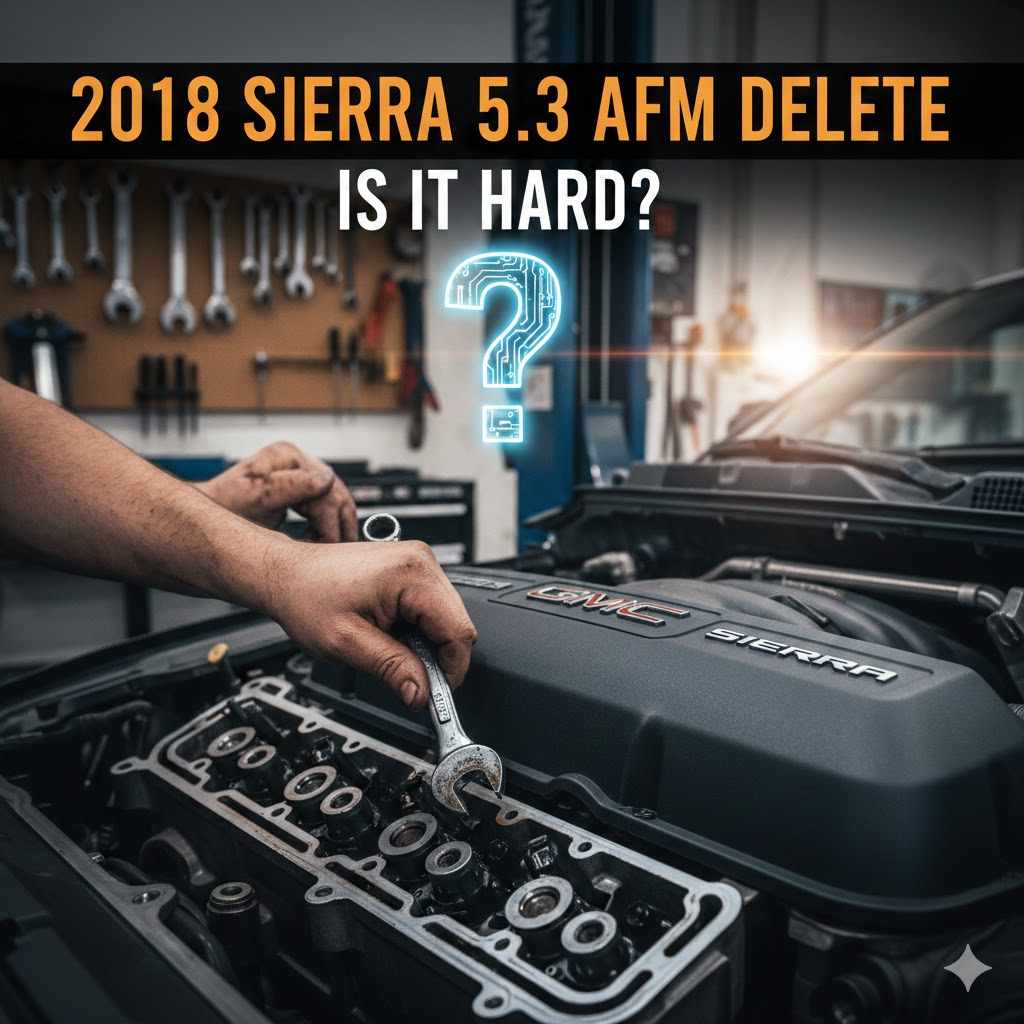
2018 Sierra 5.3 AFM Delete Is It Hard
Many truck owners wonder if a 2018 Sierra 5.3 AFM Delete: Is It Hard?. It sounds like a big job, and for some, it might be. But don’t worry, it’s often simpler than people think.
This guide will break it down step-by-step, making it easy to follow. We’ll cover everything you need to know to get your Sierra running smoothly without the Active Fuel Management system. Get ready to learn how to do this yourself.
What Is AFM And Why Delete It
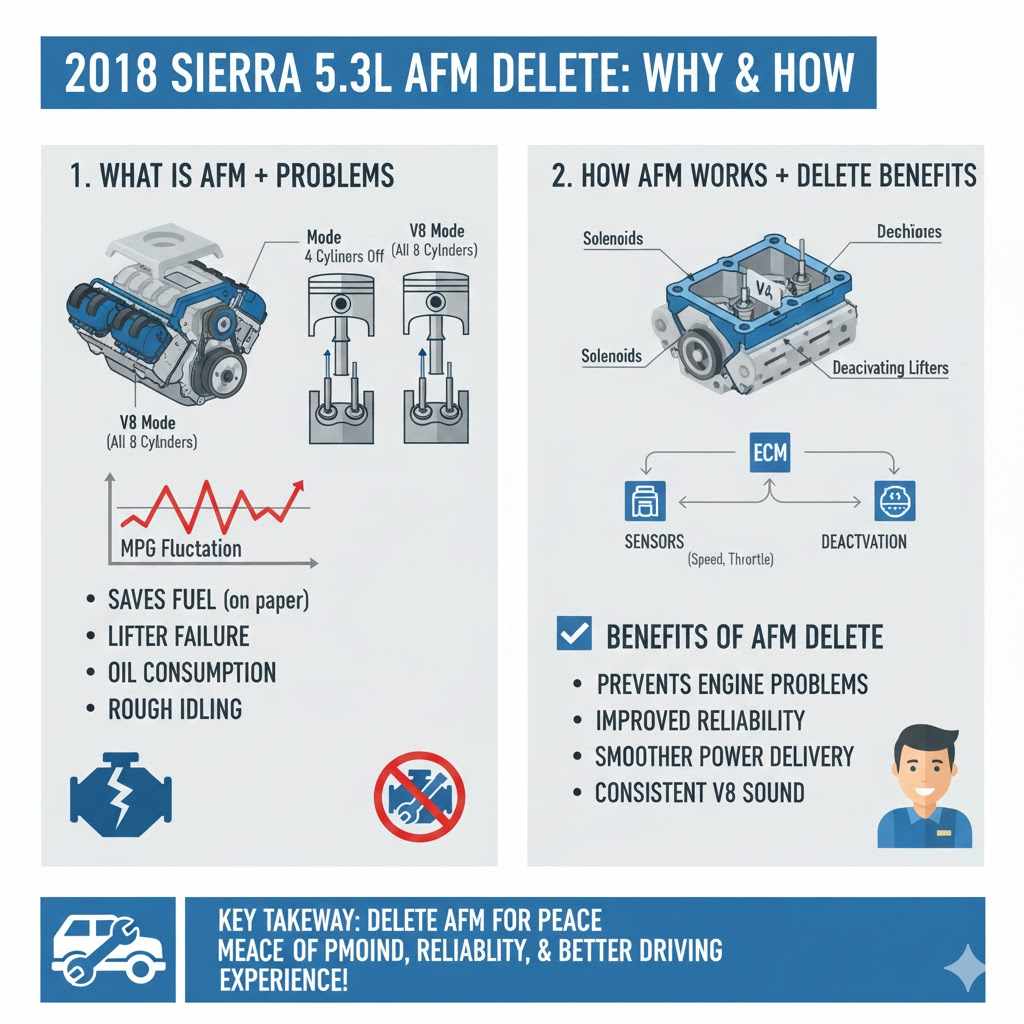
AFM, or Active Fuel Management, is a system in many GM trucks, including the 2018 Sierra with the 5.3L engine. It’s designed to save fuel by shutting off cylinders when they aren’t needed. For example, on the highway, it might switch from eight cylinders to four.
This helps improve your miles per gallon, at least on paper. However, many owners report issues with this system.
Common problems include lifter failure, oil consumption, and rough idling. These issues can be costly to repair. The AFM system puts extra stress on certain engine parts.
When cylinders are shut off, oil pressure can fluctuate. This can lead to premature wear on the lifters and camshaft. Some owners also notice a slight hesitation or jerky feeling when the system engages or disengages.
This can be quite annoying during daily driving. The desire to eliminate these potential problems is why many look for an AFM delete.
How AFM Works
The AFM system works by using special oil pressure controls. These controls tell solenoids to deactivate specific lifters. When a lifter is deactivated, it doesn’t open the corresponding valve.
This effectively shuts down that cylinder. The engine control module (ECM) manages when and how many cylinders are shut off. It uses sensors to monitor throttle position, speed, and other factors.
The goal is to keep the engine running smoothly even with fewer active cylinders.
The process is quite automatic. When you’re cruising at a steady speed and not accelerating hard, the system kicks in. You might feel a slight change in the engine’s sound or vibration.
This is the system switching between V8 and V4 mode. The transition is designed to be as seamless as possible. However, not all vehicles achieve this seamlessness.
Some drivers find the switch noticeable and disruptive. This is a major reason why people consider an AFM delete.
Reasons For AFM Problems
The main reason AFM causes problems is the increased stress on certain parts. When only half the cylinders are firing, the load is uneven. This can lead to premature wear on the camshaft and lifters.
The oil system also plays a critical role. The solenoids and deactivation mechanisms are complex. If they malfunction, it can cause severe engine damage.
Oil sludge and carbon buildup can also clog the small passages within the AFM system. This prevents proper operation and can lead to failure.
Another issue is related to the exhaust system. With fewer cylinders firing, the exhaust pulses are less frequent. This can affect the performance of the catalytic converter.
It can also lead to different exhaust sounds. Some people don’t like the quieter, less powerful sound of the V4 mode. The engine can also develop a “shudder” or vibration when the AFM system is active.
This is due to the uneven firing. It can make the truck feel less refined.
Benefits Of An AFM Delete
Removing the AFM system can bring several advantages. The most significant is the prevention of future engine problems. By disabling AFM, you eliminate the risk of lifter failure and camshaft wear associated with it.
This can save you a lot of money on repairs. Many owners also report improved engine reliability and a more consistent power delivery. The engine will always run on all eight cylinders, providing a smoother and more predictable performance.
Some people also notice a slight improvement in fuel economy, contrary to what the system was designed for. This can happen because the engine doesn’t have to work as hard to overcome the drag from inactive cylinders. Others report a more satisfying engine sound.
The V8 rumble is always present. It can feel more responsive. The overall driving experience can become more enjoyable.
It’s about peace of mind and a more robust engine performance.
Is A 2018 Sierra 5.3 AFM Delete: Is It Hard?
When asking 2018 Sierra 5.3 AFM Delete: Is It Hard?, the answer depends on your comfort level with mechanical work and the specific method you choose. For many DIYers, it’s a manageable project. There are a couple of main ways to disable AFM.
One involves using a simple plug-in device, while the other is a more involved physical modification. Both have their pros and cons regarding difficulty and cost. Understanding these options will help you decide.
The easiest method is using a deactivation module. These devices plug into your truck’s OBD-II port. They essentially tell the engine computer to keep all cylinders active.
This requires no tools and takes minutes. The more involved method is a physical AFM delete. This usually involves replacing certain internal engine components.
It’s more complex and requires more mechanical skill. We will explore both options to give you a clear picture. Let’s see what’s involved in each.
Method 1 The AFM Disabler Module
This is by far the easiest and most common way to disable AFM. An AFM disabler module, sometimes called a DOD (Displacement on Demand) delete module, is a small electronic device. You plug it directly into your truck’s diagnostic port, usually located under the dashboard.
Once plugged in, it immediately prevents the AFM system from engaging. You don’t need to remove any engine parts or make any permanent changes to your truck.
The module works by sending a constant signal to the engine control module (ECM). This signal tells the ECM that AFM should remain inactive. It’s like tricking the computer into thinking the conditions for AFM engagement are never met.
These modules are readily available online from various aftermarket companies. They are designed specifically for GM vehicles. Installation typically takes less than five minutes and requires no special tools.
This is a great option for beginners or those who want a quick and reversible solution.
Pros Of Using A Module
- Extremely easy to install no mechanical skills needed.
- Takes only minutes to set up.
- Completely reversible if you ever want to re-enable AFM.
- No permanent changes to the engine.
- Relatively inexpensive compared to physical modifications.
- Avoids potential warranty issues with the powertrain.
The simplicity of an AFM disabler module makes it appealing to a wide range of truck owners. You don’t have to worry about opening up your engine or dealing with intricate parts. If you decide to sell your truck or change your mind, you can simply unplug the module.
The AFM system will return to its original factory settings. This reversibility is a significant advantage. It offers flexibility without commitment.
The cost is also a major factor. For under a few hundred dollars, you can gain peace of mind. This is often much less than the potential cost of AFM-related repairs.
Cons Of Using A Module
- May not be recognized by all emissions testing equipment in some states.
- Some users report a slight delay in the module activating after starting the truck.
- Doesn’t physically remove the AFM components, which some purists prefer.
While modules are convenient, they aren’t perfect for everyone. In some regions, emissions testing might flag the presence of a non-factory device. You should check your local regulations.
Also, there’s a small chance the module might not immediately prevent AFM engagement upon startup. This means there could be a brief moment where AFM could try to activate before the module fully takes over. However, for most users, this is not a noticeable issue.
It’s a software bypass, not a physical removal, which might bother those who want the system completely gone.
Method 2 The Physical AFM Delete Kit
This method involves physically removing or replacing the components responsible for AFM. It’s a more in-depth procedure. It typically requires removing the intake manifold, valve covers, and possibly the oil pan.
The AFM lifters are then
A physical AFM delete kit usually includes all the necessary parts. This often consists of new lifters, gaskets, seals, and sometimes a new camshaft. The process can take several hours, even for experienced mechanics.
It requires specialized tools and a good understanding of engine mechanics. This is a permanent modification. Once done, the AFM system is completely gone from your engine.
This method is often chosen by those who plan to keep their truck for a long time or who want to optimize engine performance.
Components Of A Physical Delete Kit
- Replacement lifters designed for full cylinder operation.
- A new camshaft (optional, for performance gains).
- Lifter trays or guides.
- New gaskets and seals for intake manifold, valve covers, etc.
- Oil pump bypass or replacement (depending on the kit).
- A tune for the engine control module (ECM) to prevent AFM-related codes.
A comprehensive physical AFM delete kit is designed to completely bypass the system. Standard lifters are used, which are more robust and designed for constant operation. If you opt for a performance camshaft, you can achieve better power and torque gains.
This is because the new camshaft profile can optimize airflow and combustion for all eight cylinders. The gaskets and seals are crucial for preventing leaks after reassembly. The ECM tune is vital.
It ensures the computer doesn’t throw error codes because it can no longer communicate with the AFM solenoids.
Difficulty Level Of Physical Delete
Performing a physical AFM delete is considered a moderate to difficult task for a DIYer. It involves working deep inside the engine. You need to be comfortable with disassembling and reassembling complex engine parts.
Safety is paramount. You must follow proper procedures to avoid damaging the engine. This includes torque specifications for bolts and correct gasket installation.
If you have limited experience with engine work, it’s highly recommended to have a professional mechanic perform this job.
The process requires specialized tools like torque wrenches, engine hoist (sometimes), and specific socket sets. You’ll also need a good service manual for your specific truck model. Improper assembly can lead to serious engine problems, such as oil leaks, coolant leaks, or even complete engine failure.
The cost of parts for a physical delete kit can also be significant, often several hundred dollars. This, combined with the labor involved, makes it a more substantial investment than a simple module.
Understanding The Engine Control Module (ECM) Tune
Whether you use an AFM disabler module or a physical delete kit, managing the ECM is key. An ECM tune is often necessary, especially with a physical delete. The tune tells the engine computer that AFM is no longer active.
This prevents it from trying to engage the system and triggering error codes. Without a proper tune, your truck might run poorly or have a “check engine” light on.
Some AFM disabler modules work by simply blocking the AFM signal. Others might require a minor tune. For a physical delete, a full tune is almost always required.
Tuning can be done with specialized handheld devices or by sending your ECM to a tuning company. A good tune can also optimize engine performance. It can adjust fuel and ignition timing for better power and efficiency.
It ensures all engine systems work together harmoniously after the AFM modification.
Why Tuning Is Important
The engine control module (ECM) in your 2018 Sierra 5.3 is programmed to manage the AFM system. It monitors various sensors to decide when to activate or deactivate cylinders. If you physically remove the AFM components, the ECM will still expect them to be there.
It will try to send signals to the solenoids and lifters. Since these parts are gone, the ECM will register a fault.
This fault will typically illuminate the “check engine” light. It might also put the engine into “limp mode,” which severely limits power. A tune overwrites the factory programming related to AFM.
It essentially tells the ECM to ignore the AFM system entirely. This allows the engine to run smoothly on all eight cylinders without triggering any error messages. For owners who have had their AFM lifters fail, a tune is crucial to prevent future issues and ensure the engine runs as it should.
Tuning Options Available
There are several ways to get your Sierra’s ECM tuned. One popular method is using a handheld tuner device. These devices plug into your OBD-II port and allow you to upload pre-made or custom tunes.
Brands like HP Tuners and Diablosport offer such devices. You can often buy tunes specific to an AFM delete for your truck’s year and engine. Some tuners also allow for custom tuning, where a professional calibrator adjusts the tune based on your specific modifications and driving style.
Another option is to send your ECM to a tuning specialist. They will reprogram it and send it back to you. This method requires your truck to be out of commission while the ECM is being serviced.
For those seeking the best performance, custom tuning is the way to go. A custom tune can optimize fuel delivery, ignition timing, and transmission shift points. It can significantly improve the overall driving experience.
It also ensures the engine is running safely and efficiently after the AFM delete.
What Tools And Parts Are Needed
Deciding on the approach for your 2018 Sierra 5.3 AFM Delete: Is It Hard? question means gathering the right supplies. For the simple module method, you really only need your hands and maybe a flashlight to find the OBD-II port. The physical delete is where the tool list grows significantly.
It requires a range of mechanic’s tools. Having the correct parts is also essential for a successful job.
Let’s break down what you’ll need for both scenarios. This will help you prepare and understand the scope of the work involved. It’s always better to have everything ready before you start.
This avoids frustrating trips to the auto parts store mid-project. You want the job to go as smoothly as possible.
Tools For AFM Disabler Module Installation
- A flashlight or work light to see the OBD-II port.
- Your 2018 Sierra 5.3.
- The AFM disabler module itself.
Honestly, that’s pretty much it. The beauty of the module approach is its simplicity. You just need to locate the port, which is usually on the driver’s side under the dashboard.
Plug it in, and you’re done. No wrenches, no sockets, no specialized equipment. It’s designed for absolute ease of use.
This makes it accessible to anyone who can reach under their dashboard.
Make sure you buy a reputable module designed for your specific truck. Companies like Range Technology or Trifecta Performance offer popular options. They are generally plug-and-play.
Always follow the manufacturer’s specific instructions that come with the module. Some may have a small button or LED indicator, but the core installation is always the same – plug it in.
Tools For Physical AFM Delete Kit Installation
This is where the tools become more extensive. You will need a comprehensive mechanic’s toolkit. Here’s a list of common items:
- Socket set (metric, various sizes, including deep sockets)
- Wrench set (metric)
- Torque wrench (essential for reassembly)
- Ratchet set with extensions and universal joints
- Screwdriver set (Phillips and flathead)
- Pliers set (needle-nose, slip-joint)
- Pry bars
- Drain pan for oil and coolant
- Funnel for refilling fluids
- Gasket scraper
- Rags and shop towels
- Gloves (nitrile or latex)
- Safety glasses
- Jack and jack stands (if working from underneath)
- Engine hoist or support bar (depending on approach)
- OBD-II scanner for checking codes and potentially tuning
- Service manual for your 2018 Sierra 5.3
Depending on how you access the engine, you might need more specialized tools. For instance, if you need to remove the engine mounts, you’ll need tools for that. The service manual is your best friend here.
It will detail exactly what tools are required for each step and the correct torque values for every bolt.
Engine Reassembly Tools
When putting the engine back together, precision is key. A good quality torque wrench is not optional. Over-tightening or under-tightening bolts can lead to leaks or catastrophic engine failure.
You’ll need to follow the torque specifications listed in your service manual precisely. This applies to everything from valve cover bolts to intake manifold bolts.
Having extension bars for your sockets will be a lifesaver. Many bolts are in hard-to-reach places. Universal joints can also help you get at awkward angles.
A magnetic pickup tool is also handy for retrieving dropped bolts or small parts. Cleanliness is paramount during reassembly. Make sure all mating surfaces are perfectly clean before applying new gaskets and tightening bolts.
Parts Required For Physical AFM Delete
When you purchase a physical AFM delete kit, it usually contains most of what you need. However, it’s good to know what’s inside:
- AFM Lifter
- Camshaft: Some kits include a performance camshaft designed for all-eight-cylinder operation. This is optional but highly recommended for maximizing gains.
- Gaskets and Seals: A full set of necessary gaskets and seals, including intake manifold gaskets, valve cover gaskets, and front/rear main seals if needed.
- Oil Pump Components: Depending on the kit, it might include a new oil pump or components to bypass the AFM oil control system.
- Pushrods and Rocker Arms: Sometimes these are also
- ECM Tune: As mentioned, a tune is critical. This might be included in the kit or purchased separately.
Always ensure the kit you buy is specifically for the 2018 Sierra 5.3L engine. There can be subtle differences between model years and engine variants. Reading reviews and checking compatibility is essential.
Some kits might require you to reuse certain factory parts. Make sure you know which parts are included and which you might need to source separately.
What Else To Consider Purchasing
Beyond the core kit, you might want to consider purchasing additional items. Fresh engine oil and a new oil filter are a must. You’ll be draining the oil, so you’ll need to refill it.
High-quality synthetic oil is recommended.
You might also need new coolant if you have to drain the cooling system. It’s also a good time to inspect your spark plugs and potentially replace them. If your truck has high mileage, consider replacing spark plug wires or ignition coils as well.
A thorough cleaning of engine components during disassembly can also improve the overall outcome.
The Process Of Deleting AFM
Now that you know the methods and what you’ll need, let’s talk about the actual process. The question, “2018 Sierra 5.3 AFM Delete: Is It Hard?” really comes down to which path you take. We’ll detail both, making it clear what each involves.
The plug-and-play module is incredibly straightforward. The physical delete, however, is a significant undertaking. It requires patience, mechanical skill, and a methodical approach.
We’ll walk through the general steps so you can visualize the job.
Step-By-Step AFM Disabler Module Installation
This is designed to be a quick and easy process. Here’s how it typically works:
- Locate the OBD-II Port: This port is usually found on the driver’s side of the dashboard, near the steering column. It’s a trapezoidal connector.
- Plug In The Module: Insert the AFM disabler module firmly into the OBD-II port. It should click into place.
- Start The Truck: Turn the ignition key and start the engine. The module will begin working immediately.
- Confirmation (Optional): Some modules have an LED light that indicates it’s active. You can also monitor engine behavior to confirm AFM is not engaging.
That’s it. The whole process takes mere minutes. No tools are required beyond finding the port.
It’s the simplest solution for disabling AFM. It’s also fully reversible by just unplugging the module.
Step-By-Step Physical AFM Delete Procedure
This is a much more involved process. The exact steps can vary slightly depending on the specific kit and your truck’s configuration. Here’s a general overview:
- Preparation: Park the truck on a level surface. Disconnect the battery. Drain the engine oil and coolant.
- Disassembly: Remove the air intake system, any under-engine covers, and the exhaust manifold. You’ll then remove the intake manifold and valve covers.
- Lifter
- Camshaft Replacement (If Applicable): If you’re installing a new camshaft, do so now, ensuring it’s properly lubricated and timed.
- Reassembly: Install new gaskets and seals. Reinstall the valve covers, intake manifold, and exhaust manifold. Torque all bolts to specification.
- Fluid Refill: Refill the engine with fresh oil and the cooling system with coolant.
- ECM Tune: Connect your ECM tuning device or take your ECM to a tuner to implement the AFM delete tune.
- Final Checks: Reconnect the battery. Start the engine and check for leaks or unusual noises. Clear any diagnostic trouble codes.
This process requires significant mechanical knowledge and time. It can take a full weekend or more for a DIYer. If you are not comfortable with engine internals, it is best left to a professional mechanic.
Accessing Engine Components
Getting to the internal parts of the engine requires removing several external components. The intake manifold sits on top of the engine and needs to be removed to access the lifters. The valve covers are on the sides of the engine and must come off to get to the rocker arms and valve springs.
If you need to replace the camshaft, you might have to remove the radiator and fan assembly to get enough clearance. The oil pan at the bottom of the engine might also need to be removed, depending on the specific AFM delete kit and the strategy for disabling the oil control. This is why a service manual is absolutely essential for this job.
Replacing Lifters and Camshaft
This is the heart of the physical AFM delete. The AFM lifters are designed with a spring-loaded plunger that allows them to collapse. This deactivates the valve.
Standard lifters do not have this feature. They are solid and ensure the valve opens every time the camshaft lobe hits them.
When replacing the camshaft, it’s crucial to lubricate the lobes and bearings with specific camshaft assembly lube. This prevents premature wear during the initial startup. The timing chain or belt must also be correctly aligned with the new camshaft.
If the timing is off, the engine will not run correctly and could suffer severe damage.
Common Pitfalls To Avoid
When attempting an AFM delete, several things can go wrong. For modules, ensure you buy from a reputable source. A cheap, unbranded module might not work reliably or could even cause electrical issues.
For physical deletes, the biggest pitfalls involve cleanliness and proper reassembly. Dirt and debris can easily get into the engine during disassembly, causing damage. Not using a torque wrench or using incorrect torque values is another common mistake.
This can lead to leaks or component failure. Also, forgetting to disconnect the battery before starting work can lead to electrical shorts.
Importance Of A Clean Workspace
Working on an engine is like performing surgery. A clean environment is critical. Dust, dirt, and debris can easily fall into open engine ports.
These particles can cause significant damage to internal components like pistons, cylinders, and bearings. When you remove the intake manifold or valve covers, the openings are direct pathways into the engine’s combustion chambers.
Cover all open ports with clean rags or shop towels. Clean the surrounding areas thoroughly before removing parts. When reinstalling parts, make sure they are also clean.
This attention to detail prevents costly mistakes and ensures the longevity of your engine after the modification.
Torque Specifications And Sequences
Every bolt on your engine has a specific torque value and often a specific tightening sequence. This ensures that pressure is applied evenly across gaskets and components. For example, the intake manifold bolts must be tightened in a specific order and to specific torque values.
This prevents warping and ensures a good seal.
The valve covers also have a sequence. If you just tighten them randomly, you can create an uneven seal, leading to oil leaks. Using a torque wrench is non-negotiable for critical engine components.
Always refer to your service manual for the correct specifications. Failure to do so is one of the most common reasons for DIY engine repair failures.
Is It Worth It For Your 2018 Sierra 5.3?
So, after all this, is the answer to “2018 Sierra 5.3 AFM Delete: Is It Hard?” a simple yes or no? Not really. It’s more about understanding the effort versus the reward.
For many Sierra owners, the benefits of disabling AFM outweigh the challenges. The potential for avoiding costly repairs is a major draw. It also offers a more consistent and satisfying driving experience.
The decision really hinges on your mechanical skill, budget, and desired outcome. If you want a quick, easy fix, a module is the way to go. If you’re looking for a permanent, robust solution and don’t mind the work or expense, a physical delete is for you.
Let’s summarize what you gain.
Weighing The Pros And Cons
Here’s a quick rundown to help you decide:
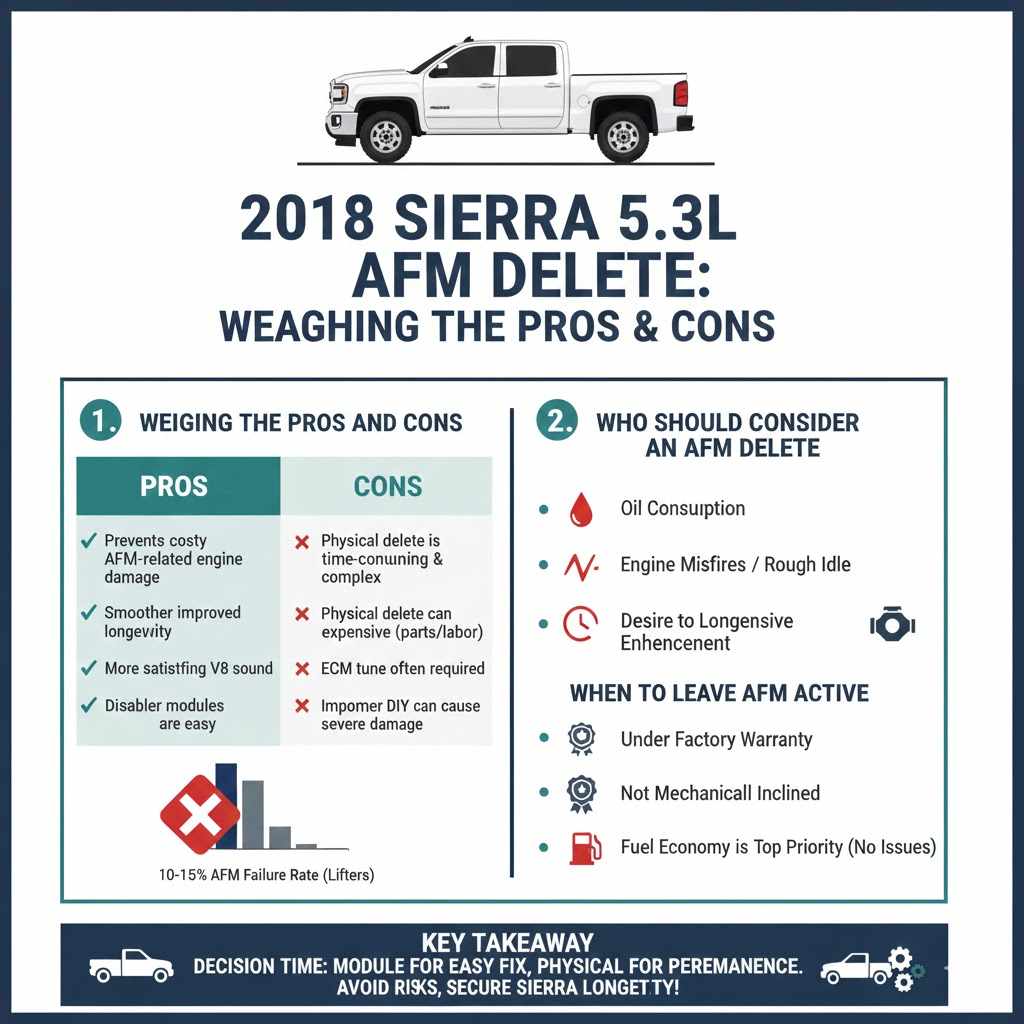
| Pros | Cons |
|---|---|
| Prevents costly AFM-related engine damage (lifters, camshaft). | AFM modules may not be compatible with all emissions tests. |
| Smoother engine operation and more consistent power delivery. | Physical delete is time-consuming and requires significant mechanical skill. |
| Potentially improved engine longevity. | Physical delete can be expensive due to parts and labor. |
| More satisfying engine sound (always V8). | ECM tune is often required for physical delete, adding cost and complexity. |
| AFM disabler modules are easy to install and remove. | Improper physical delete can lead to severe engine damage. |
The statistics on AFM failure rates are not always widely publicized by manufacturers, but owner forums and repair shops report a significant number of issues. Some estimates suggest that up to 10-15% of vehicles with AFM systems may experience problems over their lifespan, with lifter failure being the most common cause of catastrophic engine damage. This highlights the preventative value of an AFM delete.
Who Should Consider An AFM Delete
If your 2018 Sierra 5.3L is experiencing any of the following, an AFM delete is worth serious consideration:
- Oil Consumption: If you’re regularly adding oil between changes, it could be an AFM-related issue.
- Engine Misfires or Rough Idle: These can be early signs of lifter problems.
- Knocking or Ticking Sounds: A ticking noise from the engine, especially on startup, can indicate worn lifters.
- Desire for Longevity: If you plan to keep your truck for many years and want to ensure its engine health.
- Performance Enhancement: While not the primary goal, some enjoy the constant V8 feel and potential for slight improvements.
If your truck is running perfectly and you have no concerns, you might choose to leave it as is. However, many owners opt for a proactive approach to avoid future headaches and expenses. The peace of mind an AFM delete can provide is often invaluable.
When To Leave AFM Active
There are situations where you might choose not to delete AFM. If your truck is still under its factory warranty, and you’re concerned about voiding it, a plug-in module might be your safest bet, as it’s reversible. However, if a major AFM-related failure occurs, the manufacturer might still attribute it to the module.
Always check your warranty terms.
If you are not mechanically inclined and cannot afford professional installation, then a physical delete is out of the question. In such cases, a module is the only practical option. If fuel economy is your absolute top priority, and your truck is not experiencing any AFM issues, leaving the system active will likely give you the best possible MPG from the factory tune.
Frequently Asked Questions
Question: Can I do an AFM delete if my truck is still under warranty?
Answer: Using an AFM disabler module is generally considered the safest option if your truck is under warranty. It’s easily reversible. However, some manufacturers may still flag the use of such devices.
A physical delete kit will almost certainly void your powertrain warranty.
Question: How much does an AFM delete typically cost?
Answer: For an AFM disabler module, expect to pay anywhere from $100 to $300. A physical AFM delete kit can cost $500 to $1,000 or more for parts alone, plus the cost of labor if you hire a mechanic.
Question: Will disabling AFM affect my truck’s performance?
Answer: Most people report a more consistent throttle response and a stronger, smoother feel. You won’t experience the slight power dips or hesitations that can occur when AFM engages. Some also feel a slight improvement in acceleration.
Question: Does AFM delete improve gas mileage?
Answer: The results vary. While AFM is designed to improve MPG, it can sometimes lead to more stress and potential issues. Some owners report slightly better MPG after a delete because the engine doesn’t have to work as hard.
Others see no significant change.
Question: What happens if I don’t tune my ECM after a physical AFM delete?
Answer: If you perform a physical AFM delete without tuning your ECM, your truck will likely trigger a “check engine” light and may enter limp mode, severely restricting engine power. The computer will detect that the AFM system is not responding as expected.
Summary
The question of 2018 Sierra 5.3 AFM Delete: Is It Hard? has a clear answer: it depends on your chosen method. A plug-in module is very easy, while a physical delete requires considerable mechanical skill. Both offer significant benefits, primarily preventing costly engine problems and providing a more consistent driving experience.
Choose the path that best fits your abilities and goals.