Does Endurance Car Warranty Cover Everything? (Sample Contract)
No Endurance plan covers everything, and the company’s own sample contract says so in its first paragraph: it is a vehicle service contract, “not a warranty or insurance policy,” and covers only the repairs and parts it lists. This guide reads that published sample (form VSC-01DE, 04/25, read on 2026-10-13) alongside the FTC consumer page on auto warranties and service contracts to show what is covered, what is excluded, and what to check before signing.
Endurance Warranty Plans and What the Sample Contract Says
Endurance’s sample contracts page offers sample contracts by plan name. Secure, Secure Plus, Superior and Supreme link to the same 16-page PDF, and the text inside also names a Supreme Wrap plan. Advantage and Premier have their own sample files that this article did not read, so nothing below applies to those two plans. Your own contract is the only binding document and can differ from the sample.
 |
Best Pick for Keeping Service Records Spiral Bound Vehicle Maintenance Log Book, A5 size The sample contract asks owners to keep a maintenance log that lines up with receipts. A paper log is one way to start that habit, though it only helps if you also keep the receipts.
|
As an Amazon Associate we earn from qualifying purchases. Spec-based pick from the listing, not a hands-on test.
The plans work in two different ways, and that single difference explains most of the confusion online. Secure, Secure Plus and Superior are “listed component” plans: a part is covered only if the contract names it. Supreme is described in the sample as covering any breakdown of all parts, including seals and gaskets, except items listed in the exclusions section. Neither design means everything is covered.
| Plan in the sample | How coverage is defined | What the sample lists | Liability cap in the sample |
|---|---|---|---|
| Secure | Listed components only | Engine, turbo or supercharger, transmission, drive axle, transfer unit, seals and gaskets (with a covered repair) | Lesser of $10,000 or J.D. Power average trade-in value |
| Secure Plus | Listed components only | Everything in Secure plus brakes, steering, electrical, air conditioning | Lesser of $10,000 or J.D. Power average trade-in value |
| Superior | Listed components only | Adds suspension, fuel system and cooling system to the Secure Plus list | J.D. Power average trade-in value |
| Supreme | Exclusionary: covered unless excluded | Any breakdown of any part, including seals and gaskets, except Section VIII exclusions | J.D. Power average trade-in value |
| Supreme Wrap | Exclusionary, wraps the factory powertrain warranty | Described as paying around the manufacturer’s powertrain warranty | J.D. Power average trade-in value |
Source: Endurance sample contract, Sections III.E and VI.C, read 2026-10-13. Prices are not in the sample, so none are given here.
The liability cap deserves a second look. In the sample, once the combined maximum is reached, the contract and its transfer and cancellation rights end. On the higher plans that cap is the vehicle’s average trade-in value at the time of repair, which matters on an older car. To estimate it, see how to determine the actual cash value of your car.
What Does Endurance Car Warranty Actually Cover?
The table below combines the sample’s component lists and exclusions. It describes the sample text, not a promise about any claim, because coverage also depends on a genuine breakdown, a finished waiting period and prior authorization.
| Component group | Listed plans: covered when named | Supreme | Commonly excluded or limited in the sample | Where it says so |
|---|---|---|---|---|
| Engine internals | Yes, on every listed plan: pistons, bearings, crankshaft, timing parts, water pump, oil pump | Covered unless excluded | Block and heads damaged by overheating; oil-consumption or compression repairs; sludge or carbon causes | VI.C.1.a; VIII.C, VIII.I |
| Transmission and drive axle | Yes: internally lubricated parts, torque converter, axle shafts, CV joints (boots intact) | Covered unless excluded | Clutch disc and pressure plate on a manual; housings only if an internal part failed | VI.C; VIII.B |
| Brakes | Secure Plus and up: master cylinder, calipers, hydraulic lines, ABS sensors and pump | Covered unless excluded | Brake pads, linings, shoes, rotors and drums | VI.C.2.f; VIII.B |
| Steering and suspension | Steering from Secure Plus; suspension from Superior, including hydraulic struts and shocks | Covered unless excluded | Air, MagneRide and electronic struts or shocks on listed plans; alignments and adjustments | VI.C.2.g, VI.C.3.j; VIII.B |
| Electrical and A/C | Secure Plus and up: alternator, starter, window motors; A/C compressor, condenser, evaporator | Covered unless excluded | Fuses, bulbs, lenses, battery and cables, speakers, cellular phones | VI.C.2.h-i; VIII.B |
| Seals and gaskets | Only alongside a covered repair; minor fluid loss or seepage is called normal | Included | Standalone minor seepage on listed plans | VI.C.1.f; VI.C.4 |
| Tires, wheels, glass, paint, trim, body | Not listed | Excluded | Tires, tire pressure sensors, wheels, glass, paint, bumpers, body panels, upholstery | VIII.B |
| Exhaust and emissions | Not listed | Excluded | All exhaust components, catalytic converter, EGR parts, vapor canister | VIII.B |
| Airbags and restraints | Not listed | Excluded | Safety restraint systems, including air bags | VIII.B |
| Routine maintenance | Not listed | Excluded | Spark plugs, drive belts, wiper blades, filters and fluids (fluids only with a covered breakdown), tune-ups | VIII.B |
Two lines in that table answer the questions people type into search most often. First, the sample says tires are excluded, along with wheels and tire pressure sensors. Second, hydraulic struts and shocks are listed from Superior upward, while air, MagneRide and electronic struts or shocks are carved out of that list. A struts claim therefore depends on both your plan and your strut type.
Does Endurance Cover ADAS or Safety Systems?
It depends on the plan and on an add-on. The sample describes a High Tech Option, available on Superior and included with Supreme, that covers backup camera and sensors, perimeter warning, the video system and display screen, GPS and navigation, blind spot sensors, the electronic driver information display and anti-theft systems (remote excluded). Lane-keeping cameras, radar units and automatic emergency braking sensors are not named in that list, and the sample does not mention ADAS calibration at all.
Airbags and other restraint systems are excluded, and so is programming or updating a component that has not mechanically failed. If a named sensor fails, ask the administrator in writing whether related calibration will be authorized.
Does Endurance Warranty Cover Brakes?
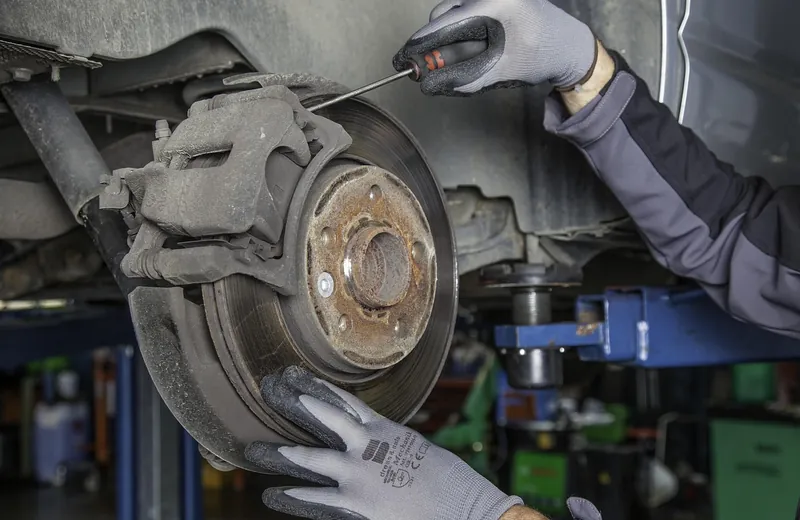
On the Secure Plus, Superior and Supreme plans, yes for the hydraulic side: master cylinder, power brake cylinder, vacuum or hydro boost, disc brake caliper, wheel cylinders, brake lines and fittings, plus ABS sensors, pump and modulator. No for the parts that wear out: the sample excludes brake pads, linings and shoes, and also brake rotors and drums. Secure, the lowest listed plan in the sample, does not list brakes at all. Brakes are a safety system, so if a pedal feels soft or a warning light stays on, stop driving and have the car inspected before worrying about paperwork.
How Does Endurance Car Warranty Work?
The sample describes a process with a strict order. Skipping a step is how most claims run into trouble, so the order matters more than the speed.
- Wait out the waiting period. The sample says the number of days and miles is printed on your application page, counted from the sale date and odometer reading. The sample itself does not give a number, so look at your own application. Failures that occur or begin before it ends are not covered.
- Stop and protect the car. The sample says the contract will not cover damage from continued operation, and says to tow the vehicle if driving could cause more damage.
- Choose a licensed repair facility. The sample defines it as a for-profit business that repairs vehicles and is recognized as such in its state, and it points to preferred providers on a lookup page without making them mandatory.
- Get authorization before any repair. The sample says repairs done without prior approval are not covered, except for defined emergency repairs when the office is closed, which you must report within five business days.
- Expect teardown costs. The sample says you pay inspection or teardown charges if the failure turns out not to be covered.
- Pay the deductible and submit paperwork. You pay the deductible shown on your application page, and the repair documents must reach the administrator within 30 days, or 365 days in Wisconsin, according to the sample.
The authorized amount is the most that will be paid for that repair, and the sample lets the administrator choose original, aftermarket, remanufactured or used parts. Labor is limited to the shop’s published hourly rate times the time in a national labor guide, and parts to the manufacturer’s suggested retail price. If your shop quotes above those figures, the difference is yours.
Common Misconceptions
“Supreme means everything.” The sample’s own wording for Supreme is breakdown of all parts except those excluded, and the exclusions run for pages: wear items, body parts, exhaust and emissions parts, tires, glass, batteries and more.
“A covered part covers the damage it causes.” The sample is the reverse in one direction: damage to a covered part caused by a failed non-covered part is excluded, and so is damage to a non-covered part caused by a covered one. Read that clause before you rely on a plan for a chain-reaction failure.
“A used car’s existing problems are covered.” The sample excludes pre-existing conditions, defined as a condition that within reasonable mechanical probability relates to the vehicle’s condition before the contract or before the waiting period ends.
Maintenance Records, Cancellation and Refunds in the Sample
The maintenance clause is the one owners tend to read last. The sample says you must service the vehicle per the owner’s manual schedule for your driving habits and climate, keep verifiable documents, and that failing to follow the schedule may result in claim denial. It states that handwritten documents and invoices are not accepted, that invoices must be generated electronically by the repair facility, and that do-it-yourself work needs computer-generated receipts plus a log with date, vehicle, mileage and a reference to each receipt.
On cancellation, the base text of the sample says you may cancel at any time. Cancel within 30 days of purchase with no claim filed and the entire price is refunded. After that, or if you have claimed, the refund is pro rata by the lesser of time or mileage, less a $50 administrative fee and the claims paid. Section X then amends those terms by state, with different free-look periods, fees and notice rules in some states, so the refund in your state may not match the base text.
Service Contract vs Warranty: Who Regulates This?
The FTC consumer page on auto warranties and service contracts, dated April 2024, says an auto service contract is an optional contract, often called an extended warranty, sold by manufacturers, dealers or independent companies, and that it is not a warranty under federal law because you buy it separately. It tells buyers to identify the provider and the administrator that decides claims, and to read the contract for your rights if a claim is denied.
Regulation is not uniform. The NAIC chart of state laws on service contracts (Spring 2023) shows the difference: Alabama’s entry puts service contracts under its department of insurance, Alaska’s says insurance statutes do not apply to service contracts, and Florida’s says its Insurance Code applies to motor vehicle service agreements. Because that chart is dated, check your own state’s insurance department or attorney general for current licensing and complaint steps.
Unsolicited calls are a separate matter. In a FTC consumer alert from March 24, 2023, the FTC described a settlement with American Vehicle Protection over a telemarketing scheme and advised buyers to get coverage details in writing before paying. That alert concerns a different company and says nothing about Endurance. It is cited only because the same advice applies to any seller: confirm the written terms match what you were told.
Before You Sign: A Checklist
- Read the exclusions first. The list of what is not covered shapes real-world coverage more than the plan name does.
- Find the waiting period and deductible on the application page. The sample leaves both blank.
- Ask who pays the shop and who decides. The sample names an administrator and a separate insurer that backs the contract, and the FTC advises identifying the administrator.
- Check repair-shop rules. Confirm any licensed facility is allowed and how authorization works outside business hours.
- Confirm cancellation and refund terms for your state, including fees and the free-look period.
- Check the transfer rule. The sample describes a $50 transfer fee when the owner sells the car.
- Read the dispute clause. The sample includes alternative dispute resolution and a class action waiver, which Section X modifies in some states.
- Look up the seller and administrator with your state insurance regulator, and keep every maintenance receipt from day one.
This article is general information drawn from published documents, not legal or financial advice, and it makes no judgment about any company. For the separate question of returning a car you just bought, see can you return a car to a dealership.
Frequently Asked Questions
Does Endurance cover tires?
No, according to the sample contract: it excludes tires, wheels, rims and tire pressure sensors in Section VIII.B. Check your own contract for any differences.
Does Endurance cover brakes?
On Secure Plus, Superior and Supreme, the sample lists hydraulic parts such as the master cylinder, calipers and ABS components, but it excludes brake pads, linings, shoes, rotors and drums.
Does Endurance cover safety systems and backup cameras?
The sample’s High Tech Option, available on Superior and included with Supreme, lists backup camera and sensors and blind spot sensors. Airbags and other restraint systems are excluded.
How long is the waiting period?
The sample says the waiting period is the days and miles stated on your application page, so the number is in your own contract rather than the sample.
Bottom Line
The sample contract’s own summary is the most reliable one-liner: it does not cover everything, only listed or non-excluded parts, and only with authorization. Compare the exclusions and the application page, not the plan name, and keep your maintenance records from the first day.
Products related to this article
Sponsored / affiliate links. As an Amazon Associate I earn from qualifying purchases. I may earn additional commission from eligible campaigns.