Honda Civic Key Fob Replacement: Identify, Buy, and Program Without Overpaying
It’s 6:45 PM, you’re juggling groceries, and the Civic won’t unlock. The key fob clicks, but nothing happens. You press it again, harder. Still nothing. Maybe the battery died. Or maybe the case finally cracked after years of pocket wear. Either way, you’re facing a decision: call the dealership, find a locksmith, or try to fix it yourself.
Most people assume a Honda Civic key fob replacement means a trip to the dealer and a $300 bill. That’s often wrong. Depending on your generation, you can buy a new fob online, transfer the internals, and program it yourself in under ten minutes. This guide walks you through the whole process—identifying your fob, finding the right part number, choosing between OEM and aftermarket, programming it, and knowing when to call a pro.

USARemote
Cutting NOT Required - Key Fob Keyless…
- HONDA KEY FOB SHELL REPLACEMENT: Replacement key fob shell case for select Honda vehicles, including 2003-2014 Accord, 2006-2013 C…
- SHELL ONLY (NO ELECTRONICS / NO CHIP INCLUDED): This is a replacement key fob shell only — no circuit board, battery, or electroni…
- NO CUTTING REQUIRED: Easy DIY installation. Move your existing key blade and internal components from your original remote into th…
If your fob’s case is cracked or the buttons are worn but the electronics still work, a shell replacement is the cheapest fix. A product like the USARemote key fob shell fits select Honda models including the 2026-2026 Civic EX. It’s a shell only—no circuit board or chip—so you move your original internals into it. No cutting, no locksmith. It won’t fix a dead battery, but it will make a worn fob look and feel new again.
Identify Your Honda Civic Key Fob Type
Before you buy anything, you need to know which fob your Civic uses. Honda has used three main types over the years, and they are not interchangeable.
Standard Remote (2026-2026)
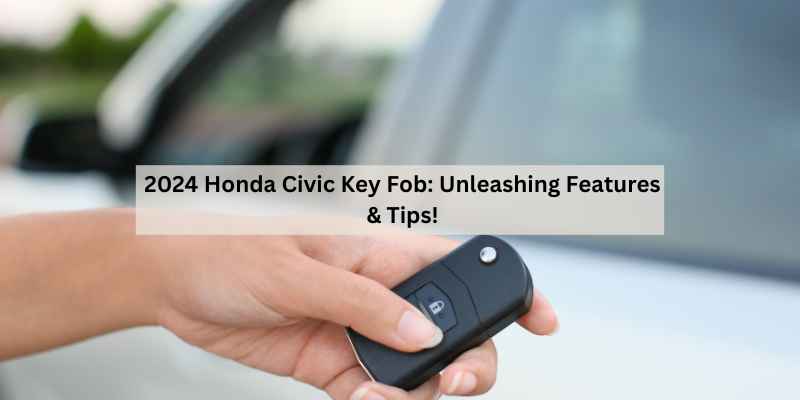
These are the rectangular fobs with lock, unlock, and trunk buttons. They work with a manual ignition key. The key blade is separate from the remote body, or it folds out. Common part numbers include 35114-SNA-A01 and 35114-SNA-A11. These fobs use a CR2032 battery.
Smart Key (2026-Present)
Starting with the 10th generation (2026-2026), the Civic uses a smart key with push-to-start. The fob is larger, has a mechanical emergency key blade inside, and communicates with the car’s immobilizer system. Part numbers include 35114-TBA-A01 and 35114-TEA-A01. The battery is a CR2032 as well.
Flip Key (2026-2026, Some Models)
Some Civic trims, especially in Europe and Asia, used a flip key where the blade folds into the fob. These are less common in the US but still appear. If you have one, the programming process is the same as the standard remote, but the part number differs.
How do you know which one you have? Look at the shape and the ignition. If you insert a key and turn it, it’s a standard remote. If you press a button and the car starts, it’s a smart key. That simple test narrows it down.
How to Find the Right Part Number (FCC ID & OEM Number)
Buying the wrong fob is a waste of money. The good news is that every Honda fob has a few identifying numbers printed on the back or inside the battery compartment. You need two things: the FCC ID and the Honda part number.
The FCC ID is a 3-5 character code followed by a longer string, like ‘KRDSVK3A’ or ‘N5F-A551T’. This is the radio transmitter’s ID. It tells you the frequency and protocol. If you buy an aftermarket fob, it must match this FCC ID exactly. Otherwise, the car won’t recognize the signal.
The Honda part number is a 10-digit code like 35114-SNA-A01. This is the manufacturer’s reference. If you go to a dealer, they’ll ask for this number or your VIN. You can find both numbers on a sticker on the side of the fob, or inside the battery compartment after you pop the cover off.
If you’re buying online, search for the FCC ID first. That’s the safest bet. If you don’t have the fob (you lost it), use your VIN. Honda dealers can look up the correct fob for your exact trim and year. But you can also find that information in the owner’s manual or on Honda’s parts website.
One more thing: the year alone isn’t enough. A 2026 Civic LX and a 2026 Civic Touring use different fobs. The Touring has a remote start button, the LX doesn’t. So always verify the FCC ID or part number before you click buy.
OEM vs. Aftermarket: Pros, Cons, and Hidden Risks
You have two main options when buying a replacement fob: genuine Honda (OEM) or an aftermarket brand. There’s a lot of confusion about this, so let’s clear it up.
OEM fobs are made by Honda or its licensed suppliers. They cost more—typically $80 to $150 for the fob alone. But they’re guaranteed to work, and they come with a warranty. If you buy from a dealer, they’ll also program it for you (for a fee).
Aftermarket fobs are made by third-party companies. They’re cheaper, often $20 to $50. Many work perfectly, but quality varies. Some have weaker buttons or cheaper plastic. The biggest risk is compatibility. If the FCC ID doesn’t match exactly, the fob won’t work. That’s why you must check the number before buying.
Here’s what most people get wrong: aftermarket fobs don’t void your car’s warranty. The Magnuson-Moss Warranty Act protects you. A dealer can’t deny warranty coverage just because you used a non-OEM part, unless they can prove the part caused the problem. In practice, a key fob won’t affect your engine or transmission warranty. It might affect the keyless entry system warranty, but that’s usually only covered for a year anyway.
Another hidden risk: Honda software updates. Some newer models (2026+) have updated immobilizer software that may be picky about aftermarket fobs. If you have a 2026 or newer Civic, I’d lean toward OEM or a high-quality aftermarket brand with a good return policy. It’s not worth the hassle of a fob that works for a week then stops.
For older Civics (pre-2026), aftermarket fobs are generally fine. The technology is older and well-understood. I’ve used a $25 aftermarket fob on a 2026 Civic for two years without a single issue.
Step-by-Step Programming Guide (By Generation)
Programming a new fob depends on your car’s generation. The good news is that pre-2026 models are easy to program at home. The 2026+ smart keys are more complicated, but still doable if you have a working key.
Pre-2026 Models (Manual Ignition)
These use a simple sequence that you can do in about two minutes. Here’s how:
- Sit in the driver’s seat and close all doors.
- Insert the key into the ignition. Do not turn it.
- Press and hold the ‘Lock’ button on the driver’s door (the power lock switch).
- While holding the lock button, turn the ignition to ‘ON’ (position II) and back to ‘OFF’ four times. Do this within 10 seconds. The fourth time, leave the key in the ‘ON’ position.
- Release the lock button. You’ll hear the door locks cycle (lock/unlock) to confirm programming mode.
- Press the ‘Lock’ button on the new fob. The locks should cycle again.
- If you have a second fob, press its ‘Lock’ button within 10 seconds.
- Turn the ignition to ‘OFF’ and remove the key. Test both fobs.
That sequence works for most 2026-2026 Civics. If it doesn’t work, check the owner’s manual. Some trims require a different number of ignition cycles (like 5 instead of 4).
2026-Present Models (Push-to-Start)
Smart keys are trickier. You can’t just cycle the ignition. Instead, you use the brake pedal and the engine start button. Here’s the process for 10th-gen (2026-2026) and 11th-gen (2026+):
- Sit in the driver’s seat with the working key fob in your pocket or nearby.
- Close all doors. Keep them closed during the whole procedure.
- Press the engine start button once to turn on the car’s electrical system (do not press the brake). The dashboard lights will come on.
- Press and hold the ‘Lock’ button on the working fob for about 5 seconds. Then press the engine start button again to turn the car off.
- Open and close the driver’s door once. Then press the engine start button again (no brake) to turn the car on.
- The car should now be in programming mode. The dashboard may show a message like ‘Keyless Remote’ or the door locks will cycle.
- Hold the new fob near the start button (within a few inches). Press the start button once. The car should beep or flash the lights to confirm.
- Repeat for additional fobs.
- Turn the car off by pressing the start button once. Test all fobs.
This sequence is a general guide. Some 2026+ models have updated software that requires a diagnostic tool to program. If the sequence doesn’t work after two attempts, you may need a locksmith or dealer. Don’t keep trying—you could lock yourself out of programming mode.
One important note: if you have a used fob from eBay that was previously programmed to another car, it may not work. The immobilizer system stores a unique code. Once a fob is programmed to a car, it’s locked to that car. You’ll need a locksmith with specialized equipment to clear it.
Complete Cost Breakdown: Dealership vs. Locksmith vs. DIY
Here’s where the money is. The table below compares the three main routes for each type of fob. Prices are estimates based on average rates in the US (as of 2026). Your actual cost may vary.
| Method | Standard Remote (Pre-2026) | Smart Key (2026+) | Flip Key (2026-2026) |
|---|---|---|---|
| Dealership (parts + labor) | $150 – $250 | $300 – $450 | $200 – $350 |
| Mobile Locksmith (parts + labor) | $100 – $200 | $200 – $350 | $150 – $250 |
| DIY (buy online, self-program) | $20 – $50 | $50 – $120 | $30 – $80 |
Why is the dealership so expensive? They charge $100-$150 per hour for labor, and programming a smart key can take 30-60 minutes if they have to order the fob. Locksmiths are often cheaper because they have mobile units and lower overhead. But for pre-2026 Civics, DIY is a no-brainer. You can buy an aftermarket fob for $25 and program it yourself in five minutes. Even an OEM fob from an online Honda parts dealer costs around $60-$80, still less than half the dealer price.
For smart keys, DIY is possible but riskier. The programming sequence may not work on all trims. If you buy a fob online and can’t program it, you’ll have to pay a locksmith anyway. So weigh the risk. If you have a 2026+ Civic, I’d skip DIY and go straight to a mobile locksmith. The $150 you save isn’t worth the headache of a fob that won’t sync.
What to Do If You’ve Lost All Keys
This is the worst-case scenario. No working key means you can’t program a new one yourself. The immobilizer system requires a valid key to authorize new ones. So you’re stuck with a dealer or a specialized locksmith.
The process is the same for both: they order a new fob based on your VIN, then use a diagnostic tool to program it to the car. The catch is that the car must be present, and they need to access the OBD-II port (usually under the dashboard). If the car is locked, they’ll need to unlock it first, which adds to the cost.
Expect to pay $300-$500 for a smart key replacement if you’ve lost all keys. For older models, it’s slightly less, around $200-$400. The dealer will likely require proof of ownership (registration and ID) to prevent theft. Some locksmiths can do it cheaper, but they need the same equipment and expertise.
One tip: if you have a spare key that’s not programmed (like a valet key), you might be able to use it to program a new fob. The valet key works in the ignition for pre-2026 models, so you can use it to enter programming mode. For smart keys, the valet key doesn’t have a chip, so it won’t start the car. But it will unlock the doors, which gives you access to the OBD-II port.
Common Key Fob Issues and How to Fix Them
Not every fob problem requires a replacement. Here are the most common issues and what actually fixes them.
Fob Works Intermittently
If the fob works sometimes but not others, the problem is usually not the coin battery. It’s often worn internal contacts. The rubber buttons press down on a circuit board, and over time, the conductive coating wears off. You can clean the contacts with isopropyl alcohol and a cotton swab. If that doesn’t work, the circuit board may be cracked—then you need a new fob.
Another culprit is the car’s antenna. The receiver module is located near the rearview mirror or in the trunk. If it’s failing, the fob will work from close range but not from across the street. That’s a dealer repair, typically $200-$400.
Also check the 12V battery. A weak car battery can cause the fob to work intermittently because the receiver isn’t getting enough power. If the car cranks slowly or the dashboard lights dim, that’s a sign.
Fob Not Detected at All
If the car says ‘No Key Detected’ even with the fob inside, the fob’s battery is dead or the fob is out of sync. Replace the CR2032 battery first. Then try holding the fob against the start button. Some models have a backup slot in the center console. If that works, the fob is fine—the battery was just too weak.
Buttons Stick or Feel Mushy
That’s a case issue, not an electronics issue. You can replace the rubber pad or the entire shell. The USARemote shell includes a new pad, so it fixes both the cracked plastic and the mushy buttons. It takes about ten minutes to swap the internals.
Emergency Key Won’t Turn
The emergency key blade is for manual unlocking when the battery is dead. If it won’t turn, the ignition cylinder may be worn. Try spraying graphite lubricant into the cylinder. If that doesn’t help, you may need a new cylinder—that’s a $150-$300 job at a shop.
Maintenance Tips to Extend Fob Lifespan
Your key fob will last longer with minimal care. Here’s what I do:
- Replace the battery every 2-3 years, even if it’s still working. Corrosion from a leaking battery is the #1 killer of fobs.
- Keep the fob away from water and extreme heat. The dashboard in summer can reach 150°F, which can warp the plastic and damage the battery.
- Use a silicone case if you drop your keys often. A $5 case is cheaper than a $100 fob.
- Clean the contacts with alcohol if the buttons feel unresponsive. Do this before buying a new fob.
- Don’t leave the fob in the car overnight. If the car’s battery dies, you might not be able to unlock the door with the emergency key if the cylinder is frozen.
These small habits can add years to your fob’s life. I’ve seen fobs from 2026 still working perfectly because the owner replaced the battery every couple of years and never let it bake on the dash.
Frequently Asked Questions
Can I program a Honda Civic key fob myself?
Yes, for most pre-2026 models. The manual ignition sequence takes about two minutes. For 2026+ smart keys, you can try the pedal/button sequence, but it’s not guaranteed. If it fails, you’ll need a locksmith or dealer.
How much does a Honda Civic key fob replacement cost?
It depends on the method. DIY costs $20-$50 for a standard remote, $50-$120 for a smart key. A locksmith charges $100-$350. A dealership charges $150-$450. The fob itself is the biggest variable—OEM parts cost more than aftermarket.
Does an aftermarket key fob void my warranty?
No. The Magnuson-Moss Warranty Act protects you. A dealer can’t void your warranty just because you used a non-OEM part. They can only deny coverage if the part caused the problem, which is unlikely for a key fob.
What if my key fob works but the car won’t start?
That’s usually an immobilizer issue, not a fob issue. The transponder chip inside the fob may be damaged or out of range. Try holding the fob closer to the start button. If that doesn’t work, the chip may need reprogramming.
Can I use a fob from a salvage yard?
Maybe. The fob’s circuit board is programmed to the original car’s immobilizer. You can’t simply reprogram it to another car without specialized equipment. A locksmith can often clear it, but it’s not a DIY job. If you find a used fob, make sure the FCC ID matches and the internals are intact.
The Bottom Line
Replacing a Honda Civic key fob doesn’t have to drain your wallet. Start by identifying your fob type and finding the FCC ID. Then decide between OEM and aftermarket based on your car’s age. For pre-2026 models, DIY is the clear winner. For newer smart keys, weigh the risk of self-programming against a locksmith’s fee.
- Check the FCC ID on your current fob before buying anything.
- Pre-2026 Civics: buy an aftermarket fob and program it yourself—save up to $200.
- 2026+ smart keys: try the pedal sequence once, but call a locksmith if it fails.
- If you’ve lost all keys, budget $300-$500 for a dealer or locksmith.
- Intermittent fob issues are often dirty contacts or a weak 12V battery, not a dead fob.
- Replace the coin battery every 2-3 years to prevent corrosion.
- If the case is cracked, a shell replacement is a cheap fix that keeps your original electronics.
You don’t need to be a mechanic to handle most key fob issues. Just take a few minutes to identify your fob, and you’ll avoid the dealership markup. For more on key fob maintenance, check out this key fob battery guide. And if you’re curious about other Civic topics, like Civic color options or interior upgrades, we’ve got those covered too.
Products related to this article
Sponsored / affiliate links. As an Amazon Associate I earn from qualifying purchases. I may earn additional commission from eligible campaigns.