Apple CarPlay Keeps Disconnecting: Quick Solutions
It’s frustrating when your music stops or your maps freeze while driving. If your Apple CarPlay Keeps Disconnecting: Quick Fixes is happening, you’re not alone! Many people face this issue. It can be tricky, especially if you’re new to the technology. But don’t worry, there are simple solutions to get things working smoothly again. Let’s explore some common causes and easy steps to get you back on the road with your favorite apps.
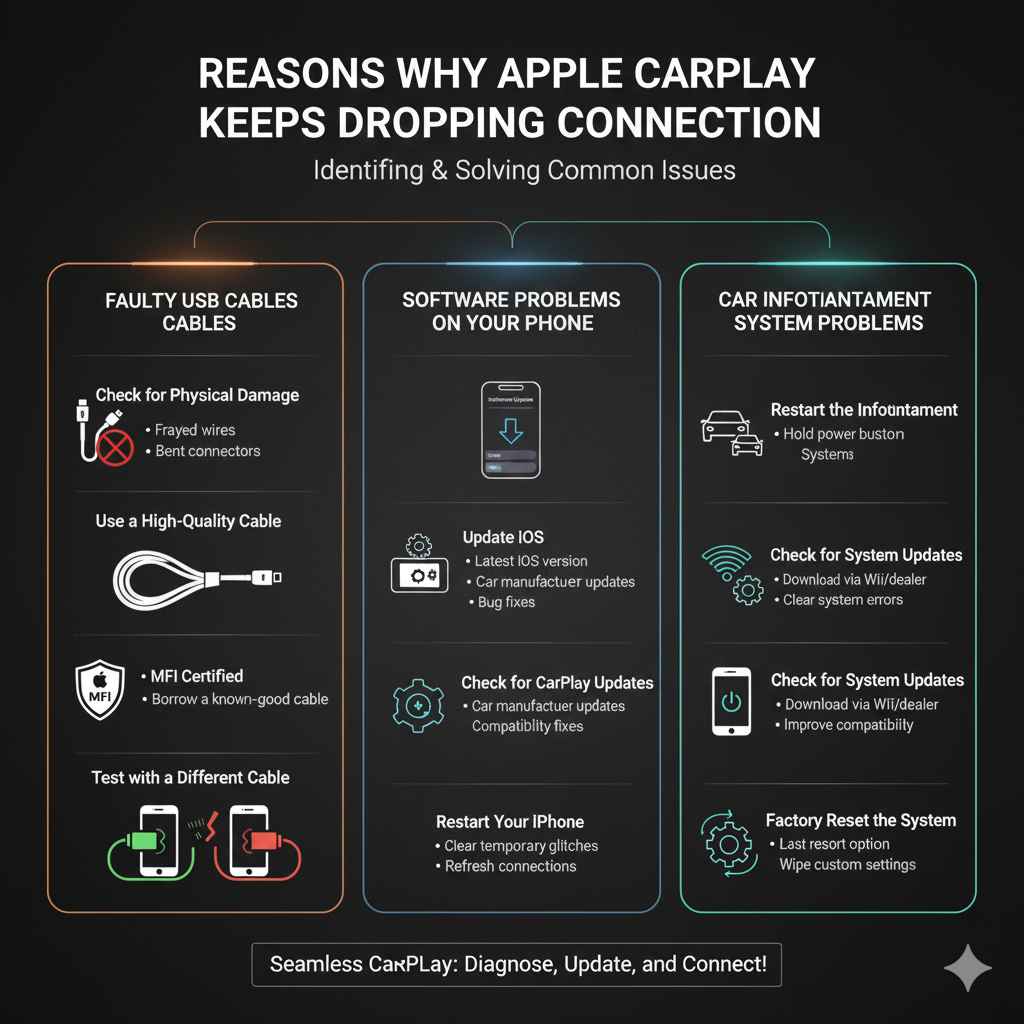
Reasons Why Apple CarPlay Keeps Dropping Connection
One of the most common issues users face is the frustrating problem of CarPlay losing its connection. This can manifest in several ways, from the music cutting out abruptly to navigation apps freezing mid-route. Several factors can lead to these interruptions, which can range from something as simple as a loose cable to more complex software glitches within your iPhone or the car’s system. Knowing the source of the problem is the initial step toward restoring a seamless CarPlay experience. We’ll explore the main reasons for these interruptions.
Faulty USB Cables
A damaged or low-quality USB cable is a frequent culprit when Apple CarPlay Keeps Disconnecting: Quick Fixes are needed. The connection relies on the cable to transmit data and power between your iPhone and the car’s infotainment system. If the cable is loose, worn out, or not up to the standards of data transfer needed for CarPlay, interruptions are likely. Even subtle damage inside the cable can disrupt the connection. The physical wear and tear from constant plugging and unplugging can also cause problems. A good USB cable is a strong foundation for the CarPlay experience.
- Check for Physical Damage: Inspect the cable for any visible damage, such as frayed wires, bent connectors, or breaks in the insulation. These can cause intermittent connections and the car may not recognize the device.A damaged cable, even if it looks fine, might not be able to deliver the consistent power and data transfer necessary for CarPlay. Carefully examine the USB connector ends for damage.
- Use a High-Quality Cable: Always use a high-quality, certified USB cable. Many budget cables can look similar but aren’t built to the standards needed for reliable data transfer. Look for cables with the MFi (Made for iPhone) certification.MFi certification ensures the cable meets Apple’s performance standards. This means it has been rigorously tested to work with Apple devices, ensuring consistent connectivity and data transfer rates that are essential for CarPlay.
- Test with a Different Cable: The easiest way to identify a cable issue is to test CarPlay with a different cable. Try a cable you know works correctly, or one that’s known to be MFi-certified. This quick test will show if the cable is the problem.If CarPlay works fine with a different cable, it clearly shows the original cable is at fault. Make sure to choose a cable of the same type (USB-A to Lightning or USB-C to Lightning) that fits your iPhone and your car’s USB port.
Software Problems on Your Phone
Software glitches on your iPhone can lead to frustrating CarPlay disconnection issues. Software updates, both for iOS and the car’s infotainment system, are often designed to fix these problems. When these updates fail or are incomplete, errors can occur. Sometimes, background processes on your iPhone might interfere with the CarPlay connection. These problems can create a frustrating situation where CarPlay disconnects without warning. Taking care of these software issues will make sure you have the best possible connection.
- Update iOS: Ensure your iPhone runs the latest version of iOS. Apple releases software updates frequently, fixing bugs and improving the performance of CarPlay. You can do this by going to Settings > General > Software Update.Software updates include critical bug fixes and improvements that enhance CarPlay’s stability and reliability. Install updates over a strong Wi-Fi connection and ensure your iPhone has enough battery life during the installation process.
- Check for CarPlay Updates: Some cars may need software updates for their infotainment systems to be compatible with the newest iOS versions and CarPlay features. Consult your car’s manual or visit the manufacturer’s website.Car software updates often contain compatibility enhancements and performance improvements. These updates can address issues with connectivity and fix bugs that cause CarPlay to disconnect. The process varies, depending on your vehicle model.
- Restart Your iPhone: Simple restarts can solve many temporary issues. Restart your iPhone to clear its memory and refresh its connections. Hold down the power button until the power-off slider appears, then slide to turn off the iPhone. Wait a few moments before turning it back on.Restarting your iPhone is a straightforward way to clear temporary glitches. This process closes all apps and clears cached data, allowing the system to start fresh. This simple action can often resolve connectivity problems.
Car Infotainment System Problems
The car’s infotainment system itself might be the source of Apple CarPlay Keeps Disconnecting: Quick Fixes issues. This can involve software glitches, hardware problems, or compatibility issues with your iPhone. Infotainment systems are complex, with many parts that must work together seamlessly. Sometimes, even after updating iOS on your phone, problems may remain because of system incompatibilities. These are more difficult to fix, but some strategies can usually improve performance.
- Restart the Infotainment System: Similar to restarting your iPhone, you can reboot your car’s infotainment system. This usually involves holding down the power button for several seconds. Refer to your car’s manual for specific instructions.A simple reset of the car’s system can clear temporary errors. This action can resolve minor software glitches that affect CarPlay’s function. Ensure you allow the system to fully restart before trying to connect your iPhone.
- Check for System Updates: Car manufacturers release software updates for their infotainment systems. These updates improve CarPlay compatibility and fix problems. These updates can often be downloaded via Wi-Fi or require a visit to a dealership.Keeping your car’s system updated is a good practice. Updates contain important enhancements and bug fixes. Regularly check for new software on the manufacturer’s website or app.
- Factory Reset the System: As a last resort, you can reset the car’s infotainment system to its factory settings. This will wipe any custom settings you have made and reset everything to the original setup. Back up any important settings.A factory reset should only be done if other troubleshooting steps fail. This action will restore your system to its original state, which can help clear deep-seated software conflicts. Carefully follow the instructions in your car’s manual.
Wireless CarPlay Connection Issues
Wireless CarPlay brings convenience to the driving experience, but it can also present connection challenges. Unlike wired connections, wireless CarPlay relies on Wi-Fi and Bluetooth. These technologies can experience interference or be affected by environmental factors. Several things can cause problems, from interference from other devices to software issues. Understanding these factors and knowing the solutions is important to getting a more reliable wireless experience.
Bluetooth and Wi-Fi Interference
Wireless CarPlay uses Bluetooth for initial pairing and Wi-Fi for streaming data. Interference can cause significant problems, especially in areas with many wireless devices. Microwave ovens, Bluetooth devices, and other Wi-Fi networks can cause interference that leads to disconnections. Understanding the causes of interference and how to minimize it can greatly improve the stability of your connection. This helps to ensure a smoother, more reliable CarPlay experience. This can usually solve Apple CarPlay Keeps Disconnecting: Quick Fixes problems.
- Minimize Bluetooth Interference: Turn off Bluetooth on devices that aren’t needed for CarPlay to reduce signal overlap. Keeping other devices close can interfere with the connection. Also, make sure that Bluetooth is only connected to the devices you intend to use.Interference from nearby Bluetooth devices is a common issue. By limiting the number of active Bluetooth connections, you minimize potential disruption to the CarPlay connection. This makes it easier for your iPhone to maintain a stable link.
- Manage Wi-Fi Interference: Wireless CarPlay uses Wi-Fi to transmit large amounts of data, so keep devices away that operate on the 2.4 GHz frequency (the frequency used by most CarPlay systems). This also includes other devices, such as other Wi-Fi hotspots, or anything emitting strong wireless signals.Other devices using the same Wi-Fi frequency can degrade the CarPlay connection. Position your car away from areas with lots of Wi-Fi hotspots, if possible. If you park in a garage, this is something to be aware of, if there are many active networks.
- Check Wi-Fi Settings: Ensure your iPhone’s Wi-Fi is correctly set up. CarPlay needs a strong, stable connection, so make sure your phone isn’t trying to connect to a weak network. Go to Settings > Wi-Fi on your iPhone and make sure your car’s Wi-Fi network is selected.A strong Wi-Fi connection is vital for wireless CarPlay. Check for Wi-Fi interference from nearby devices to boost performance. Making sure that your iPhone connects to the car’s Wi-Fi network before initiating CarPlay ensures that you are connected.
Software and Device Conflicts
Software conflicts can impact the wireless connection with CarPlay, where your iPhone and car’s system must work well together. Sometimes, older versions of software in either your car or your iPhone can cause problems. Also, apps running in the background might interfere with the CarPlay function, leading to disconnects. Troubleshooting these conflicts involves making sure the iPhone and car system are compatible and free from potential conflicts. This will improve the reliability of the connection.
- Update CarPlay-Compatible Apps: Apps like Spotify or Apple Maps can cause problems if not updated. App updates often include support for the latest CarPlay features and fix bugs that can cause connection problems. Visit the App Store on your iPhone to update.Updated apps not only improve features, but also compatibility. Make sure apps designed for CarPlay are updated regularly. This prevents problems and ensures they work as designed. Updating all of your apps is always a good practice.
- Manage Background App Activity: Background processes can sometimes interfere with CarPlay’s performance. Close unused apps or disable background app refresh in Settings > General > Background App Refresh on your iPhone.Background apps consume resources and can cause conflicts. Managing your iPhone’s background app refresh will reduce the load on your phone and increase the chances of the CarPlay connection remaining stable. This also applies to apps connected to CarPlay.
- Check Car Compatibility: Make sure your car’s infotainment system supports wireless CarPlay. The feature isn’t standard on all cars, and older models may only support wired CarPlay. Check your car’s manual or manufacturer’s website.Not all cars support wireless CarPlay. Confirm your car’s specifications before assuming it will work wirelessly. Knowing your system’s features prevents frustration and ensures you are using the correct connection method.
Bluetooth Pairing and Settings
Establishing the initial Bluetooth connection is essential for the functionality of wireless CarPlay. Many problems stem from issues with the device pairings. The connection uses Bluetooth for the first stage of connecting, making sure the devices can “see” each other. Incorrect settings or problems with the Bluetooth configuration can cause disconnections. The setup of the Bluetooth settings on your iPhone and in your car is critical for a smooth connection. Correct Bluetooth settings will usually resolve Apple CarPlay Keeps Disconnecting: Quick Fixes issues.
- Forget and Re-pair Devices: If CarPlay isn’t connecting, try removing your iPhone from your car’s Bluetooth settings and the car from your iPhone’s Bluetooth settings. Then, restart both devices and try pairing them again.Removing and re-pairing can fix software conflicts that are causing connection problems. This action restarts the Bluetooth connection and allows your devices to establish a fresh, reliable connection. This action is usually simple, but always check the instructions.
- Ensure Bluetooth is Enabled: Double-check that Bluetooth is turned on in your iPhone’s settings and in your car’s infotainment system. The function must be enabled on both sides for pairing to occur.Bluetooth must be enabled on both your iPhone and your car for wireless CarPlay to work. If Bluetooth is turned off on one device, the two cannot locate each other. Review settings before trying a new connection.
- Check for Interference: Keep your phone and car radio free from interference that might disrupt the Bluetooth signal. Other Bluetooth devices or certain electrical items could be a problem. Make sure to keep other items at a distance.Bluetooth is vulnerable to interference from other devices operating on the same frequency. Removing these items reduces the chance of signal disruptions, resulting in a more reliable CarPlay connection. Move the devices if you can.
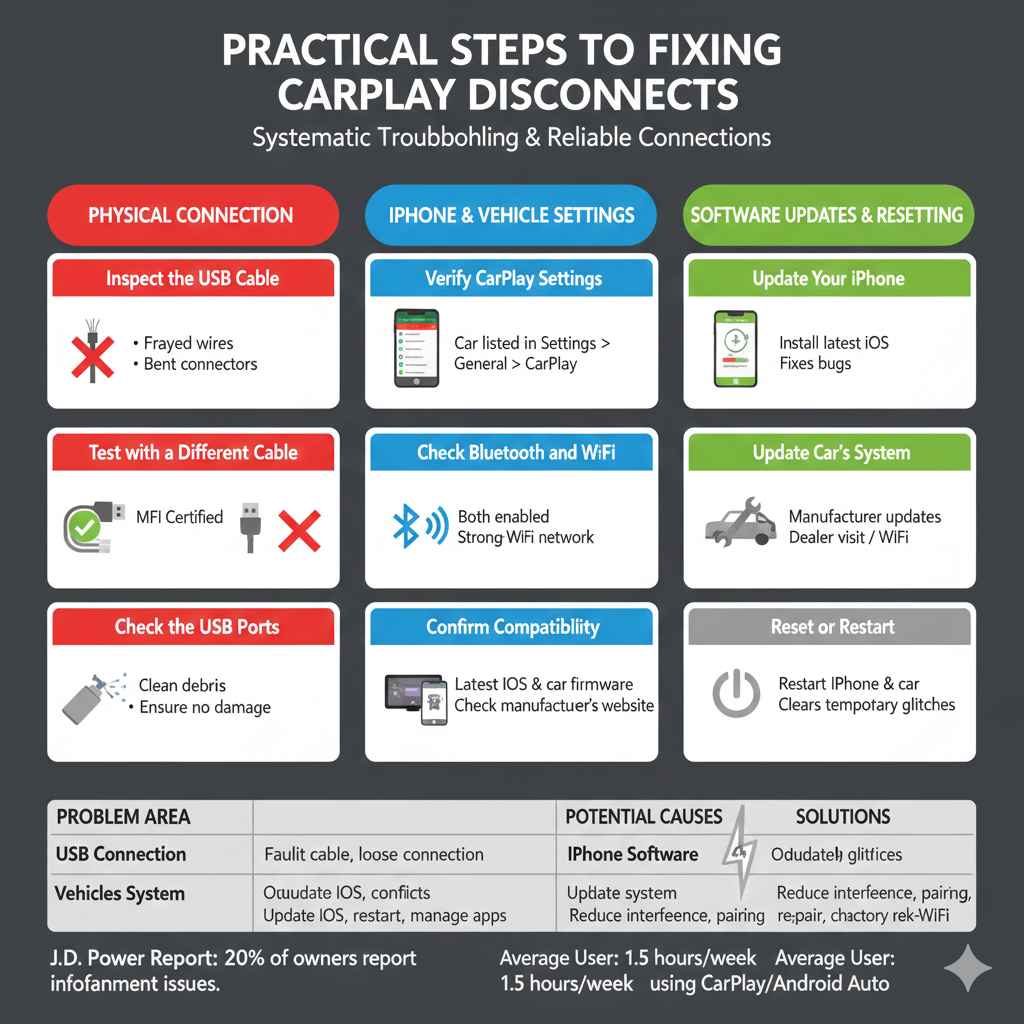
Practical Steps to Fixing CarPlay Disconnects
When you’re dealing with CarPlay disconnects, the correct way to approach the issue is to systematically check each area of the system. This will help you identify the source of the problem. You can then try the right solution. You can begin with quick checks, like inspecting the cable, and work toward other complex solutions, like updating software. Let’s examine practical steps to make sure your CarPlay is always connected.
Troubleshooting the Physical Connection
Begin by checking the physical connection, starting with the USB cable, if you’re experiencing a wired connection. Often, the cause of the problem is something simple, so it’s always wise to start with a quick check of the cable and ports. A faulty connection will cause constant disconnections. Also, by focusing on the physical aspects, you can quickly address these problems before moving to more advanced solutions. This first step often helps in determining Apple CarPlay Keeps Disconnecting: Quick Fixes.
- Inspect the USB Cable: Carefully examine the USB cable for any damage. Look for frayed wires, bent connectors, or other visible wear. If any damage is found,A damaged cable is a frequent source of CarPlay problems. A new cable will often immediately solve the problem. If it is damaged, it will also be more prone to creating a short circuit, which can cause other problems. The best thing to do is replace it.
- Test with a Different Cable: To rule out a cable issue, try using a different USB cable, preferably one you know works correctly. If CarPlay works with the new cable, the original cable is the problem.Testing with a known-good cable is a quick and effective method to determine if the cable is causing the disconnects. Make sure you use a cable that matches the original cable. A fast charging cable might not be a data transfer cable.
- Check the USB Ports: Inspect the USB ports in your car and your iPhone for any debris or damage. Make sure the ports are clean and free from any obstructions that might prevent a solid connection.Clean USB ports ensure a reliable connection. Use a can of compressed air to clear any dust or debris from the ports. This is another easy fix that will often provide an improvement. Ensure that the ports are not damaged.
Checking iPhone and Vehicle Settings
After the physical aspects are confirmed, the next phase is to review the settings on both your iPhone and the car’s system. Misconfigured settings can also lead to CarPlay disconnections. Making sure your settings are correct will ensure your devices are properly communicating. In this section, we’ll explore the settings that affect connectivity. Correct configurations are a key part of the solution to Apple CarPlay Keeps Disconnecting: Quick Fixes issues.
- Verify CarPlay Settings on iPhone: Go to Settings > General > CarPlay and check that your car is listed. If it isn’t, you can connect your iPhone again through the car’s infotainment system.Ensure that your car is recognized by your iPhone’s CarPlay settings. This establishes the initial pairing and allows for a smooth connection. The setup process is usually easy, but follow the steps.
- Check Bluetooth and Wi-Fi: If using wireless CarPlay, make sure Bluetooth and Wi-Fi are enabled on your iPhone and that your car’s Wi-Fi network is selected. A strong and stable Wi-Fi connection is vital for wireless performance.Wireless CarPlay relies on both Bluetooth and Wi-Fi for connectivity. Ensure all connection settings are active on both your iPhone and car system. This setup is a must for successful operation.
- Confirm Compatibility: Make sure your iPhone is compatible with the version of CarPlay supported by your car’s infotainment system. If you recently updated your iPhone, your car’s system may need an update as well.Compatibility issues can create disconnections. Check your car’s manual to confirm the supported CarPlay versions. Update your car’s infotainment system to make sure that it can work with your iPhone.
Software Updates and Resetting
Software and system updates can resolve a large number of CarPlay problems. Outdated software can create compatibility problems. A fresh start might solve many issues. The steps discussed will often deliver Apple CarPlay Keeps Disconnecting: Quick Fixes results.
- Update Your iPhone: Make sure that your iPhone’s operating system is up-to-date. Go to Settings > General > Software Update and install any available updates. Updates often include fixes for CarPlay.Software updates fix bugs and improve performance. Regular updates are critical for a great CarPlay experience. Install new software over a stable Wi-Fi network to avoid disruptions during the update process.
- Update the Car’s Infotainment System: Check for software updates for your car’s infotainment system. The updates can address compatibility issues. Check the manufacturer’s website, or at your local dealership.Your car’s infotainment system needs updates just like your iPhone. Update the system regularly. Follow the manufacturer’s instructions to perform the update. This guarantees compatibility with the most recent iPhone software.
- Reset or Restart: Sometimes, a simple reset can resolve the issue. Restart your iPhone and then restart your car’s infotainment system. This will clear temporary glitches that can cause connection problems.A simple restart can fix many connection problems. Restarting all devices clears the system and allows them to communicate again. These steps often provide immediate results.
| Problem Area | Potential Causes | Solutions |
|---|---|---|
| USB Connection | Faulty cable, loose connection, debris | Replace cable, secure connections, clean ports |
| iPhone Software | Outdated iOS, software conflicts | Update iOS, restart iPhone, manage background apps |
| Vehicle System | Outdated software, infotainment glitches | Update infotainment system, restart system, factory reset |
| Wireless Issues | Bluetooth/Wi-Fi interference, pairing issues | Reduce interference, re-pair devices, check Wi-Fi settings |
According to a report from J.D. Power, in , nearly 20% of vehicle owners reported problems with their infotainment systems. This highlights how common issues with these systems can be, even in new cars. Another report stated that on average, consumers spend 1.5 hours per week using Apple CarPlay or Android Auto. This data indicates the need for reliable connections that perform properly.
Frequently Asked Questions
Question: Why does my CarPlay disconnect randomly?
Answer: Random disconnections can be caused by a variety of reasons, including a bad USB cable, software bugs on your iPhone or in your car, or interference when using wireless CarPlay.
Question: How do I fix a loose connection to CarPlay?
Answer: Check your USB cable for wear and tear, and firmly insert it into the ports on both your iPhone and your car. Also, make sure the USB ports are clean and free of debris.
Question: Can an old iPhone cause CarPlay to disconnect?
Answer: Yes, an older iPhone might experience issues if it’s running an older iOS version that isn’t fully compatible with your car’s CarPlay system. Keeping your iPhone updated can help.
Question: What should I do if my wireless CarPlay won’t connect?
Answer: Make sure Bluetooth and Wi-Fi are enabled on your iPhone, and that your car’s system is selected. Try forgetting and re-pairing the device. Make sure there is little to no interference.
Question: Is there a way to reset CarPlay?
Answer: Yes, you can usually reset CarPlay by restarting both your iPhone and the infotainment system in your car. Some systems also provide a factory reset option.
Final Thoughts
Dealing with Apple CarPlay Keeps Disconnecting: Quick Fixes can be an annoyance, but the solutions are often straightforward. By exploring the causes, which may include USB cables, software, and wireless interference, you can take action to solve the problem. These steps range from testing new cables to updating software or simply restarting your phone. Knowing the specific problem makes the solution much easier. Usually, the issue can be resolved with a few simple steps.
With a few troubleshooting actions, you can restore a stable and reliable connection. That will make your drives more enjoyable and less stressful. Take the steps to ensure that your CarPlay works well.