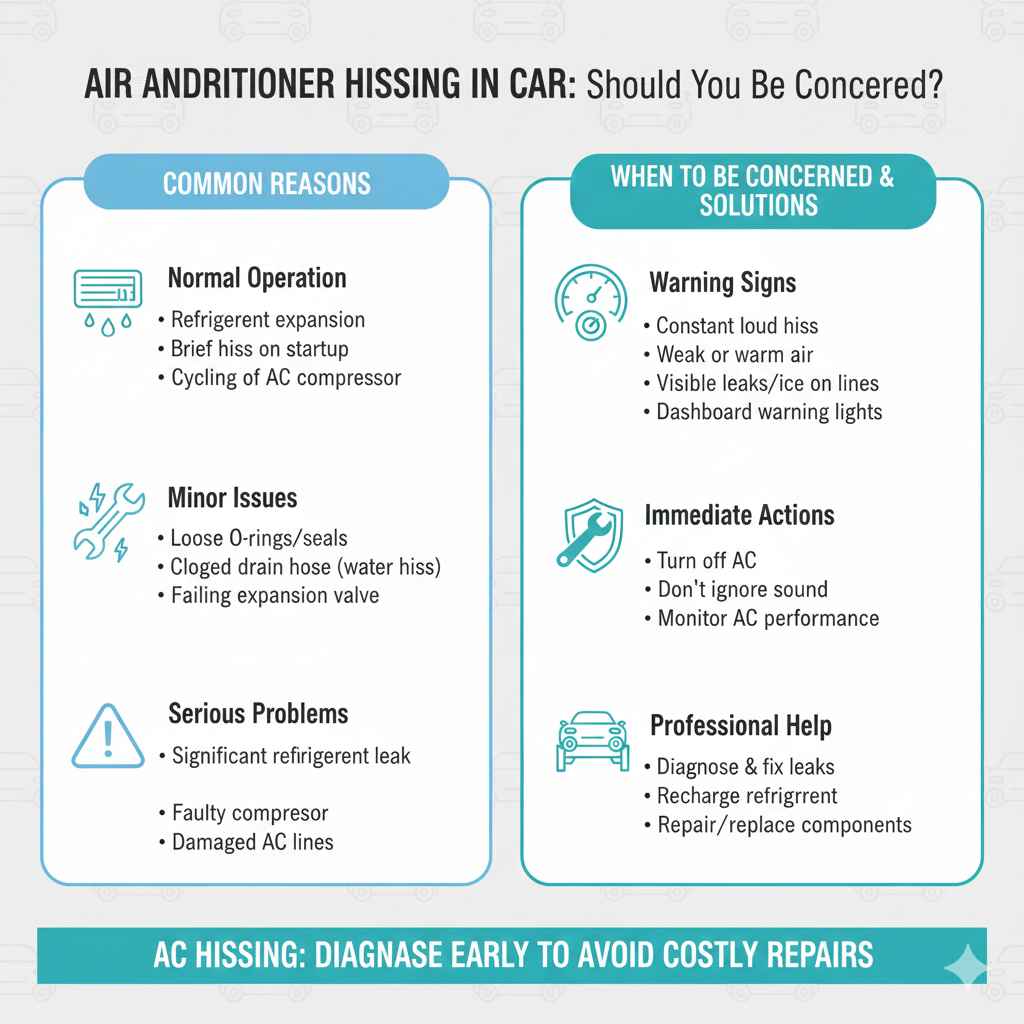
Air Conditioner Hissing in Car: Should You Be Concerned?
Hearing an unexpected noise from your car can be unnerving, especially if it’s coming from your air conditioning system. The sound of an Air Conditioner Hissing in Car: Should You Worry? is a common question, and it’s something that often leaves people feeling uncertain about what to do. The good news is, you’re not alone, and it’s usually not a complete disaster. This article aims to break down the cause of the hiss, making it easy to see what’s going on. We’ll explore the main causes of the hissing sound and find out if it’s something that needs immediate attention. Let’s get started, and explore the steps to figure out what’s causing the problem.
Deciphering the Sound The Source of Car AC Hissing
When you hear a hissing noise from your car’s air conditioning system, it can be a sign of trouble, although not always a major one. The sound often indicates a problem with the refrigerant or the components that make up the AC system. It’s often related to the pressure inside the system as the refrigerant flows through the different parts, from the compressor to the evaporator. Addressing the sound is important because ignoring it can lead to bigger and expensive issues down the road. This section will look at the potential causes of this sound and how you might check them.
Refrigerant Leakage: The Prime Suspect
One of the most common reasons for an Air Conditioner Hissing in Car: Should You Worry? involves refrigerant leaks. Refrigerant, often called Freon, is the substance that absorbs heat and cools the air in your car. A leak in the system can cause the refrigerant to escape, leading to the hissing sound. This is because the refrigerant escapes under pressure, similar to how air rushes out of a punctured tire. Leaks can happen at various points, including seals, hoses, and the condenser or evaporator. Leaks can become more noticeable during hot weather when the AC system is working harder.
Finding the Leak: Locating the exact spot of the leak can sometimes be difficult. Technicians often use specialized equipment, such as a leak detector that identifies refrigerant. Another method involves adding a dye to the refrigerant; this dye glows under a UV light, pinpointing the leak’s location.
Causes of Leaks: Several factors contribute to refrigerant leaks, including wear and tear over time. Rubber hoses and seals can degrade and crack. Vibration from driving can also cause the system’s components to loosen and leaks.
Consequences of Leaks: A leaking AC system will gradually lose its cooling efficiency. You might notice the air coming from the vents is not as cold as before. Ignoring a leak will eventually result in the AC system failing completely, leaving you with no cool air on hot days.
Refilling Refrigerant: It’s important to note that just refilling the refrigerant doesn’t resolve the problem. The leak must be fixed before adding more refrigerant, otherwise, it will just escape.
Compressor Problems: A Potential Culprit
The air conditioning compressor is a central component in your car’s AC system. It is responsible for compressing the refrigerant, which is a key step in the cooling process. A failing compressor can make hissing sounds due to internal issues or problems with the valves or seals. Issues with the compressor are generally more severe than a simple leak and might involve replacing the entire unit. It’s important to address compressor sounds promptly, because other issues within your vehicle’s AC system could develop.
Internal Compressor Issues: Over time, the internal components of the compressor, such as pistons and valves, can wear down or fail. This wear can result in pressure changes that cause the compressor to hiss.
Valve Issues: The compressor has valves that regulate the flow of refrigerant. If these valves become damaged or stuck, they can create hissing sounds as refrigerant tries to pass through them.
Seal Problems: Compressors use seals to contain the refrigerant. If these seals fail, the refrigerant can leak, and the compressor might produce a hissing noise.
Symptoms of Compressor Trouble: Besides the hissing sound, you might notice other signs of a failing compressor, such as reduced cooling, unusual odors, or the AC system turning on and off erratically.
Clogged Expansion Valve or Orifice Tube
The expansion valve (or orifice tube) is a critical component that controls the flow of refrigerant into the evaporator, where it absorbs heat and cools the air. A blockage in this valve or tube can lead to pressure changes, leading to hissing sounds. Blockages typically result from debris or contamination inside the AC system. Identifying and resolving a blocked expansion valve or orifice tube will restore the efficient cooling of your AC system.
Debris and Contamination: Over time, contaminants, such as debris and metal shavings, can accumulate in the AC system. These particles can clog the expansion valve or orifice tube, leading to pressure imbalances.
Pressure Imbalances: The expansion valve or orifice tube maintains the appropriate pressure differences required for the cooling cycle. A blockage disrupts this pressure balance, causing the refrigerant to flow and potentially creating hissing sounds.
Symptoms and Diagnostics: Apart from hissing, other symptoms of a clogged expansion valve or orifice tube can include poor cooling performance and uneven airflow. Diagnostics include inspecting the expansion valve and removing the orifice tube to see if the blockage is there.
Replacing the Valve or Tube: Replacing the expansion valve or orifice tube is typically needed to resolve the issue. If contamination is present, it’s crucial to clean the AC system thoroughly. This can include flushing the lines and replacing the receiver/drier to remove any remaining debris.
Troubleshooting Steps If Your AC Hisses
If you’re dealing with an Air Conditioner Hissing in Car: Should You Worry?, you’ll need a systematic approach to identify the cause. Before you head to a mechanic, here’s a series of easy steps you can perform. These simple checks can help pinpoint the problem and also save you time and money by providing valuable information. Starting with simple checks, you can quickly assess the situation and decide whether it requires a more in-depth inspection.
Visual Inspection: Your First Line of Defense
A visual inspection is a fundamental step in troubleshooting any car issue. For your AC system, this means a careful look for any obvious signs of damage or leaks. Check the easy-to-see components for any unusual clues. Be systematic when checking the various parts, looking for any visible problems. This preliminary inspection can save time and potential headaches, and might identify the issue quickly.
Hoses and Lines: Begin by examining the AC hoses and lines for any visible damage. Look for cracks, bulges, or signs of wear. Check where the hoses connect to other components, as leaks often occur at these connection points.
Compressor and Components: Inspect the compressor, condenser, and other easily accessible parts for any signs of refrigerant leakage. Look for oily residue or discoloration, which can be indicators of a leak. Check all connections, including the receiver-drier, for leaks.
Listen Closely: With the engine running and the AC turned on, carefully listen around the AC system components for the location of the hissing sound. Pay attention to changes in the noise when the AC system cycles on and off.
Use a Mirror: If parts of the AC system are difficult to see, such as the back of the compressor, use a mirror to assist your visual inspection.
Checking for Refrigerant Leaks
Checking for refrigerant leaks is crucial if you suspect a problem with your AC system. Leaks can cause a variety of issues, including reduced cooling efficiency and, potentially, damage to the AC components. Identifying a leak is crucial for performing necessary repairs and keeping your AC system working efficiently. This section details how you can inspect for refrigerant leaks and what to look for when you do.
The Soap Test: Mix water with a bit of dish soap and apply this solution to the AC lines and connections, especially where you think a leak might be. Turn on the AC system. If there’s a leak, bubbles will form at the leak location, showing where the refrigerant is escaping.
Refrigerant Leak Detectors: There are various refrigerant leak detectors available, ranging from simple electronic sniffers to more sophisticated tools. These tools sense the presence of refrigerant and will often pinpoint the leak location more precisely than the soap test.
Visual Inspection for Oil: Refrigerant leaks often leave an oily residue around the point of the leak. Look closely at the AC components for signs of oil. If you see an oily substance on a hose or fitting, it could indicate a refrigerant leak.
Professional Diagnostics: If you can’t find the leak with these methods, the problem might be inside a component or in a hard-to-reach area. In this case, consult a professional mechanic, who has advanced leak detection equipment, like electronic sniffers.
When to Call a Mechanic
Knowing when to call a mechanic is a key part of maintaining your car’s AC system. Some issues are best left to professionals to ensure proper diagnosis and repair. If you are uncomfortable working on your vehicle’s AC system, or if the problem seems complex, a mechanic’s expertise is necessary. This section will look at signs that it’s time to seek professional help. Your mechanic has the skills and the specialized tools to get the job done right.
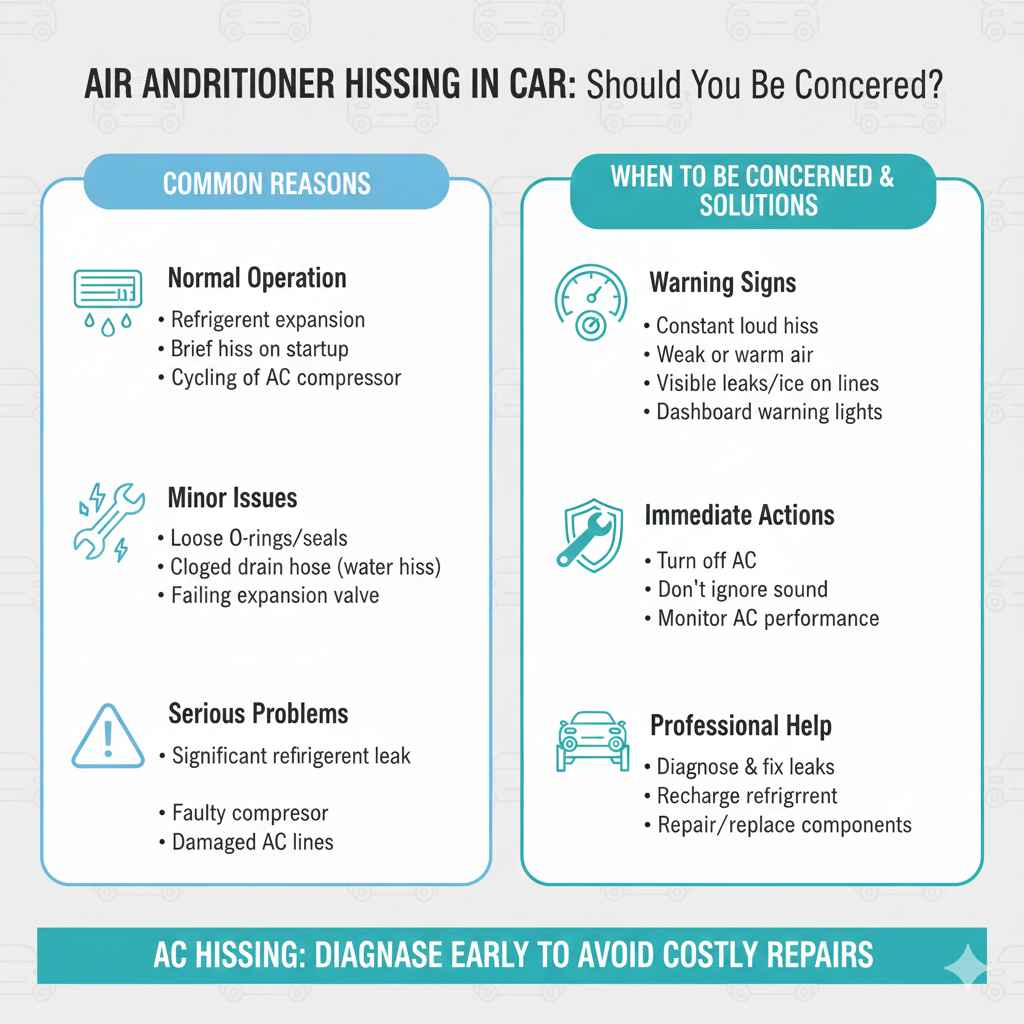
Persistent Hissing: If you hear constant hissing sounds, it is important to address the situation. This could indicate a refrigerant leak or another issue within the system.
Reduced Cooling: If your AC isn’t cooling as well as it should, or if the cooling performance has gradually worsened, there might be a problem with the refrigerant level or other internal AC issues.
Unusual Odors: If you smell unusual odors, such as a musty or burning smell, coming from the vents when you turn on the AC, this could suggest that the AC system has a problem.
Complex Issues: If you can’t identify the source of the hissing sound with basic inspections, or if you suspect problems within the compressor or other difficult-to-reach components, it’s best to consult a professional mechanic.
Understanding Car AC Components
Having a basic understanding of your car’s AC system is helpful when you are experiencing issues like, Air Conditioner Hissing in Car: Should You Worry? Knowing about the key components, how they work, and what might go wrong will make troubleshooting problems easier. This section outlines the essential components of a car’s AC system and how they work. The more you know, the more confident you will become.
The Compressor: The Heart of the System
The AC compressor is the heart of the air conditioning system, responsible for circulating the refrigerant throughout the system. It compresses the refrigerant, raising its pressure and temperature. This compression step is essential for the air conditioning process, allowing the refrigerant to transfer heat efficiently. Problems with the compressor, such as leaks or internal failures, can disrupt the system’s operation and lead to unusual sounds, such as hissing. To avoid issues with your compressor, regular maintenance and quick attention to any unusual sounds are important.
Function: The compressor increases the pressure of the refrigerant. This high-pressure, high-temperature refrigerant is then directed to the condenser.
Types of Compressors: There are different kinds of compressors, including wobble-plate and swash-plate types. These variations refer to the mechanism within the compressor that drives the refrigerant circulation.
Common Compressor Issues: Compressors can fail due to many reasons, including a lack of lubrication, mechanical wear, or contamination. Internal issues, leaks, and noise are common signs of compressor problems.
Maintenance: Compressor maintenance involves checking the refrigerant level, inspecting for leaks, and ensuring the AC system is properly lubricated. In some situations, a compressor needs to be replaced.
The Condenser: Heat Dissipation
The condenser is a radiator-like component that is responsible for releasing heat from the compressed refrigerant. It is usually located at the front of the car, in front of the engine radiator. The high-pressure, high-temperature refrigerant flows through the condenser, and as it passes, heat is dissipated into the outside air. The efficiency of the condenser is vital for the entire cooling process. A condenser failure can reduce the AC system’s cooling capacity, so knowing how it works and what could go wrong is important.
Heat Release: As the refrigerant flows through the condenser, it cools down and condenses from a gas to a liquid. Heat is released to the surrounding air via fins and tubes.
Location and Design: Condensers are designed to maximize heat exchange. They use a network of tubes and fins to increase surface area for heat dissipation. They are typically located at the front of the car to access outside air.
Common Issues: Condenser issues include blockages, leaks, and reduced heat transfer caused by dirt or debris buildup. These issues can lower the AC’s cooling efficiency.
Maintenance Tips: Keeping the condenser free of debris is crucial. You can do this by washing the outside of the condenser regularly. Also, make sure that the condenser is getting enough airflow to operate efficiently.
The Evaporator: Cooling the Air
The evaporator is another essential part of the AC system, where the cooling process happens. Located inside your car, usually behind the dashboard, the evaporator takes heat from the air inside the vehicle. The refrigerant, now at low pressure and temperature, absorbs heat from the surrounding air in the evaporator, making the air cool. The cooled air is then blown into the car, providing the desired cooling effect. The performance of the evaporator directly affects how well the AC cools the interior.
How It Works: The low-pressure refrigerant flows through the evaporator, where it absorbs heat from the surrounding air. This process causes the refrigerant to change from a liquid to a gas.
Location and Function: The evaporator is located inside the car, typically near the dashboard. It uses a network of coils and fins to maximize heat absorption.
Common Issues: Evaporator problems include blockages, leaks, and the growth of mold or mildew, which can cause unpleasant odors. Clogging with debris or corrosion can also reduce its effectiveness.
Maintenance: Regularly cleaning the evaporator and ensuring it stays free from debris is important for maintaining its function. Cleaning the drain tube is also crucial, because it helps prevent condensation buildup.
Refrigerant and Other Key Components
The refrigerant is the primary element responsible for cooling the air inside your car. It cycles through the AC system, absorbing heat from inside the car and releasing it to the outside. In addition to refrigerant, other components, such as the expansion valve or orifice tube and the receiver-drier, are crucial for the AC system to function correctly. Every component has a specific function in the cooling process and affects the overall efficiency and reliability of the AC system.
Refrigerant: Refrigerant, such as R-134a, is the substance that absorbs heat from inside the car and releases it outside. The refrigerant moves through the system, changing state.
Expansion Valve/Orifice Tube: This component controls the flow of refrigerant into the evaporator, reducing its pressure and temperature. Blockages or failures can reduce cooling and cause hissing.
Receiver-Drier: The receiver-drier removes moisture and filters out debris from the refrigerant. This ensures that the system stays clean and performs efficiently.
Connecting Hoses and Lines: The hoses and lines transport refrigerant between the different components. They must be leak-free and in good condition to maintain system pressure.
Real-Life Examples and Scenarios
Understanding real-world examples of AC problems can provide insight into how things work in practice. The following cases and scenarios offer practical examples and illustrate the causes of an Air Conditioner Hissing in Car: Should You Worry?. These situations show the importance of paying attention to unusual sounds, recognizing the symptoms of AC problems, and knowing what steps you can take to solve them. These cases show the range of problems that can arise and how a careful approach can lead to effective solutions.
Case Study 1: The Gradual Refrigerant Leak: A car owner noticed a slight hissing sound coming from under the hood. Over several weeks, the cooling performance of their AC gradually decreased. They had the system tested, and a small leak was found in a hose connection. The mechanic replaced the hose and refilled the refrigerant, solving the problem and restoring the AC system’s efficiency.
Case Study 2: The Blocked Expansion Valve: Another car owner experienced a hissing sound accompanied by a lack of cold air. After a diagnostic check, a mechanic discovered the expansion valve was blocked with debris. Cleaning the system, replacing the valve, and adding new refrigerant restored the AC system to full performance.
Here are some examples of what can go wrong:
Your AC suddenly stops working, and you hear a hissing noise. This is usually caused by a major leak, often in a hose or connection.
You notice the AC isn’t as cold as it used to be, and there’s a faint hissing sound. This can be caused by a small leak that is gradually releasing refrigerant.
The AC is blowing hot air, and you hear hissing, probably due to a compressor failure or a major refrigerant leak.
The examples and scenarios above illustrate that understanding the AC system and paying close attention to any changes in your car can save you problems. From gradual leaks to system failures, a proactive approach and a clear understanding of the components and symptoms will lead you in the right direction.
Frequently Asked Questions
Question: Why is my AC hissing only when I turn it on?
Answer: Hissing that starts when you turn on your AC can be caused by a refrigerant leak or a problem with the compressor. Turning on the AC puts pressure on the system, making leaks or compressor issues more obvious.
Question: Is it safe to drive with a hissing AC?
Answer: It’s best to address the issue as soon as possible. Driving with a hissing AC could damage the AC system further, or lead to overheating. A short trip may be fine, but get it checked quickly.
Question: Can I fix the hissing AC myself?
Answer: Small issues, such as a loose hose clamp, might be fixable. However, most repairs, such as those that involve refrigerant leaks or compressor problems, require special tools and expertise.
Question: What does it mean if my AC is hissing and not blowing cold air?
Answer: This likely indicates a refrigerant leak, an issue with the compressor, or a blockage within the system. The hissing sound shows refrigerant escaping under pressure, while the lack of cold air is a sign that the refrigerant level is low or not circulating.
Question: How often should I have my car’s AC system checked?
Answer: It’s a good idea to have your AC system checked regularly, at least every year or two. This is particularly important before the hot summer months. Regular checks can catch small issues before they become major problems.
Final Thoughts
If you’re wondering about the sound of an Air Conditioner Hissing in Car: Should You Worry?, the answer is a simple yes; the sound signals that you need to take action. This sound often means there is an issue with your AC system. The most common causes of this noise include refrigerant leaks, problems with the compressor, or blockages in the expansion valve or orifice tube.
In some instances, it might be something small, like a loose connection; other times, it could indicate a more serious failure. To assess the problem, you should check for leaks, listen for the location of the hissing, and see how well your AC is cooling. Take the time to regularly check your AC system, especially before and during the hottest months. A proactive attitude, with attention to any unusual sounds and symptoms, can ensure a comfortable driving experience.