AIRCARE Humidifier CF Code: What It Means and How to Fix It
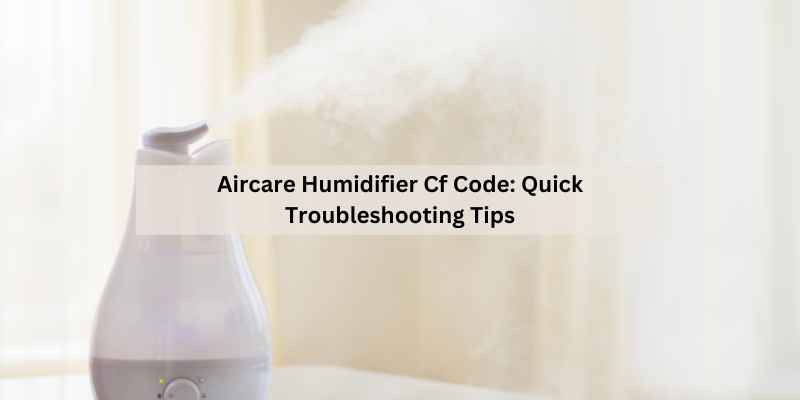
Your AIRCARE evaporative humidifier just blinked a CF code on its display. The room is dry, the tank is full, and you have no idea what just happened. You press the power button. The code stays. You unplug it, wait ten seconds, plug it back in. Still CF. Now you’re wondering if you need to toss the unit and buy a new one.
Don’t do that yet. The CF code stands for Check Filter. It’s not a catastrophic failure, and in most cases it’s a maintenance prompt, not a malfunction. This guide walks you through the exact steps to clear the code, reset it on your specific model, and fix the root causes that make it keep coming back. You’ll also learn how to tell CF apart from other error codes and when the unit is genuinely done for.

AIRCARE
AIRCARE 1043 Replacement Space Saver Wick (1)
- AHAM certified output and less energy consumption.
- Pack of 1 per order.
If you already know your wick is overdue, the AIRCARE 1043 replacement wick is the part you’ll likely need. It’s the standard Space Saver wick for many AIRCARE models, and swapping in a fresh one resolves a large share of CF issues tied to clogged filters.
What the CF Code Means (and Why It’s Not a Malfunction)
The CF code is a sensor-driven alert. Inside your humidifier, a small sensor monitors water level and wick saturation. When the sensor detects that the wick isn’t absorbing water properly, it triggers the CF display. The unit isn’t broken; it’s telling you the evaporative process has stalled.
Think of it like a check engine light. The light itself isn’t the problem. It’s pointing at something underneath. For AIRCARE units, that something is almost always one of four things: a mineral-clogged wick, a dirty sensor, hard water buildup, or a filter that wasn’t seated correctly.
Here’s the important part: CF is not the same as a low-water code. Some models show a separate code for an empty tank. CF specifically relates to filter performance. If your tank is full and the code still shows, the sensor isn’t seeing enough moisture transfer through the wick.
Quick Fix: 3-Step CF Reset
Before you tear anything apart, try the standard reset sequence. It works on most AIRCARE models, including the MA1201, 8310, and 4900 series.
- Power down completely. Turn the unit off with the control knob, then unplug it from the wall. Wait at least 60 seconds. This lets the control board fully discharge and clears any transient sensor glitch.
- Inspect the wick. Open the front grill and pull the wick up. Look for white crusty deposits or a stiff, crunchy texture. A healthy wick should feel damp and slightly flexible. If it’s hard or covered in scale, that’s your problem.
- Press and hold the reset button. Most AIRCARE models have a small reset button near the control dial or behind the front panel. Hold it for 5 seconds. Plug the unit back in and turn it on. The CF code should clear within a minute.
If the code clears but comes back within a day or two, you haven’t fixed the root cause. Move on to the troubleshooting sections below.
Model-Specific Reset Instructions
Not all AIRCARE humidifiers reset the same way. Here’s the breakdown for the three most common families.
MA1201
The MA1201 uses a rotary dial for fan speed and a separate power switch. There’s no dedicated reset button on this model. To clear CF, unplug the unit, remove the wick, and leave it unplugged for 5 minutes. Reinstall the wick, plug in, and set the dial to high. The code typically clears after the wick gets fully saturated. If it doesn’t, the sensor likely needs cleaning (see below).
8310 and 4900 Series
These models have a digital control panel with a Reset button labeled on the front. Press and hold it for 3 seconds until the display flashes. Release it, then power the unit off and on. If the code persists, hold the reset button for 10 seconds while the unit is unplugged, then plug it back in while still holding the button. That forces a deeper control board reset.
One caveat: the reset button on these units is small and sometimes recessed. Use a paperclip or a pen tip to press it fully. A partial press won’t register.
Why CF Keeps Reappearing: 4 Root Causes
A reset clears the code. It doesn’t fix what caused it. If CF returns, you’re dealing with one of these four issues.
Water Quality and Mineral Buildup
Hard water is the number one enemy of evaporative humidifiers. Tap water with high calcium and magnesium leaves behind mineral scale as it evaporates. That scale coats the wick fibers, reducing their ability to pull water up. The sensor sees a dry wick and triggers CF.
You can test your water hardness with a cheap TDS (total dissolved solids) meter. Dip it in a glass of tap water. Readings under 150 ppm are fine. Above 300 ppm, you’re in trouble. Above 500 ppm, you’ll be cleaning the wick every two weeks. If your TDS is high, switch to distilled water or use a water softening filter on your humidifier’s intake. It’s not a luxury; it’s the difference between a wick that lasts two months and one that dies in two weeks.
Sensor Dirt and Misalignment
The water level sensor sits in the base of the unit, usually near the float or the wick housing. It’s a small metal or plastic probe. Over time, mineral scale forms on the sensor surface, making it less sensitive. It can’t detect water correctly, so it reports a dry wick even when the tank is full.
Locate the sensor, unplug the unit, and wipe it down with a cloth dipped in white vinegar. Let it dry completely before running the humidifier again. Sometimes the sensor arm gets bent out of position during cleaning. Make sure it sits parallel to the water path and moves freely.
Filter Installation Errors
It sounds basic, but it’s common. The wick must sit flat in the base and align with the water trough. If it’s folded, tilted, or wedged against the sensor, water can’t wick evenly. The sensor reads the dry spot and throws CF.
When you install a new wick, wet it under the tap first. A dry wick takes hours to saturate, and the sensor will often trigger CF during that window. Pre-soaking eliminates that false alarm.
Internal Hardware Failure
If you’ve replaced the wick, cleaned the sensor, and reset the unit multiple times, and CF still appears, you’re looking at a hardware issue. The sensor itself may be dead, or the control board may have a fault. A failing motor can also cause a similar symptom if the fan isn’t moving enough air to drive evaporation.
Test the motor by listening to the unit on high speed. If the fan sounds weak or rattles, the motor bearings may be worn. At this point, weigh the cost of repairs against a new unit. Most AIRCARE models cost less than $150, and a replacement sensor or motor can run $40–$70 plus labor.
How to Clean the Sensor and Wick Filter Properly
Cleaning isn’t complicated, but doing it wrong can damage the unit. Here’s the safe sequence.
Unplug the unit and remove the water tank and wick. Take the wick outside and rinse it with a garden hose to knock off loose scale. Then fill a bucket with one part white vinegar to three parts water and soak the wick for 30 minutes. Rinse it thoroughly. This restores some absorbency, but it’s a temporary fix. A wick that’s been running on hard water for months will never perform like new.
For the sensor, use a cotton swab dipped in vinegar. Gently wipe the probe tip and the surrounding plastic housing. Do not scrub hard. The sensor is delicate. After cleaning, wipe the base tray with a damp cloth to remove any scale buildup. Let everything air dry for an hour before reassembling.
One thing to avoid: putting any part of the humidifier in a dishwasher. The heat warps plastic components and ruins the sensor.
Preventive Maintenance Schedule to Avoid Future CF Codes
CF codes are predictable. They follow a pattern of neglect. Stick to this schedule and you’ll rarely see the code.
- Weekly: Empty the tank and wipe the base tray with a dry cloth. Refill with fresh water.
- Every 2 weeks: Clean the sensor with a vinegar-dipped cotton swab.
- Every 30 days: Soak the wick in a vinegar-water solution for 30 minutes, then rinse.
- Every 60–90 days: Replace the wick. The exact lifespan depends on your water hardness and usage hours.
- Seasonally: Before storage, run a full cleaning cycle with vinegar. Dry the wick completely to prevent mold.
Using distilled water eliminates most of the mineral buildup. It costs more per gallon, but it extends wick life by two to three times. That trade-off is worth it for most people.
CF vs. Other Error Codes (CL, F, E3) — A Quick Reference
AIRCARE units use a handful of codes. Knowing which one you have saves time.
| Code | Meaning | Likely Cause | First Step |
|---|---|---|---|
| CF | Check Filter | Clogged wick, dirty sensor, hard water | Reset unit, inspect wick |
| CL | Clean Unit | Mineral scale in base or on sensor | Vinegar soak and wipe down |
| F | Fan Fault | Motor stalled, obstruction in fan blade | Check fan spins freely, test motor |
| E3 | Electronic Sensor Error | Short circuit, dead sensor, bad control board | Unplug 10 minutes, then test again |
If you see E3, that’s a more serious electrical fault. A reset may clear it, but it often returns. If it does, the control board is likely failing. That’s a repair job, not a maintenance task.
For a different kind of diagnostic challenge, the P1345 code on Chevy trucks follows a similar logic: the code points to a sensor reading that’s out of range, and you have to trace the root cause rather than just clearing it.
FAQ: Persistent CF, Reset Button Not Working, and More
Why does my AIRCARE humidifier show CF even with a new filter?
A new filter that isn’t pre-soaked will trigger CF. The sensor needs to detect moisture, and a bone-dry wick takes hours to absorb water. Wet the wick under a tap before installing it. If you already did that, check the sensor for scale buildup.
How do I clear the CF code if there’s no reset button?
Models like the MA1201 don’t have a dedicated reset button. Unplug the unit for 5 minutes, remove the wick, and dry the sensor area with a cloth. Reinstall everything and run on high. The code should clear once the wick is saturated.
Can I keep using the humidifier with the CF code showing?
You can, but it won’t humidify properly. The unit may run the fan without adequate evaporation, which wastes electricity and can overheat the motor. Fix the problem rather than ignoring the code.
Does hard water really cause CF codes?
Yes. Hard water leaves mineral deposits that clog the wick and coat the sensor. A TDS meter reading above 300 ppm confirms your water is the culprit. Switch to distilled water to stop the cycle.
What if the CF code stays after a full reset and a new wick?
You’re looking at hardware failure. The sensor is likely dead, or the control board has a fault. Test the fan motor as well. If the unit is more than three years old, replacement is usually more cost-effective than repair.
Final Verdict: When to Fix vs. Replace Your Humidifier
Most CF codes are a maintenance reminder, not a death sentence. A $20 wick and 20 minutes of cleaning will solve 80% of cases. If you’re on your second wick in a month and the code keeps returning, stop throwing parts at it. Test your water hardness first. That single test tells you whether you need a different water source or a new unit.
Here’s what to remember:
- CF means Check Filter, not catastrophic failure.
- Always unplug for 60 seconds before attempting a reset.
- Pre-soak new wicks to avoid false CF triggers.
- Clean the sensor with vinegar every two weeks.
- Test your tap water with a TDS meter if CF recurs.
- Replace the wick every 60–90 days, or sooner with hard water.
- If the code persists after a new wick and a clean sensor, the control board or sensor is failing — consider a replacement unit.
For those who need a fresh start, the Honda P1457 code is a good reminder that error codes across different machines share the same diagnostic philosophy: the code is a clue, not the verdict. And if you’re comparing evaporative vs. steam humidifiers, the PO430 code diagnostic approach applies here too — check the simplest mechanical parts first before suspecting electronics.
Products related to this article
Sponsored / affiliate links. As an Amazon Associate I earn from qualifying purchases. I may earn additional commission from eligible campaigns.